
In the Golden Age of Hollywood, when the city of dreams sparkled with tinsel, floodlights, and Christmas carols, another set of candles burned quietly in the shadows — eight of them, glowing behind drawn curtains or on modest tabletops in Beverly Hills and Bel Air.
By Allan R. Ellenberger

Hanukkah — the Festival of Lights — was seldom photographed, rarely publicized, and almost never staged on a Hollywood soundstage. Yet for many of the men and women who built the film industry, it was their holiday, a private act of remembrance in a public world of reinvention.
The Founders and the Faith They Hid
Hollywood was, in many ways, a Jewish creation. The titans who founded the major studios — Louis B. Mayer (MGM), Adolph Zukor (Paramount), Carl Laemmle (Universal), Harry and Jack Warner, Samuel Goldwyn, William Fox, and Harry Cohn (Columbia) — were all Jewish immigrants or the children of Jewish immigrants from Eastern Europe.
They arrived in America with little more than ambition, carving an empire from nickelodeons and newsreels. Yet, in building Hollywood, they also built a dream of American-ness — one that often required the suppression of their own roots.
The studio moguls celebrated Christmas in grand, glittering fashion — not necessarily out of faith, but for the optics. Mayer, for instance, hosted lavish Christmas parties at MGM and sent ornate cards to everyone from Clark Gable to the mayor of Los Angeles. A menorah never appeared in the publicity photos.
For these men, Judaism was a private inheritance, not a public identity. Hollywood, after all, had been designed to sell the American dream — and in mid-20th-century America, that dream was overwhelmingly Christian.
Hanukkah in the Hills
While the studios staged Christmas on every backlot, Hanukkah remained an intimate, mostly indoor holiday—observed quietly in the homes of Jewish studio families scattered through Beverly Hills, Hancock Park, and Brentwood. The Warner brothers gathered privately to light candles in memory of their parents who had journeyed from Poland, while Frances Goldwyn hosted small, elegant Hanukkah dinners where traditional gefilte fish shared the table with Hollywood champagne. At Universal, Carl Laemmle marked the season by sending Hanukkah gifts to relatives still living in Germany, a gesture that grew ever more poignant and desperate as the shadows of the 1930s lengthened across Europe.
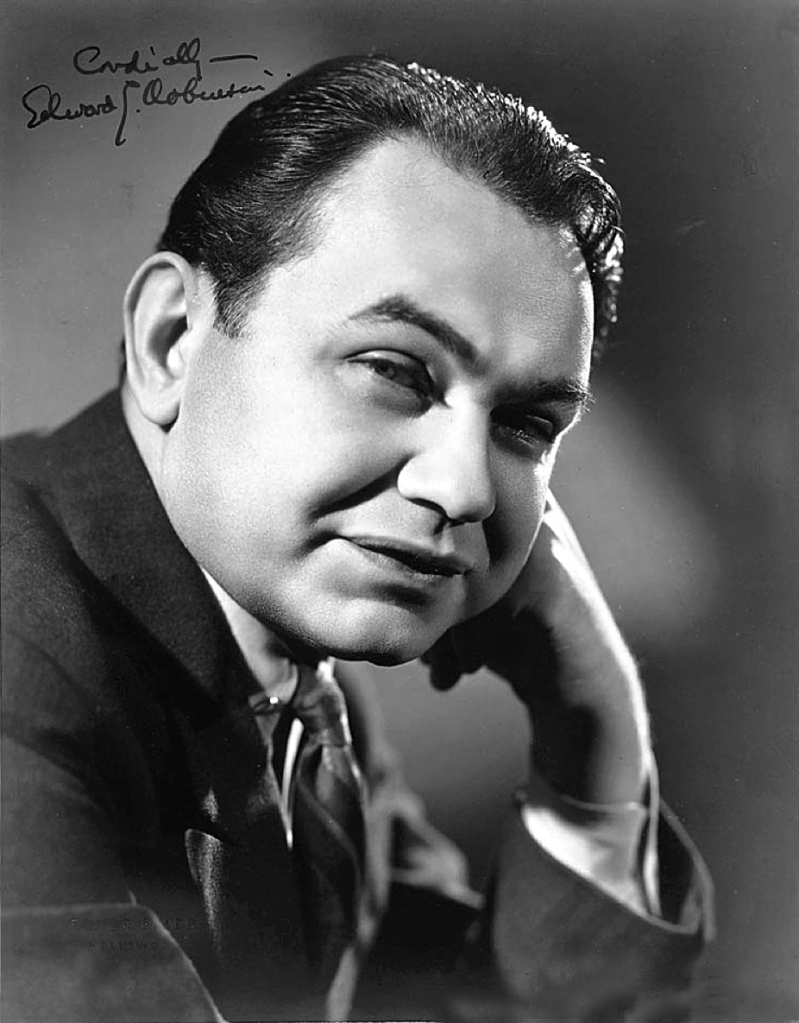
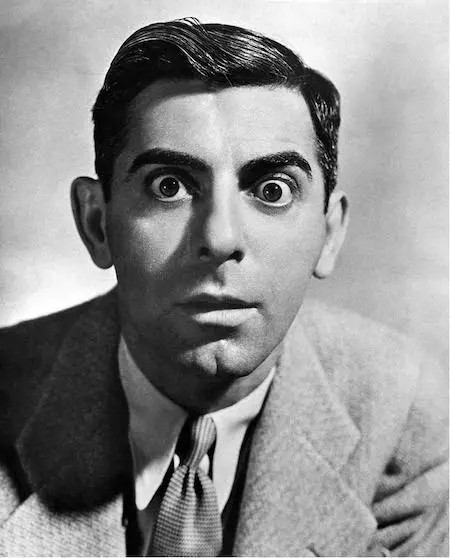
Among the stars, Jewish actors such as Edward G. Robinson, Paul Muni, John Garfield, Lauren Bacall, and Eddie Cantor celebrated quietly, often blending Hanukkah traditions with Hollywood’s secularized Christmas culture.
Cantor — a proud Jewish entertainer and one of America’s first major radio comedians — occasionally mentioned the Festival of Lights in his broadcasts, wrapping humor around heritage. But he was the exception. Most avoided public association with Jewish holidays for fear of alienating audiences or incurring industry prejudice.




Assimilation and Silence
To be openly Jewish in 1930s and ’40s Hollywood carried risk — not necessarily of unemployment, but of invisibility. The industry’s Jewish architects were acutely aware of the growing tide of antisemitism both abroad and at home.
Even in Los Angeles, there were barriers. The Los Angeles Country Club, the Hollywood Athletic Club, and several luxury hotels along Wilshire Boulevard quietly barred Jewish members. Real estate covenants in Beverly Hills and Brentwood explicitly restricted Jewish homeownership well into the 1940s.
Within that atmosphere, Hanukkah was less a public celebration than a statement of quiet endurance — a way of keeping faith alive in a world that preferred it unseen.
Fan magazines like Photoplay and Modern Screen ran endless spreads of Christmas trees, but never menorahs. The studios, dominated by Jewish executives, carefully avoided broadcasting Jewish identity in any form. As historian Neal Gabler famously wrote, “They created a universal dream of America — and left themselves out of it.”
A Private Light in a Public Town
Still, the holiday was not forgotten. In homes across the Hollywood Hills, menorahs glowed in secret — their reflections shimmering off Art Deco mirrors and crystal glassware.
Actress Sylvia Sidney, who came from a Jewish family in the Bronx, was known to light candles each year with her mother, even as she starred in Christmas-themed films. Lauren Bacall (born Betty Perske), later recalled that her family “kept Hanukkah modestly — no publicity, just candles, prayers, and a lot of love.”
Eddie Cantor, ever the showman, made it a point to teach his children both Christmas carols and Hanukkah songs — “so they’d understand everyone’s joy,” he once said.
For many Jewish stars, Hanukkah wasn’t just about religion — it was about identity, a small rebellion against invisibility.




The War Years: Rekindling the Flame
World War II changed everything. As news of Nazi atrocities reached Hollywood, Jewish awareness — and pride — intensified.
Jewish writers, producers, and actors began to speak more openly about their heritage, often through allegory. Films like The Great Dictator (1940), written and directed by Charlie Chaplin, and To Be or Not to Be (1942), starring Jack Benny, mocked fascism with satire that barely concealed its moral outrage.
Hanukkah that decade took on a new gravity — a symbol of survival against tyranny. In Los Angeles synagogues such as Wilshire Boulevard Temple and Temple Israel of Hollywood, candles were lit not only for the Maccabees, but for the Jews of Europe. Stars like Edward G. Robinson attended memorial services, while moguls such as Mayer quietly financed refugee rescue efforts.
In private, the Festival of Lights became both a religious act and a remembrance.
After the War: A Brighter Glow
By the late 1940s and 1950s, as antisemitism receded and American Jewish life grew more confident, Hanukkah found a modest place in Hollywood’s public life.
Radio programs and charity drives occasionally acknowledged the holiday, and menorahs began appearing in department store windows alongside Christmas trees. Eddie Cantor, Danny Kaye, and Sammy Davis Jr. — each proudly Jewish in his own way — began to merge the languages of show business and faith.


Cantor once quipped on his radio show:
“In Hollywood, the Christmas lights go up, and the Hanukkah candles go down — and either way, it all means the same thing: love, laughter, and leftovers.”
It was humor, but also truth.
Epilogue: The Hidden Light Endures
In classic Hollywood, Hanukkah was seldom seen but always present — a quiet counterpoint to the tinsel and trumpet of Christmas. Behind the polished veneers and the press releases, a community of Jewish artists kindled their own flames, whispering the ancient blessings in a new language of light and fame.
For them, the menorah was not a prop but a promise — a reminder that even in a city built on illusion, identity could not be entirely extinguished.
And so, while the studios sold White Christmas to the world, somewhere up in the hills, another kind of miracle glowed — smaller, steadier, and every bit as bright.
We welcome your thoughts — share your comments below and help keep Hollywood’s golden age alive
Add comment
Comments