

By Monday, August 16, 1926, Rudolph Valentino’s private medical crisis had become a national spectacle. Newspapers carried his condition on their front pages, thousands of anxious admirers overwhelmed the Polyclinic Hospital with telephone calls, and crowds gathered outside seeking the latest bulletin about the screen idol’s survival. Yet even as Valentino tried to reassure family members, friends and Pola Negri that he would recover, another drama was taking shape beyond his hospital room. Conflicting stories about his final night began spreading through New York—stories involving nightclubs, showgirls, alcohol and a gathering at Barclay Warburton’s apartment. As Valentino fought for his life, those who had been with him struggled to explain exactly where he had gone, whom he had seen and what had happened before he collapsed.
By Allan R. Ellenberger
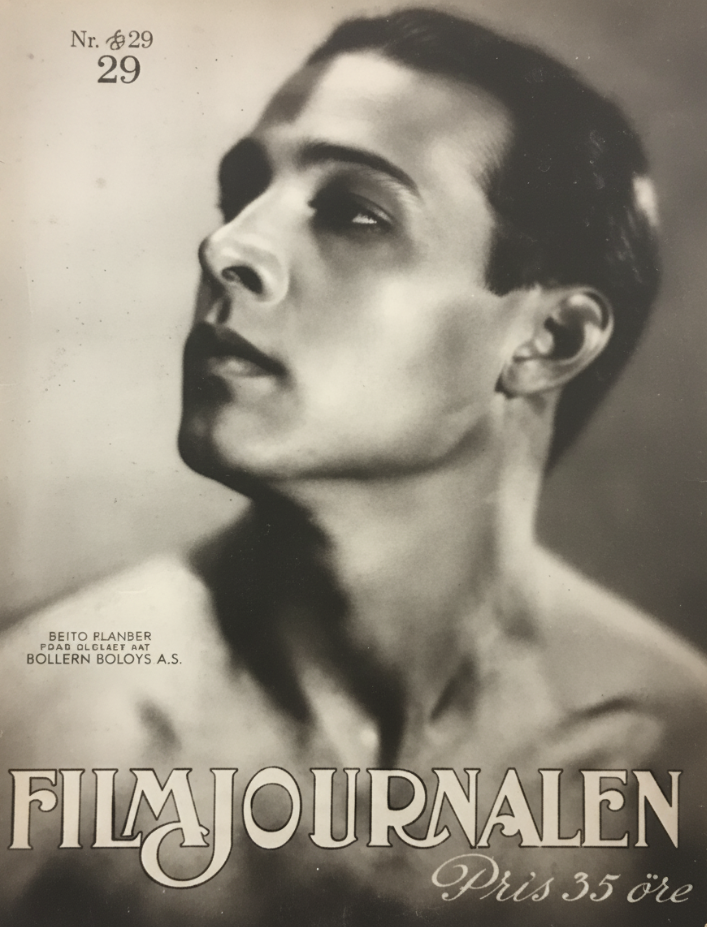
The Polyclinic set up a “Valentino Information Desk” on the first floor where bulletins on the actor’s progress were given out every few hours. Extra telephone operators were placed on duty to handle the thousands of incoming calls, mostly from women asking for news about their idol.
As the morning progressed, the number of fans arriving at the hospital inquiring about Valentino’s condition increased. They finally had to be turned away, and the hospital doors closed. Jean Acker, who was planning a trip to Europe at the end of the week, called about Rudy’s status, saying she would visit later in the day.
As Rudy requested, Ullman sent a cable to Alberto and his sister Maria in Italy, and to Natacha in France. Ullman at first wanted Alberto to return to New York, but Rudy declined. “By no means,” he insisted. “Just cable him that I am a little indisposed and will soon be all right.” When Natacha received news of Rudy’s illness, all the anger and hurt that she experienced the past year suddenly faded, and the differences that had separated them now seemed unimportant.
For support, she turned to her mother and aunt, Teresa Werner, who was a favorite of Rudy’s. Both women had maintained hope that the couple would be reunited and felt that this illness might bring them back together.
Rudy asked that a wire also be sent to Pola (Negri). “Tell her that I’m all right,” he told Ullman. “Tell her not to worry. I’ll pull through.” When Pola received her telegram, it provided hope for her, though his condition remained serious. “Mr. Valentino has been operated on for appendicitis and gastric ulcers,” the telegram read. “He is making good progress.”
Negri was on the set of her latest film, The Hotel Imperial, when she spoke to reporters. “I am so unhappy,” she said. “I can’t just walk off the set, for I am in the middle of a big picture. But I will go to Rudy just as soon as I can leave my business and as fast as a train will take me to New York. Poor Rudy—I had no idea he was going to get sick—he was so strong and happy when he left, and he didn’t say a thing about illness in his last telegram.”
Rudy’s boss, Joseph Schenck, who newspapers reported had a $1,000,000 insurance policy on Valentino’s life, was still in Maine at the summer camp of United Artist's managing director, Hiram Abrams, when he received word of Valentino’s condition. Schenck cabled that he and Norma (Talmadge) would leave for New York immediately.
After a slight relapse that afternoon, rumors spread that Valentino had died. The actor rallied, however, and briefly regained consciousness. Recognizing his nurse, Pearl Frank, a diminutive and exceedingly attractive brunette, he patted her on the cheek and said, “You’re a fine girl. You’ve been so good to me!”
While Valentino fought for his life, stories circulated up and down Broadway that the star had attended a “wild party” with liquor and showgirls the evening before he took ill. Barclay Warburton emphatically denied that a party of any kind had taken place. Earlier that afternoon reporters gathered at his Park Avenue apartment as Warburton confirmed that he, Rudy, and Ullman had dined at the Colony before attending George White’s Scandals. Afterward, he said, Valentino felt “rotten” and complained of pain. Instead of continuing, Warburton went to this apartment, and Valentino and Ullman, as far as he knew, returned to the Ambassador. He first learned of Rudy’s condition when the actor’s valet telephoned him on Sunday morning.
The reporters left Warburton’s apartment convinced that he was telling the truth. One newspaper, however, revealed that as they were leaving, an attractive young woman arrived, a “member of one of the popular Broadway revues.” Some have speculated that it was Ziegfeld Follies girl, and frequent Valentino date, Marion Benda.
Two days after Warburton’s denial, Benda related her version of that evening to the New York American. She corroborated Warburton’s story, saying that she met with Valentino and Warburton (she did not mention Ullman) after the theater. “Mr. Warburton was going home, he said, and Rudy and I decided to go dance some place,” she told the tabloid.
Benda claimed they ended up at Club Lido at 47 East 44th Street, where Valentino again complained of feeling unwell. Later, at Texas Guinan’s nightclub, The 300 Club at 151 West 54th Street, Valentino became upset for reasons unknown to Benda, so she suggested that they leave. “He said he wasn’t in the mood for such a place,” Benda said, “although we had such a good time there only a few nights before.”
From there, Valentino escorted Benda to her apartment building at 145 West 55th Street. “I saw Rudy last at the door of my apartment house,” she said. “It was about 3 o’clock in the morning. He said he was going home to bed.” However, cab driver Mike Di Calzi told the New York Evening Graphic that he picked up Valentino and Benda at her apartment at four-thirty that morning and took them to Warburton’s apartment. Frank Gross, the elevator operator in Benda’s building, reportedly confirmed that Valentino and Benda did leave her apartment around that time.
The question arises: how could Valentino be with Marion Benda at two nightclubs and her apartment, and be at a party at Barclay Warburton’s at the same time? Were the cab driver and elevator operator lying, or did the Evening Graphic fabricate the story, which would not be hard to believe considering their reputation. It should also be noted that no one ever came forward from Club Lido or Texas Guinan’s to confirm Valentino’s presence there that evening.
Regardless, a few days after Valentino’s death, Benda changed her original story. This time she stated to a New York Daily News reporter (to whom she originally told a few days earlier that she “knew nothing about it”) that they had indeed gone to Club Lido and Texas Guinan’s, but they were not alone—Warburton, dancer Frances Williams and “a girl named Hayes” accompanied them. She couldn’t remember who else was in the party.
Benda said that when Valentino took ill, the festivities moved to Warburton’s apartment, where Dr. Paul Durham was called. At first Durham thought that Valentino was suffering from indigestion. “Perhaps he’s eaten something that disagreed with him,” Durham suggested.
“All he had was a ham-and-egg sandwich,” Benda replied.
All evidence points to a party at Warburton’s apartment that evening, but whether it was a “wild party” or not is hard to say. In 1920s vernacular, a “wild party” conjures up visions of scantily clad girls dancing on tables drinking champagne. Regardless of Prohibition, it was, in all probability, a simple gathering of a few people having drinks, listening to music, and dancing, as Harry Richman stated.
If this were true, why would Warburton lie? He is not convincing when he insists that a party never occurred. Not only are there those who contradict him, but there were none who defended him, including Ullman. And the fact that he later avoided the press on the subject generates skepticism. At this point, one can only speculate as to why Warburton would choose not to tell the truth. Being that it was the middle of Prohibition, perhaps he was nervous because he served liquor. With a well-earned reputation as a playboy, he was known for hosting riotous parties that lasted until all hours of the morning. A former neighbor, who claimed that his dusk-to-dawn soirees kept him from sleeping and forced him to move, had already sued him.
This brings up another consideration—the possibility of a scandal. At the time, it was uncertain whether Valentino would live or die. If the actor died after attending a party where they served alcohol, who knows what the repercussions would have been. After all, memories of the Fatty Arbuckle scandal, less than five years earlier, were still fresh in the public’s mind. The best defense, it would seem, would be to deny that a party had even occurred.
And what of Marion Benda? There is no question that she was acquainted with Valentino and attended Warburton’s party, but why give two different accounts to two different newspapers? If Benda were the mysterious chorine at Warburton’s apartment that day, perhaps she and Warburton reached an “agreement” that should back up the playboy’s statement. Though only speculation, perhaps the fact that she suddenly includes Warburton in the second version of her story indicates that any agreement may have gone sour, and this was her way of setting things right.
Nearly a century later, the truth about Valentino’s last night remains blurred by denials, contradictions and changing memories. The available evidence strongly suggests that some gathering took place at Warburton’s apartment. However, there is little proof that it resembled the sensational “wild party” imagined by the tabloids. Warburton’s denial, Marion Benda’s shifting accounts and the absence of independent witnesses from the nightclubs only deepened the mystery. Perhaps those involved feared legal trouble during Prohibition, public condemnation, or another Hollywood scandal in the shadow of the Fatty Arbuckle case. Whatever their reasons, the conflicting stories ensured that the hours before Valentino’s illness would become almost as controversial as the tragedy unfolding inside his hospital room. And while reporters argued over the events of Saturday night, Valentino’s condition remained critical—and the most devastating chapter was still to come.
The story continues tomorrow. Join me for the next chapter of Valentino’s Last Days, as we retrace, day by day, the events of August 1926 and the final journey of Rudolph Valentino, one hundred years later.
If you’ve been following Valentino’s Last Days, I invite you to share your thoughts on today’s chapter. Please take a moment to comment, rate and share the story as we continue retracing the final days of Rudolph Valentino.
Local readers are invited to attend the 99th Rudolph Valentino Memorial Service on August 23, beginning at 12:10 p.m. in the Cathedral Mausoleum at Hollywood Forever Cemetery. The service will commemorate the centenary of the silent screen idol’s death while continuing a Hollywood tradition that has endured for nearly a century.
For those unable to attend in person, the memorial will be streamed live on Facebook through the “We Never Forget” Rudolph Valentino page, allowing admirers around the world to take part in remembering Valentino and his enduring legacy.
In addition to the memorial service, that evening, Hollywood Forever will present the Los Angeles premiere of the restoration of The Son of the Sheik, accompanied by a recorded orchestral score by renowned composer and conductor Carl Davis. The screening will begin at 6:00 p.m. in Hollywood Forever’s Masonic Lodge.
Add comment
Comments