

Today Agnes Ayres is mainly remembered as Lady Diana Mayo, the beautiful and headstrong heroine who played opposite Rudolph Valentino in The Sheik. Nevertheless, her career went beyond that one film; at one time she was among Paramount's most well-known actresses, worked with Cecil B. DeMille and other prominent filmmakers, experienced wealth and fame, and appeared to have a secure position in Hollywood. Unfortunately, her later years became a sad illustration of how quickly silent-film fame could disappear.
By Allan R. Ellenberger
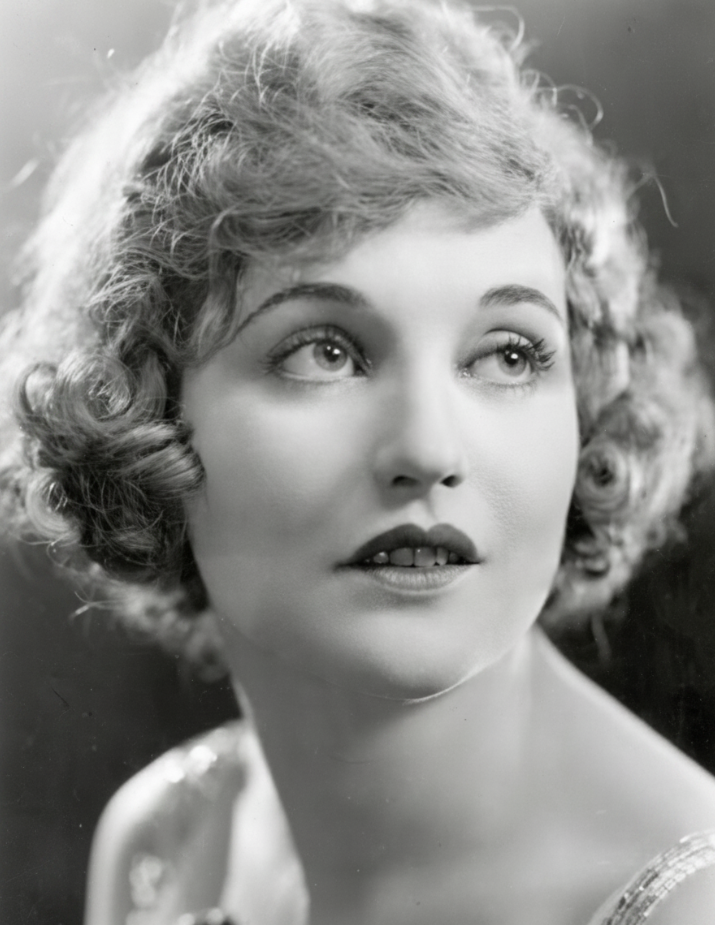
Agnes Eyre Henkel was born on April 4, 1898, in Carbondale, Illinois, and after spending her youth in the Midwest she joined the film industry in Chicago, where, it is said, she started off as an extra with the Essanay Film Manufacturing Company, one of the country's early important studios.
Later, Ayres traveled to New York with her mother, and actress Alice Joyce remarked on how similar she was to her, which helped her get the part of Joyce's sister in Richard the Brazen in 1917. She then appeared in several short films, including adaptations of stories by O. Henry, which earned her the publicity nickname "The O. Henry Girl."
Her career advanced significantly after producer Jesse L. Lasky of Famous Players-Lasky took an interest in her; the company later became Paramount. Lasky helped promote her into leading roles, including Held by the Enemy (1920). Their professional relationship also became personal, and Ayres reportedly had an affair with the married producer.
Her personal life was already complicated since in 1918 she had married the army officer Frank P. Schuker, though the marriage ended by divorce in 1921. It was in that same year that she acquired the role which made her famous forever; Paramount cast Ayres as Lady Diana Mayo in The Sheik, opposite Rudolph Valentino. The film became one of the great sensations of 1921 and was responsible for establishing Valentino as an international idol. Likewise, Ayres' Diana, an independent Englishwoman who was fascinated by the desert, was equally significant to the film's romantic appeal.
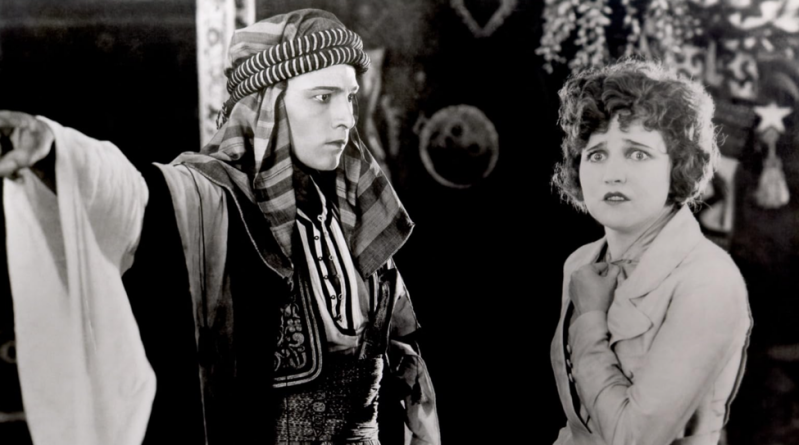
Success was achieved. Ayres starred in Cecil B. DeMille’s Forbidden Fruit and The Affairs of Anatol, and then appeared in Bought and Paid For, Clarence, The Heart Raider, Hollywood, and in DeMille’s 1923 version of The Ten Commandments; she seemed to be firmly established among the leading women in Hollywood for several years.
After her relationship with Lasky had ended, her career started to lose impetus. Although she kept working steadily, for example playing opposite Warner Baxter in the 1925 edition of The Awful Truth, she began to get fewer major roles.
In July 1924 Ayres married S. Manuel Reachi, who was a Mexican diplomat, writer and film producer. Their daughter, Maria Eugenia Reachi, was born in 1926 and the marriage was later dissolved the following year.
In 1926, Ayres also played Diana in The Son of the Sheik, with Valentino playing both the older Sheik and his son, and Vilma Bánky as the leading lady of the younger man. Although her role was smaller than in the first film, the movie gained historical significance as Valentino's last film; he died on August 23, 1926, shortly after its release.
Her own career was also going through a difficult time. She kept appearing in films until the late 1920s, for example in Frank Capra’s The Donovan Affair (1929). But the introduction of talkies, together with serious financial losses, brought about a complete change.
She had made substantial investments in real estate and in the stock market, but the 1929 crash destroyed a large part of her wealth. Since she needed some income and wanted to adjust to sound films, she decided to take up work in theatre and vaudeville and went to New York in order to gain experience performing in front of live audiences.
In the mid-1930s, she went back to Hollywood hoping for a comeback, but the industry she knew had changed. Rather than getting leading roles, she only obtained small ones, many of which were uncredited. She took part in films including Small Town Girl, Maid of Salem, Midnight Taxi, and Souls at Sea. By 1937, her film career was essentially over.
Her private life grew increasingly difficult. She experienced episodes of emotional instability and went to a sanitarium. In 1939 she lost custody of her daughter to her former husband, and by 1940 her health had also declined.
Agnes Ayres had a sudden cerebral hemorrhage on Christmas Eve, 1940, and never recovered consciousness; she died the next day, on December 25, at St. Vincent’s Hospital, having been only 42 years old.
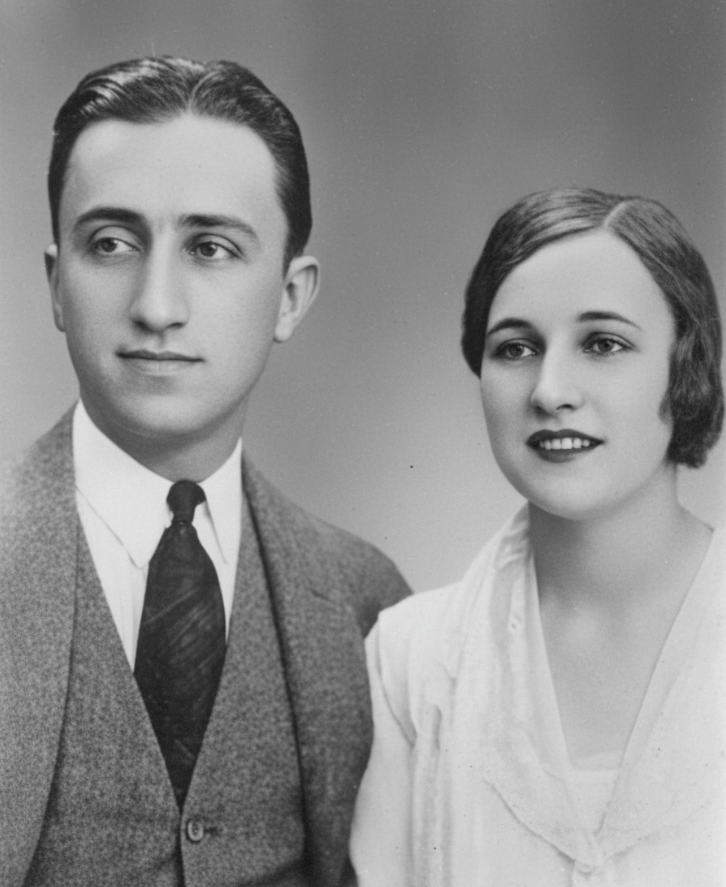
S. Manuel Reachi and Agnes Ayres shortly after their marriage.
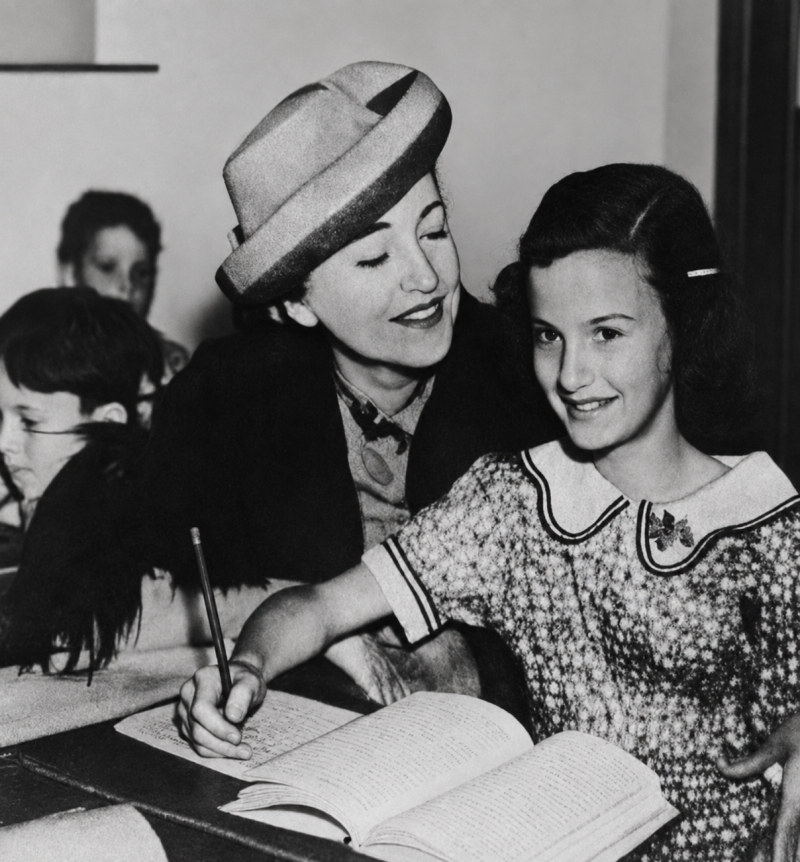
Agnes Ayres helps her 10-year-old daughter, Maria, with her schoolwork on a film studio set in 1937.
The funeral, at Pierce Bros. Hollywood Chapel, was extremely simple in contrast to the fame she had enjoyed in the 1920s. Contemporary reports said only a small number of people attended and that there were approximately ten floral tributes; the only recognition from the film industry was the Screen Actors Guild. Maria, her fourteen-year-old daughter, was one of those present. A particularly moving detail was the inclusion of the film which had made Ayres' famous. During the funeral the song "Kashmiri Song," which is linked with The Sheik, was played.
Ayres was cremated at the Hollywood Crematorium on December 27, 1940; her ashes were afterwards deposited in Hollywood Memorial Park Cemetery, which is now Hollywood Forever Cemetery, and she was inurned in the Chapel Columbarium, on the first floor, in the Lower South Wall, Tier 3, Niche 3D.

Maria Reachi, daughter of actress Agnes Ayres, with Robert Hollis at Ayres’ funeral service.
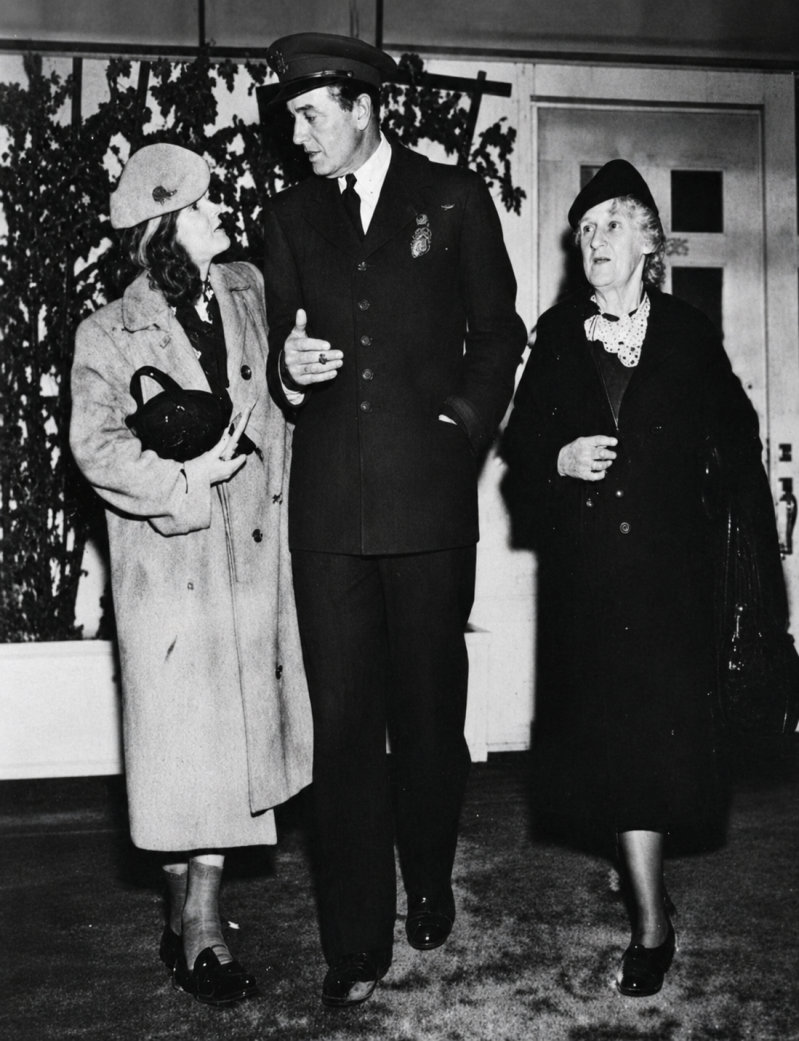
Silent-era film actors gather to mourn Agnes Ayres at her funeral service at Pierce Brothers Hollywood Chapel. From left are actress Ruth Renick, actor Herbert Rawlinson, and “Mother” Nellie Anderson, actress and mother of former film star Mary Anderson.
The place is particularly appropriate since Rudolph Valentino, who was her co-star and with whom she is most closely associated, is buried in the Cathedral Mausoleum; at the time, the newspapers even stated that Ayres' ashes had been planned to be placed near to Valentino's.
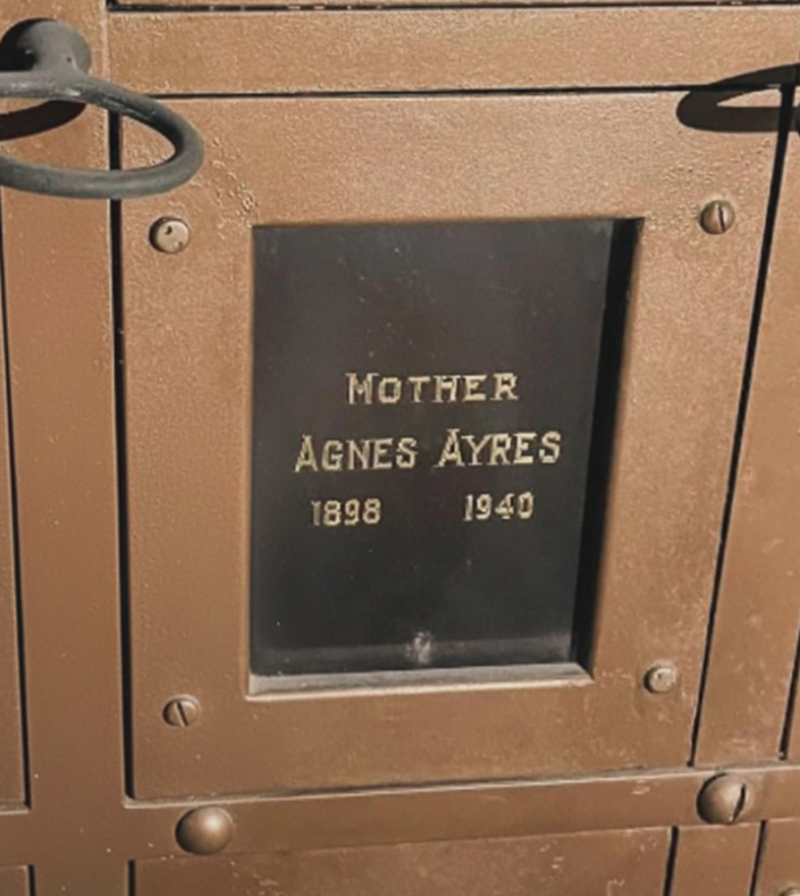
Agnes Ayres is inurned in the Chapel Columbarium, on the first floor, in the Lower South Wall, Tier 3, Niche 3D.
Nowadays her name is probably less well known than Valentino’s, but The Sheik has kept her image alive for over a century. There she still appears young, elegant, and self-assured as Lady Diana Mayo, riding into the desert in a film that permanently associated her with one of Hollywood’s silent legends. At Hollywood Forever, Agnes Ayres lies at rest among the pioneers of the period she helped define.
Tomorrow on The Hollywoodland Revue: this week’s “Coming Attractions” roundup featuring the newest theatrical releases, critical reactions, audience buzz, and recommendations on what may—or may not—be worth your ticket money.
If you enjoyed my Hollywood Forever profile of silent-film actress Agnes Ayres, please take a moment to comment, rate the post, and share it with others who enjoy classic Hollywood and silent-film history. Your support helps bring renewed attention to the stars whose stories still deserve to be remembered.
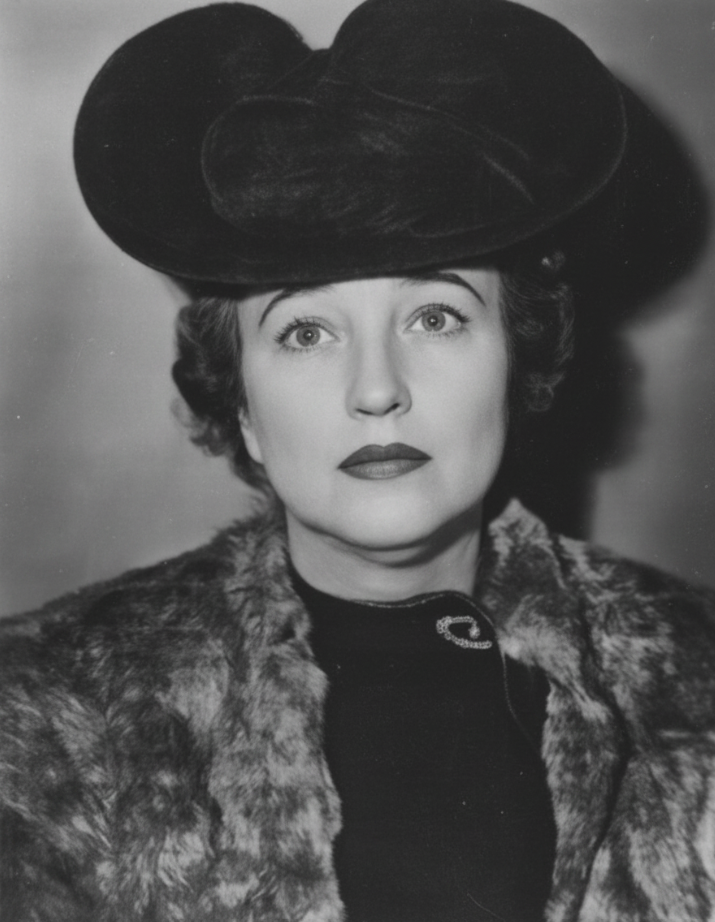
Agnes Ayres, a year before her death, when she lost custody of her daughter, Maria.
Add comment
Comments