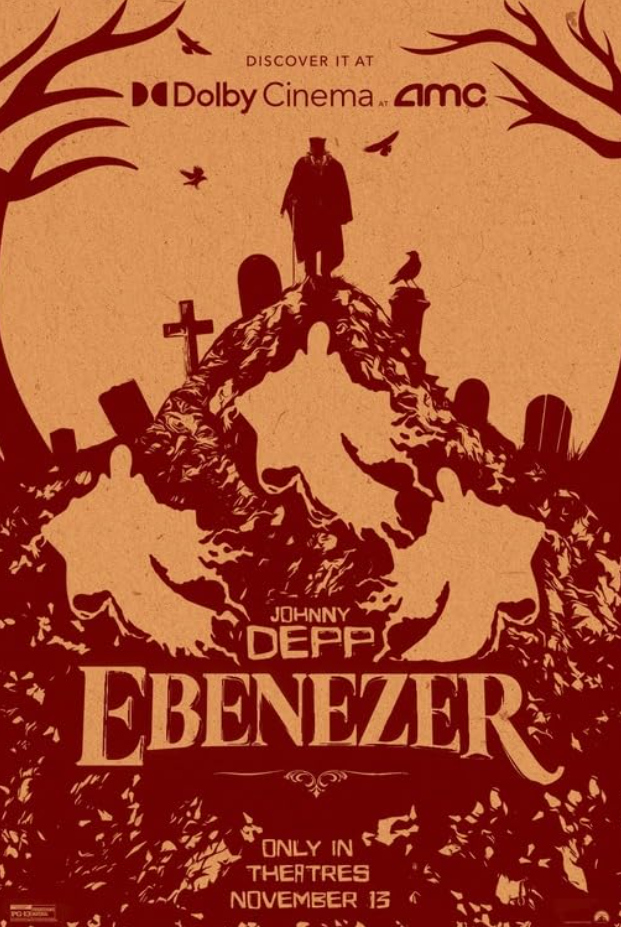
I've always loved Charles Dickens's A Christmas Carol. Every December, I make a point of watching the various film adaptations, from the beloved 1951 version starring Alastair Sim to the 1984 production with George C. Scott and the more recent interpretations. I know the story practically by heart, yet I never seem to tire of it. Consequently, when I learned that Johnny Depp would portray Ebenezer Scrooge in a new adaptation directed by horror filmmaker Ti West, I knew I had to see it. I attended an opening-day showing, and I'm happy to report that I wasn't disappointed. Ebenezer (2026) is atmospheric, entertaining, surprisingly moving, and quite possibly the scariest version of Dickens's immortal Christmas ghost story yet.
Reviewed by Allan R. Ellenberger

Released by Paramount Pictures on Friday, November 13, the film reunites audiences with the familiar tale of Ebenezer Scrooge, a wealthy, miserable London businessman whose contempt for Christmas is exceeded only by his disregard for his fellow human beings. On Christmas Eve, he receives an unexpected visit from the ghost of his deceased business partner, Jacob Marley, who warns him that his selfish existence will lead to eternal suffering. Three spirits subsequently guide Scrooge through his past, present, and possible future, forcing him to confront the consequences of his choices. The essential story remains intact, but West and screenwriter Nathaniel Halpern approach it with a decidedly darker imagination.
Depp is perfectly suited to the role. Hidden beneath elaborate makeup, facial prosthetics, period clothing, and an assortment of wonderfully unpleasant expressions, he virtually disappears into Scrooge. Some critics have complained that his performance is exaggerated, occasionally bordering on caricature. I disagree. That theatricality is precisely what makes the character so entertaining. Scrooge is supposed to be an extreme personality, a man whose bitterness and cruelty have become almost grotesque.
Depp understands this and has great fun with it, exaggerating his mannerisms without entirely losing the wounded human being beneath them. His comic flourishes also provide welcome relief from the more frightening sequences.
The casting of Ian McKellen as Jacob Marley is inspired. Few actors could communicate such anguish and supernatural dread with comparable authority. His Marley is not simply a ghost rattling chains; he is a tormented soul confronting the terrible consequences of his wasted life. McKellen brings tremendous dignity to the character, and his scenes with Depp establish the ominous atmosphere that dominates much of the picture. Rupert Grint is appropriately sympathetic as Bob Cratchit, while Sam Claflin portrays Scrooge's nephew Fred and Daisy Ridley plays Fred's wife, Clara. Arthur Conti appears as the younger Ebenezer, with Ellie Bamber portraying the young woman whose relationship with him reveals another painful chapter of his past.
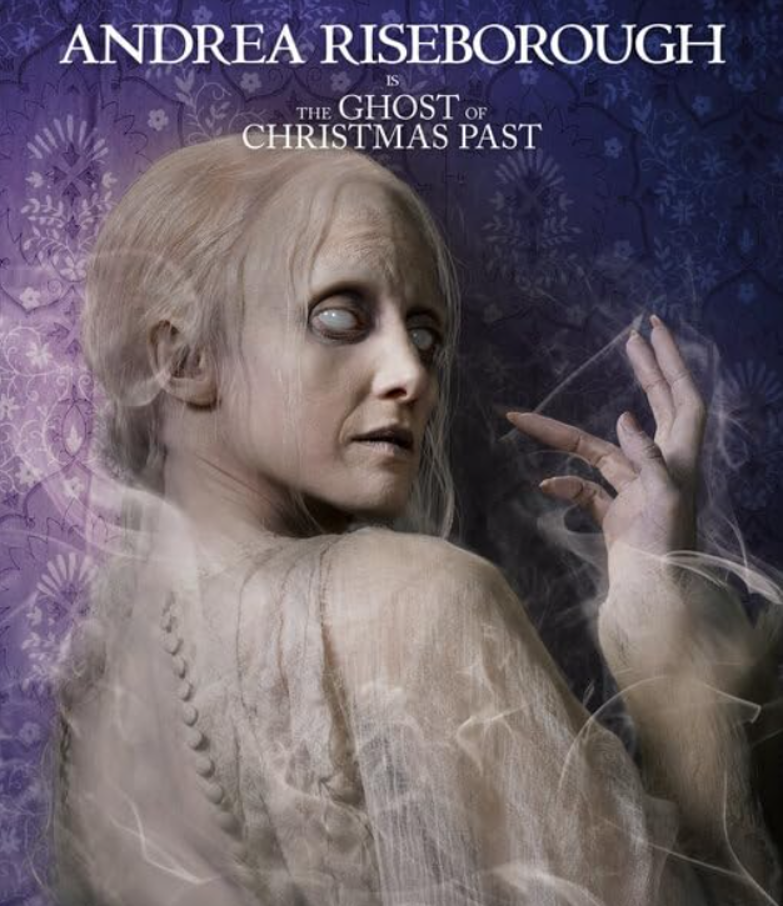
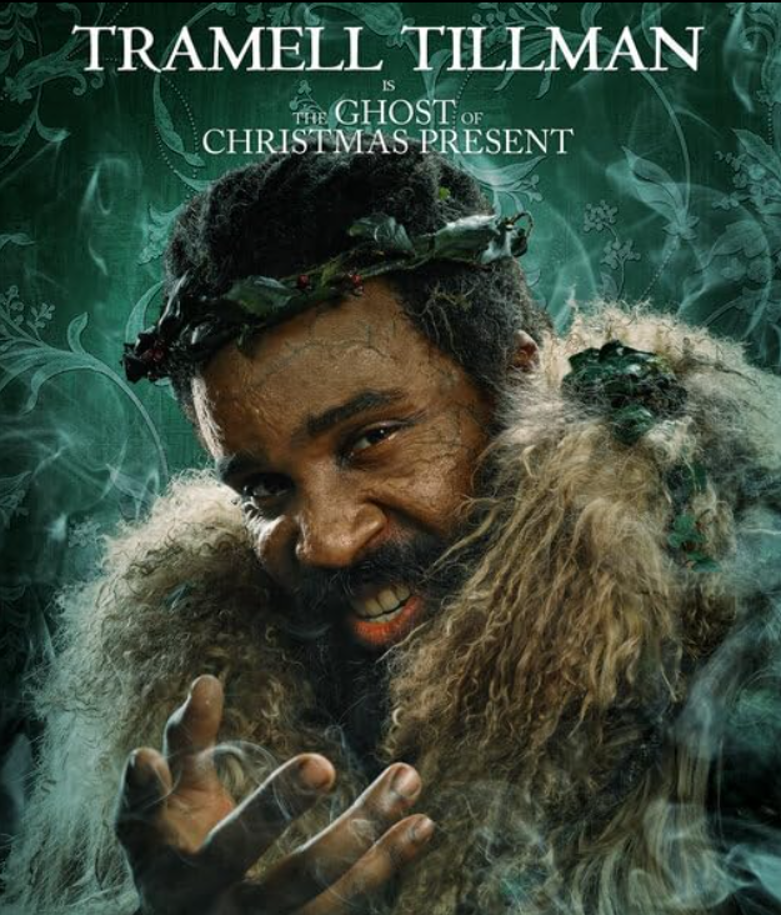
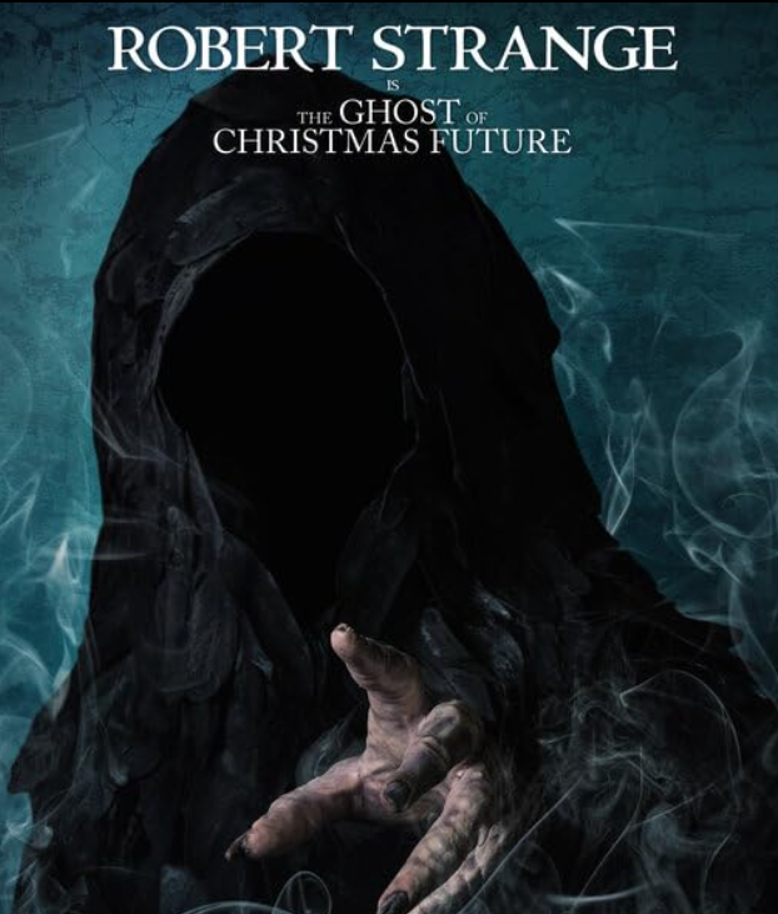
The three Christmas spirits are particularly memorable, and far more unsettling than their counterparts in most previous adaptations. Andrea Riseborough's Ghost of Christmas Past possesses an eerie, almost otherworldly presence, while Tramell Tillman's Ghost of Christmas Present combines apparent generosity with a disturbing awareness of humanity's failings. The Ghost of Christmas Yet to Come is especially terrifying, representing not merely death but the dreadful uncertainty of what awaits a person who refuses to change. West makes these supernatural visitors genuinely frightening rather than treating them as colorful holiday decorations.
One sequence that particularly impressed me involves Ignorance and Want, the two unfortunate children revealed beneath the robe of the Ghost of Christmas Present. Dickens originally described them in almost monstrous terms, using their appearance to condemn society's indifference toward poverty and suffering. Many film versions have softened or omitted the episode, but West embraces its disturbing implications. His treatment is genuinely chilling, reminding viewers that A Christmas Carol was never intended to be merely a sentimental holiday entertainment. It was also an angry commentary on Victorian society, class inequality, and the moral obligations of those fortunate enough to possess wealth.

Visually, Ebenezer is a splendid recreation of Victorian London, with its gloomy streets, crowded neighborhoods, imposing interiors, and sharp contrasts between poverty and privilege. West, whose previous films include X (2022), Pearl (2022), and MaXXXine (2024), brings his horror expertise to material that already contains its own supernatural terrors. The film's PG-13 rating for frightening material seems entirely justified. This isn't necessarily a Christmas movie for very young children, though older viewers who enjoy a good ghost story should find plenty to appreciate.

I don't always pay particular attention to the technical aspects of a film, but the sound design here is exceptional. Sudden noises, ominous silences, unsettling echoes, and the persistent suggestion that something dreadful is approaching contribute enormously to the atmosphere. At times, what we hear is more frightening than what we see. The sound frequently made me uneasy even when relatively little was happening onscreen. I wouldn't be surprised if Ebenezer received Academy Award consideration for its sound work. The cinematography and production design are equally impressive, creating a convincing world where Dickens's familiar story feels unexpectedly dangerous.
Critical reaction has been decidedly mixed. Matt Zoller Seitz, writing for RogerEbert.com, admired West's classical filmmaking style and his willingness to restore the story's frightening qualities.
The Hollywood Reporter said Depp's charisma ultimately overcame the excesses of his performance, while The Guardian called the picture an enjoyable, if hardly revolutionary, adaptation. Other reviewers were less enthusiastic. Time Out criticized its conventional approach, and TheWrap complained that Depp's familiar eccentricities offered little new insight into Scrooge. Early screening reactions were more encouraging, with some viewers praising Depp's return to a major studio production and the film's darker atmosphere. At Grauman’s Chinese Theatre, where I saw the film, the audience broke into applause as the closing credits began to roll.
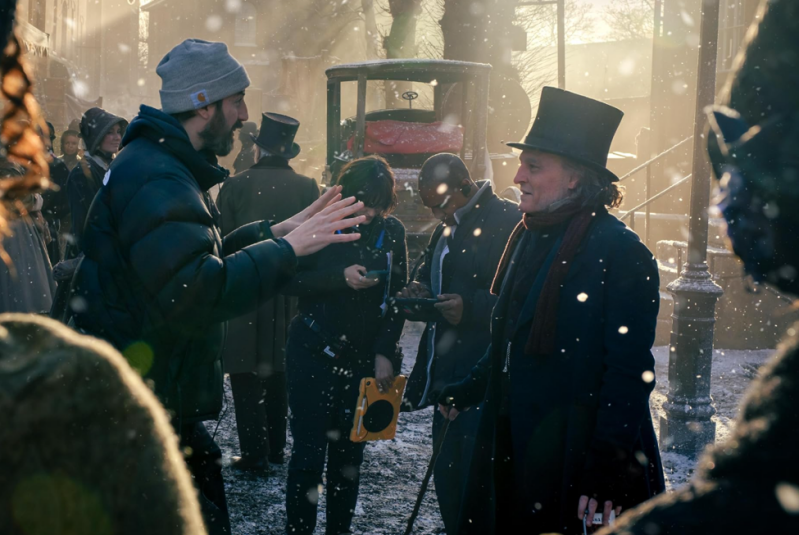
I can understand why some critics wanted a more radical reinterpretation, but I don't believe every new version of A Christmas Carol needs to reinvent Dickens. Sometimes the pleasure lies in seeing a familiar story told with imagination, conviction, and a fresh visual perspective. West adds touches to Scrooge's personal history without abandoning the essential message of redemption. More importantly, beneath the frightening apparitions and macabre imagery, the film retains the compassion that has made the original story endure for more than 180 years.
For someone who has enjoyed A Christmas Carol in its many incarnations, Ebenezer is a welcome addition to the holiday tradition. It may not replace Alastair Sim or George C. Scott in my affections, but Johnny Depp brings his own wonderfully eccentric interpretation to one of literature's most unforgettable characters. The film frightened me, amused me, brought a tear to my eye at one point, and ultimately reminded me why I return to Dickens every Christmas. I fully expect to add this version to my annual December viewing. Bah, humbug? Not from me.
COMING WEDNESDAY TO THE HOLLYWOODLAND REVUE! Long before Hollywood became the movie capital of the world, Danish immigrant Ivar Alexander Weid helped shape the growing community. His name lives on in one of Hollywood's best-known streets, but how much do we really know about the man behind it?
Johnny Depp brings his trademark eccentricity to Ebenezer Scrooge in Ebenezer (2026), a chilling new interpretation of Dickens's beloved A Christmas Carol. Have you seen it, and how does it compare with your favorite versions? Please share your thoughts in the comments, rate my film review, and share it with fellow movie lovers and Dickens enthusiasts. Your participation helps keep the conversation about cinema alive!
Add comment
Comments