

It could hardly have been a more appropriate time and place for the screening of Rudolph Valentino's last film. On August 23, 2026—precisely one hundred years after his death—the Los Angeles premiere of the Cohen Film Collection's careful restoration of The Son of the Sheik took place at the Masonic Lodge at Hollywood Forever. Earlier that same afternoon, fans had assembled in the Cathedral Mausoleum for the 99th Annual Rudolph Valentino Memorial Service. A few hours later, Valentino appeared once more on screen: young, athletic, and still able to command a room, as he had a century after his death.
Reviewed by Allan R. Ellenberger
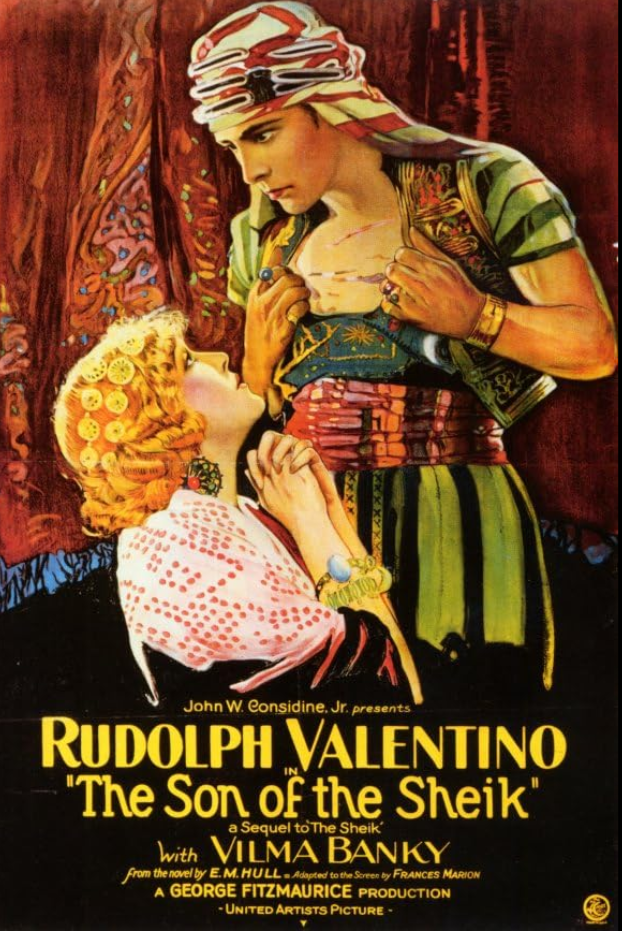
The Son of the Sheik, which was released in 1926, was the follow-up to The Sheik of 1921, the film that had turned Valentino into one of the world's first true screen idols. Producer Joseph M. Schenck knew precisely what the audiences wanted, and so Valentino went back to the desert for a movie that was intended to take advantage of the romantic image which had made him famous.
The film was directed by George Fitzmaurice, and this gave Valentino the rare chance to take on two parts: that of the older Sheik from the original story and that of his impetuous son, Ahmed. The screenplay had been adapted from E. M. Hull’s novel by Frances Marion and Fred de Greuze, and the cinematography was done by Hollywood Forever resident, George Barnes, with the production design being linked to William Cameron Menzies.
The main female character in Valentino's film was Vilma Bánky, who had been his co-star in The Eagle. She portrays Yasmin, a dancer and the daughter of a member of a gang of thieves. Ahmed falls in love with her but soon suspects her and decides on revenge when her father's gang kidnaps him and comes to the belief that Yasmin has betrayed him.
George Fawcett, Montagu Love, Karl Dane, and Bull Montana are also in the film. Meanwhile, Agnes Ayres, who was Valentino's leading lady in the original version of The Sheik, makes a brief appearance as Diana, who is now the wife of the older Sheik and the mother of Ahmed.
The film is a straightforward example of a silent-period melodrama, featuring desert chases, kidnappings, sword fights, mistaken intentions, disguises, revenge and a rescue. Certain elements of the film have not aged well, especially its romanticized fantasy of Arab culture and the more sinister sexual relationship between Ahmed and Yasmin. A contemporary audience cannot just disregard these aspects. Nevertheless, when seen as a product of 1920s filmmaking, The Son of the Sheik is surprisingly vivid and enjoyable.
Fitzmaurice maintains a fast pace in the action. Horses race across the desert, the villains appear out of nowhere, swords flash and the characters are frequently captured and then rescued. Most of the filming of the scenes set in locations was done around Yuma, Arizona, in the harsh desert heat. Since Valentino was an experienced horseman, he looked after a large part of his own riding and physical stunts, which gives the film a kind of energy that is still wonderfully visible on screen.
The most striking aspect, nevertheless, is Valentino himself. The sophistication of his double role goes beyond what his popular image indicates. In the part of Ahmed, he is impulsive, romantic, and physically expressive, while in that of the older Sheik—with the help of make-up and a beard—he becomes calmer, amused and authoritative. Although the scenes in which the father and son appear together are still technically impressive, the true enjoyment comes from seeing Valentino show the differences between the two characters through his posture, expression and temperament.


Even more humor is present than one might imagine. Valentino appears to be at ease with his well-established image as the 'Great Lover' and so makes use of it. The effect is that his performance comes across as relaxed and self-conscious, rather than stiff and excessively dramatic, as is sometimes unfairly linked to silent films.
Vilma Bánky has just as great a contribution to the film's success; her portrayal of Yasmin is luminous and expressive, and the chemistry she had previously shown with Valentino in The Eagle transfers smoothly into this film. The way they act together serves to remind us once again of the reason why both of them were such effective silent film performers—emotions are clearly evident without the need for exaggerated gestures.
The actual revelation is the restoration carried out by the Cohen Film Collection. It has been made from the nitrate copies that the Library of Congress still possesses, and as a result it has restored a great deal of visual detail to the film. The features of the faces are now clearer, the textures of the costumes and the sets come through, the desert scenery has more depth, and George Barnes' photography can now be enjoyed without the haze and damage which had affected so many of the earlier versions.
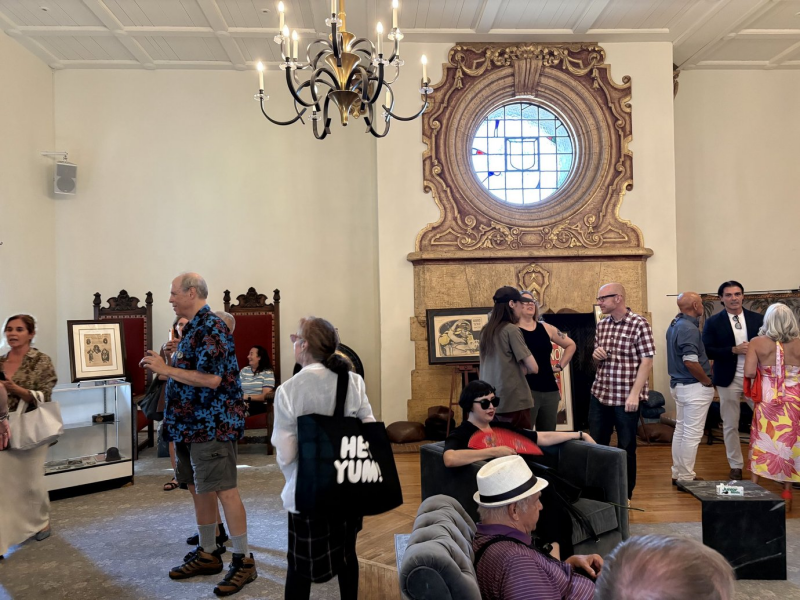
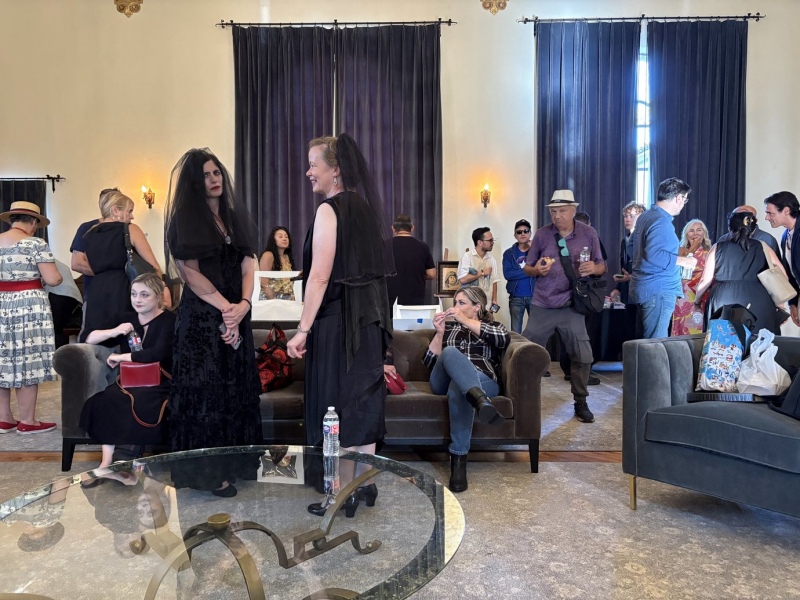
An audience gathers outside the Masonic Lodge at Hollywood Forever, awaiting the Los Angeles premiere of the restored The Son of the Sheik.
For someone who is used to looking at the film The Son of the Sheik in poor-quality public-domain editions, the difference is obvious. This version does not now appear as a remote relic from a damaged past; instead, it looks like a well photographed Hollywood production.
The restoration includes an orchestral score recorded by Carl Davis, who was one of the great modern composers to have worked on silent films. Davis realized that music for silent cinema should do more than simply make up for the lack of dialogue; his score imparts a sense of momentum, romance, and scale, and it smoothly shifts between action, comedy and emotion without overpowering the action on screen.

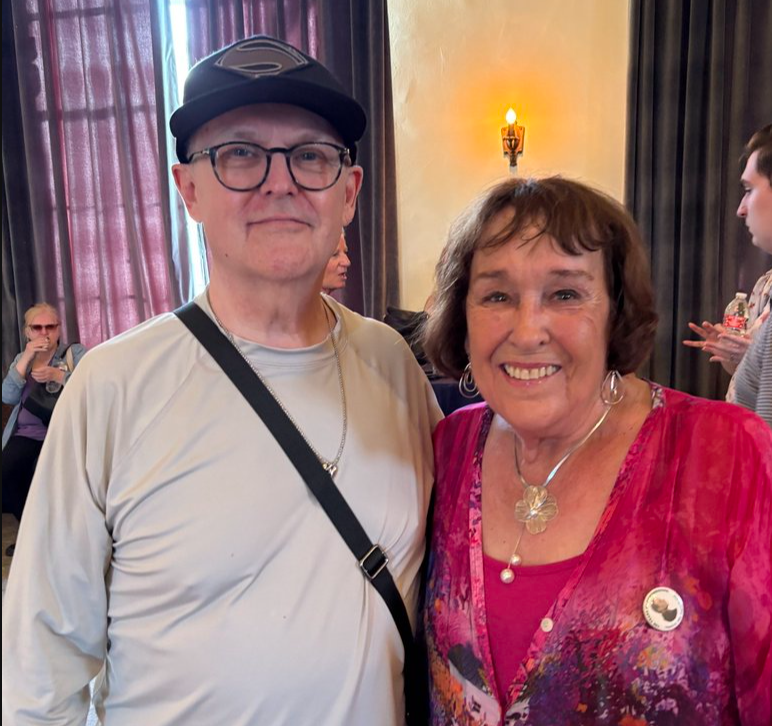
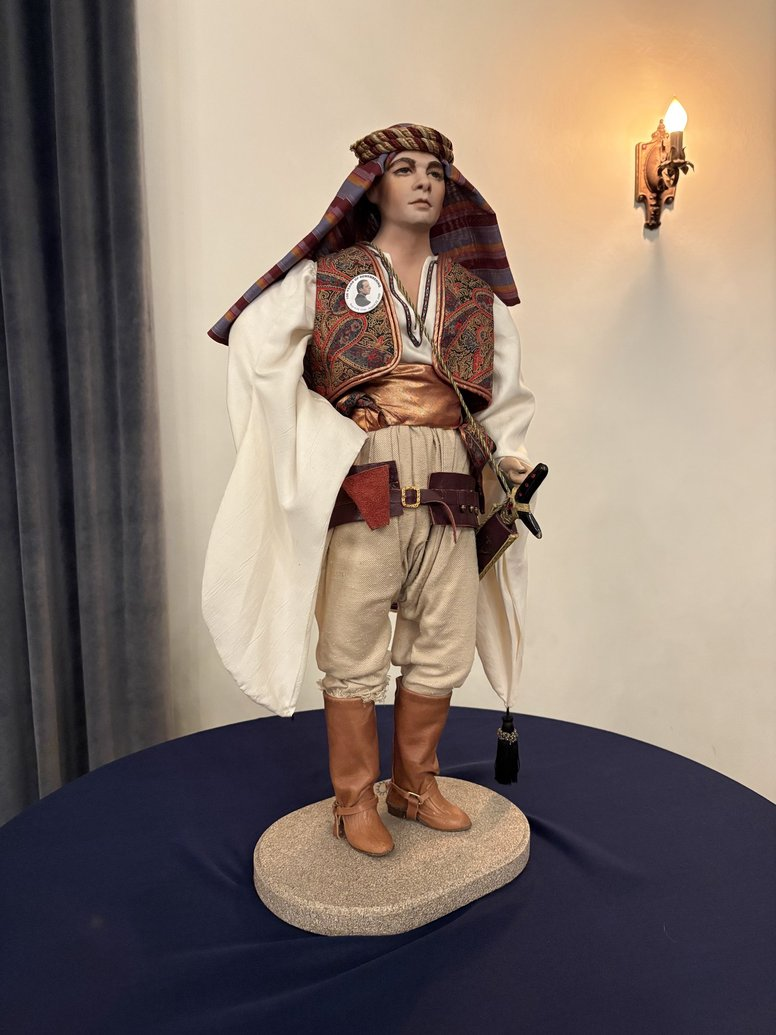
The Son of the Sheik memorabilia from the collection of Tracy Ryan Terhune. The Hollywoodland Revue’s Allan Ellenberger poses with Rudolph Valentino’s great-niece, Sylvia Valentino Huber.
Since it was first released, The Son of the Sheik has generally received favorable critical attention. At the time, reviewers acknowledged it as fast-moving popular entertainment, and nowadays many critics have highlighted it as one of Valentino's best films and performances. The film's reputation has increased as historians have begun to evaluate Valentino more in terms of his acting rather than merely as a cultural phenomenon.
In 2003 The Son of the Sheik was chosen by the Library of Congress for inclusion in the National Film Registry, it being considered important from the points of cultural, historical and aesthetic value. Of course, the film's history cannot be divorced from the tragedy that occurred after it was made. The Son of the Sheik had its premiere in Los Angeles at the Million Dollar Theatre in July 1926. Valentino traveled east to promote the film, fell seriously ill in New York and had emergency surgery. He died on August 23, 1926, at the age of thirty-one.
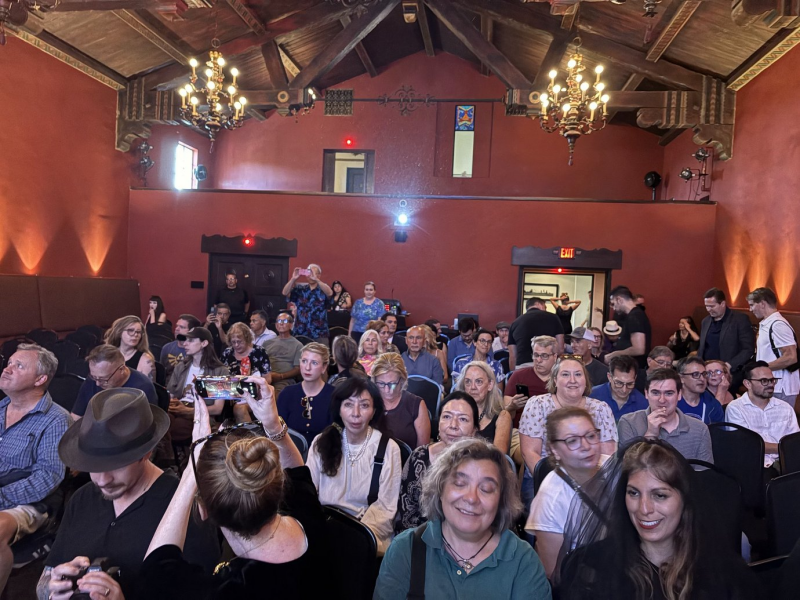
The audience waits patiently at The Masonic Lodge for the Los Angeles premiere of the restored The Son of the Sheik.
As a result, the film marked his last appearance in a cinema setting. When the film was released nationwide, the audience was seeing a man who had suddenly become the center of one of the most remarkable episodes of public mourning in the history of the entertainment industry.
The knowledge acquired gave the screening that took place at Hollywood Forever on August 23, 2026, an emotional quality which no ordinary revival could have. Valentino's crypt is located just a short walk from the Masonic Lodge; during the morning of that day people had assembled to remember the man who died a century before. That evening they saw the movie star who had never grown old.
The fact that the film has been restored shows that Valentino does not need the mythology surrounding his death to remain appealing; he is funny, energetic, romantic, and completely at ease in front of the camera. Bánky looks radiant, Fitzmaurice keeps the plot progressing, and the restoration by the Cohen Film Collection once again brings out the film's craftsmanship.
For over an hour it appeared that the gap between 1926 and 2026 was amazingly narrow. Rudolph Valentino was no longer just the famous figure lying in the mausoleum; he had once again become what had originally made his name—a movie star.
Check in tomorrow at The Hollywoodland Revue when Mary Pickford’s maid revolts: It’s a strange and vivid little piece of early Hollywood history involving Mary Pickford, an angry maid, a hatpin, a confrontation on a Hollywood lawn, and a trip to police court.
If you enjoyed my review of the restored The Son of the Sheik, please take a moment to comment, rate the post, and share it with others who appreciate Rudolph Valentino, silent film, and classic Hollywood. Your support helps keep these restored films—and the history behind them—in front of new audiences.
Add comment
Comments