

Bob Mackie, the famous costume designer known for his use of feathers, beads, rhinestones and bold illusion gowns, which played a major role in shaping American show business over more than fifty years, died on September 14, 2026, in Palm Springs, California; he was 87 years old. The news of his death was made public through his official social media account, the account stating that Mackie had lived his life in pursuit of the dream he had had since childhood to become a fashion and costume designer. At this time, no cause of death has been given and no funeral arrangements have been announced.
By Allan R. Ellenberger

Robert Gordon Mackie was born on March 24, 1939, in Monterey Park, California; his parents separated when he was a child, after which he spent a great deal of his childhood with his grandparents in Rosemead. Being quiet and solitary, he continually drew and found escape in the movies. On weekends his mother took him to see musicals, and the Technicolor fantasies of Betty Grable, Carmen Miranda, and the major MGM films formed his introduction to the idea of glamour. He later recalled seeing the film An American in Paris and coming to the conclusion that costumes could form an essential element of storytelling. He went to Pasadena City College and obtained a scholarship to the Chouinard Art Institute, which later merged into CalArts.
Mackie did not enter Hollywood as a famous designer but rather as a sketch artist. In this rather unnoticeable position, he worked alongside some of the most outstanding costume designers of the studio period. From 1961 on, he provided sketches for Edith Head, Jean Louis and the others.
A notable early assignment of his was drawing the sketch of Jean Louis's design for the sheer, crystal-studded dress that Marilyn Monroe wore when she sang "Happy Birthday" to President John F. Kennedy at Madison Square Garden in 1962. Although he did not design the dress, he is frequently given credit for it; what he actually did was produce the sketch which turned Jean Louis's concept into its final visual appearance.
It was television that enabled Mackie to discover his true vocation. In 1966 Mitzi Gaynor engaged him to design costumes for her Las Vegas performance and for her television special appearances. The way in which Gaynor mixed dancing, comedy, and a glamorous showmanship was exactly what Mackie wanted. Carol Burnett and her husband and producer Joe Hamilton watched Gaynor's show and then employed Mackie to work on a new CBS variety programme. When The Carol Burnett Show first aired in 1967, Mackie took on the responsibility of designing the clothing not only for Burnett but for almost everybody who appeared on the show. He stayed with the programme for all of its 11 seasons.
The amount of work was incredible. Burnett later calculated that Mackie had produced about 17,000 costumes over the show's duration. But what set him apart was not just the number of costumes or their elegance. He had a good understanding of comedy; his clothing could deliver a punchline even before the actor spoke. The best-known instance was the 1976 parody of Gone with the Wind called "Went with the Wind!" In this sketch Burnett descended the stairs as Scarlett O’Hara, wearing a huge green velvet curtain—with the curtain rod still running over her shoulders. The costume became one of the most recognizable comedy images on television and was eventually included in the Smithsonian.
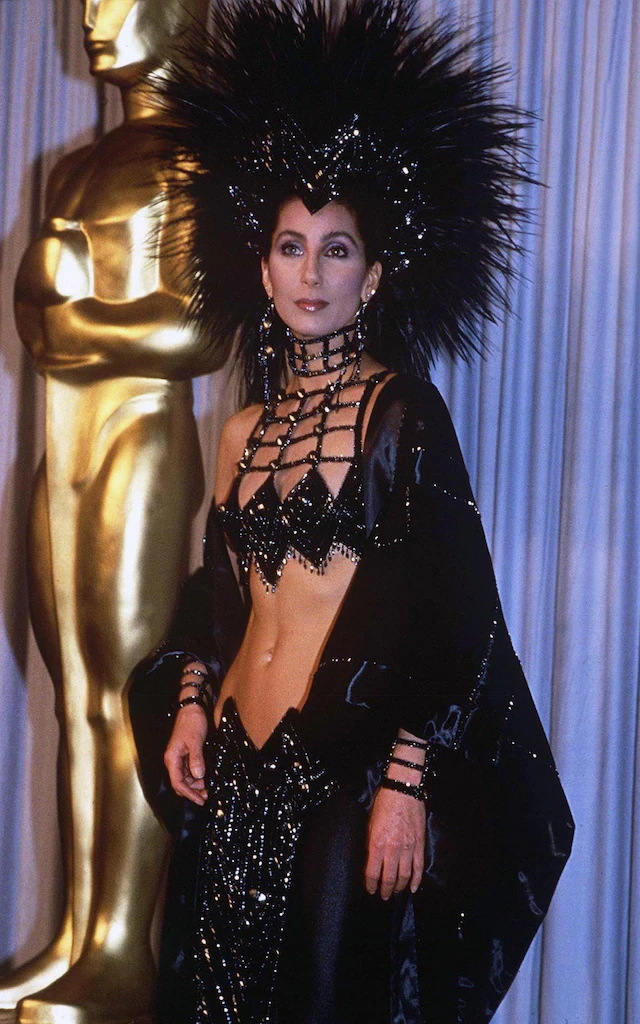


Meanwhile, Mackie developed a completely different visual style for Cher. Their partnership started while they were on The Sonny & Cher Comedy Hour, since Cher's long straight hair, slim figure, and cool, slightly exotic appearance had already set her apart from the usual kind of television glamour. Mackie then gave her a look which television had seldom seen before: feathers, exposed midriffs, jeweled headdresses, sheer fabrics and beadwork placed in a strategic manner so as to appear almost painted on to the body. The collaboration lasted for many decades and included television appearances, concerts, tours in Las Vegas and award shows. The huge, feathered Mohawk headdress and the revealing midriff outfit that Cher wore at the 1986 Academy Awards became one of the most well-known looks of all time on Oscar night.
Mackie's client list is essentially a record of twentieth-century entertainment. He has dressed a number of celebrities including Judy Garland, Diana Ross and the Supremes, Tina Turner, Liza Minnelli, Barbra Streisand, Bette Midler, Elton John, Ann-Margret, Dolly Parton, Whitney Houston and many other people. He has also been discovered by later generations, since Zendaya, Miley Cyrus, Taylor Swift and Sabrina Carpenter all wore Mackie's vintage designs, which shows that his work never really belonged to one particular decade.
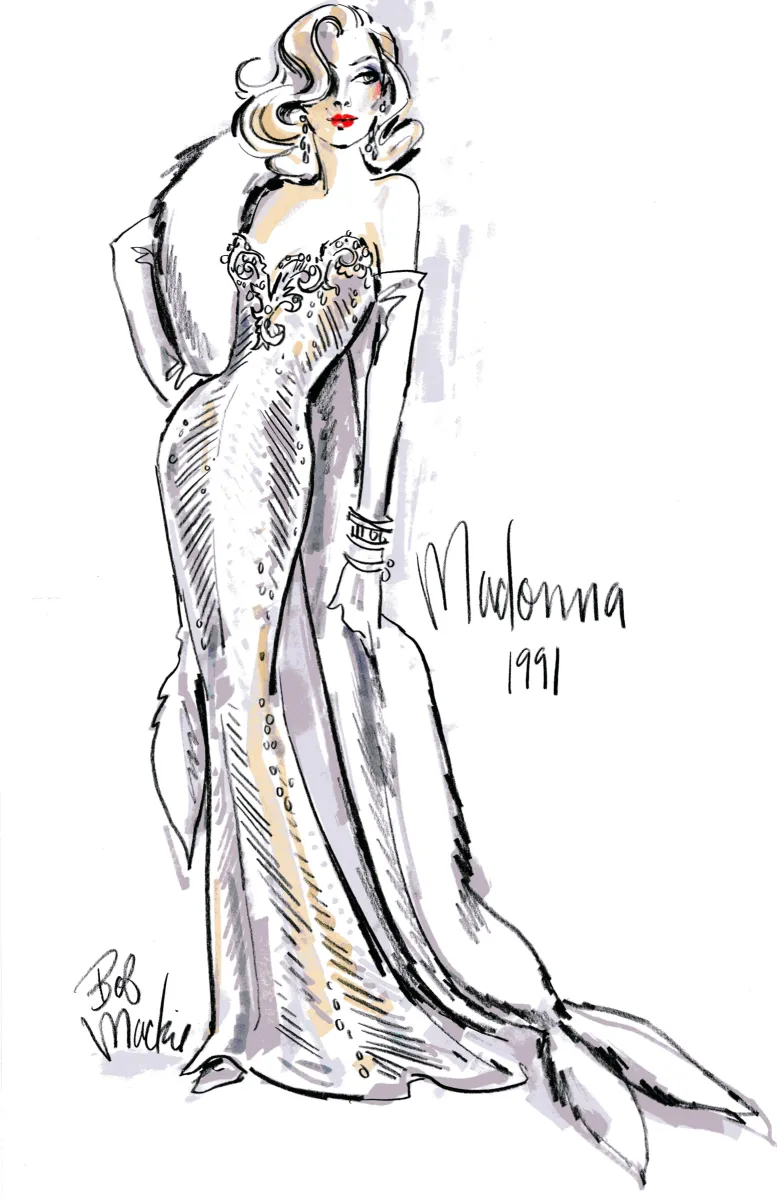


Although film was not quite as important to Mackie as television and live performance, his work in the cinema was highly respected. He was nominated three times by the Academy for costume design, for Funny Lady in 1975, A Star Is Born in 1976 and Pennies from Heaven in 1981. Among his other credits were Lady Sings the Blues (1972), …All the Marbles (1981) and Max Dugan Returns (1983). Mackie was officially nominated by the Academy for Best Costume Design for Pennies from Heaven at the 1982 ceremony.
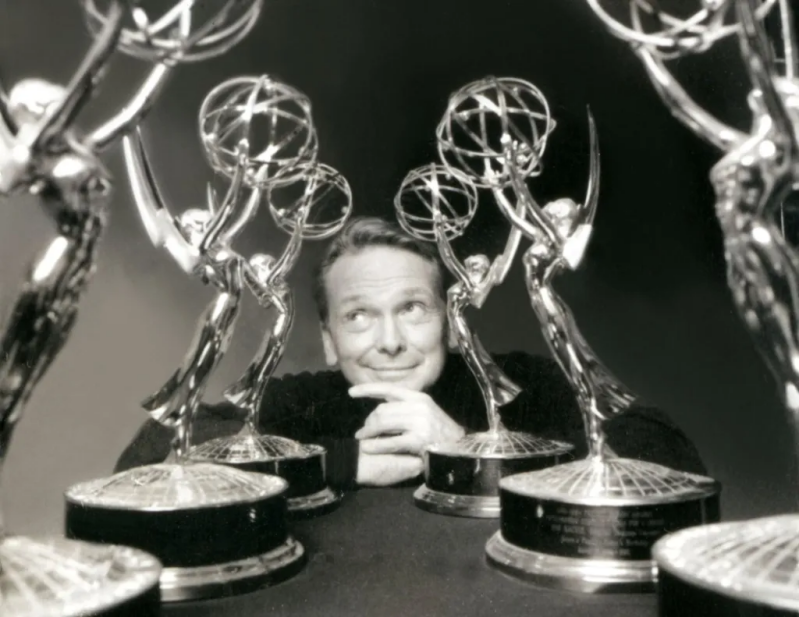
He received a large number of awards: according to the Television Academy records, he has 32 Emmy nominations and nine wins, plus his induction into the Television Academy Hall of Fame in 2002. In 2019 he won the Tony Award, the Drama Desk Award and the Outer Critics Circle Award for the costumes he designed for the Broadway musical The Cher Show. This was a very appropriate award since, decades after having helped create Cher's visual image, Mackie was now being recognised for recreating that history on stage.
Despite the glamour that had been linked to his name—since he had been referred to as the “Sultan of Sequins”, the “Rajah of Rhinestones”, and the “Guru of Glitter”—Mackie always saw himself primarily as a costume designer. He wasn't interested in dressing a woman just to make her look fashionable; instead, he wanted to reveal a character, enhance the performance, and ensure that the entrance was unforgettable. Diane von Furstenberg once described him straightforwardly as the typical show-business designer who knew how to make an entrance.
Under the flashy exterior there was a more private individual. He married the singer and actress LuLu Porter in 1960, and although they divorced in 1963, they stayed on good terms. Their son, Robert Gordon "Robin" Mackie Jr., went into the business of makeup and died in 1993 at the age of 33 due to an AIDS-related illness. Mackie seldom spoke about the loss in public and later stated that losing a child was a matter one kept to oneself rather than discussing it casually. In later years Mackie and Porter found out that they had a granddaughter through Robin and then formed a close relationship with her and their great-grandchildren.
From the early 1960s Mackie had as his long-time partner the other costume designer, Ray Aghayan, with the two working professionally together and staying companions until Aghayan died in 2011. Mackie usually kept his private life separate from the dazzling public world which he had helped to create, a point that Matthew Miele looked at more openly in his 2024 documentary Bob Mackie: Naked Illusion. This film gathered together Cher, Carol Burnett, RuPaul, Pink and others in order to look at a career that had lasted for more than six decades.
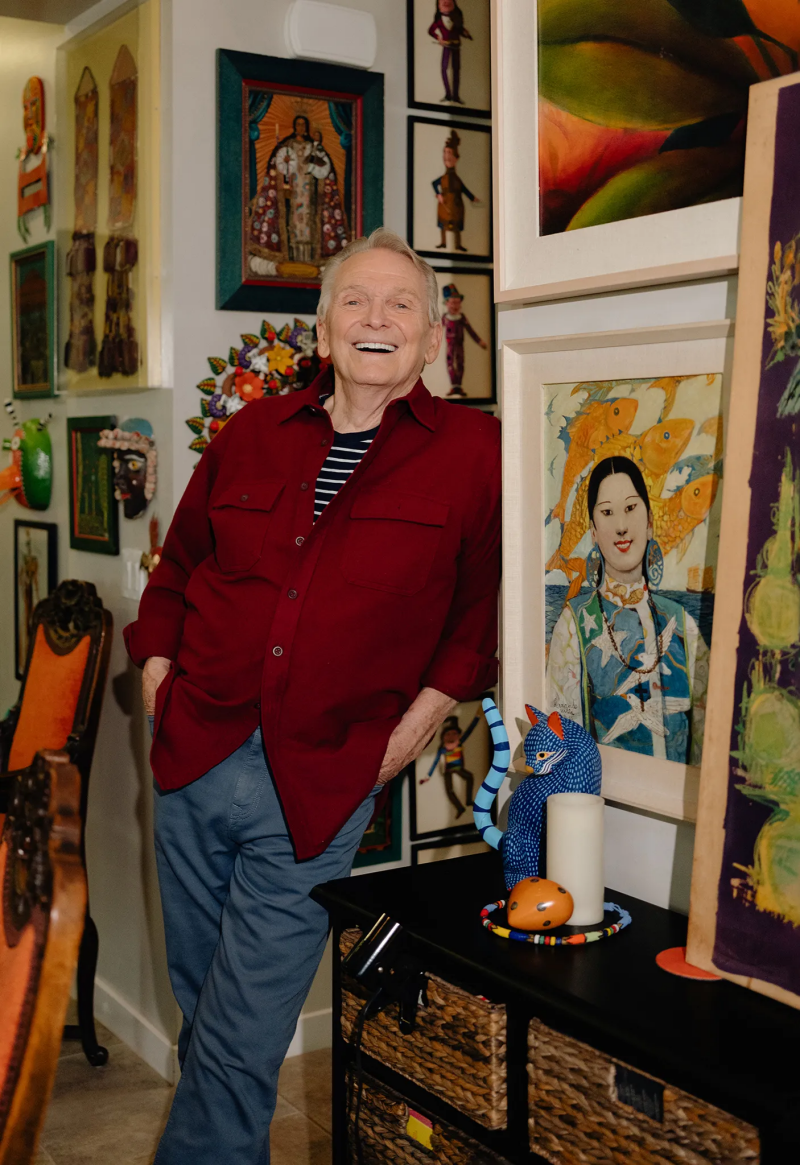
Mackie was still very active right up to the end. In early 2026 the Palm Springs Art Museum gave him an award at its Art Party gala, the award being presented by Carol Burnett and Stephanie J. Block, who stars in The Cher Show. Given the nature of a designer whose career had long been situated between museum-quality craftsmanship and pure show-business pleasure, it was a suitable event for him.
The Bob Mackie costumes were not restrained, but there was a great deal of discipline underlying all the sparkles. He knew nothing about bodies, movement, television lighting, comedy, and the fundamental truth that a performer sometimes has to become larger than life before walking onto the stage.
His clothing did precisely that. Since his career had been based on entrances, Bob Mackie has already left behind something more lasting than any curtain call—a visual vocabulary of glamour which immediately conveys Hollywood.
If you appreciated my obituary of legendary costume designer Bob Mackie, please take a moment to comment, rate the post, and share it with others who appreciate classic Hollywood, television history, costume design, and the artists who helped create show business glamour. Your support helps keep these stories circulating and introduces The Hollywoodland Revue to new readers.
Add comment
Comments