

R.J. Mitte was only 14 when he was cast as Walter White Jr. on Breaking Bad. The role that made him famous in the long term was far more significant than simply a successful TV job. Mitte (who had cerebral palsy) brought a realness to the part that was still pretty rare on American TV at the time. Over the next 20 years he became an actor, a producer, a model and a very vocal advocate for people with disabilities, using his platform to challenge the barriers that Hollywood often puts in the way of disabled performers. He died on October 12th, 2026, in Brownsville, Texas. He was 34.
By Allan R. Ellenberger
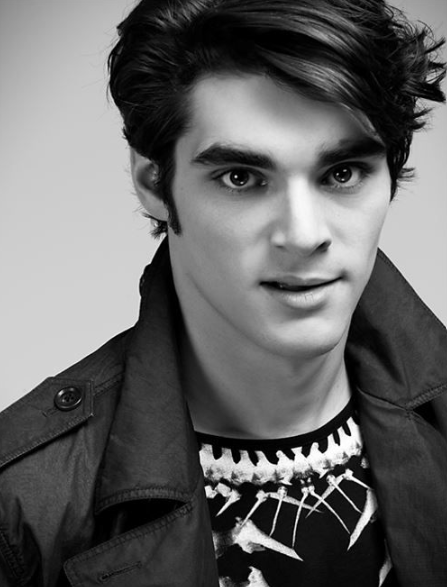
Roy Frank "R.J." Mitte III was born August 21, 1992, in Jackson, MS. He suffered oxygen deprivation at birth which resulted in brain damage and was adopted as an infant. He was diagnosed with cerebral palsy at the age of three. As a child he wore leg braces and used crutches and spent many years in physical and occupational therapy. Through exercise and sheer determination his mobility improved to the point that by his teens he no longer required any walking aids.
Mitte's childhood was one of early maturity. His parents split up when he was quite young and he was brought up by his mother. When she was seriously injured in a car accident and ended up paralysed for a time, Mitte took on a huge amount of responsibility at home. He was looking after his younger sister Lacianne as well as taking on a lot of the practical and financial responsibilities of the household. He later recalled that by his early teens he was effectively the main pillar of the family, who had relocated to Los Angeles in 2006 as Lacianne started to go after opportunities in entertainment.
Mitte got into acting quite quickly, initially as a background player and then in various small TV roles. His break came when he got an audition for Breaking Bad (the AMC drama created by Vince Gilligan).
Gilligan wrote Walter White Jr. as a teenager with cerebral palsy and Mitte was an absolutely perfect choice. He started filming the pilot in 2007 and was in the pilot with Bryan Cranston and Anna Gunn as the White kids. The show premiered in 2008 and very few people at the time could have imagined it would go on to become one of the most lauded dramas on television.
Mitte grew up on the series. Walter Jr. (who later became Flynn) was never really defined by his disability. He was a stubborn lad, a funny lad, fiercely loyal to his family, regularly exasperated with his parents, very protective of them and increasingly horrified by the truth about his father. As Walter White's secret life as a meth cook progressively destroyed the family around him, Walter Jr.'s sense of disillusionment became one of the most painful indicators of the damage his father had done.
The role also gave him something that he knew was very rare indeed: visibility. He was very much in favor of disabled actors playing fully realized characters rather than being used as a symbol or as an inspirational device. Following the end of Breaking Bad in 2013 he became increasingly involved in disability advocacy, working with groups such as United Cerebral Palsy and with SAG-AFTRA on their initiatives to create more opportunities for performers with disabilities.
In 2013 he was awarded the SAG-AFTRA Harold Russell Award for his work in disability awareness. He became a very regular speaker on the issues of bullying, inclusion, employment and representation, drawing on his own experiences as a child who had been bullied due to his disability. He often spoke about how that had affected his confidence and his sense of what he could achieve.

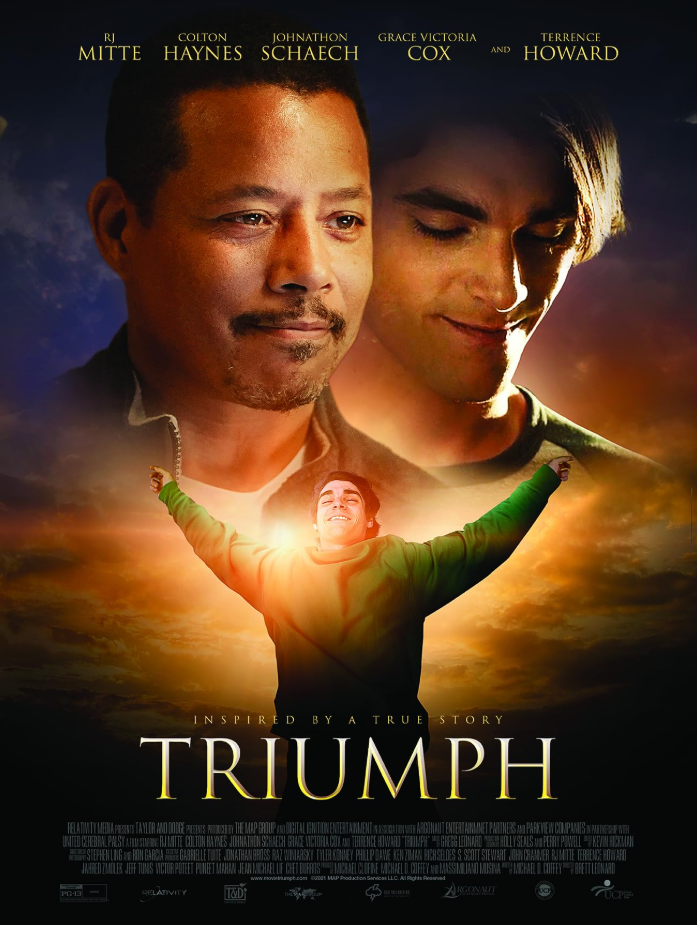
He went on to do a number of television roles after Breaking Bad (Campbell Bingman in Switched at Birth, Now Apocalypse, The Guardians of Justice) and a range of films (Who's Driving Doug, The Recall, Standing Up for Sunny, The Oak Room, Triumph, The Unseen). A number of those films and television roles were opportunities to play a character with a disability as part of their life, rather than having that be the sole defining aspect of the character.
Mitte was also a model and a presenter and did the Channel 4 coverage of the 2016 Rio Paralympics for Britain. He went on to become involved with the Mitte Foundation and with a number of cultural projects in Brownsville, Texas. His work in later years was very much about combining entertainment with activism and philanthropy.
His personal life was fairly private, though he was always very vocal about his love for his mother and sister. He was engaged to his long-term girlfriend Kennedy Suarez at the time of his death. He had stayed in touch with his Breaking Bad colleagues and was very fond of the show which had obviously changed his life.
Mitte died in Brownsville on October 12, 2026. He was pronounced dead at about 1.30pm and an autopsy was ordered. His representatives subsequently confirmed the reports that he had taken his own life. The initial reports came out prior to the release of the final official medical findings.

The news of his death naturally prompted a wave of heartfelt tributes from the Breaking Bad family. Bryan Cranston (who had watched Mitte go from teenager to man over the course of the filming) spoke of him with genuine affection and sadness. Aaron Paul was clearly heartbroken. Dean Norris remembered him as a very kind and good young man. All of their comments were testimony to the genuine relationships that had endured long after the series had finished.
For a lot of people Mitte will always be Walter White Jr. at the breakfast table, arguing with his parents, defending his dad and ultimately being repulsed by what Walter had become. His impact went way beyond that one character though. At a time when disabled performers were still very much the exception rather than the rule in terms of getting mainstream roles, Mitte showed that you could be authentic without being restricted to playing a disabled character.
R. J. Mitte died far too young, but he had already left a distinctive mark on television and on the broader conversation about disability in entertainment. He entered Hollywood as a teenager with cerebral palsy and became part of one of television’s landmark dramas. More importantly, he used the attention that followed to argue that disabled performers deserved the same opportunities, complexity, and visibility as anyone else. That advocacy may prove to be as lasting a part of his legacy as the role that first made audiences know his name. Brownsville planned a public celebration of his life.
If you or someone you know is struggling with suicidal thoughts, help is available. In the United States and Canada, call or text 988 to reach the Suicide & Crisis Lifeline, available 24 hours a day. If there is immediate danger, call 911 or go to the nearest emergency room.
If you are concerned about someone, take what they say seriously, stay with them when possible, listen without judgment, and help connect them with professional support. Asking directly whether someone is thinking about suicide does not plant the idea; it can open the door to an honest conversation. You can also help by reducing access to firearms, medications, or other potentially dangerous means while assistance is being arranged.
No one should have to face a crisis alone. Reaching out to a trusted friend, family member, doctor, therapist, clergy member, or crisis counselor can be an important first step.
Add comment
Comments