

Warner Bros. has spent nearly a century manufacturing ghosts. They have drifted through Gothic mansions, crept along shadowed corridors, rattled doors, whispered from darkened rooms, and terrified generations of moviegoers. Most disappeared the moment a director called “Cut.” But according to a persistent strain of studio folklore, not every ghost on the Warner Bros. lot was created for the cameras. Some, employees have quietly suggested over the years, may never have left.
By Allan R. Ellenberger

One of the most intriguing stories centers on Building 136, the longtime home of Chuck Lorre Productions on the Warner Bros. lot in Burbank. From those offices have come some of television’s most successful comedies, including Two and a Half Men, The Big Bang Theory, Mom, and Young Sheldon. By day, it is a place associated with writers’ rooms, production meetings, phone calls, scripts, and laughter. After dark, however, the building has acquired another reputation. According to stories passed among Warner Bros. employees, something may be haunting the second floor.
No one has produced a photograph of an apparition. There is no recording of a voice, no documented death tied directly to the offices, and no identified spirit whose biography can be traced through studio records. The story seems to have traveled the old-fashioned way: one employee heard it from another, who heard it from someone who had worked late upstairs, who remembered somebody else refusing to remain there alone. That should make the story easier to dismiss. Strangely, it does the opposite.
That is how genuine studio folklore often survives. Details fade, names disappear, and the original incident becomes impossible to locate. What remains is the warning. Someone heard footsteps. Someone sensed another person in an empty hallway. Someone knew better than to stay upstairs by themselves. Eventually, nobody remembers precisely where the story began, yet almost everyone has heard some version of it. In the case of Building 136, the message has remained remarkably simple: the second floor is haunted.

Above is Building 136 on the Warner Bros. lot, longtime headquarters of Chuck Lorre Productions.
The setting does little to quiet the imagination. The area surrounding Building 136 has changed repeatedly over the decades. Portions of Western Street and Mexican Street once occupied nearby sections of the backlot before later reconstruction altered or erased them. Long before Chuck Lorre Productions arrived, generations of actors, carpenters, painters, electricians, writers, guards, and production crews moved through this part of the studio. The sitcom offices occupy only the latest chapter in a landscape layered with nearly a century of human activity. And Building 136 is hardly alone.
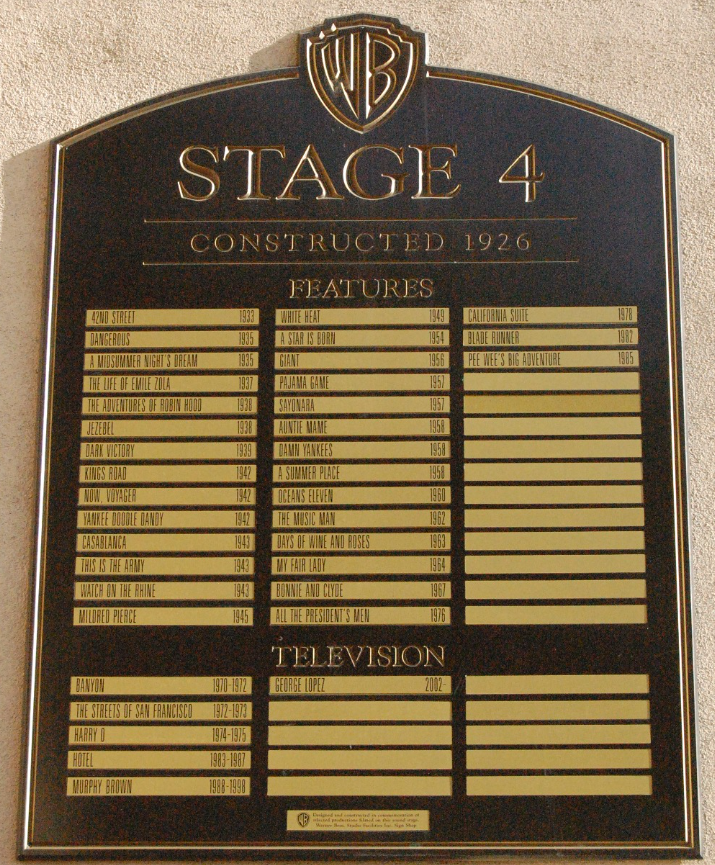
Stage 4 has perhaps the strongest supernatural reputation on the Warner Bros. lot. Its stories became more widely known during production of James Wan’s The Conjuring 2. During a 2015 set visit, unit publicist James Ferrera told journalists that Warner Bros. security guard and paranormal enthusiast Johnny Matook considered Stage 4 one of the studio's most haunted locations. Matook believed that if spirits were present, they might not have been particularly malevolent. He theorized that former Warner employees were continuing the practical jokes they enjoyed while alive.
The incidents associated with Stage 4 are almost disappointingly ordinary, which may be why they linger in the mind. Employees have reported hearing hammering and drilling when no work was supposed to be taking place. Others claimed to hear voices when nobody could be found, or to sense workers moving nearby when they knew the area was empty.
Maintenance crews working nights were reportedly reluctant to climb onto the roof unless someone remained inside, partly because of stories that unseen pranksters had a habit of locking people out.
There are perfectly reasonable explanations for strange sounds on a large studio lot. Pipes knock. Ventilation systems shudder. Sound travels through cavernous stages in ways that can make a noise from fifty feet away seem as though it came from directly behind you. Still, one can imagine what it must be like to stand inside an empty soundstage after midnight, hear the unmistakable rhythm of a hammer somewhere beyond the darkness, and know that no construction crew is supposed to be there.
Then there was the incident involving filmmaker Leigh Whannell, James Wan’s collaborator on the Insidious films. During a visit to the Conjuring 2 set, photographs from an earlier Insidious production reportedly appeared on Whannell’s iPad even though they had not previously been stored there. According to Ferrera, attempts to remove them produced even stranger results. Connected to a computer, the photographs disappeared during the transfer process, only to remain on the iPad afterward. Perhaps there was an ordinary technological explanation. But on a soundstage already whispered to be haunted, during production of a film about supernatural activity, the timing was unsettling enough to ensure that the story survived.
Warner Bros. eventually helped preserve Stage 4’s reputation itself. The home-video release of The Conjuring 2 included a feature devoted to the allegedly haunted soundstage, giving an unusually public life to what might otherwise have remained studio gossip. The legend continued years later when Jennifer Hudson visited Stage 4 with the Ghost Brothers for a 2022 Halloween segment of The Jennifer Hudson Show. In the basement, investigator Dalen Spratt used electronic equipment and a phone app to try to communicate with whatever might—or might not—have been present. It was television entertainment rather than scientific proof, but by then Stage 4’s ghosts had become part of Warner Bros. mythology.
Stage 24 has its own stories. Best known today as the stage associated with Friends, it had been used for decades before that sitcom arrived during its second season. Over the years, stories circulated about unexplained nighttime activity and crew members who supposedly knew of certain “occurrences.”

Dalen Spratt, Juwan Mass and Marcus Harvey from “Ghost Brothers” talk with Jennifer Hudson about being television's first and only Black paranormal investigators.
Unfortunately, no reliable account establishes exactly what happened, who witnessed it, or when anyone first decided the events were supernatural. As with Building 136, everyone seems to know the story eventually, while no one can quite remember who first whispered it.
Building 131 has entered the discussion, too. Former television production worker Nicole Martin spoke publicly about alleged experiences there on the Hollyweird Paranormal podcast, although the material detailing those incidents later became unavailable. Without the original account, it would be easy—and irresponsible—to embellish what happened. Yet another Warner Bros. building independently acquired a haunted reputation, adding another thread to the larger tapestry.
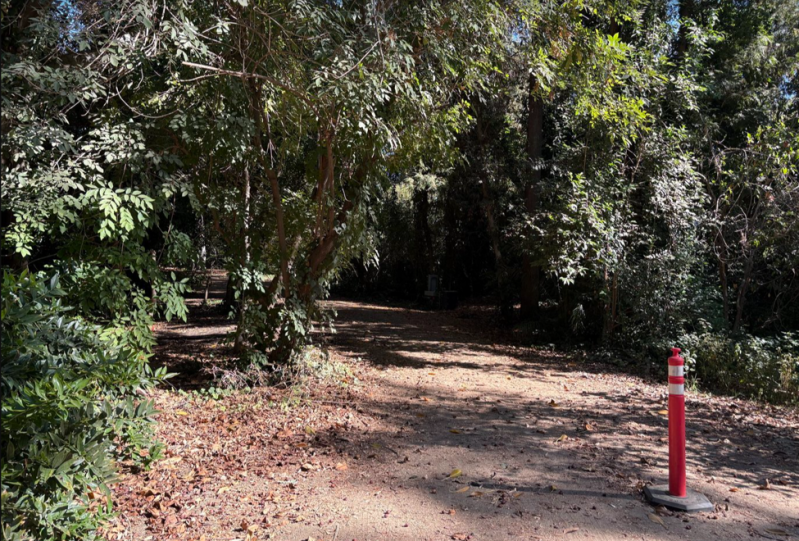
Above is the Warner Bros. Jungle Set, where studio lore claims the ghost of actress Bette Davis still lingers.
Even Bette Davis has been drawn into the studio’s supernatural lore. During Hudson’s Halloween visit, the Jungle Set was presented as a location supposedly haunted by the legendary actress. Hudson and the Ghost Brothers went looking for Davis before someone concealed in the foliage suddenly leaped out, sending everyone running. That portion was clearly played for laughs, but its humor depended upon the audience already being willing to entertain the possibility that a Hollywood legend might still be lingering somewhere on the lot.
There are, of course, very earthly reasons the Warner Bros. studio can feel unnerving after dark. The lot began as First National Pictures’ studio in 1926 and has been continuously occupied by generations of filmmaking crews ever since. At night, the illusions created for the camera become strangely hollow. Apartment buildings reveal themselves as façades. Doors open onto nothing. Streets end abruptly at blank walls. Giant soundstages that thunder with activity during the day become silent enough that a single footstep can seem impossibly loud. Ventilation systems groan, transformers hum, wood contracts, metal shifts, and distant noises echo until their origins become hard to place.

Above is Fire Chief Al Rounder of the Warner Bros.–First National Studio Fire Department, who suffered a fatal heart attack shortly after battling a devastating fire on the studio lot in December 1934.
The lot has also witnessed genuine tragedy. In January 1934, a major fire tore through portions of the Warner Bros.–First National property, destroying sets, warehouses, and shops. Studio fire chief Altie "Al" Rounder suffered a fatal heart attack while responding to the blaze. No evidence connects Rounder to any ghost story, but tragedy leaves its own imprint on a place, especially one where thousands of people have worked day and night for generations.
That larger history makes the rumors surrounding Building 136 harder to dismiss completely, even if they remain impossible to prove. Chuck Lorre has spent decades at Warner Bros., yet he has never publicly claimed he encountered a ghost there. Even his memoir Sitcom and recent interviews about his long career on the lot have, so far, produced no supernatural confession from the man whose name is on the door. Perhaps that silence should reassure us. Or perhaps the people who spend the most time in old buildings learn which noises to ignore.
The haunting of Building 136 remains what it has always been: a story passed quietly through the Warner Bros. community, supported not by evidence that would satisfy a skeptic but by the persistence of the people who continue telling it. No one has conclusively demonstrated that something walks the second floor after the offices empty. No one has conclusively demonstrated that nothing does. That uncertainty is where these stories live.
Studio lots are peculiar places after midnight. They contain bedrooms where nobody has ever slept, houses where nobody has ever lived, streets leading nowhere, and rooms created solely so imaginary lives can unfold inside them. When the lights are switched off, and the crews go home, all those carefully constructed illusions remain behind in silence. It takes little imagination to wonder whether something else might remain with them.
For a century, Warner Bros. has created ghosts for audiences worldwide. Perhaps that is all there is to the stories: creaking buildings, exhausted night crews, distorted sounds, practical jokes, and the human tendency to see something in the darkness. But if even one of those employees heard exactly what they believed they heard, the question becomes considerably more uncomfortable. And somewhere above the sitcom offices in Building 136, if the old stories are true, someone—or something—may still be walking the second floor.
My heartfelt thanks to my dear friends Michael and Allie Francis for inspiring this story and sharing such a memorable tour. I truly appreciate it!
Check in tomorrow for a chilling new post on Pickfair, the legendary Beverly Hills estate of Mary Pickford and Douglas Fairbanks. Long after Hollywood royalty called it home, stories began to circulate of strange sightings, unexplained sounds, and ghostly encounters within its walls. Were they simply old Hollywood legends—or did something remain behind at Pickfair?
If you enjoyed “Ghosts Above the Sitcoms” and the eerie stories surrounding Warner Bros., I’d love to hear what you think. Do you believe these old studio hauntings are just Hollywood folklore, or could there be something more to them? Please leave a comment below, rate the post, and share it with other readers who enjoy Hollywood history, mysteries, and ghost stories.

Add comment
Comments