

Less than a year before the Manson Family murders shocked Los Angeles on Cielo Drive, another brutal celebrity crime involving two brothers unfolded on the opposite side of the Hollywood Hills. On October 30, 1968, silent-screen idol Ramon Novarro was murdered in his Laurel Canyon home, decades after Hollywood had moved on from the era of stardom he once personified. In the 1920s, Novarro had been one of MGM’s most popular romantic leads, celebrated for his beauty, charm, and versatility in roles ranging from princes and soldiers to swashbucklers and lovers, most famously as Judah Ben-Hur. Yet in the years that followed, the violence of his death too often overshadowed the remarkable career and life that had come before it.
By Allan R. Ellenberger

This is one of the saddest parts of Ramon Novarro’s story. He was not just the victim of a violent crime. After his death, his private life was exposed in court, newspapers, and gossip columns, revealing details about his sexuality in ways that showed the biases of that time.
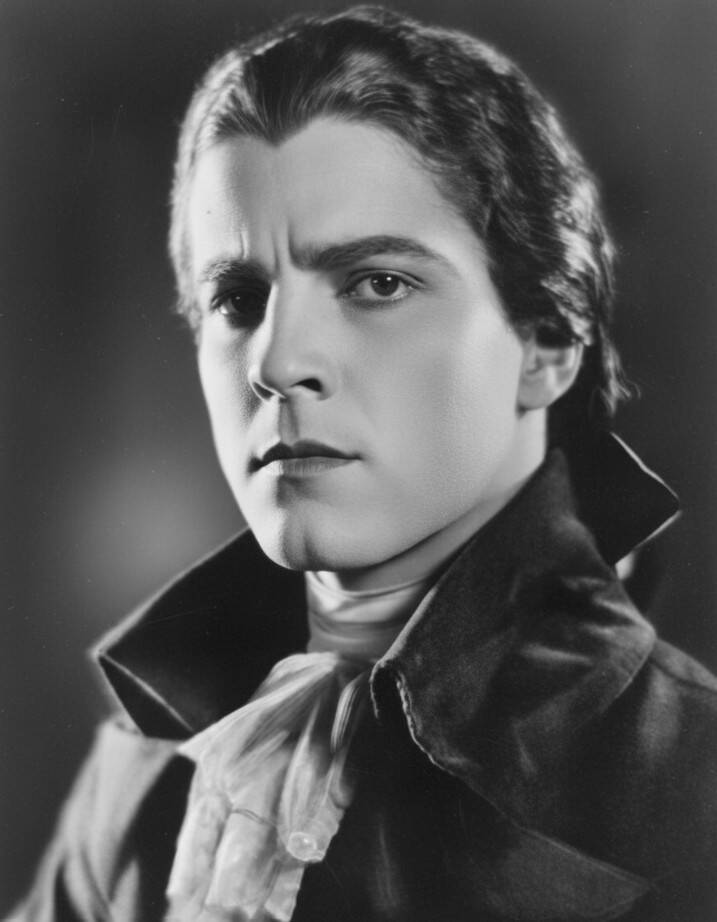
Novarro was born José Ramón Gil Samaniego on February 6, 1899, in Durango, Mexico. His family moved to Los Angeles during the Mexican Revolution. As a young man, Ramon started in the film industry with small, uncredited roles and worked as a singing waiter while trying to get noticed. Director Rex Ingram and actress Alice Terry eventually saw his potential and helped him become a leading man. He took the stage name Ramon Novarro and, by the early 1920s, was promoted as a new “Latin lover,” often compared to Rudolph Valentino.
Novarro’s big break came with Scaramouche in 1923, but MGM’s Ben-Hur: A Tale of the Christ in 1925 made him famous worldwide. His athletic and sensitive acting, along with his striking looks, put him among Hollywood’s top stars.
After Valentino died in 1926, Novarro became one of the most popular romantic leads, starring with Norma Shearer in The Student Prince in Old Heidelberg, Joan Crawford in Across to Singapore, Greta Garbo in Mata Hari, and Myrna Loy in The Barbarian. He also adapted well to sound films, even singing in Devil-May-Care.
Behind his carefully crafted MGM image, Novarro’s private life was much more complex. He was gay at a time when being open about it could end a film career, and he was also a devout Catholic who struggled with the conflict between his faith and his sexuality. People in Hollywood knew about his homosexuality, but it was mostly kept out of the press. He had relationships with men, including journalist and publicist Herbert Howe. Meanwhile, the studio continued to promote him as a desirable bachelor, suggesting that female fans still had a chance with him. The newspapers later pointed out the painful irony: the studios and press built him up as a romantic idol while hiding the truth about his personal life.
By the mid-1930s, Novarro’s time as a major MGM star had ended. His contract was not renewed in 1935, but he didn’t vanish from the scene. He continued to appear in films and later on television, with roles in The Big Steal, Heller in Pink Tights, Dr. Kildare, Bonanza, The Wild Wild West, and, just before his death, The High Chaparral. Although he was no longer a box-office draw, he stayed financially secure and recognizable, quietly living in the Hollywood Hills as one of the last silent film stars.
Novarro lived at 3110 Laurel Canyon Boulevard. On the evening of October 30, 1968, he invited two brothers, Paul Ferguson, 22, and Thomas Ferguson, 17, into his home. They had gotten his phone number from someone they both knew. Both brothers had a history of hustling and thought Novarro would be an easy target for money.
The evening started with drinking and conversation, but things turned violent when the situation got out of hand. They ransacked the house to make it look like a robbery and beat him several times. Novarro, who was 69, did not survive. He died from asphyxiation after choking on his own blood. The brothers reportedly left with only a small amount of money.

Above is the home of silent-film star Ramon Novarro at 3110 Laurel Canyon Boulevard, where he received Paul and Thomas Ferguson on October 30, 1968, before the evening ended in his murder.
The crime scene showed a mix of robbery, humiliation, and contempt. The killers left a crude, homophobic message on a mirror, likely to mislead investigators and make the murder look like a heterosexual revenge crime. Novarro’s sexuality, which he had kept private for years, was suddenly exposed. This quickly influenced how the story was reported.
At first, newspapers still portrayed Novarro as the romantic star he once was. The Los Angeles Times published a photo of him with Greta Garbo from Mata Hari and called him a “lifelong bachelor.” But as investigators learned more about the murder, the coverage changed. Details about Novarro’s private life shifted from rumors to courtroom evidence and then to headlines. After years of keeping his career and personal life separate, he was publicly outed because of the violence of his death. The trial only made things worse.

Above: Thomas and Paul Ferguson during their 1969 trial for the murder of Ramon Novarro.
The Ferguson brothers ended up blaming each other and changing their stories. At times, the defense tried to focus on supposed sexual advances by Novarro instead of the alleged robbery attempt. The victim’s sexuality was brought up again and again, as if it explained or lessened the crime against him. One defense attorney reportedly told the jury that the star who once made women swoon was “nothing but a queer.” This language is shocking today, but it shows how, at the time, gay victims of violence were often blamed for what happened to them. These arguments did not help the brothers.
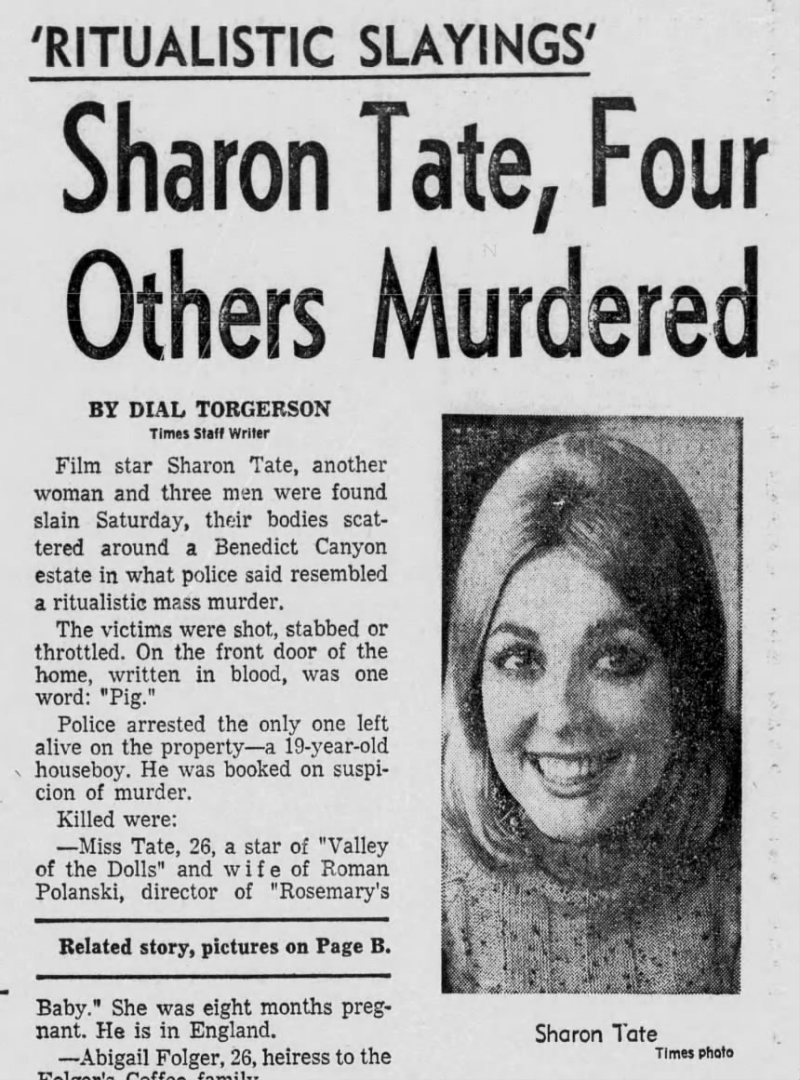
As the trial moved through August, Los Angeles was suddenly shaken by another series of murders that would eclipse almost every other crime story in the city. On the night of August 8–9, while testimony in the Novarro case was still unfolding, Sharon Tate and four others were murdered at her home on Cielo Drive; the following night, Leno and Rosemary LaBianca were killed in Los Feliz. The crimes and their perpetrators were unrelated, but the coincidence was chilling. Novarro, a survivor of Hollywood’s silent era, had been beaten to death in his Laurel Canyon home less than a year earlier; now a young actress identified with a new generation of Hollywood had been murdered on the opposite side of the hills. One Hollywood murder was still being explained in court when another, even more incomprehensible, plunged the city into fear.
Inevitably, both Ferguson brothers were convicted of first-degree murder and sentenced to life in prison. The judge said they should never be paroled. Still, both were eventually released after serving only part of their sentences. Thomas Ferguson, who was seventeen when Novarro was killed, was later convicted of rape and sent back to prison. He had served eight years for Novarro’s murder before being paroled.
After the murder, more indignities followed as lurid stories spread about how Novarro died. One well-known rumor claimed that an Art Deco lead dildo supposedly given to him by Rudolph Valentino was used as the murder weapon. This story was not true and was later disproved in my 1999 biography of the actor. By then, the rumor had already become part of Hollywood’s love of scandal.
That’s why it’s important to remember Ramon Novarro’s murder carefully. The crime was terrible enough on its own. The facts do not need to be exaggerated. Novarro’s story also reveals something troubling about how Hollywood, the media, and the legal system once treated gay men. For years, his sexuality was hidden because being open could have ended his career. After his murder, that same part of his life was used almost as evidence against him. While he was alive, the press celebrated him as a romantic idol, but after his death, the private life they had ignored became fodder for sensational stories. It’s tempting to let his murder define him, but that would be unfair.
Novarro was one of the era's major romantic stars. As a Mexican-born actor, he achieved great fame in American films during a period when Hollywood often gave Latino actors limited and stereotyped roles. He starred in Ben-Hur, worked with Garbo, Shearer, Crawford, and Loy, transitioned to sound films, and kept acting long after his days as a matinée idol were over.
Ramon Novarro died when two men went to his house with the intention of hustling him, and the situation then developed into severe violence. He was not killed because he was gay, and his sexuality in no way makes what happened to him understandable, necessary, or excusable. Nevertheless, for many years the stories about his death tended to blur that difference, which caused people to focus on his private life rather than on the simple truth that he had been the victim of a violent crime.
The best way to remember Ramon Novarro is to separate the real person from the sensational stories about his death. He was not just the aging “Latin lover” killed in a Hollywood scandal. He was a talented actor, a private person, a devout Catholic who struggled with conflicts he could not talk about openly, and one of the most famous stars of the silent film era. His murder was a tragedy, but reducing his life to that single event is another kind of loss.
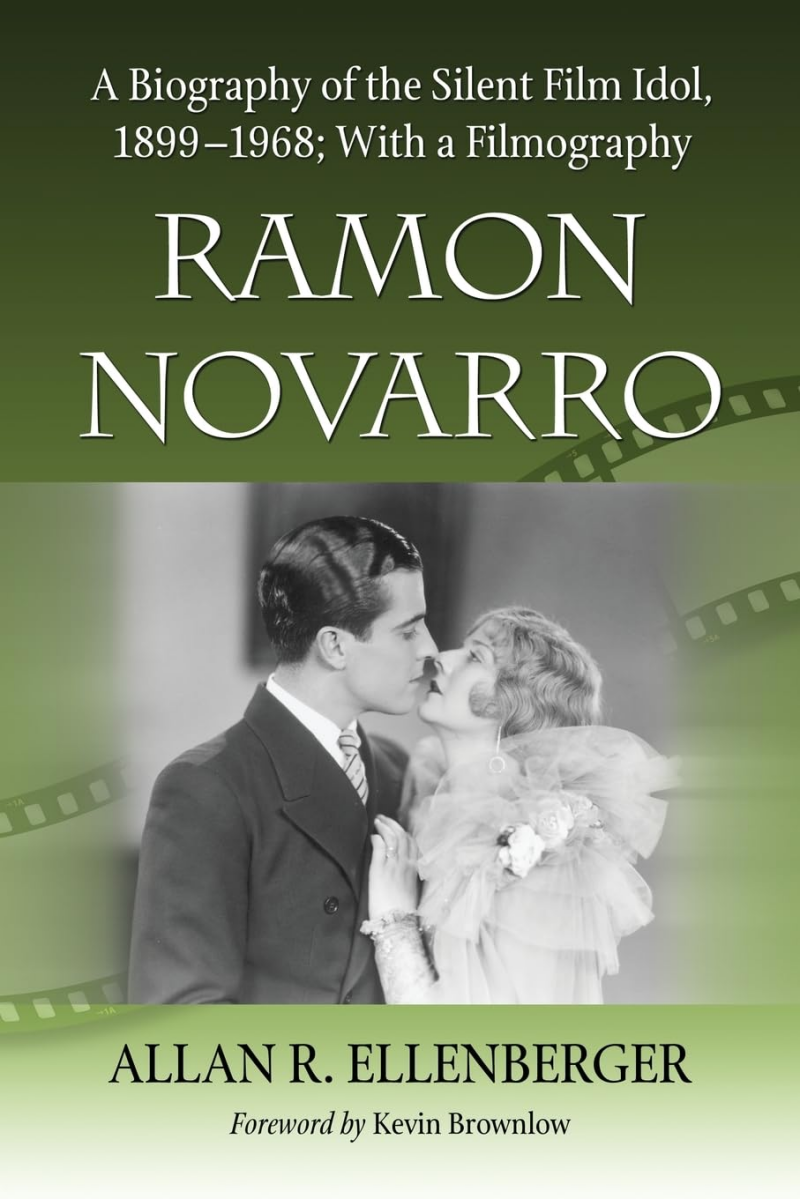
If you want to learn more about Ramon Novarro—not just the tragedy of his death, but also his incredible journey from Mexico to silent film stardom, his personal life, the events surrounding his murder, and the trial that followed—I encourage you to read my book, Ramon Novarro: A Biography of the Silent Film Idol. His murder was a tragic ending, but it should not overshadow his entire life. Novarro’s story was much richer, more complex, and more remarkable than the violence that ended it.
CLICK HERE TO PURCHASE ON AMAZON
Check in tomorrow as we bring Halloween Week to a close with one of Hollywood’s most haunting stories: Bess Houdini’s final attempt to contact her dead husband, Harry Houdini. For years after his death, Bess honored their private agreement by trying to reach him from beyond the grave. Tomorrow, we’ll revisit the last séance and the question that still lingers—did Houdini ever find a way back?
If you found this look back at the tragic murder of Ramon Novarro compelling, I’d love to hear your thoughts. Please leave a comment below, rate the post, and share it with others who are interested in Hollywood history, true crime, and the lives behind the legends. Your support helps keep these stories—and the people at the center of them—from being forgotten.
Add comment
Comments