

Sir Guy Standing belonged to an acting dynasty long before Hollywood knew what to do with him. By the time American movie audiences began recognizing his stern, aristocratic face in the 1930s, he had already spent decades on the stage, served his country during the First World War, been knighted for that service, operated a business, married three times, raised a family, and established himself on both sides of the Atlantic. His Hollywood career occupied only the last few years of his life. Yet, it produced the performances for which he is most often remembered today—and one of those films would become entangled in a persistent myth about his sudden death.
By Allan R. Ellenberger

Guy Standing was born in London on September 1, 1873, into a family in which acting was practically a hereditary occupation. His father was the distinguished stage actor Herbert Standing, who later appeared in silent films, and several of Guy’s brothers—including Wyndham, Percy, Jack, Herbert Jr., and Aubrey—also entered the profession.
Standing did not merely dabble in the theater. He became a major stage actor with a Broadway career spanning four decades. He appeared on Broadway as early as 1896 in Sue and, the following year, in The Little Minister. By the turn of the century, he was appearing regularly in productions such as Lord and Lady Algy, His Excellency the Governor, Brother Officers, Mrs. Dane’s Defense, Diplomacy, The Second in Command, and The Mummy and the Humming Bird. Later appearances included Hedda Gabler, The Road to Rome, Mrs. Moonlight, and, as late as February 1936, Jefferson Davis. He was particularly well suited to roles that required bearing and authority. Tall, cultivated, unmistakably English, and possessed of the practiced voice of a stage veteran, Standing could suggest command almost without trying.
Long before Hollywood typecast him as military officers, judges, governors, aristocrats, and patriarchs, Broadway had already discovered the same qualities.
His personal life was almost as thoroughly connected to the theater. In London on January 30, 1893, the nineteen-year-old Standing married American actress and singer Isabelle Urquhart, then a well-known comic-opera performer several years his senior. They divorced in 1899. The settlement required Standing to pay Urquhart alimony, and surviving reports indicate that financial disputes continued after their separation.
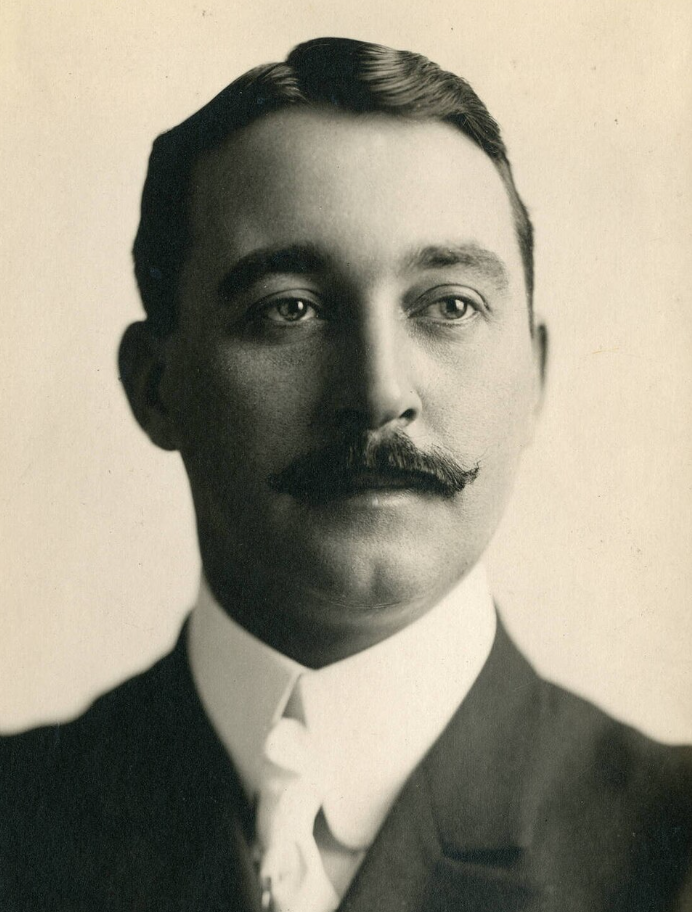
Guy Standing as a young stage actor.

Second wife, actress Blanche Burton.

Third wife, actress Dorothy Hammond.
Standing next married actress Blanche Burton. Their son, Guy Standing Jr., born in New York in 1904, also became an actor and stage manager. Standing’s third marriage was to English actress Dorothy Hammond, born Dorothy Frances Plaskitt. They married in the first decade of the twentieth century, and their children included Michael Standing and Dorothy Katherine Standing, better known as actress Kay Hammond. Kay would establish a notable stage and film career of her own, and through her Standing became the grandfather of actor John Standing, extending the family’s theatrical tradition into yet another generation.
Then came the First World War. Standing served in the Royal Naval Volunteer Reserve and rose to commander. His wartime work went beyond ordinary naval duty; records link him to British intelligence and later to the Ministry of Information. In 1918 he took part in the British War Mission to the United States. He was appointed a Commander of the Order of the British Empire and, in the 1919 New Year Honors, elevated to Knight Commander of the Order of the British Empire. From then on, the actor who had spent years billed simply as Guy Standing became Sir Guy Standing.
After the war, Standing temporarily left acting and entered the motor-transport business, remaining in it for approximately nine years. Eventually, however, the pull of the theater proved stronger. He returned to acting, including an appearance with Ethel Barrymore, and resumed a successful stage career before Hollywood finally claimed him.


Standing had made a couple of very early film appearances in 1914, but he did not seriously turn to motion pictures until nearly twenty years later. When he did, Hollywood immediately understood his value. Here was an experienced actor who could walk into a scene and instantly communicate rank, tradition, intelligence, and authority. Paramount put him to work steadily.
In 1933 alone, he appeared in a remarkable group of films. He was Major Dunham in the aviation drama The Eagle and the Hawk, starring Fredric March, Cary Grant, and Carole Lombard; Judge Drake in the controversial adaptation of William Faulkner’s The Story of Temple Drake; Commissioner Hope in Midnight Club; Don José in Cradle Song; and a rear admiral in Hell and High Water. His characters were rarely young or romantic, but they gave shape and credibility to the worlds surrounding the stars.
The following year brought Death Takes a Holiday, in which he played Duke Lambert opposite Fredric March, as well as The Witching Hour, Double Door, and Now and Forever, the latter starring Gary Cooper, Carole Lombard, and Shirley Temple. Standing had become one of those invaluable character actors whose presence signaled dignity and old-world authority.
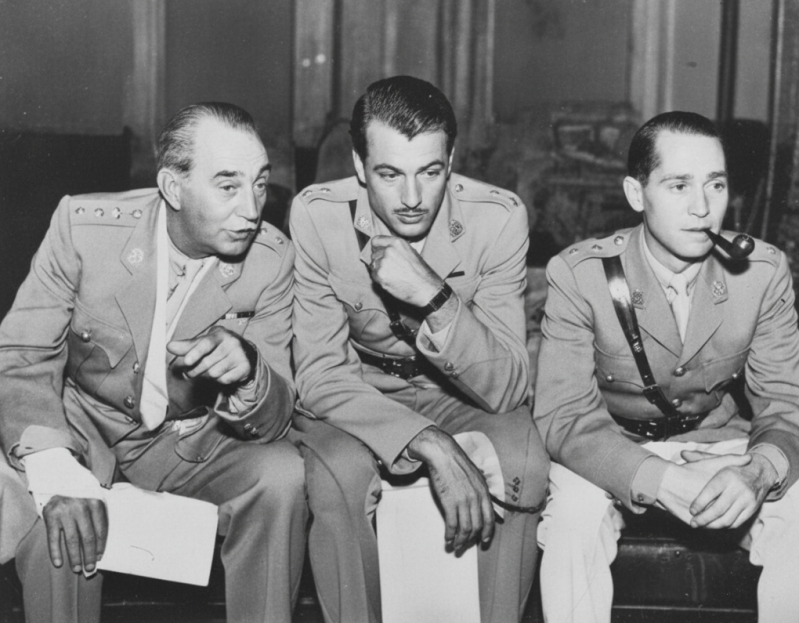
Sir Guy Standing, Gary Cooper and Franchot Tone in a scene from The Lives of a Bengal Lancer (1935).
His most enduring screen role came in Henry Hathaway’s The Lives of a Bengal Lancer (1935). Standing played Colonel Tom Stone, the rigid commanding officer whose relationship with his son, Lieutenant Donald Stone, provides an important emotional thread in the adventure. Gary Cooper and Franchot Tone were the principal stars, but Standing’s controlled performance gave the picture much of its military gravity. The film became a major Paramount production and received seven Academy Award nominations.
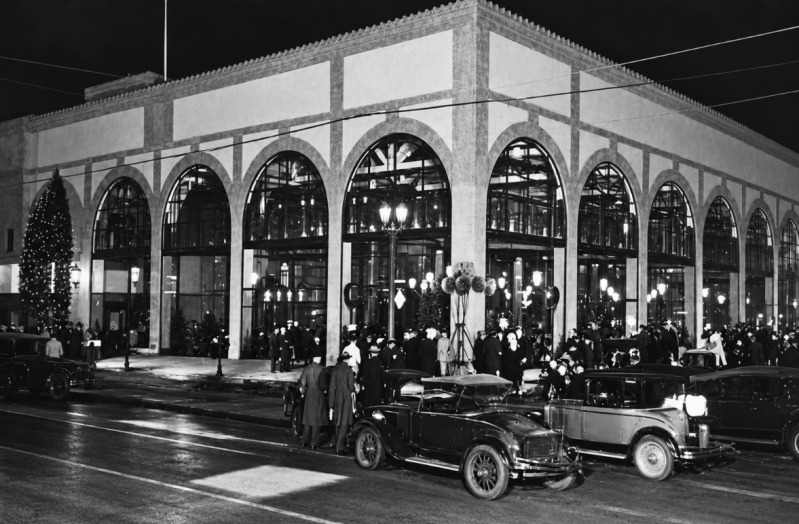
Above is the grand opening of the new Hillcrest Motor Company, the Hollywood automobile dealership and garage at the northwest corner of Hollywood Boulevard and Orange Street, where actor Sir Guy Standing went to collect his car on February 24, 1937, moments before suffering the fatal heart attack that ended his life.
On Wednesday, February 24, 1937, Standing went to the Hillcrest Motor Company car dealership, at 7001 Hollywood Boulevard, next to Grauman’s Chinese Theater, to collect his car. He was sixty-three and still actively working in pictures. When an attendant asked how he was doing, Standing replied, "Excellent. In fact, I never felt better in my life." Moments later, he collapsed, clutching his chest in severe pain. Contemporary reports said he fell to the floor and was unable to speak again. He was officially pronounced dead shortly after arriving at Hollywood Receiving Hospital.
The manner of death was natural, and the medical evidence established a catastrophic cardiac event. Contemporary accounts likewise reported that physicians believed he had suffered a heart attack. Friends and newspapers may have repeated the sensational story of venom, but it was not the established cause of death.
The timing made his death particularly shocking. Standing was not a forgotten actor whose career had long since ended. He was still working steadily. His final completed picture, Bulldog Drummond Escapes, in which he played Colonel Reginald Nielson, was released in 1937. Among his other late films were Palm Springs, The Return of Sophie Lang, I’d Give My Life, and Lloyd’s of London, where he appeared as the historic insurance figure John Julius Angerstein.

Above is the former Hillcrest Motor Company building where Sir Guy Standing died, as it appears today, now occupied by yet another Hollywood souvenir shop.
Paramount suspended production work as a gesture of respect, and colleagues paid tribute to Standing as more than another dependable character actor. Plans were made for funeral services, while an autopsy was ordered because the suddenness of the death required formal medical determination.
Standing left behind his widow, Dorothy, his children, and several brothers who had shared the family profession. He was buried at Grand View Cemetery in Glendale, which would become the resting place of numerous figures from the film community. Still, Standing arrived there with a distinction few Hollywood actors could claim: he was a Broadway veteran, a wartime naval commander, a knight of the British Empire, and a successful Hollywood character actor in one lifetime.

Above: The gravestone of actor Sir Guy Standing at Grand View Cemetery in Glendale, Section F, Lot 288. Findagrave/TLS
Yet almost immediately after Standing’s death, a more dramatic version began to circulate. Reports claimed he had been bitten by a black widow spider more than a year earlier while making The Lives of a Bengal Lancer, and that lingering venom had weakened his heart. Newspapers repeated the theory within days; a New Zealand paper even ran the headline “Spider Bite Causes Death of Sir Guy Standing?” while acknowledging in the same story that he had died of a heart attack.
Over time, speculation hardened into legend. In some retellings, the spider became a rattlesnake, and the invented wildlife encounter proved more memorable than the medical reality. It was exactly the kind of story old Hollywood encouraged, where gossip, repetition, and a taste for melodrama could transform rumor into accepted fact.
The truth was striking enough. On a February day in 1937, Standing went to collect his car, remarked that he had never felt better, and moments later collapsed from a massive heart attack. His sudden death required no embellishment. He had already lived an extraordinary life as the son of an actor, a Broadway veteran, a wartime naval officer, a knight of the British Empire, the head of an acting family, and one of Hollywood’s most distinguished character players. The spider and rattlesnake belong to legend; Sir Guy Standing’s real story is far more compelling.
If you enjoyed learning about Sir Guy Standing—his distinguished stage and screen career, wartime service, and the strange legend that grew around his sudden death—I’d love to hear your thoughts. Please leave a comment below, rate the post, and share it with others who enjoy classic Hollywood history and the stories behind the stars.
Add comment
Comments