

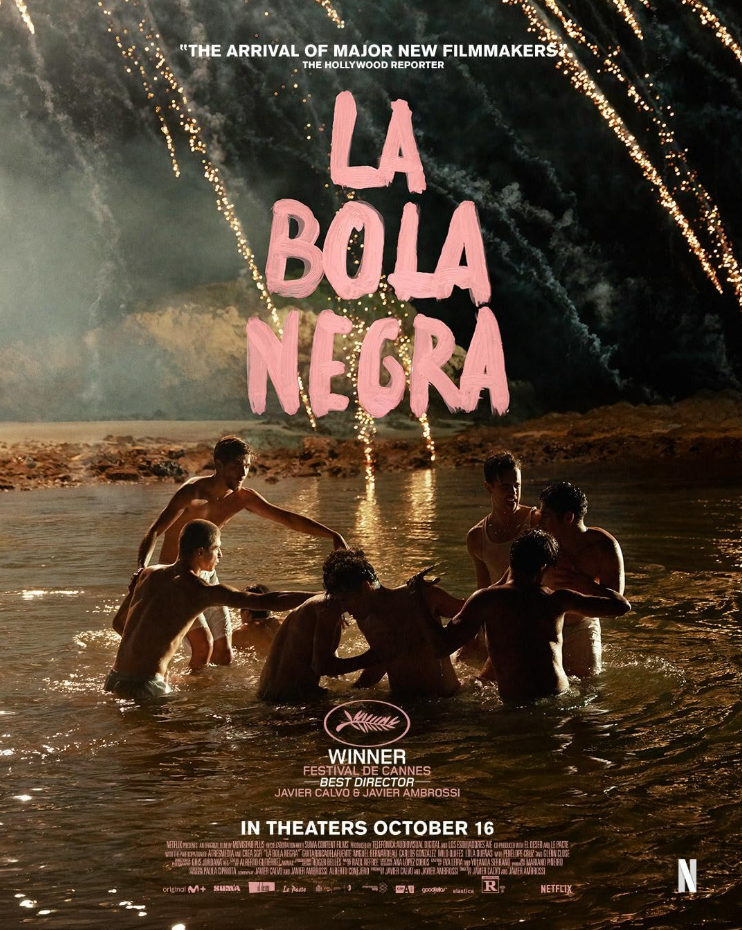
Some films tell a story. Others are attempts to bring an entire world back to life, to give voice to people whose lives and loves were buried by history. La Bola Negra (The Black Ball) is the remarkable new Spanish drama from the Javis (Javier Calvo and Javier Ambrossi) and it's one of the latter. It's a three-generation film and it's an ambitious, visually magnificent piece of work which looks at illicit love, political repression and the secrets that families carry with them long after the people who made them are all gone. It's just over 160 minutes in length and at times it genuinely feels like it's going to buckle under its own ambitions. There's something quite touching about a film which is quite so determined to remember what history has tried to bury.
Reviewed by Allan R. Ellenberger

Inspired by an uncompleted work of the Spanish poet and playwright Federico García Lorca (who was murdered by the Nationalists in 1936), the film is set in three different periods: 1932, 1937 and 2017. The stories at first seem to have no connection at all but as the film unfolds the links become increasingly apparent, all relating to sexuality, shame, the transmission of trauma and the long-term effects of intolerance. Los Javis and co-screenwriter Alberto Conejero have in fact created something much more akin to a historical novel than a film in the traditional sense, weaving together a number of intimate personal dramas with the wider tragedies of 20th century Spain.
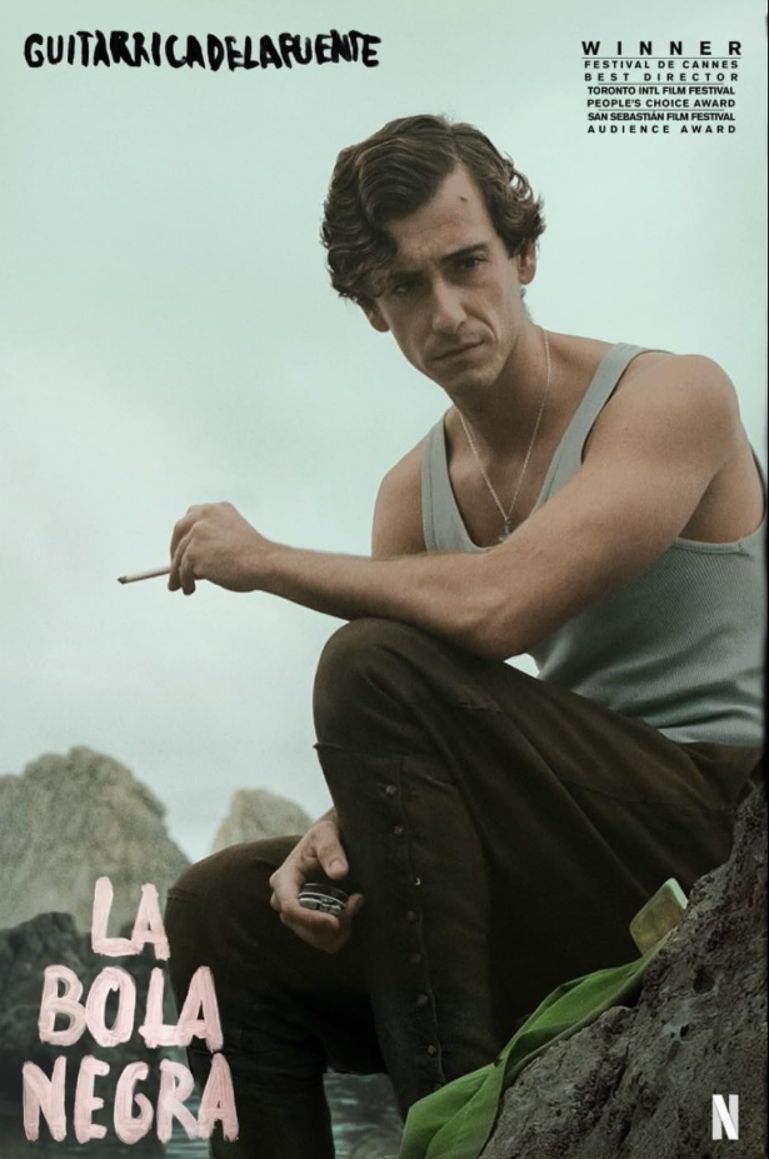
The most powerful story in the film is that of Sebastián (played by Spanish singer-songwriter Guitarricadelafuente) whose face is absolutely expressive in terms of naivety, vulnerability and yearning. In 1937, during the Spanish Civil War, his village is wiped out by an air raid, and his world is completely and utterly destroyed.
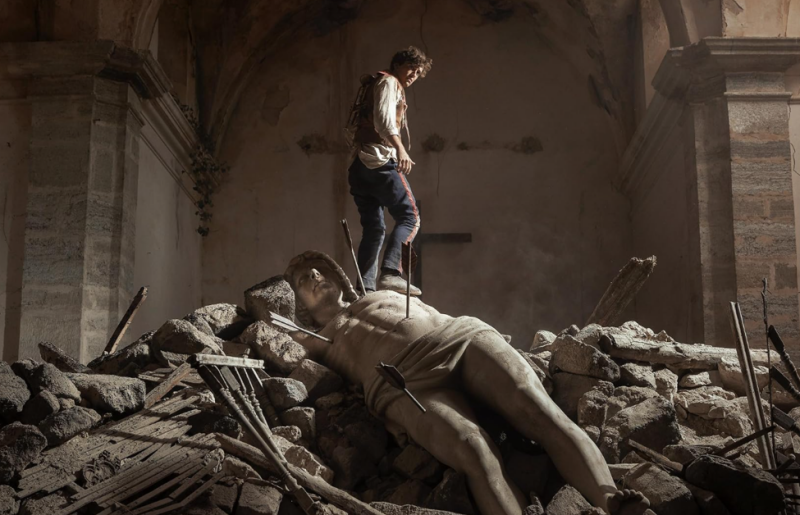
One of the most haunting images in the film is Sebastián walking into a church that has been completely destroyed and then climbing up on the huge statue of Saint Sebastian which has fallen. He pulls himself up by the arrows which are stuck in the saint's body and creates a very powerful and very disturbing image.
The symbolism is absolutely there, it's impossible to ignore. You've got Saint Sebastian (the saint traditionally shown with arrows through him, the saint of suffering, martyrdom and gay iconography) in the scene and he's utterly central to it. He's literally the embodiment of the young man's own situation. As Sebastián is just about to get to his feet in the wreckage the image is so potent it's a perfect encapsulation of the film's obsession with survival, persecution and the need to find some kind of meaning in the face of total destruction. It's exactly the kind of image that makes La Bola Negra such a powerful film.
Sebastián is then swept into the Nationalist army where he meets Rafael, a Republican prisoner played by Miguel Bernardeau. The situation is one in which tenderness is extremely dangerous, and the mere possibility of love is fraught with peril. Bernardeau brings a real sense of defiance and vulnerability to Rafael and Guitarricadelafuente gives Sebastián a very quiet emotional intensity. Their scenes together are some of the very best in the film, showing how love and intimacy can exist even in such a repressive environment.
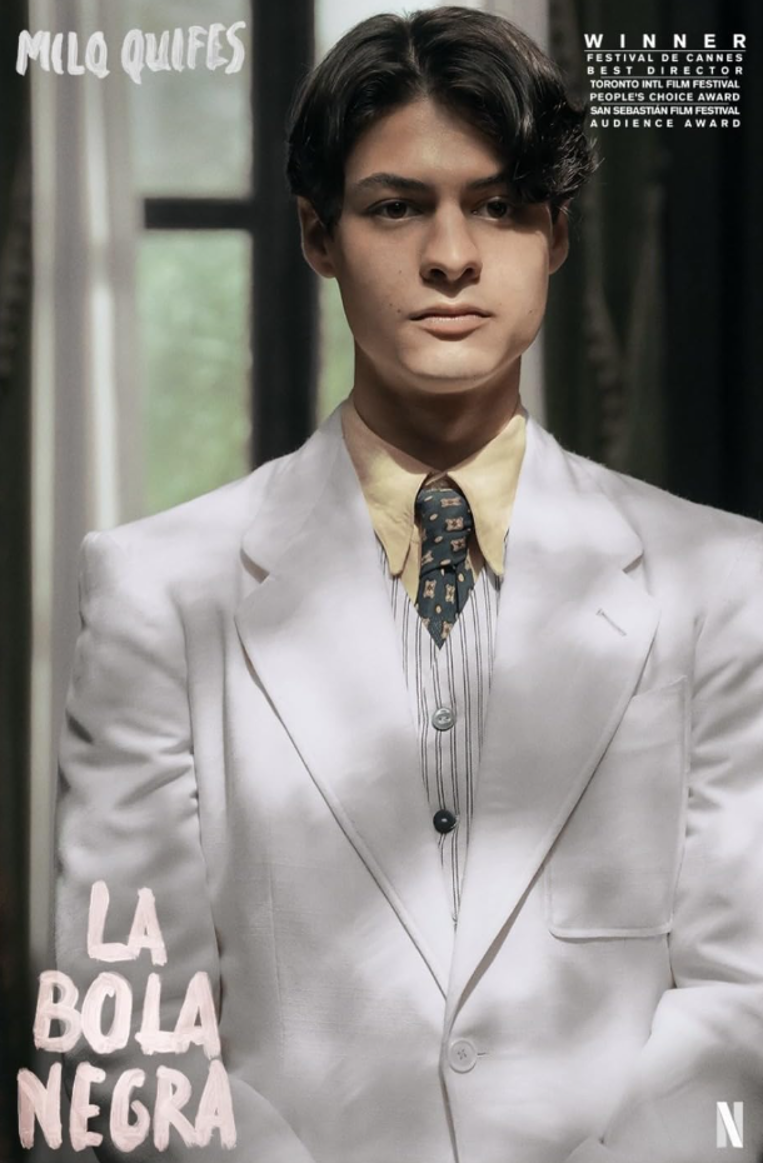
A second storyline (1932) follows Carlos (Milo Quifes) whose yearning for social acceptance is completely destroyed when the club he's applying to rejects him on the grounds of rumors about his homosexuality. The club members decide whether to take an applicant by throwing white or black balls. What at first appears to be a slight setback is in fact devastating in a society where your reputation and your conformity to the norm are everything. Quifes conveys the full breadth of Carlos' hurt pride, his confusion and his despair to show just how damaging cruelty can be without a single physical blow.
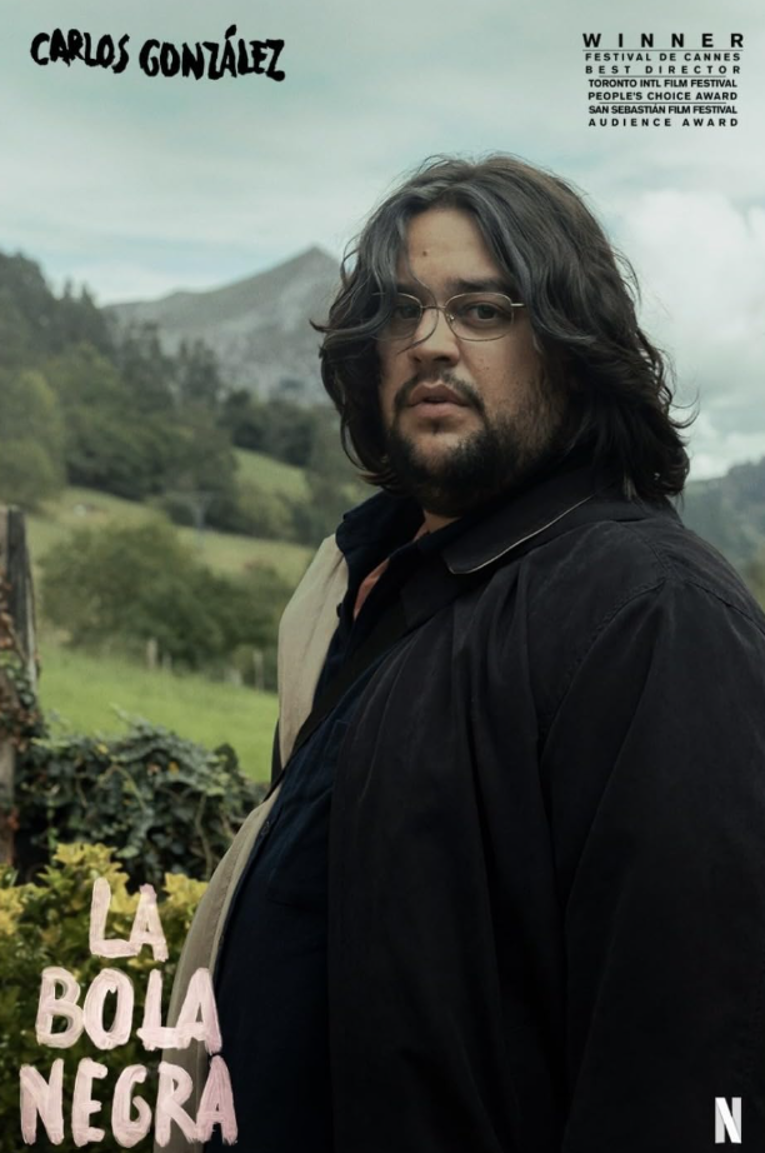
The third story is set in 2017 and sees Alberto (played by Carlos González) receiving an inheritance he has no business with, and which forces him to confront a family history he barely knows. His investigation slowly links the other stories together and the private discoveries become a broader reckoning with Spain's past. Lola Dueñas is superb as Teresa, Alberto's rather damaged mother, with the bitterness of her character masking the wounds of the generations that have gone before. Julio Torres is a real pleasure as Alberto's partner, providing the film with some much-needed warmth and a touch of humor and affection in the face of its darker revelations.
La Bola Negra is far from being a dull film despite the weighty subject matter. Penelope Cruz is absolutely sensational as Nené Romero, the cabaret performer. Her numbers are absolutely packed with color, sensuality and theatricality. Cruz is a superb performer and absolutely owns the screen, and her presence is a huge contrast to the overall mood of the film which is one of grief and repression. They're a reminder that in the face of such horrific historical circumstances, music and performance can be a form of temporary escape.
Glenn Close comes in later as Isabelle Durand, an American specialist in Lorca, and is very good in the role. She speaks Spanish and it gives the character a real sense of authenticity, which is a great help in the context of the film's increasingly complex final revelations. Neither of the two actresses is in the film for long, but both are very effective and it's a case of how well you can use a supporting cast to enhance a film that's already quite good.
The film is visually stunning in many instances. Gris Jordana's cinematography produces images which are very much like paintings in their composition, whether it's a sun-drenched landscape or a ruined church or a bustling military assembly or an intimate interior. Roger Bellés' production design and Ana López Cobos' costumes are excellent in terms of bringing the different periods to life. There are moments when the camera seems quite unwilling to move on from a given image and the sheer beauty of the frame is just there to be appreciated. Raül Refree's score is very evocative and adds another layer of emotion, without quite drowning out the quieter moments of the film.


Yet the very ambition which makes La Bola Negra such an impressive film also exposes its frailties. The directors will at times be quite happy to maintain a beautiful image or a dramatic flourish even when the narrative would be better served by a more restrained approach. As the three stories come together the final act becomes increasingly ornate with a succession of revelations and emotional outpourings which often serve to reiterate what has already been very effectively said. Some of the scenes drag on a little and the overall effect can be rather indulgent.
These criticisms have also been levelled by the critics. Peter Bradshaw in the Guardian was very complimentary of the acting and the complexity of the film's construction. Brian Tallerico in his review for RogerEbert.com was similarly impressed with the film's emotional authenticity and the sheer visual skill on display. Others, such as Guy Lodge in Variety, have been less impressed with the film's excesses and have questioned whether the sheer scale of it and the melodrama at times work against the narrative. That's a fair criticism, though I found the flaws far easier to accept given the genuine conviction and sincerity of the film.
Audience response has been absolutely fantastic. There's been a real sense of emotional engagement with the film's emotional power, the stunning photography and the unashamed celebration of queer love and queer resilience. It's clear the film has resonated with people beyond those who are already well versed in Lorca or the history of the Spanish Civil War. The issues at the heart of the film – of acceptance, of belonging, of the damage done by enforced silence – are still very much with us today.
What really sets La Bola Negra apart is its refusal to treat the past as something which can be neatly buried. The lives of Sebastián, Rafael, Carlos and Alberto become part of a wider meditation on memory, and the way one generation inherits the unresolved trauma of the previous one. Lorca is there in the film as both a historical figure and a symbolic presence, a reminder of the artists and the ordinary folk whose potential was extinguished by violence and prejudice. It can't bring them back, it can't resurrect their lives, but it can insist that their lives and their stories are something which must be remembered.

La Bola Negra is by no means a perfect film. Its length is considerable, it can be a bit over the top in places, and the ending is rather over the top. It may well wear thin on the viewer who is after a more economical piece of filmmaking. However the performances are superb, the cinematography is gorgeous and there's a real sense of humanity to it. Los Javis made a film of immense ambition, and they clearly understand that history is not just what happened, it's also what might have happened. It's an experience you don't want to miss.

And at times as Sebastián is working his way up through the wreckage of a church that's been shattered, reaching out for the arrows of a saint who's been wounded, a single image can be more powerful than any amount of dialogue.
Have you seen LA BOLA NEGRA (2026)? This visually stunning and emotionally powerful film explores forbidden love, loss, and the lasting shadows of Spain’s past. Let me know what you think! Did the film’s breathtaking imagery and performances move you, or did its ambitious storytelling sometimes become overwhelming? Please leave a comment, rate my review, and share it with fellow film lovers. Your feedback and support are always appreciated!
Add comment
Comments