

Some films seem to get better with age, and The Women (1939) is definitely one of them. It's got some of the best dialogue ever written, absolutely spectacular costumes and a brilliant collection of characters (scheming, gossiping and at times quite likeable) which has made it a film that classic film fans have just loved for nearly ninety years. As actress and film historian Illeana Douglas shows in her new book Jungle Red! The Making of MGM's The Women the business end of the film was sometimes just as good as the film itself.
Reviewed by Allan R. Ellenberger
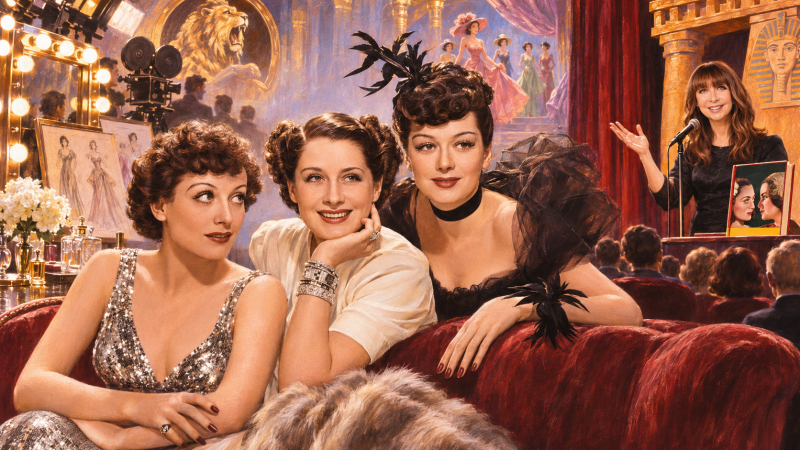
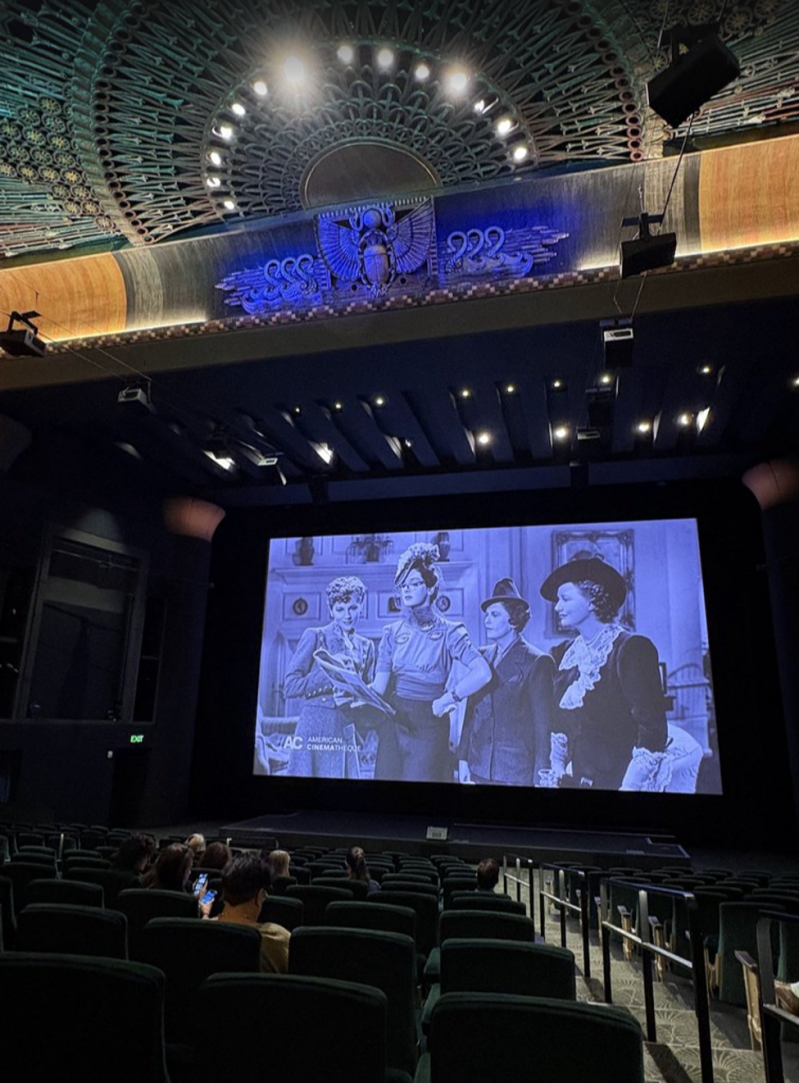
On Saturday, November 7, 2026, I went to a special 35mm screening of The Women at the Egyptian Theatre in Hollywood, organized by the American Cinematheque. Douglas was there to promote her book, signing copies before and after the screening with Larry Edmunds Bookshop also in attendance. There was an on-stage interview after the film which was absolutely fascinating in terms of the difficulties of the production and the sheer range of characters involved.
Released by MGM in September 1939, The Women was the film adaptation of Clare Boothe Luce's very successful 1936 Broadway play which was itself a rather brilliant and entertaining piece on the subject of marriage, infidelity, friendship and social ambition in the world of the New York Park Avenue set. It's a film with an absolutely staggering 135 women in it and no men at all. Rather ironically, almost everything the women in the film talk about is about the men in their lives.
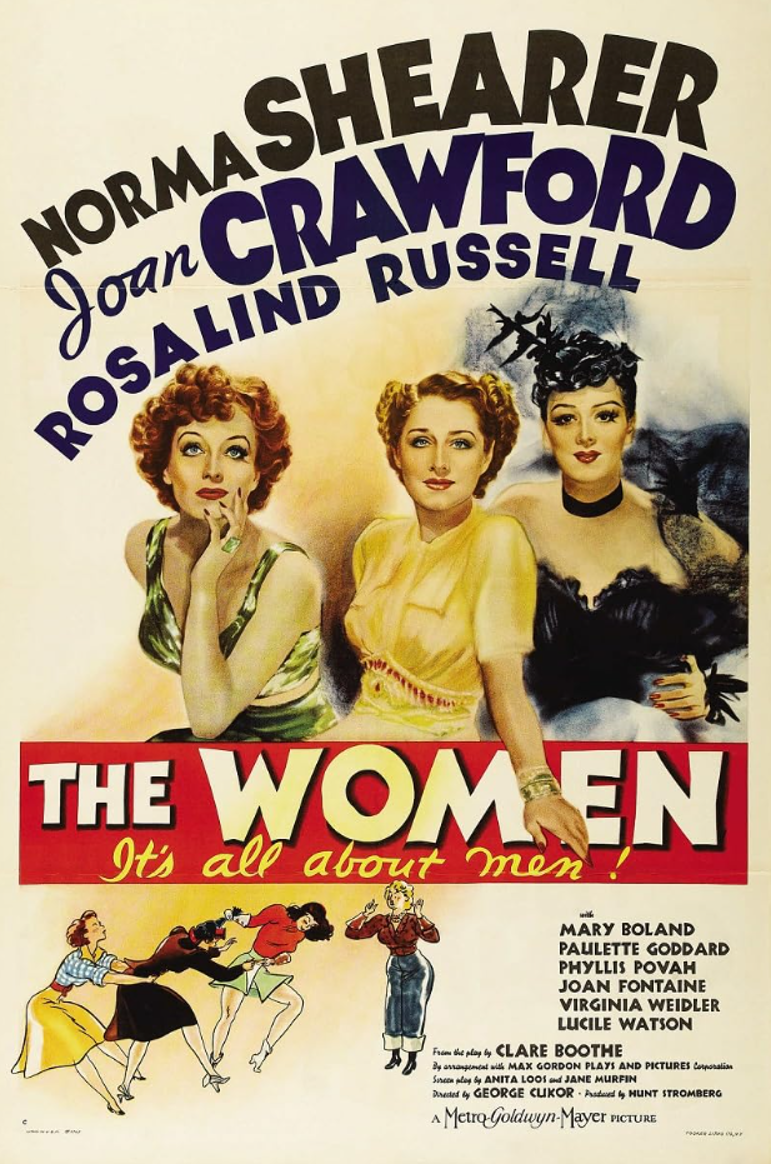

Norma Shearer is Mary Haines, a perfectly content married woman. Her world comes crashing down when she discovers that her husband is having an affair with Crystal Allen (Joan Crawford), a rather up-and-coming salesgirl in the perfume counter. The news gets out via Sylvia Fowler (Rosalind Russell) who is the most delightfully malicious of gossipers. It's a case of everyone having something very unpleasant to say about someone else very soon afterwards. Friends are lost; marriages are destroyed.
Shearer is the film's emotional core, providing the requisite amount of dignity and vulnerability to a woman whose faith in her marriage has been completely destroyed. Crawford, by contrast, seems to absolutely love every opportunity to make Crystal as unpleasant as possible. Her expressions are so calculating, her confidence so icy and so complete, and her delivery so cutting, that she becomes one of the most memorable homewreckers ever to appear on screen.
Yet Rosalind Russell pretty much steals the picture. Sylvia Fowler is a magnificent busybody, always getting herself into other people's business and completely unaware of her own. Russell is absolutely on the ball with the lines, and in doing so turns what would otherwise be a very unpleasant character into one of the film's real pleasures.
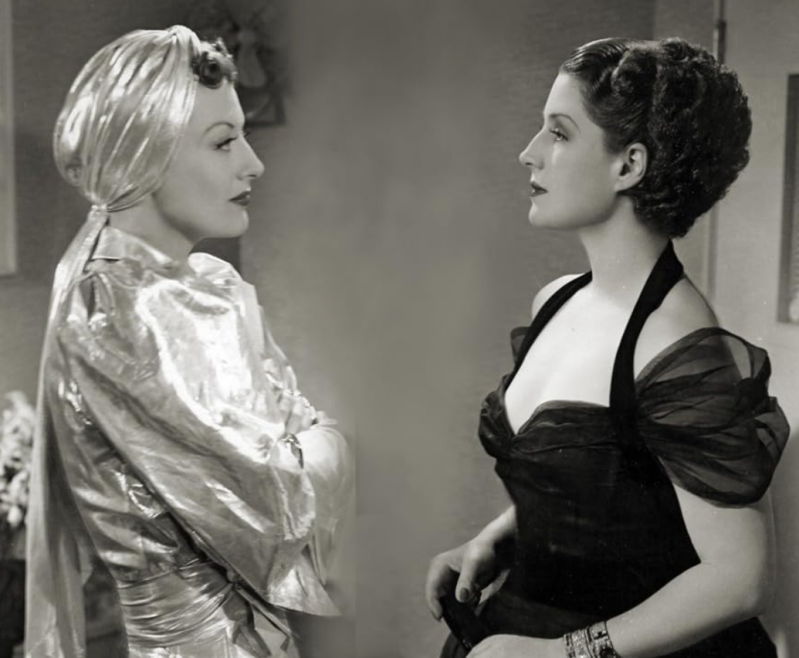
Mary Haines (Norma Shearer, right) confronts her husband's mistress, Crystal Allen (Joan Crawford), for the first time in The Women (1939).
Paulette Goddard, Joan Fontaine, Mary Boland, Ruth Hussey, Virginia Weidler and Marjorie Main are all very good in the supporting roles. Cukor's direction of such an enormous ensemble through a series of drawing rooms, beauty salons, dressing rooms and a Reno divorce is simply superb.
The picture also contains an extremely lavish Technicolor fashion show designed by Adrian, a rather extravagant interlude in an otherwise black and white film. It adds nothing to the story per se but does give a very interesting insight into MGM's sheer determination to go to the lengths of displaying glamour on a truly ridiculous scale.
What makes The Women particularly fascinating, however, is the history of its production, a subject Douglas explored with considerable enthusiasm during her onstage interview. What struck me most was the depth of her research and the ease with which she linked the film to the wider history of Hollywood in that spectacular year of 1939. Rather than just going through the standard anecdotes, she placed The Women in the context of two other major productions of that year (Gone with the Wind and The Wizard of Oz) and showed how remarkably involved George Cukor was in all three.
Cukor had obviously spent a lot of time on Gone with the Wind prior to being dropped and replaced by Victor Fleming. His exit from such a major production would have been a real blow to his standing and his career. He had also done a bit of work on The Wizard of Oz (he was involved in the making of it) where he made some significant creative decisions, most notably in regard to Judy Garland's look as Dorothy, though he didn't direct a single reel of the finished film.
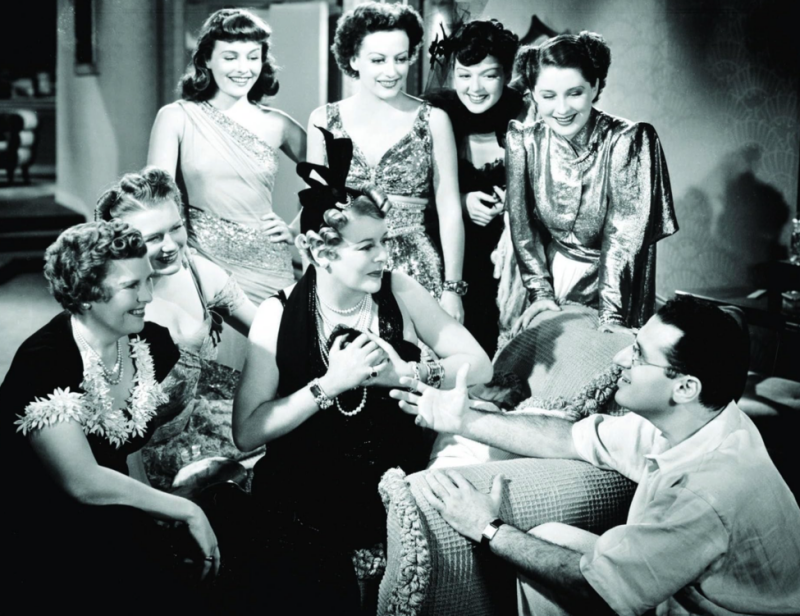
Director George Cukor (far right) appears to be entertaining the cast of The Women (1939) during a lighthearted moment on the set.
Douglas felt that The Women may have saved Cukor's career at a very low ebb. Rather than let the fact that he'd been axed from Gone with the Wind be the end of the story, he'd shown what he could do with a very different kind of film. A very interesting observation, and one which really did enhance my appreciation of what he'd achieved.
Another very interesting tidbit was that Lubitsch was originally slated to direct The Women. Lubitsch wasn't really enthusiastic about The Women at all and preferred Ninotchka (the smart Greta Garbo comedy which Cukor had been attached to). The assignments were swapped so that Lubitsch directed Ninotchka and Cukor directed The Women.
The set-up had a very personal dimension for Douglas. Her grandfather Melvyn Douglas had starred opposite Garbo in Ninotchka. Both films are classics and it's rather fascinating to think what they might have been like if the original directing assignments had not been changed.
Douglas also touched on the well-known feud between Joan Crawford and Norma Shearer. It was far from a secret that they disliked each other. Shearer had been a very influential figure at MGM as the wife of production chief Irving Thalberg, and Crawford had for a long time resented the fact that she felt Shearer got the better of her. By 1939, both of them had a great deal on the line in terms of the film's success.
That struck me as particularly interesting in that it made me wonder just how much of their real hostility seeped into the scenes they shared. They're naturally bitter adversaries and the way they interact has a real edge to it which is absolutely convincing. It's impossible to tell whether their real feelings actually informed the way they performed, but the level of tension you get from them is absolutely there.
These are the behind-the-scenes stories that form the basis of Douglas's Jungle Red! (published by Lyons Press and distributed by Simon & Schuster). It's a 304-page hardback released September 15, 2026, and contains around seventy black and white photos.

"I've had two years to grow claws, mother. Jungle Red!"
Douglas (acting credits: Cape Fear, To Die For, Grace of My Heart) is a very knowledgeable and passionate film historian. She's been with Turner Classic Movies for a number of years and previously wrote the book I Blame Dennis Hopper. Her family links to the Golden Age of Hollywood obviously give her a real insight into the studio system and the people who were in it.
In Jungle Red! she follows the film's development from Luce's success on Broadway through MGM's very complicated process of turning the play into a film. F. Scott Fitzgerald did the initial drafts and Jane Murfin and Anita Loos eventually got the screenplay credit. The Hays Code of course came into play and required a number of changes to the more risqué elements of the play.
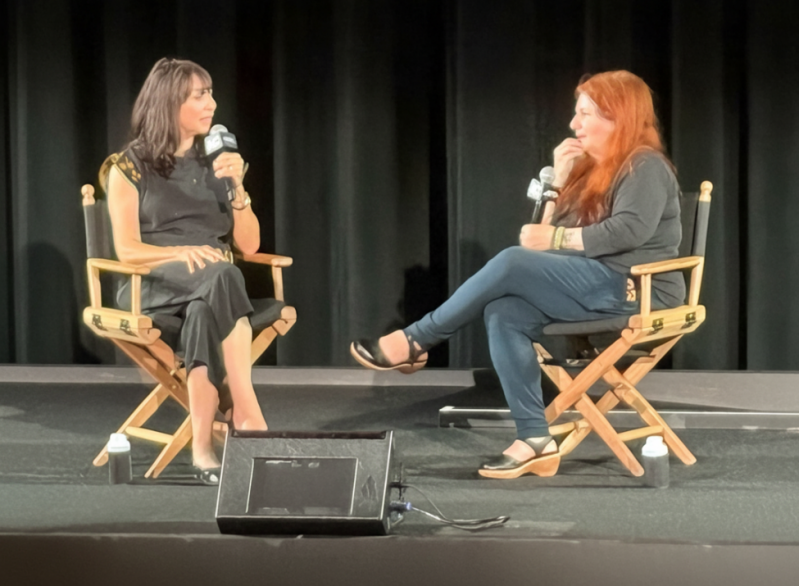
Actress, film historian, and author Illeana Douglas (left) discusses The Women (1939) and her new book with filmmaker Allison Anders during an onstage conversation presented by the American Cinematheque.
Douglas also looks at the stars' competing egos, Adrian's very elaborate costume designs, the role of the legendary Sydney Guilaroff (hair) and the impact of studio politics on pretty much every aspect of the production. Her research shows just how much artistic wrangling and personal antagonism went into a picture that on the surface looks so effortlessly entertaining.
The book has been very well received with enthusiastic reviews from all the major publications. Publishers Weekly were very complimentary of the way the research and the Hollywood figures were combined, and both Library Journal and Booklist gave it their starred review. The critics have particularly highlighted Douglas's focus on the people behind the scenes rather than just the well-worn stories of star against star.
However, not every reviewer has been completely converted. Bob Duffy in the Washington Independent Review of Books did much to praise the research and the illustrations but was not entirely convinced by the film's reputation and the amount of attention it paid to the performers' private lives. The overall critical response has been very positive though.
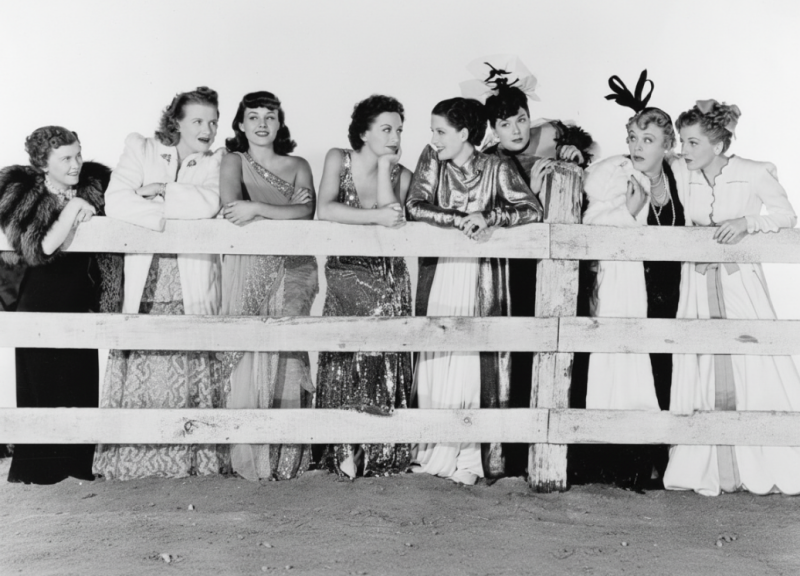
The principal cast of The Women (1939) poses together for a publicity photograph.
The Women itself was generally well received in the contemporary press though some of the reviewers did take issue with the deliberately unpleasant characters and the fact that it was a stage play. Frank S. Nugent in the New York Times was very complimentary of Shearer's performance and included it in his list of the ten best films of 1939. Other reviewers were very much in agreement with the quality of the writing and the cast, even if they did find the view of female friendship rather brutal.
Definitely there are elements of The Women which reflect the attitudes to marriage and female independence of a very different era. Its real achievement though is in the performances, the writing and Cukor's extraordinary skill at getting so many disparate personalities to work as a unit for the sake of the art.
What I found so impressive about Douglas's presentation was the way she brought the film's intricate history to life. Her knowledge of Cukor's career, the rather surprising link with Ninotchka and the personal feud between Crawford and Shearer all served to give a very different perspective on a film which I thought I knew inside out.

At the premiere of The Women (1939) at Grauman’s Chinese Theatre. From left: MGM studio chief Louis B. Mayer, actress Paulette Goddard, director George Cukor, actress Joan Crawford, and producer Hunt Stromberg.
The Women is a superb example of Hollywood craftsmanship at its very best. Jungle Red! provides a great opportunity to see how that remarkable group of actresses, writers, designers and one absolutely brilliant director put together something that is still absolutely fun to watch nearly ninety years on.
For anyone at all interested in the Golden Age of Hollywood, the film and the book are a perfect match. After all, some of the most fascinating stories in Hollywood are the ones that actually happened off the set.
Have you seen MGM's The Women (1939), or read Illeana Douglas's new book, Jungle Red! The Making of MGM's The Women? I'd love to hear your thoughts on this Hollywood classic and the fascinating stories behind its making. Please leave a comment, rate my review, and share it with fellow classic-film enthusiasts. Your feedback and support help keep Hollywood history alive!
Add comment
Comments