

Stacy Keach (the gravel-voiced, very commanding actor) died on November 10, 2026, at his home in Magdalenka, Poland. He was 85. His wife Malgosia Tomassi Keach confirmed that he had been suffering from a long-term illness involving a serious heart condition and heart failure. His death marks the end of a remarkable career of over sixt years in which he was able to move so easily between the classical theatre and the more popular forms of entertainment and was widely regarded as one of the most intelligent and accomplished actors of his generation.
By Allan R. Ellenberger

Keach was an actor who never really seemed to be at home in one kind of role. He could be a Shakespearean king one night, a dangerous criminal the next and a rather down and dirty private detective who settled his differences with his fists. He was a very imposing figure, with a very distinctive pair of eyes and a deep, rich voice which made him instantly identifiable. At the same time, he was regarded as one of the most adventurous performers in the business for his willingness to take on roles which were not necessarily conventional.
Born Walter Stacy Keach Jr. on June 2, 1941, in Savannah, Georgia, he was the son of a theatrical family. His dad Stacy Keach Sr. was an actor, director and drama instructor at the Pasadena Playhouse and his mum Mary Cain Peckham was also an actress. The family moved to Southern California, and it was there that young Stacy developed an early interest in performing. His younger brother James Keach would go on to become an actor, director and producer as well.
At Van Nuys High School he was developing his theatricality, went on to do English and Dramatic Arts at UC Berkeley, then trained at the Yale School of Drama.
He had a Fulbright to do a year at the London Academy of Music and Dramatic Art, and his classical training formed the basis of a career in which Shakespeare was always a personal passion. His stage career was very successful in the 1960s with appearances at the Oregon Shakespeare Festival and the Public Theater in New York. He was particularly renowned for his Hamlet, Richard III, Macbeth and King Lear. He was nominated for a Tony in 1970 for his performance as Buffalo Bill in Arthur Kopit's Indians and that was the point at which he was established as an actor who was prepared to take on the hard, the nasty and the controversial.
Hollywood quickly saw his talent. His film debut was in The Heart Is a Lonely Hunter (1968) with Alan Arkin and from there he went on to take on more and more substantial roles. One of his very best early performances was as Billy Tully, the broken, dispirited boxer trying to re-establish his self-worth in John Huston's Fat City (1972). That film was a masterclass in the ability to convey a sense of loneliness and despair without the need for any overt sentimentality. It's one of the most moving performances of his career.
Other major films came along including The Life and Times of Judge Roy Bean (1972), Luther (1974) and the rather odd psychological thriller The Ninth Configuration (1980). In Walter Hill's The Long Riders (1980) he played the outlaw Frank James against his brother James as Jesse James, a very appropriate casting in that it brought their real family relationship to the screen. He also showed a rather surprising ability to do comedy, playing the perpetually exasperated Sgt Stedenko in Cheech and Chong's Up in Smoke (1978) and its follow-up Nice Dreams (1981).
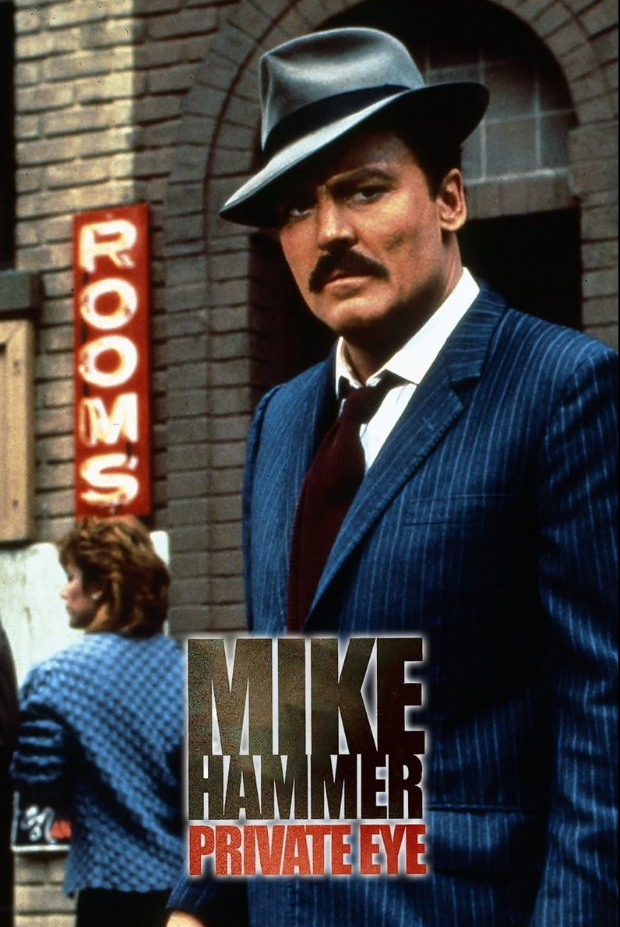
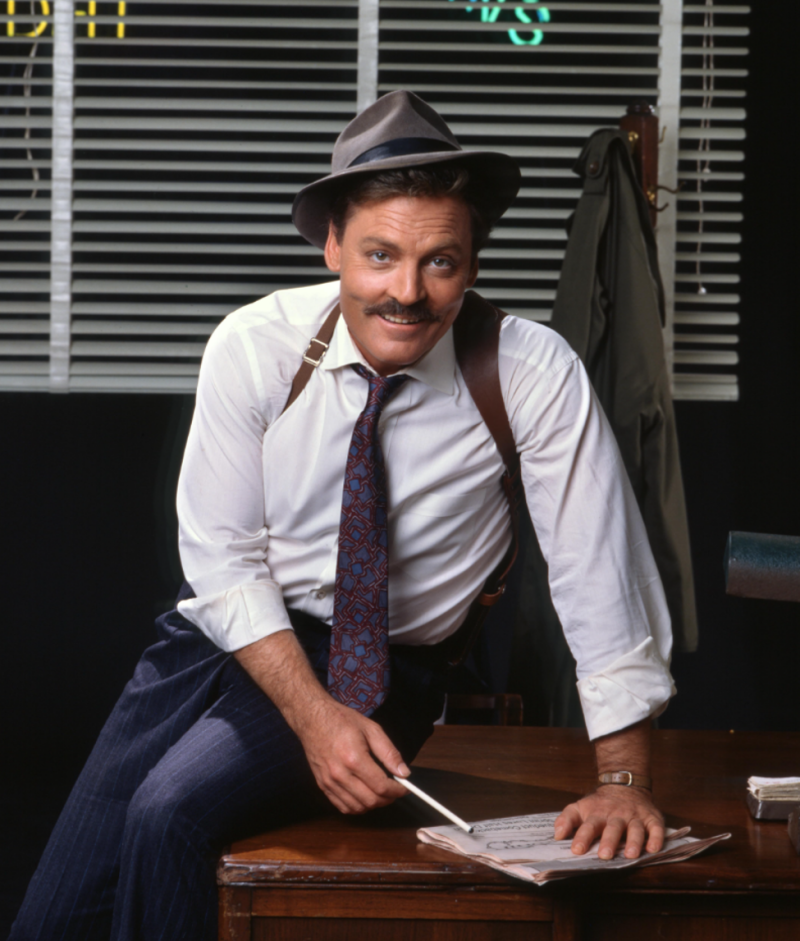
Television ultimately provided him with his most lasting popular success. In 1984, he took on the role of Mike Hammer, the tough, hard-nosed private eye from Mickey Spillane's books. Hammer was a very cynical character, had a weakness for beautiful women and was a man who just liked to do his own version of justice. He wore a fedora and carried himself with the utmost authority and Keach made the role his own. The series (which became The New Mike Hammer) was very popular, and he returned to the role in a number of television movies and in another series in the 1990s.


His career was effectively over in 1984 when he was arrested at Heathrow Airport in London attempting to smuggle cocaine into the United Kingdon. He pleaded guilty and was sentenced to nine months in prison (he served about six of them at Reading). It was a career killer, and it did him in completely. It had been a drug addiction that had been building up for the previous ten years and that was what had got him into that state. Rather than go under and pretend it hadn't happened, he actually spoke about it, went to congressional hearings and did all sorts of things to try and educate people about the dangers of drugs.
Keach eventually rebuilt his career, going back to television in Intimate Strangers (1986) and taking on the role of Mike Hammer again. It was a classic example of the kind of resilience that was one of his hallmarks. In 1988, he won a Golden Globe for his performance as Ernest Hemingway in the television miniseries Hemingway. That was another performance in the same vein as the previous one, a performance which involved the very real demands of playing a very complicated, very large character. His looks were very much Hemingway’s, and his grasp of the man's contradictions was such that it was a very effective performance.
He remained very productive over the following decades. American History X (1998), the father of Christopher Titus in the television comedy Titus (2000-2002) and the sympathetic warden Henry Pope in Prison Break (2005-2007). Other later credits included The Bourne Legacy (2012), Nebraska (2013) by Alexander Payne, Blue Bloods and Man with a Plan. His authoritative voice was as much a part of the landscape as his face through the years of documentary narration, audiobooks and the CNBC series American Greed. His final on screen role was in Jay Kelly (2025) where he played the grumpy father of George Clooney's character.
He stayed very much in the theatre throughout that period. Did a huge number of productions of King Lear, Frost/Nixon, Other Desert Cities and all sorts of Shakespeare. Was widely regarded as one of the leading classical actors in America. Inducted into the American Theatre Hall of Fame in 2019 and had a star on the Hollywood Walk of Fame in 2019. He was known among his peers as a very generous and disciplined performer, with a very imposing screen presence but a very thoughtful and accessible man underneath.
Keach's own appearance was a very telling thing. He was born with a cleft lip and a partial cleft palate and had a number of operations on him as a child to correct it. The scars from those operations were effectively hidden by his rather distinctive moustache. His powerful voice was one of his great assets as an actor, and he was very open about the difficulties he'd had in his life (the early cleft issues as well as his own addiction problems) in his 2013 autobiography All in All: An Actor's Life On and Off the Stage.


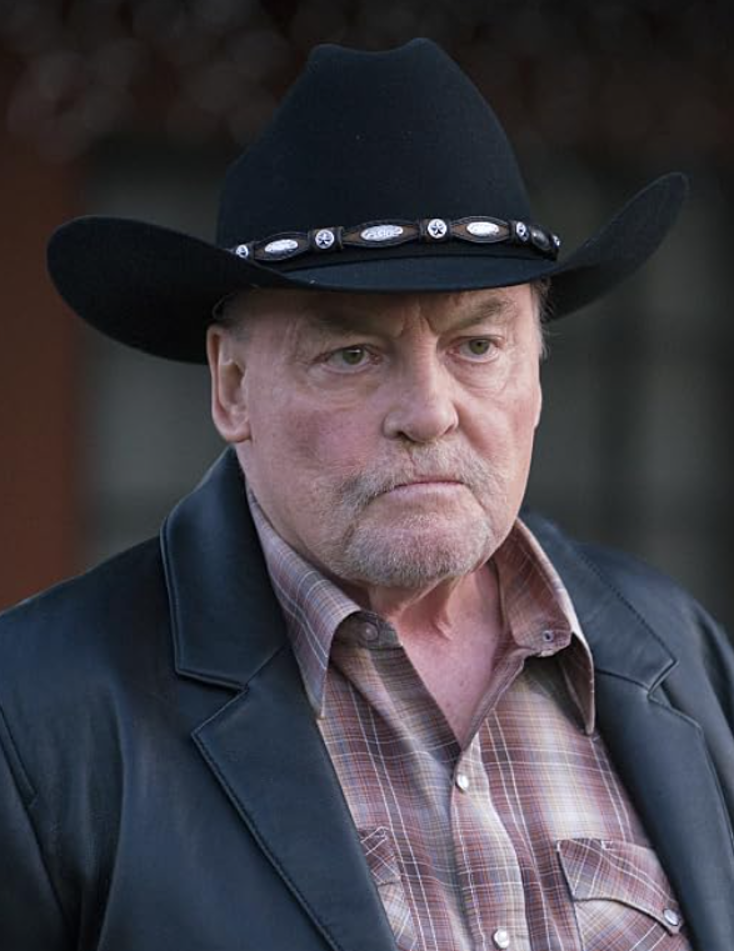
His personal life was one of four marriages, the first three of which ended in divorce. He married Polish actress Malgosia Tomassi in 1986 (they had met through his work on Mike Hammer) and that marriage lasted for forty years. They had two children, Shannon and Karolina. In his later years he split his time between the United States and Poland where he found a degree of privacy away from Hollywood.
His health was increasingly poor. In June 2017, while doing his one man show Pamplona at the Goodman Theatre in Chicago, he had a heart attack on stage, and the rest of the show was cancelled as a result. He did recover though and went back to acting, determined not to let age or ill health in any way bring his career to an end.
Stacy Keach died on November 10, 2026, at his home in Magdalenka, Poland after a long illness with heart disease and heart failure. He was 85. He is survived by his wife Malgosia, his children Shannon and Karolina and his younger brother James Keach. No funeral arrangements have been announced and there are no details at all as to whether he will be buried or cremated.
Keach leaves an absolutely staggering body of work behind him. He had the training and the temperament of a classical actor, yet he absolutely didn't look down his nose at popular entertainment. He could play the tormented boxer, the Shakespearean king, the troubled writer, the detective in his battered fedora stalking the streets of London and do it with a real intelligence, a real sense of dignity and a real sense of conviction.
Hollywood has lost one of its most distinctive voices and one of its most versatile performers. To the audience he was Mike Hammer, the hard-boiled detective with the look and the moustache. To the theatre audience he was one of the very best Shakespearean actors of his generation. Stacy Keach belonged in both worlds and very few actors moved between them as comfortably as he did.
From Shakespearean tragedy to television's hard-boiled Mike Hammer, Stacy Keach enjoyed an extraordinary career spanning more than six decades. I invite you to comment, rate, and share the article with fellow classic-film and television enthusiasts. Your thoughts and support are always appreciated!
Add comment
Comments