By Allan R. Ellenberger
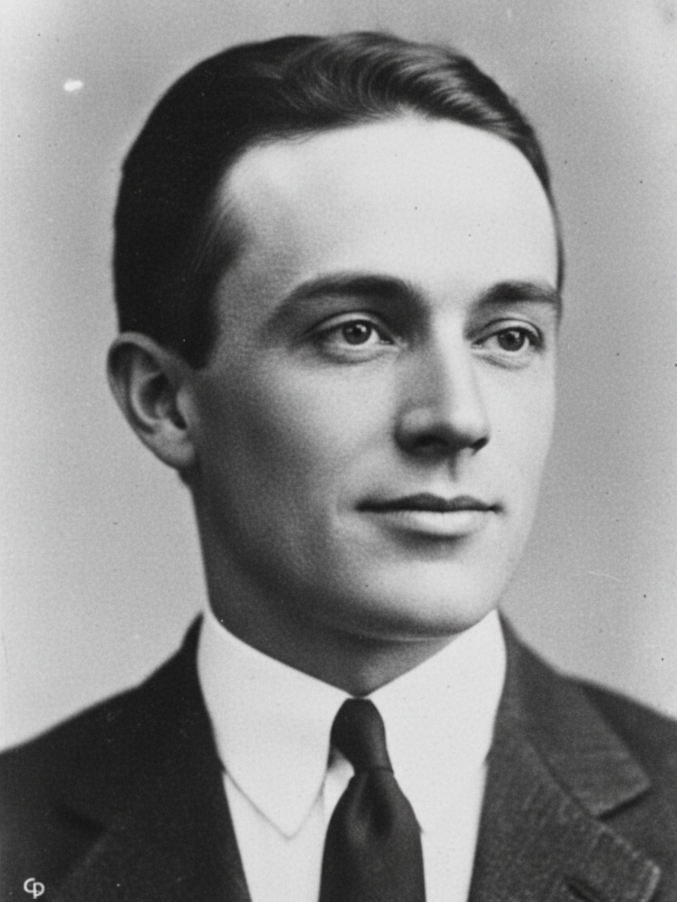
When Peter Stratford died at Highland Hospital in Oakland, California, on May 1, 1929, a very private life was about to become a national event. For nearly twenty years Peter had lived as a man, had been a writer of some note, had had relationships with women and had married Elizabeth 'Beth' Rowland, a scenario writer in Hollywood at the time. Within days of his death the newspapers all over the country were reporting that the man known as Peter Stratford had been a woman at birth. What followed was a complete media circus of headlines, intimate details and a whole lot of speculation about a life which had been very much out of the public eye.

It all happened at a time when American society had very little patience for people who didn't conform to the established expectations of what a man or a woman should be. The papers were full of the story of Stratford as a woman who had "masqueraded" as a man, a rather complex personal history presented as a complete and total lie. Underneath the scandal was a very real individual whose life intersected with literature, Hollywood film making, spiritualism and the whole area of non-conventional relationships in the 1920s.
Stratford (originally Deresley Morton) was reportedly born around 1882, in New Zealand and was a British subject. One account has him as the son of a British Royal Guardsman (this has not been independently confirmed). He came to America circa 1909 and eventually settled in America under a male identity. He was a capable writer and is said to have helped out various writers and playwrights with their manuscripts, including Austin Strong whose Broadway play Seventh Heaven became the basis for the famous 1927 silent film with Janet Gaynor and Charles Farrell.
By the late 1910s, Stratford was in a position to do the work which would have been the preserve of a man, having been involved in the supply of military medical stores during the First World War. The correspondence which survives is full of praise for his intelligence and ability, which would have been the sort of thing that would have been said of someone who had established a professional reputation and at the same time maintained a very carefully guarded personal history.
Stratford was also interested in the spiritual and philosophical aspects of life, particularly in Sufism (the mystical arm of Islam). He was known to have associations with members of the Inayat Khan circle, Inayat Khan being the Indian musician and spiritual teacher who was responsible for bringing Sufism to the West. That was fairly typical of the area at that time with Theosophy, Vedanta and all the other metaphysical movements being very much in vogue with the artists, writers and performers of the silent film era.
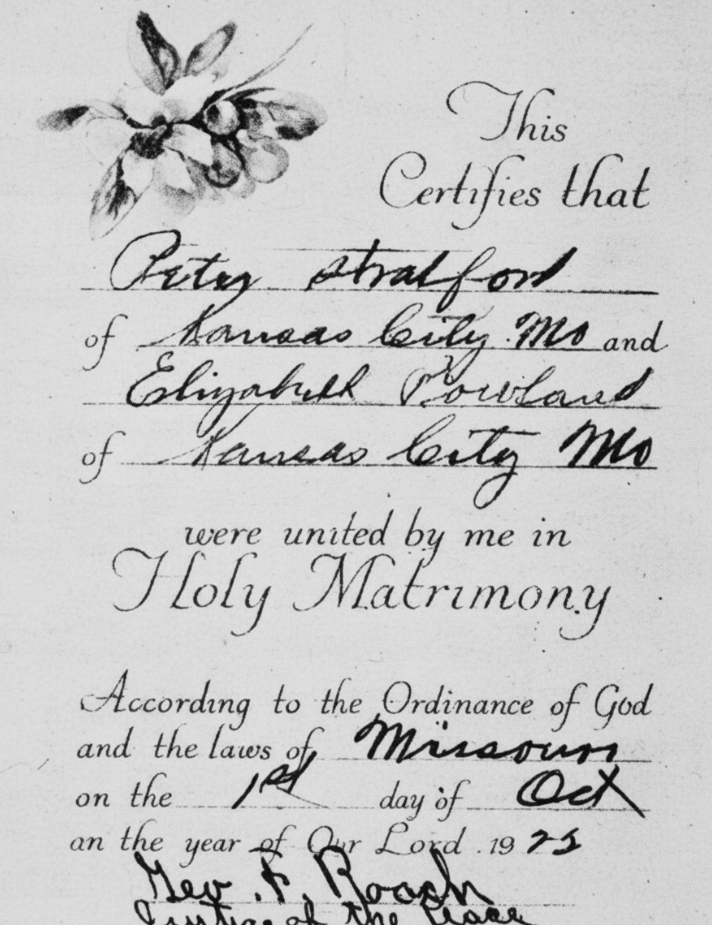
Stratford met Beth Rowland via a spiritual link. Rowland was working in the health department of Unity School in Kansas City, Missouri in April 1924, when she came across a letter from Peter Stratford, then living in Hillsdale, New Jersey, asking for prayers. She was intrigued and went against the rules of the school to write Stratford a personal note. That correspondence developed into a courtship, and they were married on October 1, 1925, before a justice of the peace in Kansas City.
While same sex marriage was not recognized as law, Stratford's public status as a man meant that the couple could enter into a marriage that would otherwise have been impossible. Whether or not Rowland knew Stratford's private life prior to the wedding became one of the most contentious issues in the aftermath of the scandal.
Rowland later maintained that she had thought she was marrying a man. She said she discovered the truth after the wedding and was absolutely shattered. She wanted an annulment, but Stratford apparently appealed to her Christian sensibilities and asked her not to leave a "man" with tuberculosis and a physical disability. Rowland said she stayed for a while out of sympathy before eventually leaving. Of course, this was all said in the context of enormous publicity and the prospect of being seen to have entered into a marriage of such a very unusual nature would have been a very serious social liability.
The pair eventually moved west and arrived at the Hotel Belvoir in Niles, California. As Stratford's health declined, Rowland went off to Hollywood with the intention of becoming a photoplay writer. Scenario writing in the silent era was a very significant route into the film industry for women and there have as yet been no verified motion picture credits found to her name.
Another Hollywood link came via Alma Thompson, a motion picture script clerk at Warner Bros. Thompson is said to have become friends with Stratford through their mutual interest in the spiritual. Their correspondence was very much the stuff of a complicated emotional attachment, though Thompson later claimed she had never actually met Stratford.

Beth Rowland, an aspiring Hollywood scenario writer whose 1925 marriage to Peter Stratford became the center of a nationwide newspaper scandal following Stratford’s death in May 1929. Below is their marriage license found in Stratford's belongings.
One newspaper described Thompson as a woman "who had never met but with whom his vibrations harmonized" and that was typical of the rather mystical language which permeated Stratford's correspondence. Thompson did offer financial help when Stratford was unwell but was at pains to avoid any further development of a relationship. There were other letters found in Stratford's possession which suggested further emotional attachments, to women referred to as Gene Nason and Nada Nawn of Hillsdale, New Jersey. The exact nature of those relationships is not known.
By April 1929, Stratford's health was very bad indeed. He had tuberculosis and was being sent to Highland Hospital in Oakland. He allegedly made a very remarkable statement to ambulance driver Carl Smith. “I'm not a man, I'm a woman” is what Stratford apparently told Smith while he was being taken in for medical treatment. We don't know if that's exactly what was said, but it was one of the most frequently cited details in the press coverage that followed.
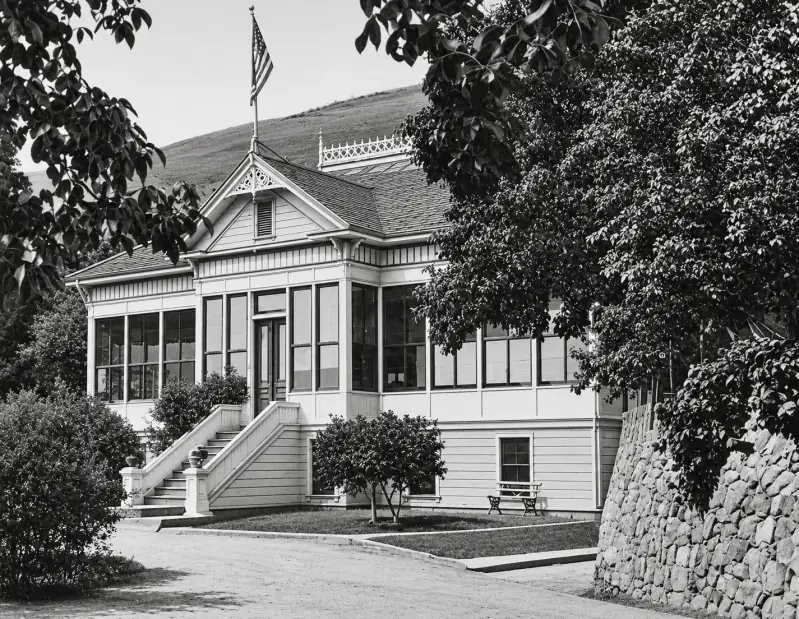
The Hotel Belvoir near Niles, California, where Peter Stratford and his wife, Beth Rowland, resided beginning in 1926. Stratford remained at the hotel until shortly before his death in May 1929.
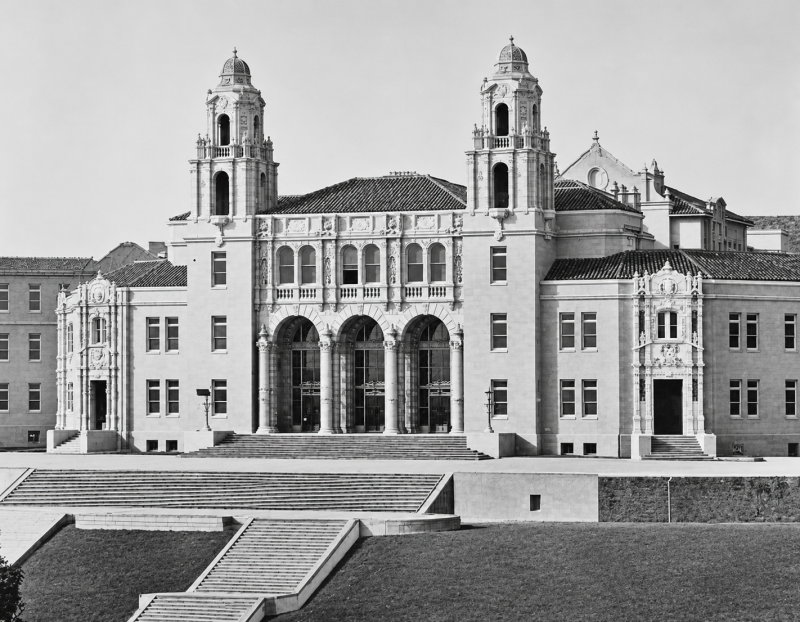
Highland Hospital in Oakland, Alameda County, California, photographed in 1928. Peter Stratford died here of tuberculosis on May 1, 1929.
Others in Niles apparently knew something of Stratford's history prior to his death. Mrs. E. L. Chittenden, the manager of the Hotel Belvoir, told the reporters that Stratford and Rowland had been there since 1926 and remembered both his arrival and his eventual separation from the wife. Other accounts suggested that a former employer had discovered the secret while on the job, arranging for his medical care.
Stratford died on May 1, 1929, at Highland Hospital, leaving behind a trunk which contained letters, photographs, various personal papers and of course the marriage certificate which was to become at the heart of the ensuing scandal.
On May 3, the newspapers had the Stratford letters, identified Rowland as being in Hollywood and Stratford's link to Austin Strong. They also had Alma Thompson's address at 1547 North McCadden Place which put another of the players in the Hollywood film colony.

Hollywood script clerk Alma Thompson (pictured with actor Lewis Stone) developed a relationship with Peter Stratford through correspondence, although the two never met in person.
Other newspapers jumped at the chance to develop the story. One piece was devoted to Stratford's spiritual interests and his personal relationships, presenting the private life as a blend of mysticism and romance. There were photographs of Stratford in masculine attire alongside the more conventional portraits which the press was so keen to have us look at, of a man who they were quite certain had deceived the public.
Stratford was buried in a pauper's grave at San Lorenzo Cemetery in Alameda County on May 5, 1929. There were no flowers and no service of any kind, attended by very few if any. Despite having publicly stated that she'd been duped, Rowland was said to have wanted Stratford's body removed from the pauper's grave and buried privately in San Diego. Whether or not she actually did this is not known. The fact that she should have wanted this at all suggests that the relationship may have had some emotional resonance which wasn't at all apparent in the lurid newspaper coverage.
The fate of Stratford's personal correspondence was also the subject of some controversy. He had left instructions that the letters should not be opened until after his burial and then be returned to their authors. One of the instructions reportedly was “Don't open this trunk until I've been buried.”
County authorities eventually agreed to return the letters, conceding a degree of privacy having already seen so much of Stratford's personal life laid bare. The trunk also contained books and other personal effects, some of which were apparently for friends and acquaintances in New Jersey and Connecticut. Rowland was not expected to take the rest of the contents.
For Rowland, the aftermath must have been tough, though we know very little of her private reaction. She was inescapably linked to the scandal as the wife of a man the papers were adamant was a woman. We don't know if she went on to write for the screen, whether she ever got film credits or whether she subsequently remarried.
Almost a century on, Peter Stratford's story is one that the press would have us believe in a very particular way and the evidence at hand doesn't actually support that.
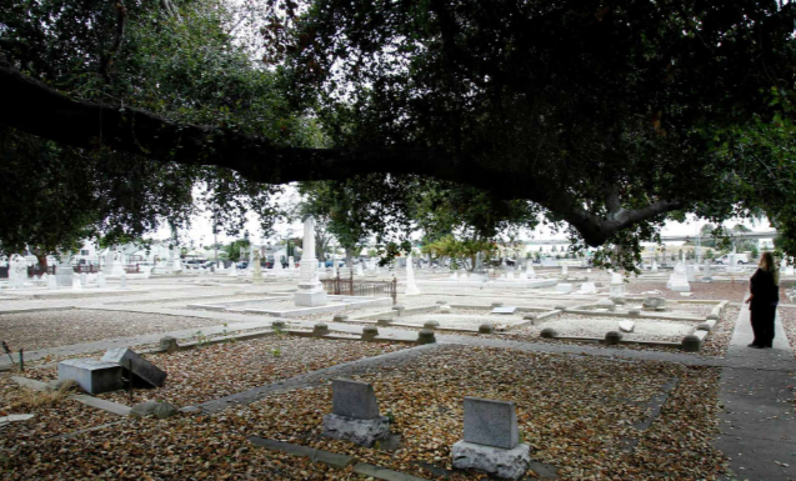
Peter Stratford was laid to rest in an unmarked pauper’s grave at San Lorenzo Cemetery in Alameda County, California, on May 5, 1929. (Today it is known as San Lorenzo Pioneer Cemetery).
We simply don't know whether he would have described himself as a trans man, a lesbian living as a man, or something else entirely. There is no doubt that he lived as a man for a long time, built up a career, had relationships and got married.
The Hollywood links make it such an interesting story. Rowland's aspirations as a screenwriter, Thompson's alleged connection with Warner Bros. and Stratford's correspondence with Austin Strong all place this rather odd life right on the edge of the movie world in the last years of the silent era.
In the end, the most telling thing about Peter Stratford's story is the contrast between the life that was lived and the story that was subsequently told. To the public it was a sensational mystery, an unusual marriage and a secret brought to light by death. Behind all that there was a man who had spent twenty years of his life trying to make a place for himself in the world, in circumstances which really didn't allow for much of a choice.
Peter Stratford died in relative obscurity, was buried in a pauper's grave, and became famous only when a carefully maintained private life was exposed. The scandal has long since faded, but the surviving information preserves the outline of a life that deserves to be remembered for more than the headlines it inspired.
Peter Stratford lived as a man for nearly twenty years, married an aspiring Hollywood screenwriter, and became the subject of a nationwide scandal following his death in 1929. But what was the real story behind the sensational headlines? I'd love to hear your thoughts! Please leave a comment, rate the article, and share it with others interested in Hollywood history and the untold stories of the past. Your support helps keep these forgotten histories alive!
Add comment
Comments