Reviewed by Allan R. Ellenberger
There was absolutely no mistaking James Mason. It may have been his uniquely identifiable voice (so smooth, so cultured, with a touch of menace about it that made even the most banal lines seem interesting), or it may have been his capacity to project such a range of emotions at once (intelligence, vulnerability, arrogance, quiet desperation) in the same scene. Whatever it was, he was one of those very rare actors who could get you to look at him without having to do anything at all. He was a very successful actor, of course, but he never quite achieved the status in Hollywood history of people like Cary Grant, Bogart or Olivier.

“Madeline King Porter’s James Mason: The Movie Star Hollywood Forgot takes us beyond the familiar performances to discover the complex man behind one of cinema’s most distinctive talents.”
That very apparent contradiction is the springboard for Madeline King Porter's James Mason: The Movie Star Hollywood Forgot (University Press of Mississippi, Hollywood Legends series). It's a biography which charts a very diverse career and seeks to make sense of the complex, at times contradictory man who lay behind the familiar voice and the very distinctive look.
The title is absolutely provocative. Has Hollywood really forgotten James Mason? Anyone who's seen A Star Is Born (1954), North by Northwest (1959) or Lolita (1962) would almost certainly say no. There's something to the argument that Mason's sheer range of talent meant he was never really a 'one type' of star. He was a man who could play the leading man, the romantic villain, the tormented intellectual and the supporting player with equal ease. That very lack of categorizable may have been the very thing that made it difficult for him to be remembered as a particular kind of star.
Born in Huddersfield, Yorkshire in 1909, Mason initially went to Cambridge to study architecture before discovering the theatre. His entry into acting was almost by accident, though his subsequent success certainly suggested he had a feel for the business. He was one of the most popular British film stars of the 1940s, usually playing the brooding, dangerous man in the melodrama.
The Man in Grey (1943), The Wicked Lady (1945) and The Seventh Veil (1945) are all classic examples of the type of film he was most associated with. Underneath the rather unpleasantness of his characters there was a real magnetism which the public found quite compelling.
He was one of the most popular British film stars of the 1940s, usually playing the brooding, dangerous man in the melodrama. The Man in Grey (1943), The Wicked Lady (1945) and The Seventh Veil (1945) are all classic examples of the type of film he was most associated with. Underneath the rather unpleasantness of his characters there was a real magnetism which the public found quite compelling.
His performance in Carol Reed's Odd Man Out (1947) showed just how much he could do. As Johnny McQueen, the wounded Irish nationalist trying his best to get away, it was a very powerful performance indeed. A very good performance, one of his best actually and it was the film that really established his international reputation.
Hollywood came calling fairly soon and that was in no small part due to the influence of his first wife, actress and screenwriter Pamela Kellino. Their marriage was passionate, volatile and very much played against the background of their respective burgeoning careers. Porter spends a good deal of space on this relationship and the rather uncomfortable fact that Mason, despite being a global star, was never really at home in the world of celebrity.
His American career was extremely diverse. In The Desert Fox (1951) he was Erwin Rommel the German Field Marshal, a performance of considerable intelligence and restraint. In 20,000 Leagues Under the Sea (1954) he was Captain Nemo with a very convincing blend of brilliance, bitterness and obsession. And in George Cukor's A Star Is Born (1954) opposite Judy Garland, he gave one of the most moving performances of his career.
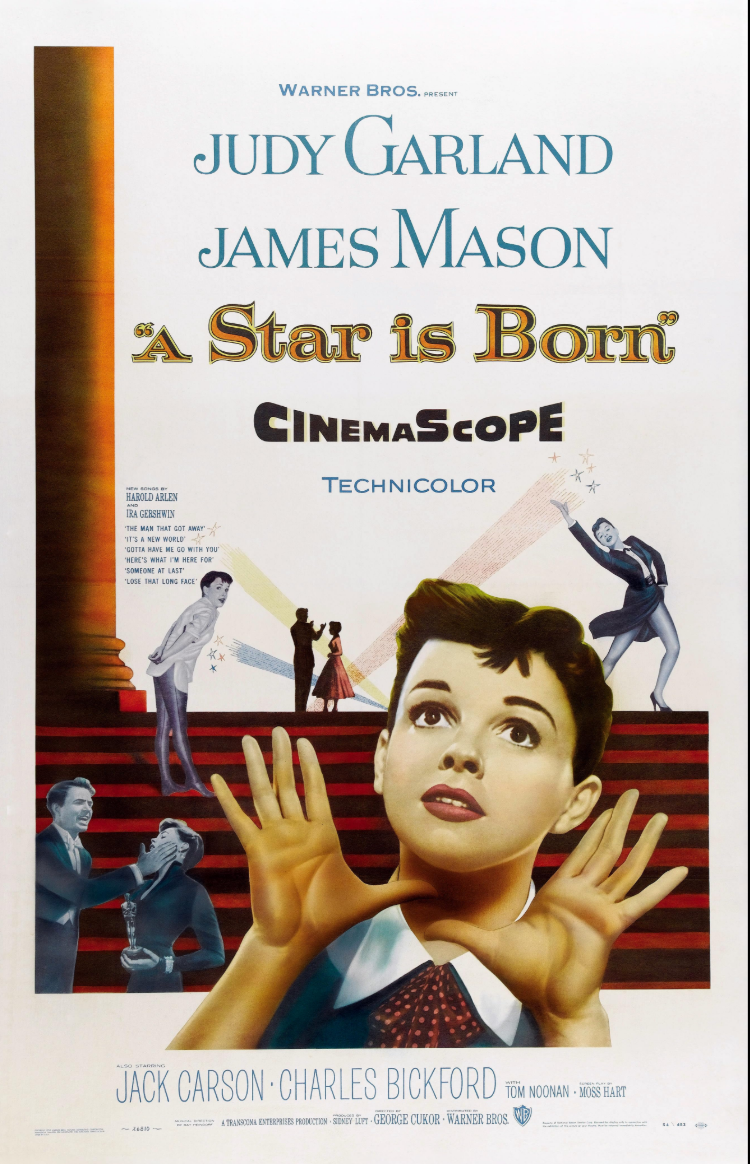


As Norman Maine, the alcoholic actor whose professional downfall is perfectly timed with his wife's ascent to stardom, Mason brought a real sense of pathos to a role which could easily have been a string of familiar Hollywood tropes. He didn't need to excuse the character's self-destructiveness. He simply understood it. It was a performance which earned him an Oscar nomination, one of three he would go on to win.
Mason was just as good as the sophisticated villain Phillip Vandamm in Hitchcock's North by Northwest. His cool, almost courteous demeanor made him a particularly nasty piece of work. He was also very much the man for the role of Humbert Humbert in Kubrick's Lolita, a role which was very much about the suggestion of a complex psychological make-up beneath a veneer of respectability.
But Mason was never happy just to repeat his successes. His career spanned a great many independent films, a number of literary adaptations, a fair number of thrillers and a fair number of disappointments. One of the attractions of Porter's book is the attention it pays to the more obscure films, e.g. The Sea Gull (1968) and Murder by Decree (1979). Those films in particular serve as a reminder that an actor's accomplishments aren't necessarily going to be reflected in the box office or in the form of an Oscar.
The bio also looks at his private life, his love of cats, his interest in drawing and his rather uncomfortable relationship with Hollywood society. His first marriage ended in divorce, and he subsequently married Australian actress Clarissa Kaye. He eventually left California for Switzerland where he found he was much happier away from the Hollywood machine. That in itself is a man who clearly enjoyed acting far more than the business of being a star.
One of the more charming aspects of the book is the inclusion of Mason's rather odd little cat illustrations which provide a completely different, far more personal insight into a man who is otherwise known for his gravitas and reserve. There's also an afterword by his son Morgan Mason and some recollections from colleagues who worked with him. Those bits are going to be a real treat in contrast to the standard accounts of his films and career.
Porter brings a very different background to the project having written a great deal in the field of historical fiction, romance and so on. Her approach is clearly to present Mason not just as a very good film actor but as a very complex human being whose private desires were often at odds with his public persona.

The inclusion of source notes, a bibliography and an index also means that it could be of use to someone doing further research. Still the subtitle does pose a question. Mason was a major star, a three-time Oscar nominee and an actor whose films are still very much in the pantheon. He wasn't a forgotten man. He was an actor who simply wasn't quite the sort of man you could comfortably slot into the standard Hollywood story. His image was too diverse, his personal ambitions too unorthodox and his career too erratic.
James Mason died in Lausanne, Switzerland on July 27, 1984, at the age of 75. More than forty years on and his performances are still absolutely fresh. Whether he was playing a tormented romantic, an elegant villain or a very much flawed ordinary man, he had the ability to make you believe in the character completely. It was an effortless quality.
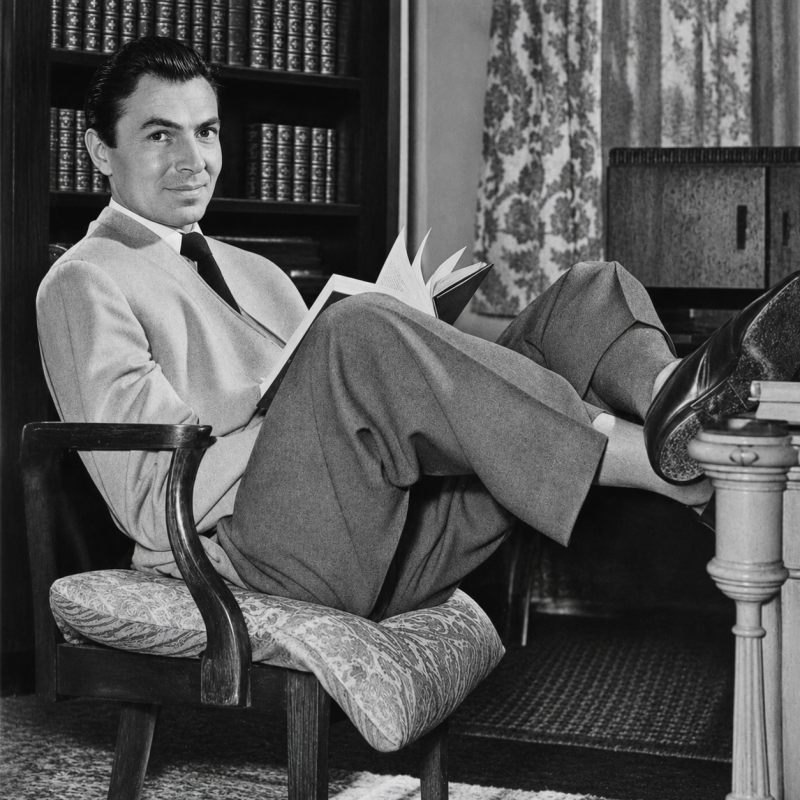
The value of a new biography is in getting us to look beyond the performances we already know and to consider the man behind them. Porter's James Mason: The Movie Star Hollywood Forgot is a good example of that. If it's enough to persuade a few people to go and see Odd Man Out, to rewatch A Star Is Born or to look at some of his other films which are less well known then it's been a success in its own right. James Mason may never have been Hollywood's most conventional leading man. He was something far more interesting.
COMING TOMORROW TO THE HOLLYWOODLAND REVUE! Behind the glamour of old Hollywood were lives filled with secrets, complicated relationships, and unexpected scandals. Tomorrow, discover the fascinating story of Peter Stratford, whose hidden life, Hollywood marriage, and headline-making scandal reveal another side of the entertainment industry's past.
James Mason was one of cinema’s most distinctive and versatile actors, yet his remarkable career is too often overlooked. Have you read my latest book review, James Mason: The Movie Star Hollywood Forgot? I’d love to hear your thoughts! Please leave a comment, rate the review, and share it with fellow classic Hollywood enthusiasts. Your support helps keep the stories of Hollywood’s great talents alive!
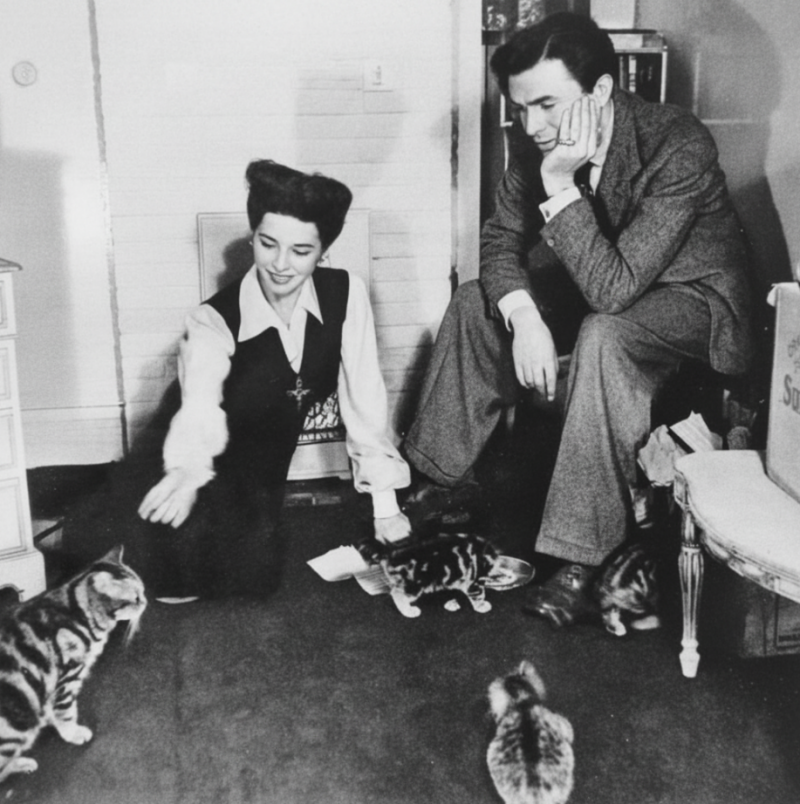
James Mason and his wife Pamela, at home.
Add comment
Comments