

Wow! Sometimes a movie completely surprises me. I went into the theater expecting one thing and left not sure what I had just seen. You Can See Everything, the new documentary from Nathan Fielder and Lance Oppenheim, is one of those rare films. I barely knew anything about it, except that critics loved it and there was already Oscar buzz. I hadn’t even heard of Elizabeth Holmes, the main subject, or the scandal that landed her in prison. In hindsight, not knowing much was probably the best way to see it.
Reviewed by Allan R. Ellenberger
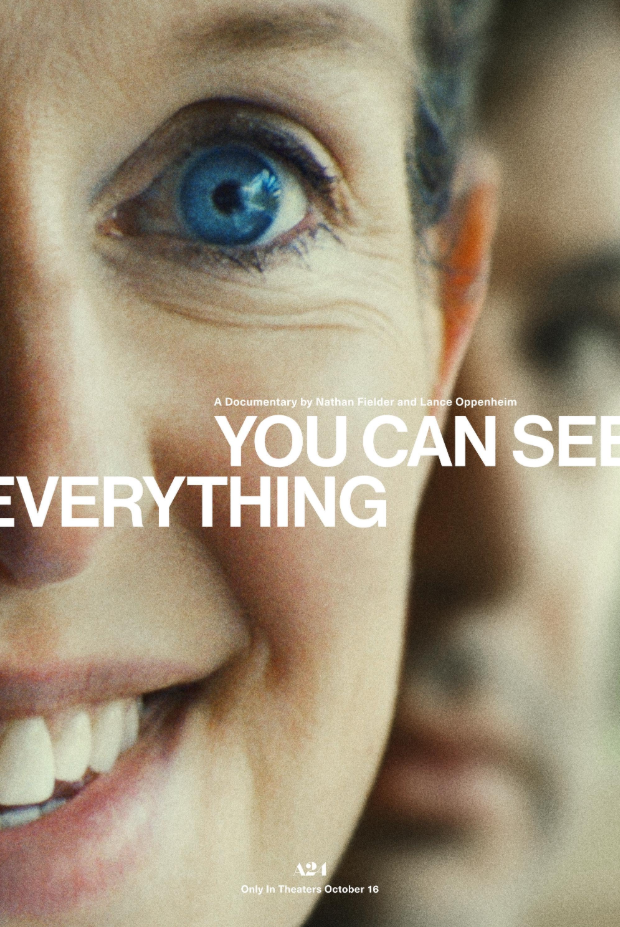
I did have some doubts. Movies with a lot of hype often end up disappointing me. More than once, I’ve gone in expecting something amazing and left wondering if I saw the same movie as the critics. The long running time—almost three hours—also made me nervous. Would I get bored? Would I keep checking my watch? But I didn’t need to worry. From the start, I was drawn in. Time flew by, and when the credits rolled, I knew I’d just watched one of the best films of 2026.
You Can See Everything, released by A24 on October 16, starts in May 2023, just before Holmes is set to go to federal prison. She was once seen as a brilliant Silicon Valley entrepreneur and started Theranos, a company that promised big changes in blood testing. Investors gave her millions, and she became a media star until investigations revealed her claims were false. She was convicted of fraud and conspiracy in January 2022 and sentenced to over eleven years in prison. Her story has already been told in books, documentaries, and a television miniseries, but Fielder and Oppenheim take a different approach.
Holmes and her partner, Billy Evans, let the filmmakers into their home during her last weeks before prison, hoping to show who she really is behind the headlines.
At first, it feels like a personal look at her life, but it soon turns into something much stranger and more unsettling. I don’t want to spoil anything, because the film’s unpredictability is its best part. Just when I thought I had it figured out, something happened that shocked me. It happened more than once. The less you know before watching, the better.
What sets You Can See Everything apart is its unsettling mood. Even though the people are real, the film often feels like a carefully made psychological thriller. The camera focuses on faces, looking for what’s hidden. Conversations turn tense without anyone shouting. A simple comment suddenly feels suspicious. A smile is hard to read. I kept watching every look and pause, trying to figure out who was honest and who might be acting for the camera.
Fielder, known for Nathan for You and The Rehearsal, is fascinating to watch. His awkward style, straight-faced look, and direct questions make him an unusual interviewer. Oppenheim, who made Some Heaven and Spermworld, adds his own unique visual style. Together, they’ve made a film that feels like a mix of documentaries, reality television, dark comedy, and psychological suspense. I haven’t seen anything like it in a theater before.
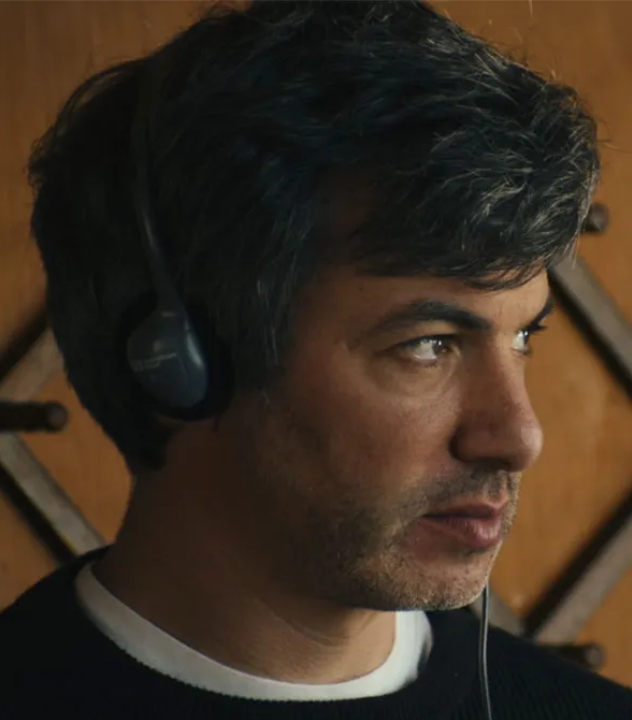

Holmes is captivating, but not in a comforting way. Her bright blue eyes, calm voice, and steady manner make her hard to figure out. Is she honest? Manipulative? Misunderstood? Evans brings another interesting layer, and as Fielder gets more involved, it makes us question everyone’s motives, even the filmmakers. There are real moments of humor, but even those feel a bit uneasy. Underneath it all, there’s a sense that something is happening just out of sight.
Critics have loved the film. Tomris Laffly from RogerEbert.com praised its creative take on nonfiction, and Amy Nicholson from the Los Angeles Times liked the psychological battle between Fielder and Holmes. Justin Chang at NPR pointed out how gripping the film is, and The Guardian highlighted its surprising twists and deep look at deception. Usually, this much praise would make me doubtful, but this time I get it.
Audiences are just as excited, loving a film that breaks almost every rule of documentaries. Its mix of suspense, awkward comedy, and big surprises has people talking. Not everyone will like how unclear it is, and those wanting a simple look at the Theranos scandal might get frustrated. But that’s what makes it so interesting. Instead of giving us neat facts and answers, the filmmakers pull us into a maze where every answer leads to more questions.
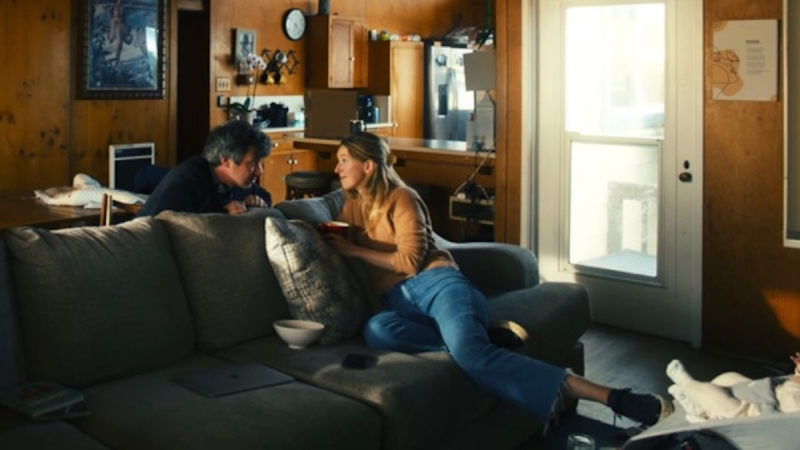
What bothered me most was realizing that a camera, which is supposed to show reality, can also hide it. We think that watching someone closely will show us who they really are. But what if the person knows how to act when they’re being watched? What if the filmmaker has his own plan? The film’s title feels like a challenge. Can we really see everything? And even if we could, would we know what’s true?
My only worry is that calling it a documentary, and its almost three-hour length, might turn people away who would actually love it. Don’t let that stop you. This isn’t a boring list of facts or just people talking. It’s a gripping, often amazing movie that should be seen on a big screen with others who are just as surprised as you. I can’t remember the last time a documentary made me forget I was watching one.
I went into You Can See Everything not knowing anything about Elizabeth Holmes and expecting to be let down. I left feeling excited, confused, and still thinking about what I’d just seen. Few movies have grabbed me so much, and even fewer have made me question what I was actually watching.
Does the film really show the truth about Elizabeth Holmes, or does it just draw us into a bigger illusion? I’m not sure, and maybe that’s what makes it so great. What I do know is I’ve never seen a documentary like this before. It’s bold, gripping, sometimes unsettling, and truly unforgettable. It’s one of the best films of the year. Don’t miss it.
Have you seen You Can See Everything (2026)? Did it leave you as mesmerized and astonished as it did me? I'd love to hear your thoughts! Read my latest film review on The Hollywoodland Revue, leave a comment, rate the article, and please share it with fellow movie lovers. Your feedback and support help keep Hollywood history and film appreciation alive!
Add comment
Comments