

Few motion-picture stars have been written about as often as Greta Garbo, yet she remains trapped inside a handful of familiar clichés. She was “the Divine,” the mysterious Swedish beauty, the reluctant celebrity who supposedly wanted only to be left alone. Over time, the legend became so powerful that it nearly erased the woman herself. Scott Reisfield’s Greta Garbo and the Rise of the Modern Woman attempts to restore that woman to the story. His Garbo is not merely an elusive star or a face designed for the camera. She is a disciplined actress, an ambitious professional, a forceful negotiator, and a cultural figure whose screen performances helped redefine how modern women could be represented.
Reviewed by Allan R. Ellenberger
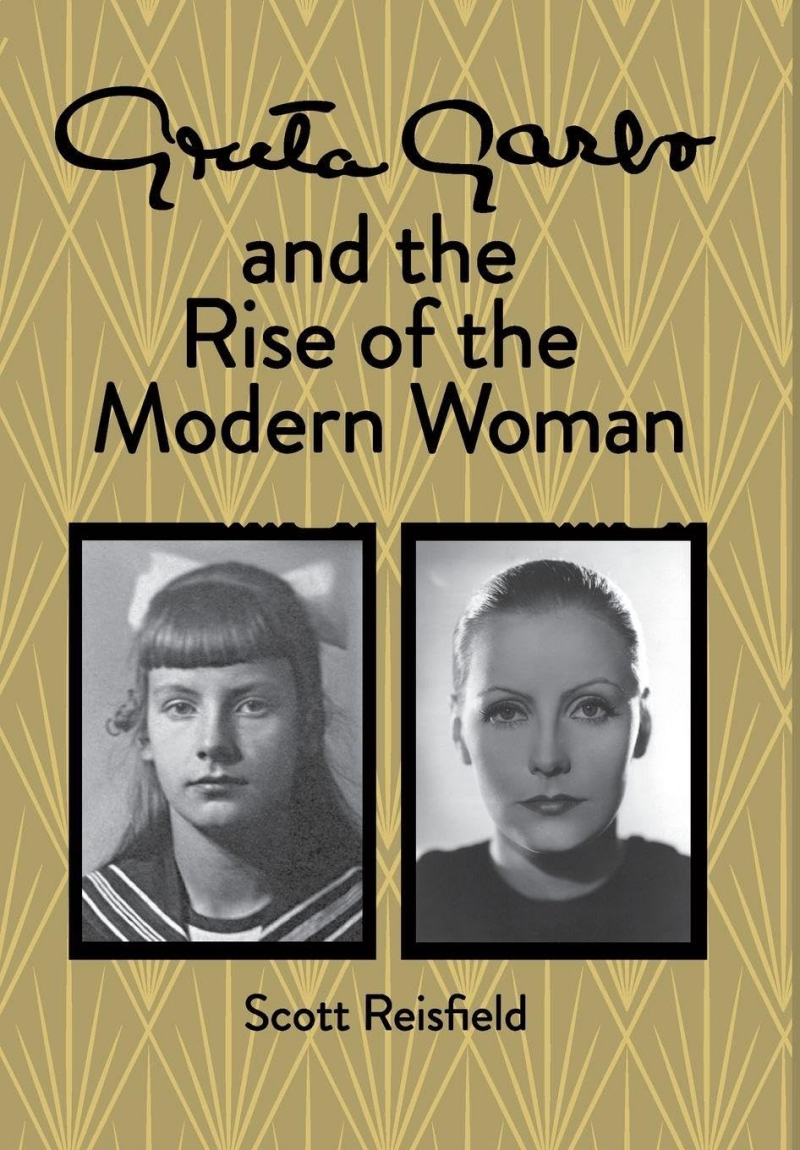
Reisfield brings an unusual personal connection to the subject. Garbo was his great-aunt, known within the family as Kata. He previously coauthored Garbo: Portraits from Her Private Collection with Robert Dance, and his new biography draws upon family recollections, correspondence, studio materials, newspaper accounts, and archival research in the United States and Europe.
Published in 2026 by Vendela Publishing, with the copyright page also identifying Wildeve Press as the original United States publisher, the book is an imposing work of more than six hundred pages. It includes photographs, advertisements, documents, appendices, extensive notes and an index. This is not a brisk celebrity biography. Reisfield has produced a detailed historical reassessment of Garbo’s life, work and cultural influence.
The book begins with Greta Lovisa Gustafsson’s working-class childhood in Stockholm. It follows her through department-store employment, advertising films, acting lessons and admission to the Royal Dramatic Theatre’s acting school. Reisfield is especially determined to correct the long-repeated image of Garbo as a passive shopgirl discovered and shaped entirely by powerful men.
Director Erik Petschler and filmmaker Mauritz Stiller were important to her development. Still, Reisfield argues that Garbo was already pursuing acting with purpose before either man became central to her story. Stiller recognized her potential and helped refine her screen presence, yet the book refuses to treat her as his creation. Garbo appears instead as an active participant in her own transformation.
Her European breakthrough in The Saga of Gösta Berling and The Joyless Street led to Hollywood, where MGM initially seemed uncertain how to use her. Audiences had no such hesitation. In silent films including Torrent, The Temptress, Flesh and the Devil, Love and A Woman of Affairs, Garbo developed an intimate, emotionally restrained style that made her appear to think and feel directly on the screen.
Reisfield connects that naturalistic acting style to the rise of what he calls the Modern Woman. Garbo’s characters desired, worked, chose lovers, rejected convention, and made mistakes without losing their emotional complexity. Even when the stories punished them, her performances resisted reducing them to moral examples.
This argument is most persuasive when Reisfield discusses the films themselves. In Anna Christie, Garbo’s famous demand for whisky introduced talking-picture audiences to a bruised, independent woman who refused to apologize for her past. In Queen Christina, she portrayed a ruler resisting expectations involving marriage, sexuality, gender and duty. The same-sex kiss, the exchange of clothing with John Gilbert’s character and Christina’s refusal to accept a conventional domestic future made the film unusually bold.

Garbo modeling a hat in 1922

Garbo in costume for Luffar-Petter.

Garbo as Elizabeth Dohna in Gösta Berling.
Garbo’s off-screen battles with MGM also receive substantial attention. Reisfield presents her contract disputes not as the behavior of a temperamental star but as calculated efforts to secure better pay, stronger material and greater control. Still in her twenties, she understood her value to the studio and was willing to stop working until MGM recognized it.
Her relationship with John Gilbert is treated as significant but not all-defining. Reisfield is equally cautious about sensational claims involving Mercedes de Acosta, Cecil Beaton and other figures later linked to Garbo. He frequently challenges memoirs and earlier biographies when records, dates or correspondence cannot support their stories.
That determination to correct the record is one of the book’s greatest strengths, although it can also slow the narrative. Reisfield sometimes spends considerable time disputing earlier writers and dismantling familiar anecdotes. Serious Garbo researchers will find these sections valuable, but general readers may occasionally feel overwhelmed by the level of detail.
The book also examines censorship and argues that Garbo’s independent women posed a challenge to conservative forces seeking tighter control over Hollywood. After enforcement of the Production Code became stricter in 1934, sexually independent and morally complicated female characters became more difficult to portray. Reisfield suggests that Garbo’s later historical dramas allowed unconventional behavior to appear at a safer distance.
Her successful comedy Ninotchka proved that she could move beyond tragic romance. Reisfield also reconsiders the failure of Two-Faced Woman, her final film, rejecting the familiar idea that one disappointing picture caused her immediate retirement. Garbo considered later projects but refused to return without suitable material and acceptable working conditions.
The biography is especially effective when challenging the label of “recluse.” Garbo disliked publicity, guarded her privacy and resisted being turned into a public possession. That did not mean she abandoned life. She traveled, maintained friendships, attended private gatherings and remained close to selected family members.
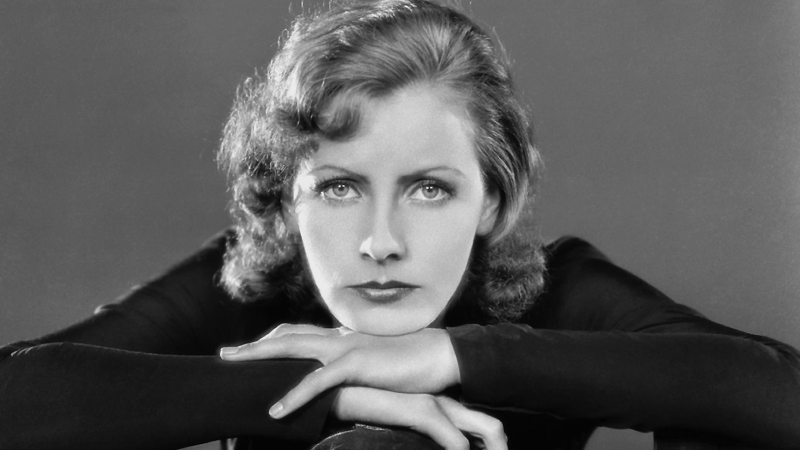
One revealing family anecdote describes Garbo entering a resort dining room in trousers despite a formal dress requirement for women. She was allowed inside, and the following evening many other women also appeared in pants. The incident neatly captures Reisfield’s thesis. Garbo did not need to deliver speeches about liberation. Her example quietly altered what other women believed they could do.
Critical response to the biography has been favorable. Kirkus Reviews praised it as a deeply researched and humanizing portrait that replaces the mythic celebrity with an ambitious, complicated person. Film historian Scott Eyman has similarly praised Reisfield for revealing a recognizable human being behind the legend. At the same time, critic Mick LaSalle emphasized the book’s treatment of Garbo’s acting and cultural influence.
Early reader reactions have also been positive, with particular praise for the archival research, illustrations and detailed production histories. The most common reservation is the book’s formidable length. At more than six hundred pages, it demands patience and may be better read slowly than consumed in a few sittings.
Reisfield’s family connection inevitably raises questions about objectivity. He clearly admires Garbo, and at times his effort to defend her becomes advocacy. Some of his conclusions about censorship, female liberation and the reliability of earlier biographers are stated with greater certainty than every reader may accept.
Even so, the book avoids turning Garbo into a saint. She could be stubborn, suspicious and emotionally guarded. What Reisfield rejects is the assumption that her desire for privacy made her damaged, cold or unknowable. His Garbo was a working artist who recognized the dangers of fame and established boundaries long before celebrity privacy became a widely understood concern.
The greatest achievement of Greta Garbo and the Rise of the Modern Woman is that it restores labor, intention and intelligence to her career. Garbo did not become great merely because she possessed an extraordinary face. She studied, rehearsed, negotiated, observed, and understood how the camera recorded the smallest emotional movement.
This may not be the final word on Greta Garbo, but future biographers will have difficulty ignoring it. For casual readers, the wealth of detail may sometimes be intimidating. For Garbo admirers, film historians and readers interested in women’s cultural history, it is an important and persuasive contribution.
The woman remembered for wanting to be alone emerges here as someone who wanted to be free—free to choose her work, defend her privacy and define herself beyond the roles assigned to her. Reisfield’s book argues convincingly that this independence was not separate from Garbo’s greatness. It was central to it.
To purchase Greta Garbo and the Rise of the Modern Woman, click HERE
"Greta Garbo and the Rise of the Modern Woman is a richly researched, deeply engaging portrait that strips away decades of myth to reveal Garbo as a fiercely intelligent artist, cultural trailblazer, and architect of her own remarkable career." -- The Hollywoodland Revue
If you enjoyed my review of Greta Garbo and the Rise of the Modern Woman, I’d love to hear your thoughts. Please take a moment to comment, rate and share the review with fellow Garbo admirers, classic-film enthusiasts and anyone interested in the remarkable woman behind one of Hollywood’s most enduring legends.
Add comment
Comments