

Before Los Angeles had the Academy Museum of Motion Pictures, before costumes and props were considered artifacts of popular culture worth saving, Harry Crocker had a brilliant idea. The tourists had already begun arriving in Hollywood in the 1920s, peeking through studio gates and milling around film premieres, dropping to their knees on Hollywood Boulevard to press their hands and feet into casts made by movie stars at Grauman’s Chinese Theatre. Harry Crocker knew what they wanted. They wanted to get closer to the movies—to see something real from the otherwise magical world just beyond the gate. In the summer of 1928, Crocker decided to give it to them.
By Allan R. Ellenberger

His Motion Picture Museum would let fans see the costumes, props, miniature sets, cameras, and personal relics that had helped create the movies they loved. It was one of the earliest attempts to preserve Hollywood history at a time when the industry itself threw away or carelessly recycled its history on a grand scale. Crocker was well situated to make it happen.
Born Henry Joseph Crocker II on July 2, 1893, in San Francisco, he was a member of the prominent California family but chose show business over banking. By the mid-1920s, he was working in films and had become well known for his work with Charlie Chaplin, whom he’d first met as a boy in San Francisco. Crocker served as Chaplin’s assistant, confidant, and occasional actor. He appears prominently as Rex, the tightrope walker, in Chaplin’s The Circus in 1928 and later that year went to work for William Randolph Hearst’s Los Angeles Examiner, where journalism became his main occupation.
Crocker later said the museum idea came to him when he watched tourists gaping at Hollywood. He remembered his own thrill on his first visit to the studios and realized that tourists and others outside the film community wanted to peek behind the studio gates. He would allow them to do better. They could see the actual objects used to create screen fantasies.
Crocker had begun planning his museum several months before it opened and told reporters he’d already started remodeling the building he intended to use. He had also spent months visiting with producers and studio executives, asking for their assistance. As a wonderfully irreverent newspaper account described it, Crocker “borrowed” his museum pieces from indulgent producers who simply averted their eyes while he “looted” their property rooms. Some gifts were given outright; others were promised as loans. Many of the museum objects came through Crocker’s friendships with people throughout the motion-picture industry.
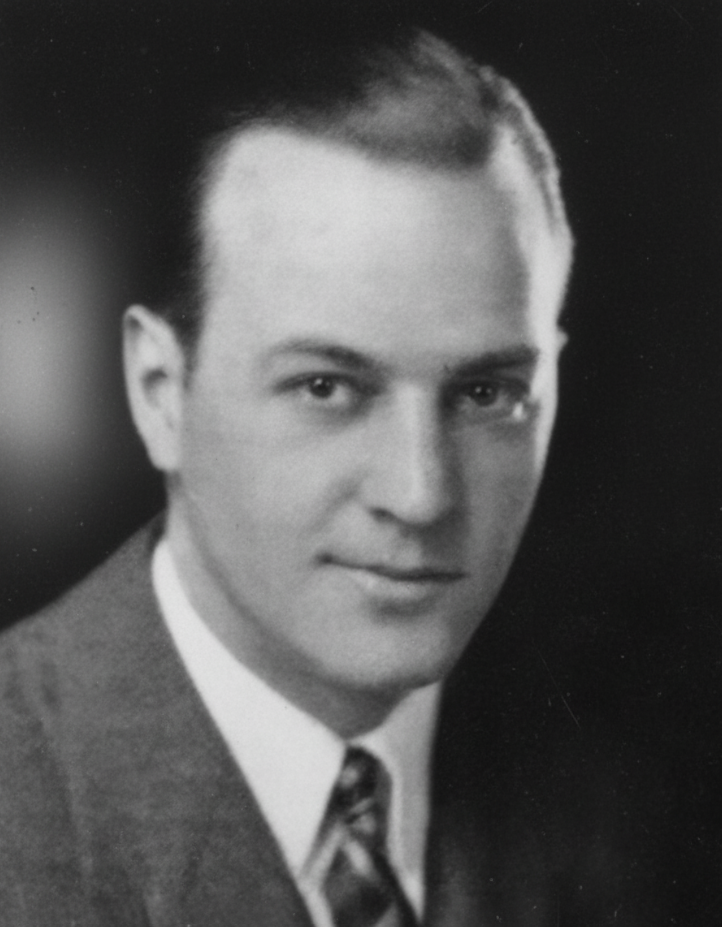
Harry Crocker, journalist, actor, and member of the wealthy Crocker family.
Crocker chose a fantastic location. He leased approximately 10,000 feet in a handsome commercial building designed in the Spanish style at 5939 Sunset Boulevard, at the corner of Sunset and Gordon. Built in 1924 as an automobile showroom for Peerless automobiles, the structure was designed by architect McNeal Swasey. Its glory days as an automobile showroom were nearly over by 1927, however, when Crocker leased the space. It would be ideal for his museum. Across the street was the sprawling studio property owned by Warner Bros., placing Crocker’s museum directly in the middle of the working motion-picture district.
Preview parties took place on Friday evening, August 31, 1928. The Los Angeles Evening Citizen News ran its description of the event several days later. Chaplin, Sid Grauman, George K. Arthur, Henry Bergman, Stuart Holmes, General Lew Cody, Milton Sills, Patsy Ruth Miller and Eleanor Boardman were among those who attended and turned Crocker’s little museum opening into a miniature Hollywood premiere. Even the lighting was dramatic, with arc lights trained on the building.
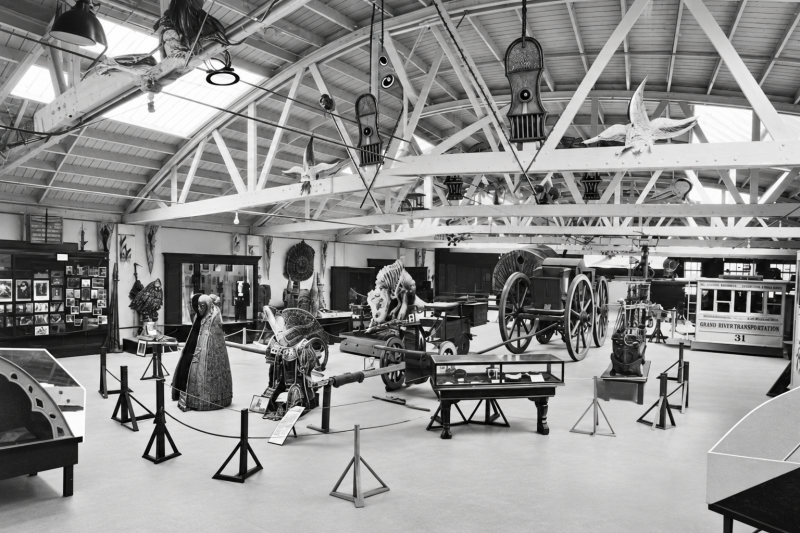
Above is the museum’s display room, filled with the many artifacts and pieces of Hollywood memorabilia collected by Harry Crocker.
Charlie Chaplin himself officiated. According to news reports, Crocker presented Chaplin with an enormous key. Chaplin, serving as master of ceremonies, used the huge gold key on an equally gigantic lock to ceremonially open the museum doors. Visitors entering the museum discovered marvelous chaos. Studio artifacts jammed every corner of the old Peerless automobile showroom. Admission cost only twenty-five cents.
Harry Crocker knew fans craved star power, and his museum delivered. Charlie Chaplin’s wardrobe was perhaps the most famous artifact. There was Chaplin’s derby, his battered cane, threadbare clothes and “other trappings of the immortal little vagabond,” according to contemporary reports. Rumor had it that Chaplin’s costume had already created a sensation when displayed elsewhere and was insured for $50,000.
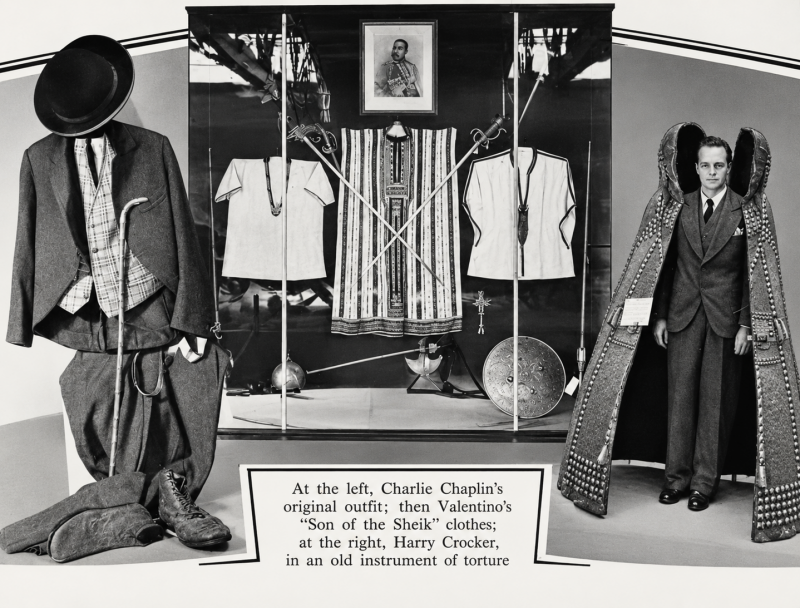

Rudolph Valentino’s costumes were there as well. So were swords, guns and jewels. The museum displayed Valentino’s elaborate embroidered garments that he’d worn in The Son of the Sheik together with rapiers, jeweled sword hilts, armlets and guns “covered with delicate inlaying’s of mother-of-pearl.” Crocker said the Valentino estate had loaned them.
To many visitors who had come to Hollywood just two years after Valentino’s death, those objects were not dusty relics from out-of-touch aristocrats or bored German poets. They were relics of Valentino, who had died suddenly and tragically in August 1926 and whose death was still a fresh memory for millions. Harold Lloyd’s horn-rimmed glasses were represented, as were costumes from Gloria Swanson and Sadie Thompson.
Lillian Gish sent a costume from her appearance in The Scarlet Letter. Betty Bronson contributed her woodland costume from Peter Pan. William S. Hart and Al Jolson also lent pieces from their closets. And on and on. The collection included Douglas Fairbanks’s enormous Argentine carriage from The Gaucho and the magic rope from The Thief of Bagdad. There were chariots from The King of Kings and Ben-Hur, not to mention a streetcar from Merry-Go-Round.
Crocker didn’t limit himself to clothes and cars. He also displayed miniature sets and movie magic. One detailed model showed how Chaplin’s famous snowbound cabin scene in The Gold Rush was created. One of the mechanical dinosaurs from The Lost World stood on prominent display. Could visitors imagine how those long-extinct monsters had been filmed roaring through downtown Los Angeles? They could stand before the ancient beast and try.
Another showstopper was a detailed working model from Paramount’s Old Ironsides, one of the museum’s most valuable pieces. Old motion-picture cameras were also displayed. A set was also painstakingly constructed to show what actors, directors, and camera operators actually did on a movie set. The museum also displayed paintings and caricatures of famous film personalities. There were hundreds of still photographs.

A small-scale model of the castle constructed for Robin Hood, with Harry Crocker standing beside its miniature battlements and towers.

Harry Crocker stands beside a medieval carving of a saint presented to the museum by Douglas Fairbanks.
Crocker understood Hollywood before Hollywood understood itself. Collecting costumes, cameras, and behind-the-scenes artifacts was one thing. But Harry Crocker also attempted to explain movies by showing how they were made. In some ways, he was decades ahead of his industry. Hollywood would love artifacts and nostalgia, but it wasn’t willing to pay twenty-five cents to see them—at least not back then.
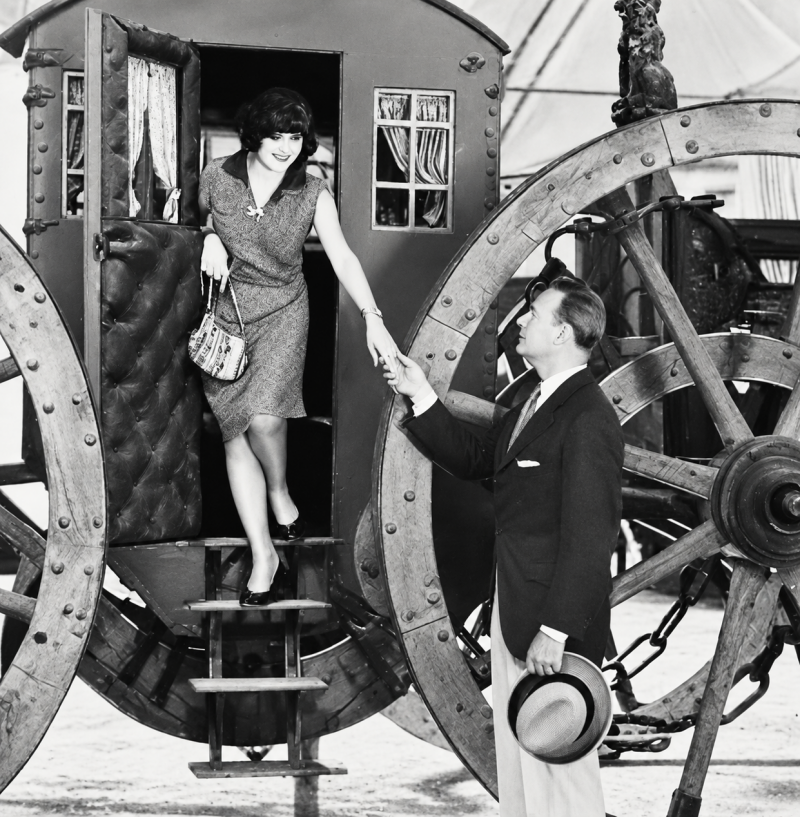
Lina Basquette and Huntly Gordon, visiting the museum, pose aboard the Argentine carriage used by Douglas Fairbanks in The Gaucho.

Lina Basquette and Huntly Gordon pause to pay a sentimental tribute to the little wagon used in Street Angel.
Almost as soon as it opened, Crocker’s museum faced problems. Another anecdote told of a well-heeled woman arriving at the museum in a large chauffeured automobile accompanied by two friends. When told admission cost a quarter, she balked and said she assumed it was free. She drove away. Harry Crocker supposedly sighed and said that maybe it was his museum’s very respectability that killed it.
Whatever the cause, the numbers don’t lie. According to one report, Crocker’s largest single day’s receipts were seven dollars. Harry Crocker’s Museum of Motion Picture History closed on January 1, 1929, folding “for want of patronage.” He returned its objects to their generous donors. Physically, it had lasted only a few months.
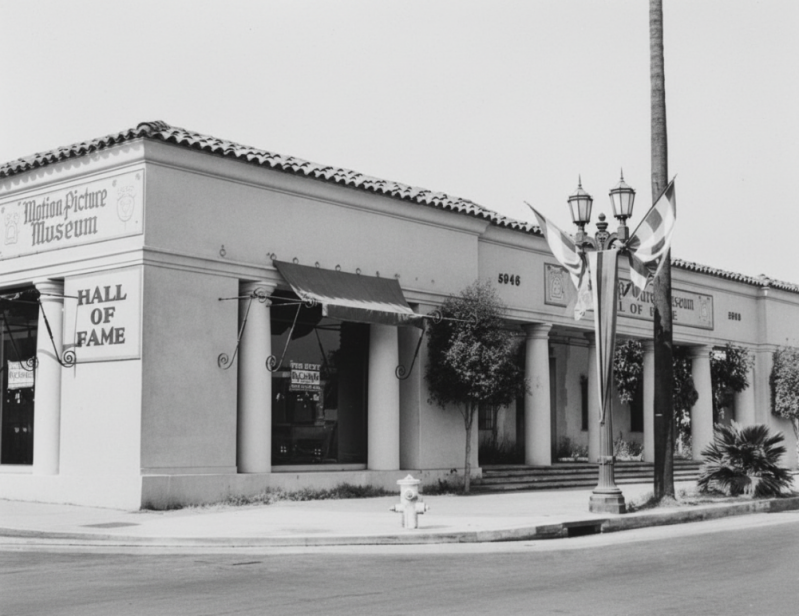
Above is the second attempt to establish a film museum at the same location, opened by Charles Pressley in November 1932.
Entertainment entrepreneurs are nothing if not persistent. In November 1932, another businessman, Charles Pressley, opened his own Motion Picture Museum and Hall of Fame, also located in the same ornate old automobile building at 5939 Sunset. Instead of authentic relics from classic films, Pressley hired actors to dress as movie stars and erected wax figures, tableaux and costumes devoted to Valentino, Garbo, Chaplin, Pickford, Fairbanks, Clark Gable and Bela Lugosi. That business also failed, though far less genteelly.
The building at 5939 Sunset went on to enjoy an astonishing second career. KNX built major radio studios there during the 1930s; Max Reinhardt later opened his theatrical workshop in the building; KMPC broadcast from the building for more than 20 years; and beginning in 1976, generations of Los Angeles residents knew the address as home of the Old Spaghetti Factory. The original building was demolished in 2012, though its elaborate façade was rebuilt as part of the mixed-use high-rise now on the corner.
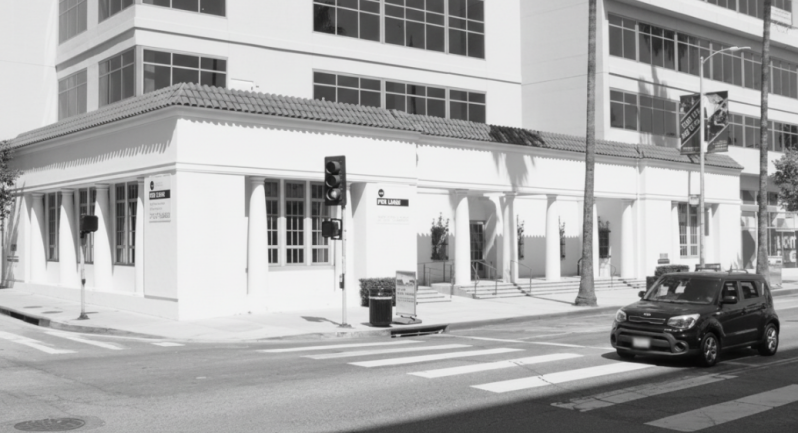
Above is the site as it appears today, with the elaborate façade reconstructed after the original was demolished in 2012 and incorporated into the mixed-use high-rise now occupying the corner.
Harry Crocker’s museum vanished so quickly that for years it was mentioned as little more than a footnote in Hollywood history books. But looking back near one-hundred years later, its failure seems heartbreaking. Harry Crocker knew something about Hollywood that its industry stubbornly refused to understand: movie props, costumes, photos, and equipment were not dusty or obsolete objects to be tossed into storage units or dumpsters when a picture was finished. They were pieces of our cultural history.
For twenty-five cents, you could walk away from Sunset Boulevard and find yourself in the presence of Chaplin’s derby and cane, Rudolph Valentino’s jeweled costumes, Douglas Fairbanks’ personal props, a dinosaur from Harry Nasour’s The Lost World and a miniature movie set from Chaplin’s The Gold Rush. Harry Crocker understood that these were precious things. Sadly, Hollywood didn’t—and still doesn’t— realize it nearly a century later.
Check in tomorrow on The Hollywoodland Revue for my look at Wallace Beery—one of Hollywood’s biggest stars, famous for playing rough-edged but lovable characters. But was the man behind the screen image really Hollywood’s “lovable lug,” or was the truth far more complicated?
If you enjoyed discovering the story of Harry Crocker’s early film museum and its remarkable collection of Hollywood costumes, props, and memorabilia, I’d love to hear your thoughts. Please take a moment to leave a comment, rate the article, and share it with others who enjoy Hollywood history and the fascinating landmarks that have disappeared from the city. Your support helps The Hollywoodland Revue continue preserving these nearly forgotten chapters of Hollywood’s past.

Add comment
Comments