

Brigitte Bardot, the French actress whose sun-struck sensuality and shaggy-haired restlessness redefined postwar screen glamour—and who later shocked the world by walking away from it all to dedicate her life to animal protection—has died at 91, at her home in Saint-Tropez on December 28, 2025. Her death was confirmed by her foundation, the cause close-held in early reports, as France and the film world began reckoning—once again—with a figure who was never merely an icon, never merely a scandal, never merely a symbol.
By Allan R. Ellenberger

Born Brigitte Anne-Marie Bardot in Paris on September 28, 1934, she grew up in a strict, bourgeois household where discipline and appearances were—and where a shy, intense child found her earliest escape in dance. Ballet training gave her posture, poise, and a ferocious work ethic; modeling soon followed, and with it the camera’s undeniable recognition that this young woman did not simply photograph well—she projected something new. In her early film roles, she seemed to arrive already charged with a modern electricity: innocent and provocative, playful and weary, a girl who could look like a dream and a warning in the same frame.
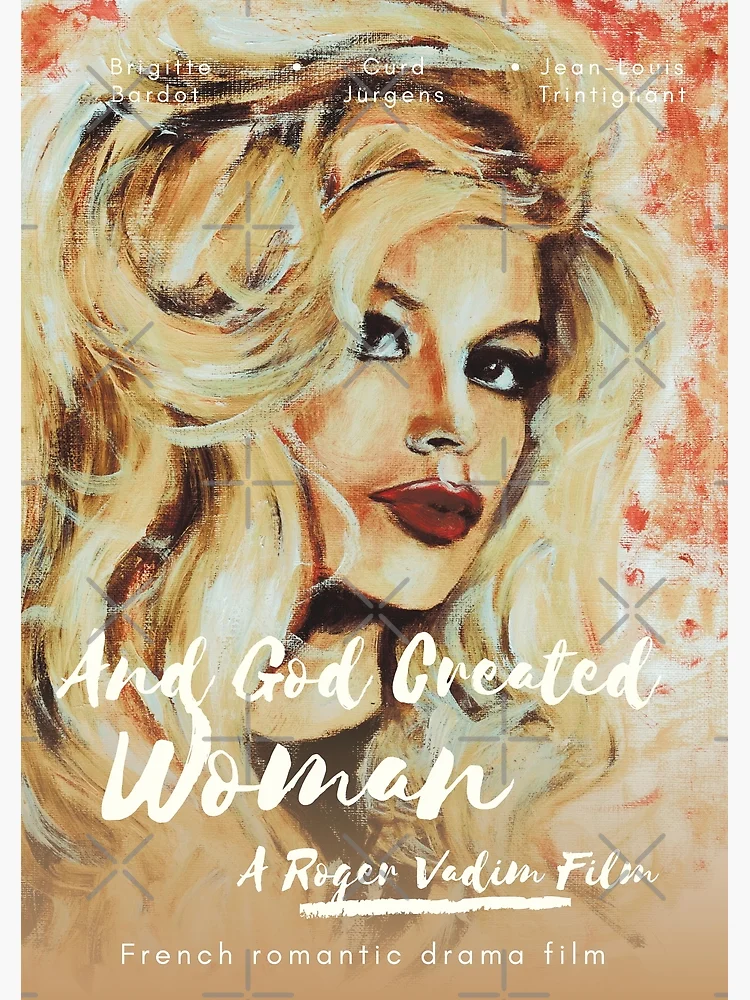
The turning point came in 1956 with ...And God Created Woman, directed by Roger Vadim, a film that did not merely introduce Bardot to the wider world—it detonated her into it. She became “B.B.” almost overnight, a shorthand for a newly international kind of stardom: less polished than Hollywood’s reigning goddesses, more candid, more physical, more openly attuned to desire. The screen had featured sex symbols before; Bardot’s effect was different. She seemed less like a carefully arranged fantasy than a living, impulsive presence—sun on skin, hair in disarray, a laugh that dared the room to disapprove. The price of that sudden mythmaking, however, was that the myth began to consume the person.
The actress had an inconsistent filmography, with roles ranging from romantic comedy to drama to foreign productions, from the late 1950s to the 1960s. She went from being a blonde bombshell to conforming with the fashions and tastes of the 1960s, and back again. Bardot was bubbly and vulnerable, mischievously humorous, sometimes disarmingly honest. She had a tension between liberation and imprisonment, a modernity the public could sense even when they could not articulate it. To Bardot, celebrity was not a slow climb to the top but an atmospheric pressure: one of adulation, but also intrusion, increasingly at odds with her private vulnerability. She was said to have periods of intense sadness and struggles with depression throughout her life under the spotlight.
Her private life, unfairly or not, was also fair game. She married four times: Vadim, actor Jacques Charrier (with whom she had her only child, Nicolas), German industrialist Gunter Sachs, and, many years later, Bernard d’Ormale. But even the “official” chronology failed to fully explain the complicated facts: a woman chased by the world, sometimes desperately trying to preserve some piece of herself from being owned. By the early 1970s, she had reached a point where few stars at her level of fame would ever go: she got out. In 1973, Bardot officially retired from acting, exited the movie frame for good, and chose a life offscreen that, ironically, would only make her more talked about.


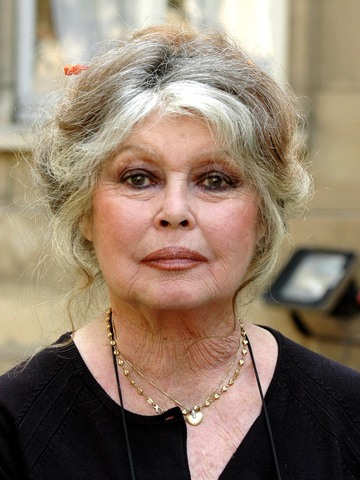
It was not a graceful exit. Bardot simply used her stardom for a different cause. Her leading issue became animal rights, and she became one of Europe's most high-profile and polarizing animal-rights activists. In 1986, Bardot founded the Brigitte Bardot Foundation. Over the decades, she's fought for animal rights with an unapologetic, often abrasive candor that won her as many admirers as critics and gained her considerable political influence. Bardot was never a quiet philanthropist. She was a fighter, willing to insult and enrage, willing to be dismissed, and, perhaps most important, willing to fight on. To her fans, Bardot became almost more famous than as a movie star: a celebrity who used her international fame as a club for a cause she believed most of the world would rather not face.
But Bardot’s later public life has been complicated by comments and alignments that have been, to many, deeply troubling. In her later years, she was repeatedly convicted in France of inciting racial hatred, and her outspoken positions – particularly around Islam and immigration – have put her in a harsh and polarizing position in national discourse, with her often being described as closely aligned with the French far right. Those who spoke of her contributions to the arts and her animal-rights work had difficulty in many cases with the damage done by her words. Bardot, who was never one to speak with moderation, rarely gave the sort of conciliatory performance that is demanded in today’s celebrity culture. She remained, to the end, stubbornly, herself, which can be read as courage in one chapter, and callousness in another.
Bardot lived a semi-reclusive life for her last decades in Saint-Tropez. The southern city may be indelibly associated with her, but in many ways it was also, for her, a place of sanctuary. This had not lessened her place in the cultural zeitgeist. “B.B.” remained shorthand for an epoch of fashion, music and cinema, a distillation of the era when the idea of a star could be as primeval, as unmediated, as combustibly white-hot. And in France, for all the arguments over her politics, her name still had a near-mythic electricity: an actress who had done so much to make French cinema look forward to the world, and then had drawn the line under that, refused to continue in the role that had been written for her.

Bardot at 19 in 1954 by Studio Harcourt
The death of Brigitte Bardot brings to a close one of the most powerful — and complex — public lives of the 20th century. She leaves behind her son and family, her foundation and a body of screen work that still sparkles with the combustible immediacy that made her an icon. She also leaves behind an example—at once inspiring and cautionary—of what it means to be watched by millions, contested by millions, and, at a decisive moment, to turn away from the gaze and live for something larger than fame itself.
Were you a BB fan? Please leave you comments below.
Add comment
Comments