

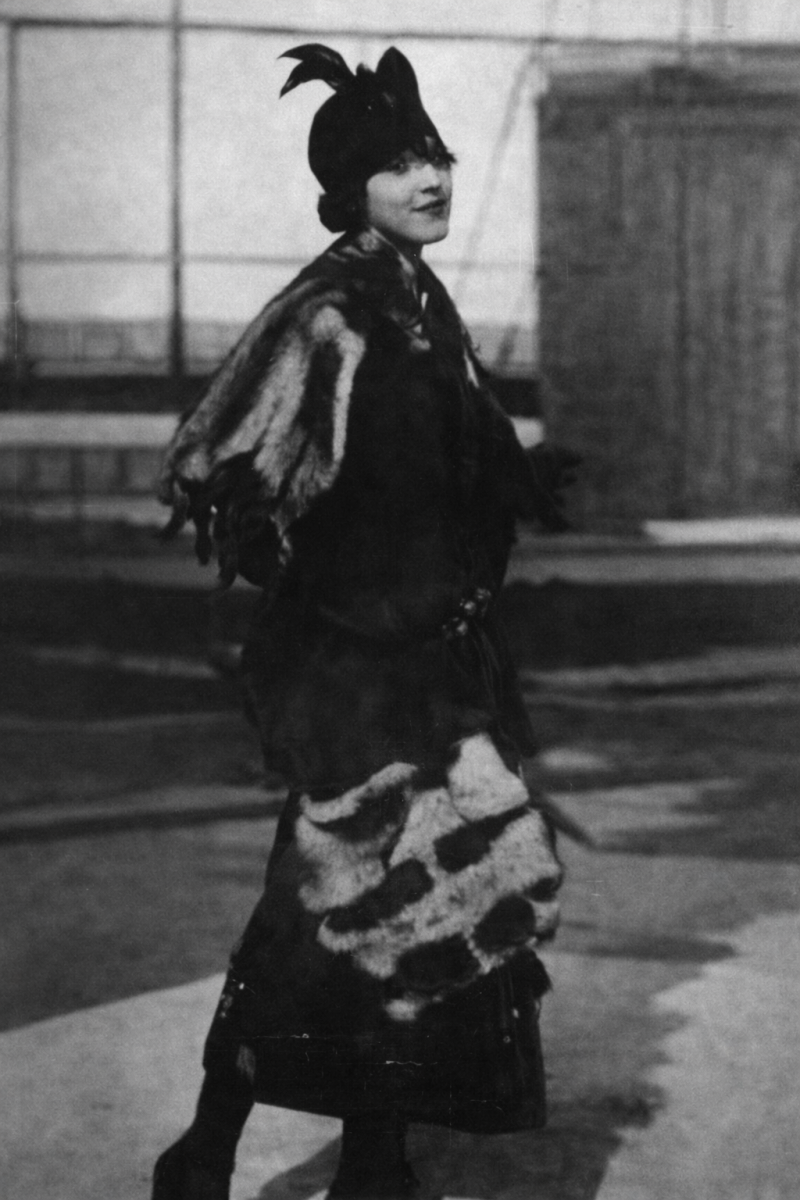
Hollywood’s silent era was filled with young actresses who rose quickly, shone brightly, and vanished almost as fast—some by choice, others by circumstance, and a tragic few by death. Among them was Lillian Webster, a motion picture actress whose career unfolded during the industry’s most volatile years and whose life ended abruptly in 1920, just as her screen future appeared to be taking shape.
By Allan R. Ellenberger

Lillian Webster was born June 12, 1894, in Tennessee to Joseph Webster and Julia Ellis Webster, natives of Tennessee. By the early 1910s she had migrated west with many other aspiring young performers to California when the film industry began to coalesce around Los Angeles. Studios were springing up throughout the city, casting anyone they could find with experience in theater or training beginners for the screen.
Webster quietly built a career as an actress. By no means a household name, Webster nonetheless worked as a solid performer, dependable but unpretentious. In 1919, she was under contract to the National Film Corporation, described at the time as one of the smaller companies that turn out films regularly, both features and shorts, but a company where actresses like Webster could find work. Reports from the time state that Webster was playing leading lady roles in films produced by the company throughout the year prior to her passing, indicating she was starting to find success.
Her reputation among fellow players was that of a dedicated actress—well known within studio ranks, if not yet a public celebrity. Unlike many of her contemporaries, Webster’s name does not appear in gossip columns or scandal sheets, nor is there evidence that her career was marked by controversy. She appears, instead, as a working actress focused on her craft during a period when the industry offered little stability and few guarantees.
Webster’s personal life, as documented, was modest and largely private. Her closest surviving relative was her sister, Mrs. Madge Marsh, the sister-in-law of actress Mae Marsh, of Los Angeles, who would later handle funeral arrangements and appear in newspaper notices following Webster’s death. Three months earlier, Webster had made headlines when she renounced Lieutenant Rand Becker, who was serving a county jail sentence for passing bogus checks; she had been devoted to him until, it was said, she discovered there was “another woman in the case.”
Her death was unexpected and untimely. Webster died on the evening of July 6, 1920, at Methodist Hospital in Los Angeles after surgery. Her official California death certificate lists her cause of death as peritonitis due to an ascending colon condition, with contributory cause salpingitis. She was 26 years old. Peritonitis and salpingitis were common post-surgery complications at the time, which often led to death since antibiotics had not yet been invented.
Newspaper coverage at the time confirmed the shock of her passing. Headlines announced simply, “Film Actress Dies” and “Film Actress Is Dead, Following Operation,” underscoring how swiftly illness could claim even the young and apparently healthy. Reports emphasized that Webster had been active in films up until her hospitalization and was regarded as well-known among her fellow players. Her death, while not widely sensationalized, was clearly felt within the industry.
Lillian Webster's funeral was conducted at the Pierce Brothers Chapel, which at the time was one of Los Angeles' leading funeral homes. Relatives and friends from the movie industry were present at the funeral on July 7, 1920. She was laid to rest in Hollywood Mausoleum (now the Cathedral Mausoleum), at Hollywood Cemetery, which would become the final resting place for many of Hollywood's first film actors.
Webster’s final resting place among actors, directors, and studio personnel helped ensure she would be remembered as one who contributed to the first decades of filmmaking in Hollywood. However, as with many silent-era actors, she was quickly forgotten as new faces came along and the film industry continued to move relentlessly forward. She left behind no memoirs, no extensive publicity archive, and no surviving filmography that firmly anchors her in popular memory. What remains are the official records, the brief notices in the press, and her quiet presence within Hollywood Forever.
Lillian Webster’s story is emblematic of a generation of performers whose lives were shaped by opportunity and uncertainty in equal measure. She worked during a time when medical advances lagged behind ambition, when a routine operation could prove fatal, and when a promising career could end overnight. Her life did not burn long enough to leave a wide trail of fame, but it burned brightly enough to earn her a place among Hollywood’s immortals.
In the stillness of Hollywood Forever, where so many early film lives now rest, Lillian Webster represents the countless silent-era actresses whose names once flickered briefly on studio call sheets and theater marquees—women whose contributions were real, whose promise was genuine, and whose time was heartbreakingly short.

"Smiling Bill Jones," Lillian Webster and director Rolin Williamson.


If this story of Lillian Webster, a star who vanished too soon, moved you, please take a moment to comment, rate, and share the post to help keep her memory alive and her story remembered.
Add comment
Comments
Such a sad tale. One of the many silent actresses, actors, others who passed far too early. Thank you Mr Ellenberger for highlighting Lillians Holywood contribution. I'm UK born and have been to Hollywood a couple of times and never get tired of the stories surrounding Hollywood the community as well as Hollywood the film capital. A marvellous site.