

It was evening on September 25, 1931, and twilight had fallen over Hollywood Boulevard. Sally's Candy Shop at 6711 Hollywood Boulevard was closing up shop for the night. Inside, 28-year-old Wilma Etta McFarland was preparing to end another typical day at work. Described by newspaper reports as a dark-haired, neatly dressed, reliable saleswoman, she would be dead within hours. Her murder would become another entry in Los Angeles' infamous list of unsolved homicides.
By Allan R. Ellenberger

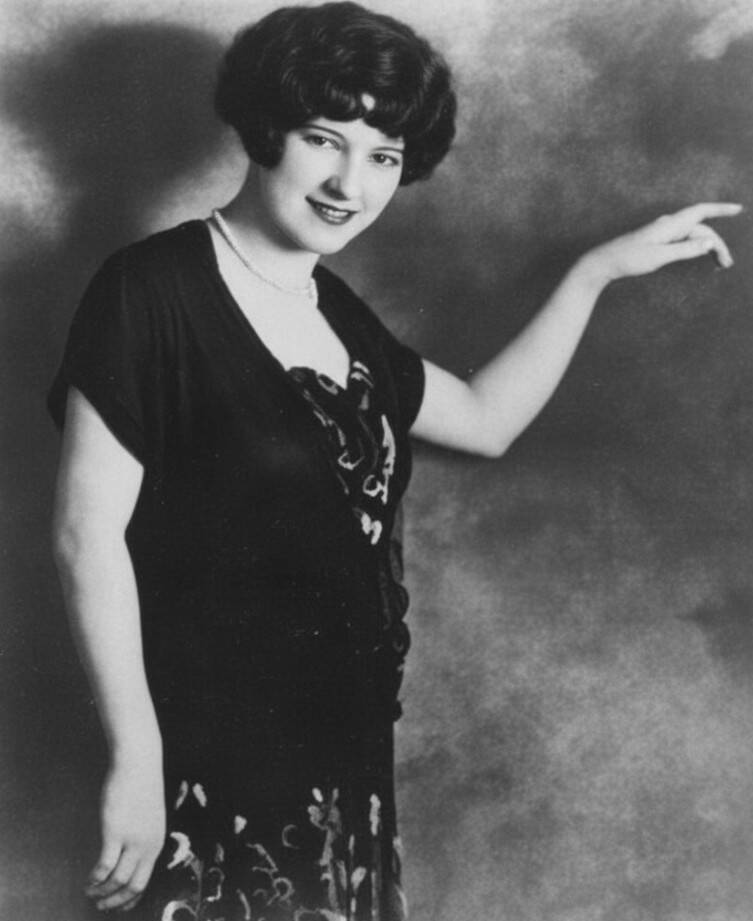
Wilma McFarland was born on March 2, 1909, in Nebraska to James J. Macdonald and Lulu Belle Hyatt. At the time of her death, she had lived in California for about 22 years. Married to Blaine A. McFarland, she lived in Los Angeles and worked as a saleslady in a candy store in Hollywood— the kind of small retail shop that thrived on foot traffic, nickel purchases, and the quiet rhythms of neighborhood familiarity.
What happened on that September evening is known only from bits and pieces of police reports and newspaper accounts. Bert Austin, White's employer, said he tried to call the shop about 6:30 p.m. He received no answer and drove to the store, arriving just after 8 p.m. He found the front door locked. Lights shone in the display windows, but inside was dark.
The floor inside told a story without words. There was a towel just inside the door. Cash registers had been opened and were mostly empty. Robbery could be the motive. Heading toward the back of the store, Austin found Wilma McFarland slumped in a small washroom.
The autopsy and coroner's report were blunt. Cause of death was noted as "concussion of the brain with strangulation and gunshot wound of the face." The coroner deemed the manner of death homicide. A .380-caliber slug was removed from her body. She had been shot in the cheek. There were indications she had been strangled. The bloodstain on the washroom wall spoke volumes about the violence of the attack.
The scene suggested a struggle. Police theorized that McFarland had been forced into the back room, possibly to open the safe or surrender cash receipts. Yet the total amount stolen appeared minimal. Investigators were left to wonder whether she had resisted a robbery or whether a deeper motive lay beneath the surface.
Newspapers of the era chronicled the investigation with the breathless tone common to early-Depression crime reporting. Fingerprints were lifted from the premises but yielded no immediate identification. Detectives canvassed the neighborhood and examined suspects, but no arrest followed. In one bizarre episode, a woman arrested for drunkenness claimed she knew the solution to the “famous McFarland Hollywood candy shop murder,” only to sober up and deny any knowledge.
Police Chief Inspectors pursued leads through the fall of 1931. Robbery seemed plausible, yet investigators admitted the evidence was thin. The empty cash drawers suggested theft, but the brutality of the attack seemed disproportionate to a few dollars in receipts. As weeks turned into months, the case slipped into that uneasy category of “unsolved.”
Wilma McFarland led a life that, apparently, was rather unremarkable -- which makes her death feel spectral. She was neither a socialite nor someone who chased notoriety. She was a working girl working a retail job, one of many employed girls staffing Hollywood's burgeoning service industry in the early-1930s. Her murder doesn't echo with glamorous infamy. It's quieter, more troubling: an acknowledgement that the boulevard's bright lights cast long shadows.

Former site of Sally's Candy Shop, 6711 Hollywood Blvd., where Wilma McFarland was murdered.
Wilma McFarland was buried at Forest Lawn Memorial Park in Glendale on September 30, 1931. She rests on Sunrise Slope, Lot 5965, an area of Forest Lawn that was built to look like a tranquil paradise. The manicured lawn and rolling hills provide a stark juxtaposition to the gunshot that stole Wilma's life. The murder of Wilma McFarland is still unsolved.

The case drifted back into the file drawer for years to come, flickering back to life occasionally when someone was arrested for another robbery or an old lead was followed up. However, there was never a definitive resolution. No one was able to match fingerprints found at the scene to anyone in the system. The .380 pistol was never conclusively tied to a suspect. No one confessed.
Crime was up in Los Angeles during the early 1930s, thanks to widespread poverty. Small business owners often found themselves victimized.
However, Wilma McFarland's murder was horrific even by those standards. It wasn't a gangland hit or a sordid tale of Hollywood intrigue. It was a plain woman slaughtered at work.
Nearly a century later, her story still matters. Los Angeles may be a city in perpetual motion, constantly remaking itself, but you can't erase what came before. Her murder is one of Hollywood's cold cases. It reminds us that underneath the glitz of the movie business were city streets where a regular girl could disappear without a trace. Just like that. And who killed Wilma McFarland? We still wonder, just as they did in 1931, when the headline newspapers turned yellow.
Step inside one of Hollywood’s most haunting unsolved crimes—then comment, rate, and share your thoughts.
Add comment
Comments
this is a sad story
I agree Dawn, thank you for sharing.