

Ted Turner's passing marks the end of one of the most revolutionary and impactful lives in modern media. Mercurial, brash, visionary, divisive and frustratingly undefinable at times, Turner revolutionized television news, redefined cable television, disrupted media ownership models, and cultivated a public image so wild that, for a time, he became as famous as the outlets he established. Launching CNN in 1980, Turner didn't just alter how we consume news, he reshaped how we witness history unfold.
By Allan R. Ellenberger

Turner was born Robert Edward Turner III in Cincinnati, Ohio on November 19, 1938, to a dominating and erratic father, Robert Edward Turner II. His father owned a prosperous billboard advertising business. Turner's upbringing has been characterized by instability and intensity. He was educated at Brown University where he studied the classics. He often found himself defiant towards authority figures including his father, who allegedly flew into a rage when learning of his son's pursuit of the classics in college. Turner joined Turner Outdoor Advertising (the family billboard business) after graduation and took over management after his father committed suicide in 1963. He was devastated by his father's death which drove him to work compulsively.
What began as a regional advertising company soon evolved into something far more ambitious. Turner bought an underperforming television station in Atlanta and turned it into WTBS, launching the “superstation” trend by broadcasting its signal to the country via satellite.
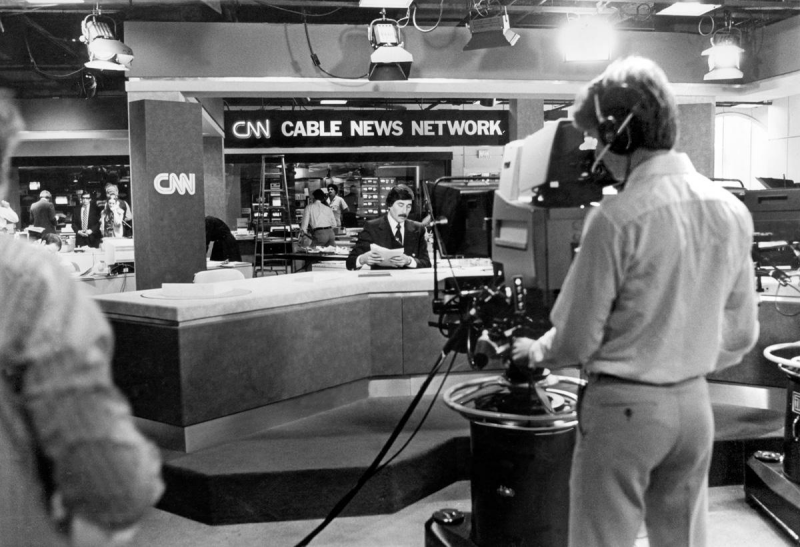
Turner did things nobody had ever thought of before, helping to push the boundaries of cable television. But nothing that Turner did would be more revolutionary than CNN. In 1980 Turner launched CNN, the world’s first twenty-four-hour television news network. Most people at the time thought it was a crazy idea. Skeptics ridiculed the idea that someone would actually watch news around the clock. Industry experts said it would bankrupt him. Turner did it anyway. He felt that the world was changing fast and scheduled network programming was becoming obsolete.
CNN quickly became one of the defining institutions of the modern age. Its coverage of the Challenger disaster, the fall of the Berlin Wall, and especially the Gulf War transformed the network into a global force and established continuous live coverage as the new standard of journalism. Turner’s instincts—once dismissed as reckless—proved prophetic. Under the Turner Broadcasting umbrella came additional networks and ventures including TNT, Cartoon Network, Turner Classic Movies, and CNN International, all of which expanded his influence across entertainment and information.
But Turner was never simply a businessman. He fashioned himself as something of a media pirate-philosopher. He earned monikers like “Captain Outrageous” and “The Mouth of the South.” He spoke in plain talk, courted scandal, and constantly made news for his remarks, which ranged from outrageous and eccentric to surprisingly insightful. He loved showmanship and gamesmanship. He won the America’s Cup in 1977. He owned the Atlanta Braves and Atlanta Hawks. He created the Goodwill Games as a geopolitical alternative to the Olympics during the Cold War. He poured vast resources into saving the environment and became one of America's biggest private landowners as a result.
Turner’s personal life proved nearly as public as his business ventures. He married three times before his highly publicized union with actress and activist Jane Fonda in 1991. Their marriage became one of the most visible celebrity pairings of the decade: Turner the outspoken Southern media titan, Fonda the politically engaged Hollywood icon.

The relationship fascinated the press because the two seemed simultaneously mismatched and deeply compatible. Fonda later acknowledged Turner’s brilliance and charisma while also describing the emotional volatility that complicated their marriage. Turner himself admitted that he once considered running for president, an idea Fonda reportedly discouraged by threatening to leave him if he did. The marriage ended in divorce in 2001, though the two remained connected by affection and mutual respect.
Turner's life was not without hardship, however. Although the merger of Turner Broadcasting and Time Warner in 1996 made him the then-largest American dollar-for-dollar deal in history, it reduced his influence on his company. The later implosion of AOL-Time Warner took a heavy toll on his wealth and left him bitter towards large corporations. Turner also faced health issues later in life. In 2018, Turner publicly announced he had been diagnosed with Lewy body dementia, a progressive neurological disorder linked to Parkinson's disease and Alzheimer's disease. His diagnosis earned him sympathy from many who remember him as a man with boundless vigor.
Ted Turner passed away on May 6th, 2026, in his home on his long-time residence Avalon Plantation outside of Tallahassee, Florida at the age of eighty-seven. He had reportedly been in hospice care in recent months after his health began to fail him due to dementia.


Details of his funeral have not yet been confirmed. Turner is survived by his five children, grandchildren, and great-grandchildren. As Turner spent much of his life caring for his extensive conservation lands and referred to himself as a son of the West and the South, many presume that he will be buried on one of his private ranches or his properties instead of a public cemetery.

Ultimately, Ted Turner will not be remembered for his networks or his corporations. He changed the pace of life in the modern world. News used to happen on schedule. After Turner, news happens around the clock. He was a father of the 24-hour news cycle and the instant connectivity that now blankets the world for good or ill. He could give billions (a billion dollars to the UN, for instance) to try to right the world, speaking out on issues from nuclear disarmament to saving the environment. He could be vulgar, reckless, and hot-headed; a fierce competitor who often let ambition override tact. Even his detractors rarely questioned his importance.
Hollywood and television history are filled with executives who protected systems already in place. Ted Turner did the opposite. He shattered existing models and forced the world to adapt to his vision. In doing so, he became one of the last truly mythic media moguls of the twentieth century—a man whose influence extended from Atlanta boardrooms to war zones broadcast live across the globe.
The television screen he transformed now glows continuously in nearly every corner of the modern world. That may be Ted Turner’s most enduring monument.
If you found my obituary on Ted Turner and his revolutionary impact on television history meaningful, please take a moment to comment on, rate, and share the post.
Add comment
Comments