

In the final, fading years of Hollywood’s Golden Age, when the old studio system was beginning to crumble and once-mythic stars drifted uneasily toward obsolescence, one last scandal exploded across newspaper headlines with the force of a dying era’s final gasp. At the center stood Beverly Aadland, a blonde California teenager whose dreams of movie stardom became forever entangled with the tragic last chapter of screen swashbuckler Errol Flynn.
By Allan R. Ellenberger

For decades, Beverly Aadland survived in Hollywood memory less as a person than as a symbol — “Errol Flynn’s teenage girlfriend,” the young girl photographed beside the aging rogue during his final months. Yet behind the sensational headlines was a far more complicated story: one involving ambition, exploitation, loneliness, faded glamour, and the brutal machinery of Hollywood fame.
Beverly Elaine Aadland was born on September 16, 1942, in Los Angeles, practically within site of the studio backlots. Beverly's mother Florence Aadland was convinced that her daughter was destined for fame and would stop at nothing to see that destiny fulfilled. Beverly was enrolled in dance lessons and acting schools as a child and prepped as so many Hollywood hopefuls had been before her. She had exactly the wholesome California look that Hollywood casting agents craved during the postwar era: blonde, photogenic, spirited, and naïve.
Like many aspiring young actresses of the era, Beverly found only limited opportunities. She appeared in small performances and dance work, moving through the lower levels of Hollywood’s entertainment world while waiting for the breakthrough her mother believed inevitable. But the role that would define her life came not through talent or career momentum, but through scandal.
By the late 1950s Flynn himself was a faded husk of his former cinematic icon. During the '30s and '40s Flynn was one of Hollywood's biggest box-office draws, starring in such classics as Captain Blood, The Adventures of Robin Hood, and The Sea Hawk. Good-looking, irresponsible, and devilishly attractive, he lived a life that fueled his hedonistic public persona. By 1958, however, Flynn's health had declined due to years of alcoholism and debauchery. Money troubles haunted him, his health was in shambles, and his career was nearing collapse. To a generation raised on his movies, however, Flynn was still the very essence of roguish charm.
Beverly met Flynn when she was only fifteen years old. Flynn was forty-nine. According to later accounts, he hired her to appear in Cuban Rebel Girls (1959), a low-budget semi-propagandistic film supporting Fidel Castro’s revolution in Cuba. What followed became one of the most controversial relationships in Hollywood history. Flynn reportedly insisted Beverly was older than she truly was, while Florence Aadland actively encouraged the relationship, believing it could advance her daughter’s career.
The ethics of their relationship have been debated for generations. What seems incontrovertibly immoral to today's society - a grown man's connection with a teenage girl - was discussed among those who knew them as a tenderness between two human beings that couldn't be captured by tabloid sensationalism. Beverly accompanied Flynn on his later travels, nursed him when he became ill, and sat by his side as he wasted away. She was "Flynn's Last Love" to the media. Flynn, to Beverly, was glamour, love, an escape from and entrance into Hollywood.
Cuban Rebel Girls became the only major screen artifact of their relationship. The film itself was chaotic and cheaply produced, but Beverly displayed flashes of genuine screen presence—bright, curious, and naturally expressive before the camera. Flynn himself reportedly praised her potential. Yet by the end of the 1950s, Hollywood had little interest in launching the career of a young actress already attached to public scandal. The relationship that briefly seemed capable of opening doors instead permanently defined her public identity.
The final chapter of their story was written on October 14, 1959. Beverly had accompanied Flynn to Vancouver, where he was staying with physician Dr. Grant Gould. Flynn, already visibly weakened, suddenly collapsed from a massive heart attack. Beverly was beside him when he died. She was seventeen years old.
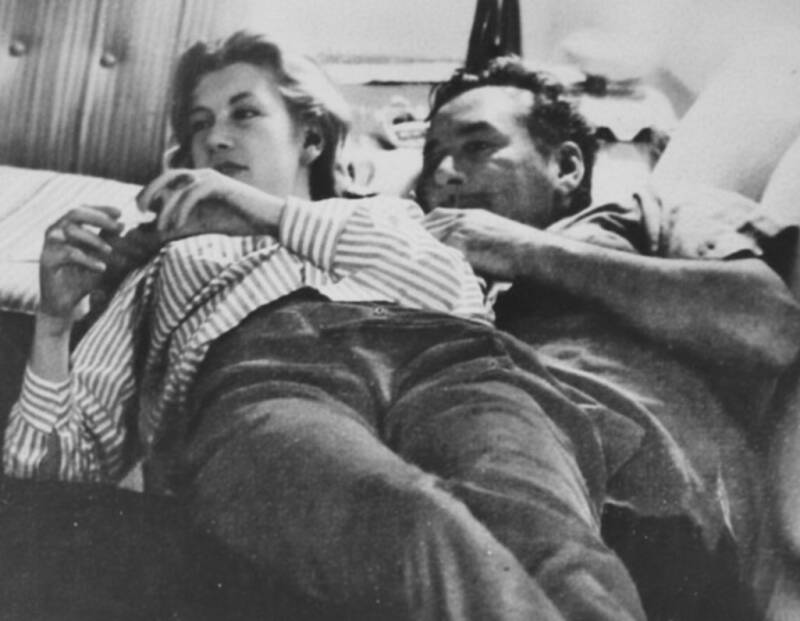

In 1960, Modern Screen magazine published photographs of Errol Flynn with teenage Beverly Aadland in the months following the actor’s death, further fueling public fascination and controversy surrounding their relationship.

Reporter Joe Finnigan and seventeen-year-old Linda Tartar accompany a grief-stricken Beverly Aadland at Los Angeles International Airport following her return from Canada after the death of Errol Flynn.
The coverage was brutal. Print media remade Beverly into the villainous protagonist of a tabloid morality play. Headlines blazoned her moniker of “Flynn's teenage lover.” Reporters milked every drop of sensationalism and moral panic from the story. Florence Aadland interviewed with magazines for pay and co-wrote the lurid tell-all The Big Love years later, painting their affair as a doomed romance. Beverly's story was later adapted into a stage production that only distorted her story further.
But for Beverly herself, life after Flynn proved unstable and often painful. Hollywood opportunities evaporated almost immediately. She worked intermittently as a dancer and nightclub entertainer while struggling to escape the notoriety that permanently shadowed her name.
On April 11, 1960, another tragedy entered her life when her boyfriend, William "Billy the Kid" Stanciu was discovered dead in their Hollywood apartment at 1780 North El Cerrito Place with a gunshot wound to his head. Police ruled his death a suicide due to playing an unfortunate game of Russian roulette that he and Beverly had been involved in. Beverly was interrogated but never charged. However, the event only contributed to the scandals and roller coaster of emotions she rode after Flynn's death.
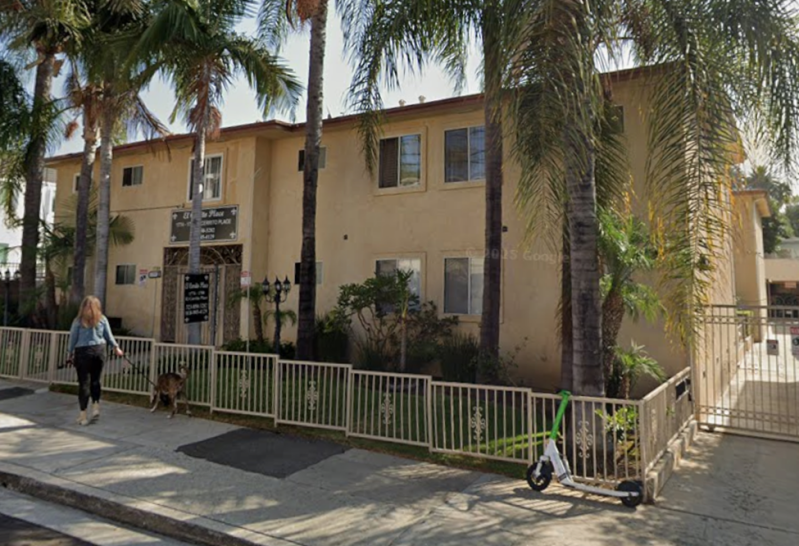
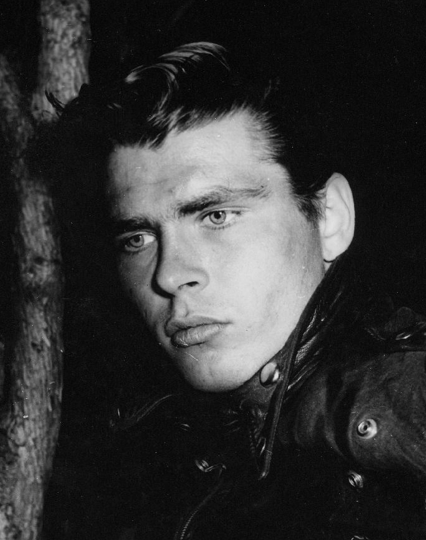
In April 1960, tragedy struck at 1780 North El Cerrito Place (above) in Hollywood when Beverly Aadland’s twenty-one-year-old boyfriend, Billy Stanciu (right), died from a gunshot wound during a reported game of Russian roulette; the coroner ruled the death a suicide.
As she grew older Beverly retreated from the spotlight. Friends and acquaintances recalled her as kind, bright, witty and deeply scarred by the fame that had overtaken her adolescence. She married and raised children, spending her days working mundane jobs a world away from the glitz and glamour she once thought she was poised to enter. No matter how many years passed she would forever be linked with Errol Flynn's last days.
Beverly Aadland died on January 5, 2010, in Lancaster, California at the age of sixty-seven, from complications of diabetes and congestive heart failure. She was cremated with her ashes scattered. Beverly Aadland's death went almost unnoticed, save by film historians and devotees of classic-Hollywood remembering her as one of the last living witnesses to Flynn's final years.
These days Beverly Aadland holds an odd place in Hollywood history. She's more infamous than famous; remembered not for what she did but for what happened to her when she was still a teenager. But to view Beverly only through the lens of scandal is to miss the bigger picture. Beverly's story exposes the seedier side of classic Hollywood: how innocence, beauty, greed and weakness were exploited by fame…and those who chased it. She was not just a chapter in Errol Flynn's life story. She was a young girl who dreamed of becoming part of Hollywood’s magic and instead became trapped inside one of its final great tragedies.
In the end, Beverly Aadland remains one of Hollywood’s most haunting cautionary figures: a teenager swept into the orbit of a dying star, forever frozen between innocence and scandal, dream and disillusionment, history and myth.
Tomorrow on The Hollywoodland Revue: a visit to Hollywood’s enchanting Chaplin Cottages, the storybook fairy-tale homes on Formosa Avenue long linked to Charlie Chaplin and the dreamlike imagination of silent-era Hollywood.

If you found this look at the tragic and controversial life of Beverly Aadland compelling, please comment on, rate, and share the article with fellow lovers of Hollywood history.
Add comment
Comments