

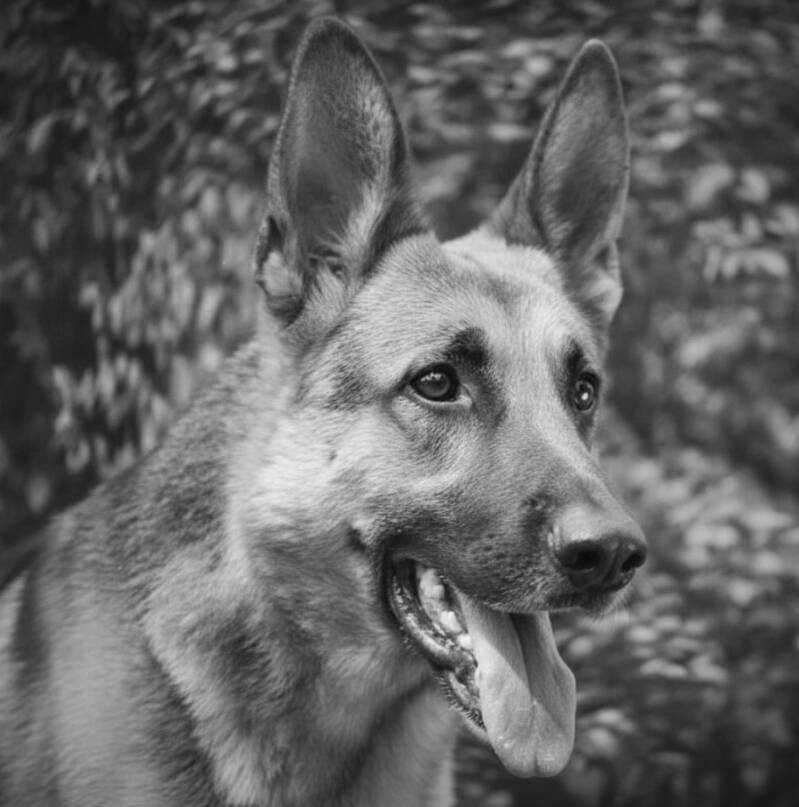
Before there was Lassie or Rin Tin Tin gracing movie marquees as Warner Bros.' top box-office star, another intelligent, disciplined and handsome German Shepherd made Hollywood studios take notice. His name was Peter the Great. Peter appeared in several silent film favorites as action melodrama and crime thriller heartthrobs throughout the mid-1920s. He was well received by both audiences and critics alike for his astounding obedience training and ability to emote on camera
By Allan R. Ellenberger

Peter the Great had a backstory almost as sensational as his films. Studio publicity stated that Peter had trained in Europe, graduating from the Berlin Police Academy before being purchased by actor Edward Faust for $100 and emigrating to America. As German Shepherds were valued for their performance in war and police work at the time, Peter seemed authentic and highly disciplined. Rumor had it that Peter served as a stunt dog and double for other canine celebs before starring on his own, including Rin Tin Tin. Hollywood producers recognized that audiences loved their animal stars, especially well-trained German Shepherds displaying athleticism as well as fidelity.
Peter's intelligence and his good looks quickly propelled him from stunt double into starring roles. By 1922, Peter starred in silent pictures that contained adventure, rescues and drama. One of Peter's most well-known films was The Silent Accuser (1924), a crime melodrama directed by Chester Bennett. Also starring Eleanor Boardman and Raymond McKee, Peter portrays a faithful canine who wants to bring justice upon a murderer he witnesses.
This premise was very common during this time period due to people's fascination with animals portrayed as being almost human. The film was popular and Peter's performance was praised. Peter demonstrated true emotion, unlike many animals used as a mere gimmick.
Following The Silent Accuser's success, Peter quickly became busy with acting jobs. King of the Pack (1926) and The Sign of the Claw (1926) further solidified Peter's public image as courageous and intelligent. During the silent film era, films relied heavily on visuals, so filmmakers sought animals that could express emotion through their body language. Peter became one of Hollywood's highest-paid dog stars.
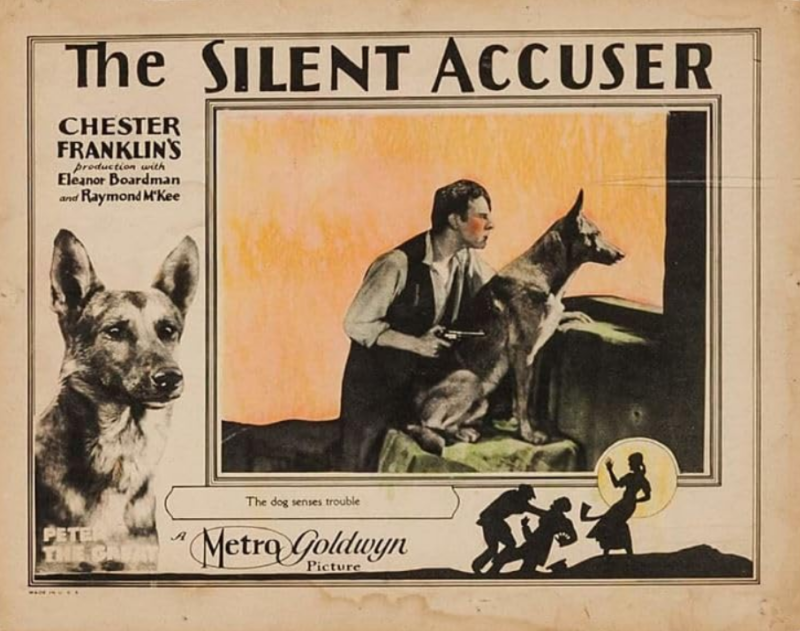
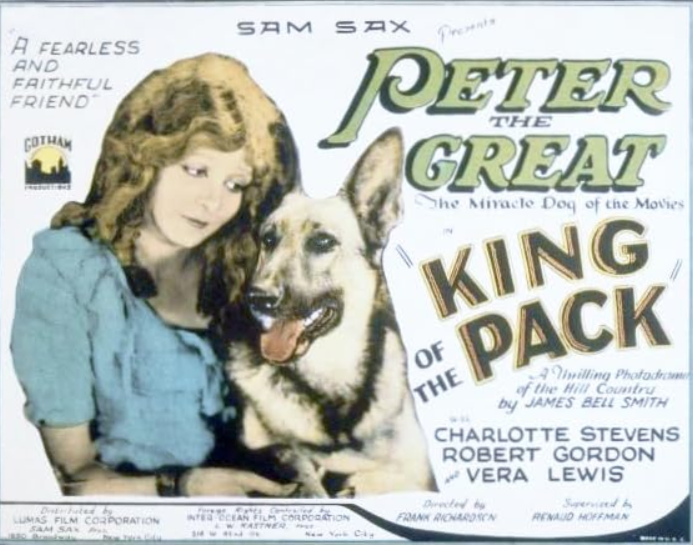
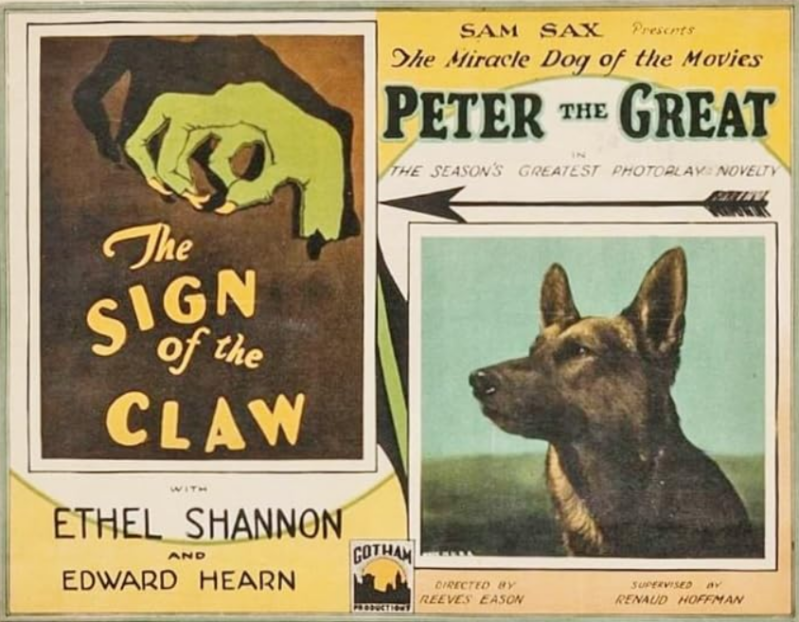
Behind the scenes, Peter's rise to stardom was complicated by several powerful men with competitive personalities who owned and handled expensive police dogs in Southern California. Peter belonged to Faust and Charles B. Dreyer who were breeders and German Shepherd dog promoters of means. Peter's trainer was stunt actor George A. Kempin. Fred R. Cyriacks was also a prominent handler of valuable police dogs who had an acrimonious falling out with Faust.
The rivalry climaxed on June 6, 1926. The incident occurred outside Cyriacks's residence at Whipple Street and Lankershim Boulevard. Faust, Kempin and others, who had been heavily drinking, were allegedly confronting Cyriacks when Cyriacks discharged multiple rounds into the vehicle occupied by Faust and his companions attempting to drive away. A stray round struck Peter the Great in the neck, close to the jaw. Cyriacks, who claimed that he did not intend to hurt the dog but was shooting at Faust and Dreyer in self-defense.
The shooting quickly made headlines. The Times called him a “$74,000 film dog” and said he had “an even chance for life” after being taken to a Hollywood animal hospital. Veterinarians tried to save him, but his injuries were fatal. His death shocked both the film industry and animal lovers.
Soon after the shooting occurred, court proceedings were initiated. George Kempin filed suit for $45,000, claiming that Peter's death destroyed Kempin's livelihood as trainer of the dog, and emotionally crippled him so that he could no longer work. Dreyer and Faust filed suit against Cyriacks, demanding $250,000 in damages, including $100,000 for the value of Peter and $25,000 punitive damages.
The lawsuits made the courts face a rare question: how much was a famous dog’s life worth? Depositions described Peter as among the most expensive and movie-trained dogs in existence. Lawyers argued that Peter's death meant losing both his companionship and income generating movie career. Newspaper covered each development.

The first verdict surprised many. In 1927, a jury gave Dreyer and Faust $125,000 in damages, including $100,000 for Peter’s value and $25,000 in punitive damages. Newspapers called it a record award for a dog’s death. The case made Peter the Great a unique legal symbol, connecting celebrity, property rights, and emotional bonds.
However, the large verdict was later overturned on appeal. In 1931, the California District Court of Appeals reversed the award in a decision that became a legal milestone. The court ruled, that no matter how indulged or what notoriety he may have achieved, “the life of a dog, no matter how valuable, cannot be considered in the same plane as the life of a human being." The judges called the damages “grossly excessive,” ending the high financial value placed on Peter’s life and career. This decision set an important precedent for how animals are valued in law and is still discussed in animal law today. In March 1932, newspapers reported that the parties had finally reached an out-of-court settlement for an undisclosed sum, quietly bringing the long-running legal battle to an end.

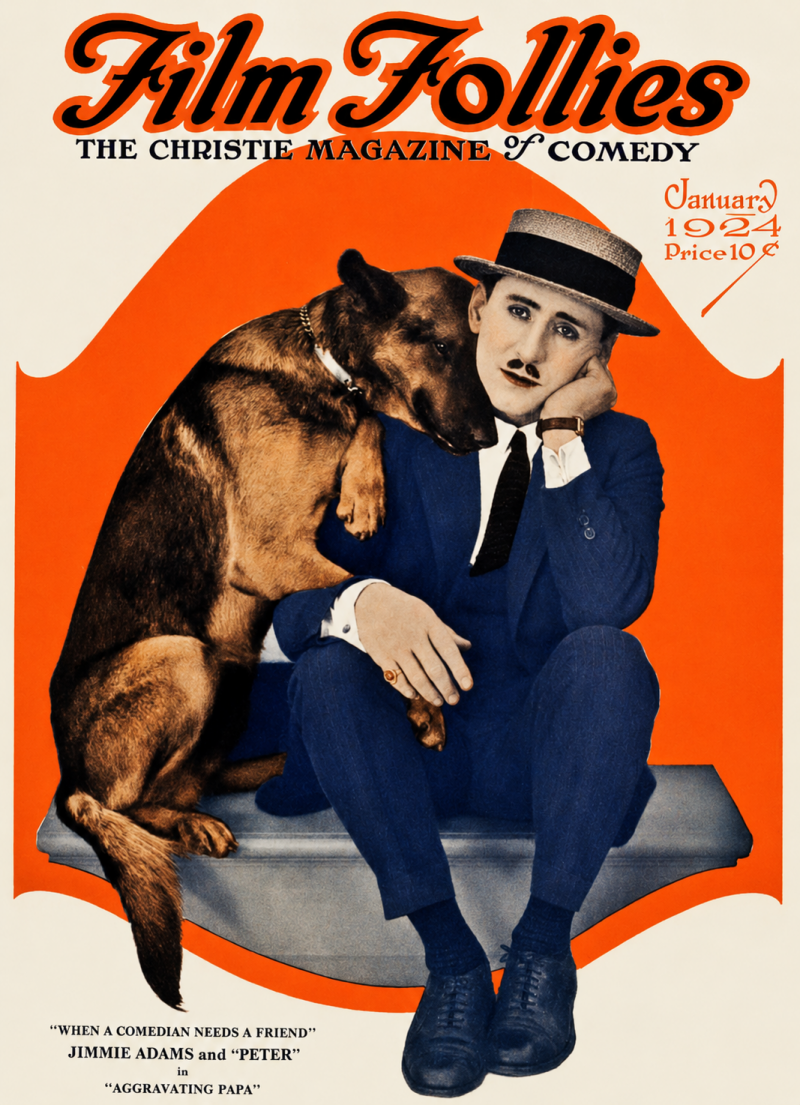

Peter the Great's big-screen potential was cut short by his untimely death. Had he survived longer, he could have rivaled or even eclipsed his contemporaries in fame. Now he lives on through surviving fragments, archival film prints, and of course, the story of his violent demise. Peter's films The Silent Accuser and The Sign of the Claw are intriguing reminders of a time when humans and heroic animals were box office draws. For a short but memorable time in the 1920s, Peter the Great was one of Hollywood’s best-known canine stars. This disciplined police dog from Berlin became a movie celebrity, and his tragic story became one of the most unusual and talked-about animal tales of the silent film era.
If you enjoyed my latest feature on silent film canine star Peter the Great — whose tragic 1926 shooting death became one of Hollywood’s strangest courtroom battles — please comment on, rate, and share the post with fellow classic film and silent cinema enthusiasts.
Add comment
Comments