

Some Hollywood landmarks stand out with neon lights, marquees, searchlights, and stories sold in souvenir shops. The Woman’s Club of Hollywood is different. It sits quietly at 1749 North La Brea Avenue, set back from the busy street, and remains as a piece of Hollywood from before the city became all about spectacle. It may not be glamorous in the usual way, but it matters more than that.
By Allan R. Ellenberger

Above: On May 3, 1914, a building permit was issued for the construction of the first Woman's Club of Hollywood's clubhouse at 7078 Hollywood Boulevard, at the intersection of Hollywood Boulevard and La Brea Avenue. It was a substantial Neo-Classical building that quickly became one of the architectural landmarks anchoring the western end of Hollywood Boulevard. For more than three decades it served as one of Hollywood's principal civic and cultural gathering places.
The Woman’s Club of Hollywood was founded in 1905 by civic-minded women, back when Hollywood was still a small, developing community. These women were not content to stay on the sidelines. They built important institutions and worked for culture, education, health, public service, and moral improvement in a town that needed all of these things. Their first big project was helping to create a public library for Hollywood. From there, their influence reached other key places in early Hollywood, like the Hollywood Studio Club, Hollywood Hospital, Hollywood High School, and even the cultural scene that led to the Hollywood Bowl.
This is what sets the club apart. It was never just a social club for women, even though they held teas, lectures, luncheons, and other club events. The club was about building things. In the early 1900s, when women did not have much civic power, groups like this gave them a way to organize, raise money, advocate, teach, and lead. The Woman’s Club of Hollywood was not just a part of Hollywood’s history—it helped shape it.
The club’s first permanent home was in 1914, at 7078 Hollywood Boulevard at La Brea Avenue, close to where the Four Ladies of Hollywood gazebo would later stand. This spot was one of the most visible in town, which suited a group so involved in the community’s growth.
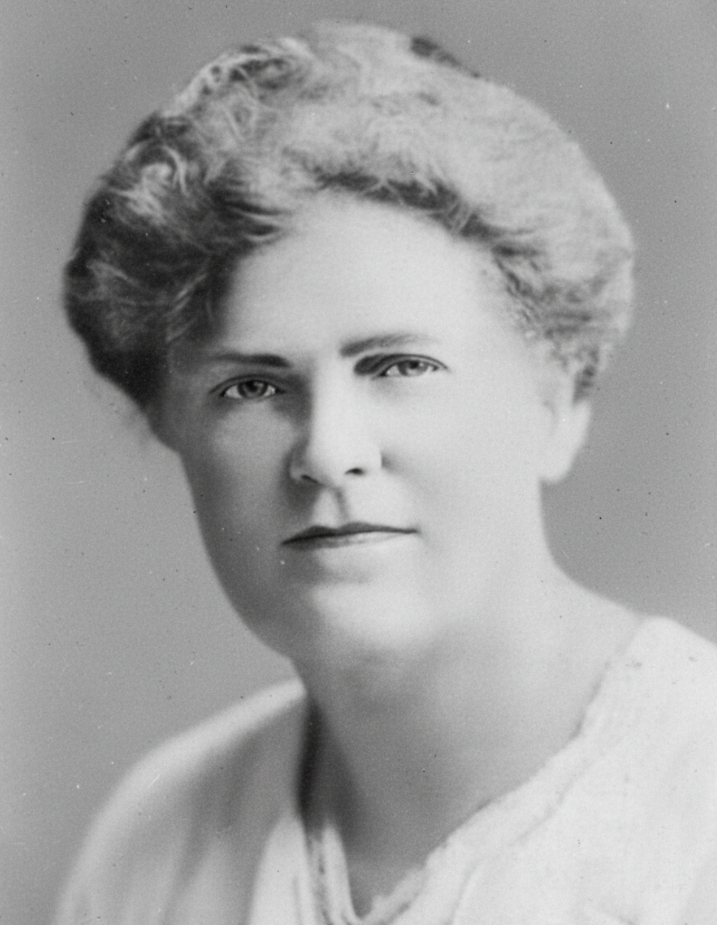
Martha Myers Smith (known in contemporary accounts as Mrs. Cassius M. Smith), president of the Woman's Club of Hollywood (1913-1915) during construction of the first clubhouse.
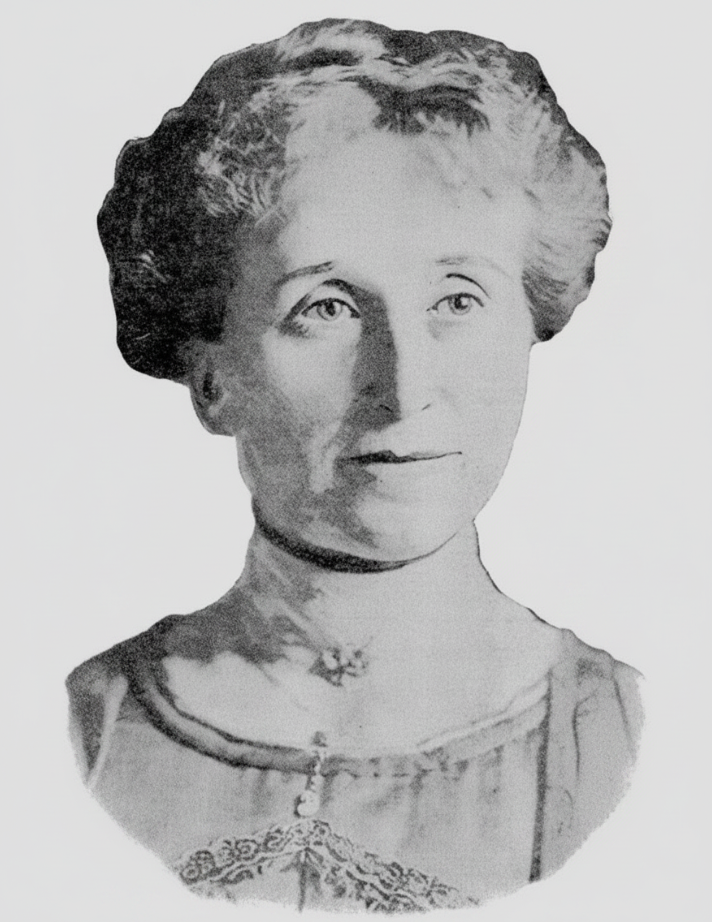
Maud Gage Baum, wife of L. Frank Baum, the author of The Wizard of Oz, was chairman of the Woman's Club House Fund Committee.
Among the club's earliest and most influential leaders was Martha Myers Smith, better known in contemporary newspaper accounts as Mrs. Cassius M. Smith. Serving as president of the Woman's Club of Hollywood from 1913 to 1915, she helped guide the young organization during its formative years, establishing it as an important force in Hollywood's growing civic and cultural life. Beyond the club, Smith was deeply involved in public service, serving as president of the California State P.E.O., founding president of the Los Feliz Elementary School PTA, a member of the Los Angeles City Charter Revision Board, and an active member of Hollywood Methodist Church for more than forty years. She also helped found the Hollywood Bowl, reflecting her lasting influence on the cultural development of early Hollywood. Widowed when her husband, Cassius M. Smith, died in 1921, Martha Myers Smith remained an admired civic leader until her death in 1953 at the age of eighty-five.
As Hollywood grew and became more commercial, the club had to move. By 1946, it found a new home nearby on North La Brea, on land already full of Hollywood history. The property had once been home to the Hollywood School for Girls, which was founded in 1909 and later used the early twentieth-century school building that still stands on La Brea. The school had strong ties to the film industry. Children from families like the Fairbanks, DeMille, Lasky, Harlow, McCrea, and Selznick attended. Edith Head, who later became a legendary costume designer, taught French there before her famous career at Paramount. So, when the Woman’s Club moved in, it was not just taking over an old school—it was becoming part of a place already deeply connected to Hollywood’s early days.

This 1924 photograph by Albert Witzel offers a rare view of the Hollywood School for Girls during its early years. The building still stands in the rear of the property.
The current clubhouse was designed by architect Arthur E. Harvey in the late 1940s and dedicated on April 22, 1949. Its Spanish Colonial Revival style is simple, and that simplicity is part of its charm. Built after World War II, the building was meant to be practical, welcoming, and civic-minded, not flashy. The complex includes the main clubhouse, the old Hollywood School for Girls building, smaller former school buildings, gardens, and one of the few large private parking lots left in Hollywood. Inside, you find spaces that show what the building was made for: a foyer, offices, a lounge, a big auditorium, a stage, meeting rooms, a kitchen, and places for people to gather. It was built for meetings, performances, lectures, dinners, benefits, theater, community events, and simply bringing people together.
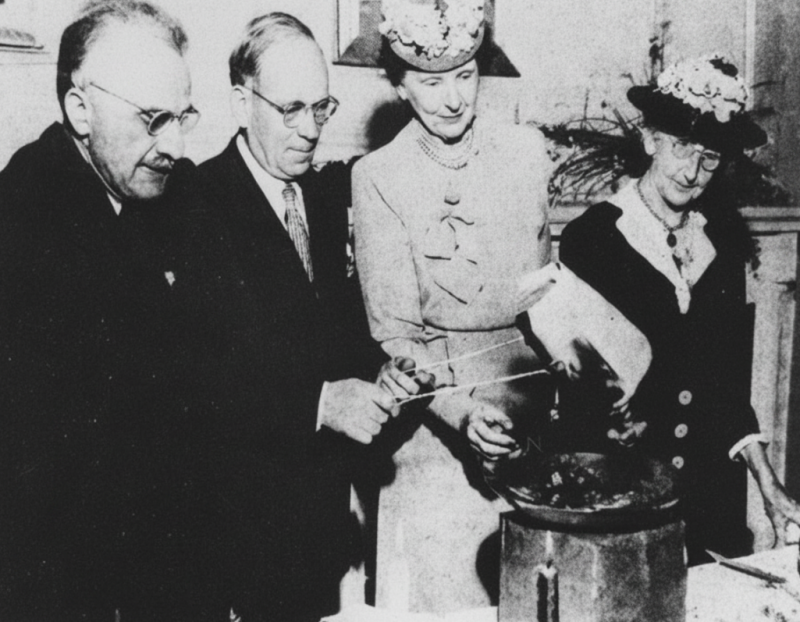
On April 25, 1946, the highlight of the Woman's Club of Hollywood's 41st anniversary celebration was the ceremonial burning of the mortgage, symbolizing the club's freedom from debt. Taking part in the historic event were, from left, Dr. Frederic Woellner, M. F. Palmer, Mrs. Downs, and Martha Myers Smith.
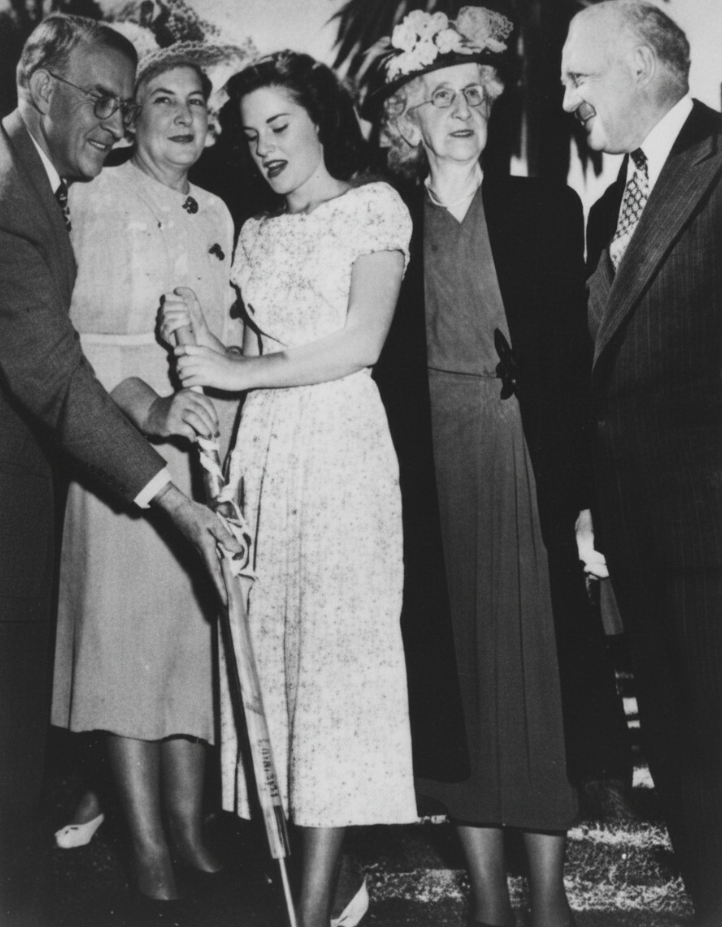
Groundbreaking ceremonies on July 28, 1948, for the new Woman's Club of Hollywood clubhouse on La Brea Avenue. Pictured, from left, are Los Angeles County Supervisor John Anson Ford; Mrs. Carl Bush, president of the Woman's Club of Hollywood; Toni Wasson, a member of the Junior Auxiliary executive committee; Martha Myers Smith, the club's first president; and Los Angeles Mayor Fletcher Bowron.
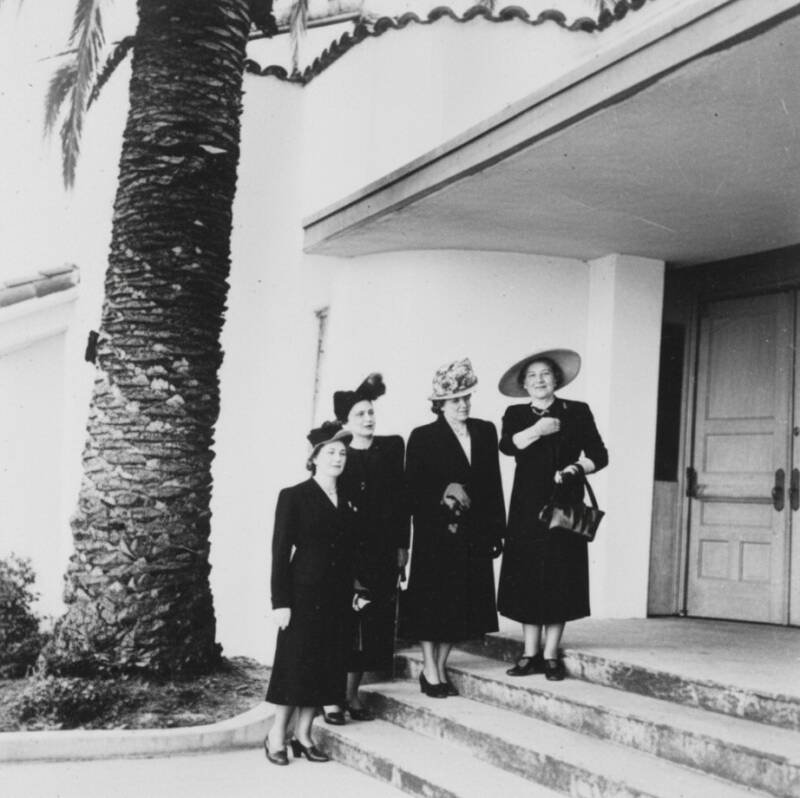
The formal dedication of the Woman's Club of Hollywood's new clubhouse at 1749 North La Brea Avenue on April 22, 1949. Celebrating the completion of the long-awaited project are, from left, Wanda C. Curtis, Mrs. Marvin C. Bradley, Mrs. Robert Scruggs, and club president Mrs. Carl Bush, all of whom played important roles in bringing the new clubhouse to fruition.
What makes this place special is that it brings together two histories. It preserves the story of educating young women and children in early Hollywood, and it also honors the civic leadership of women who helped build the community. Few places in Hollywood show this layered history so clearly. It is more than just a building—it is a campus that tells the story of women’s history.
For many years, the Woman’s Club was a place where Hollywood’s social, charitable, and entertainment circles came together. Celebrities visited for luncheons and events. The club hosted lectures, concerts, film screenings, plays, charity events, and community gatherings. Later on, the building became popular for film and TV productions because of its vintage interiors, stage, auditorium, schoolhouse, kitchen, lounge, and grounds. The club’s rental materials say the property is available for filming and mention that the auditorium has been used as a gym, concert hall, church, school hall, theater, ballroom, and town hall. Even though it is hard to confirm every film credit, it is clear the site is valuable: it offers a rare, well-preserved, old-Hollywood setting in the heart of the city, with many different looks in one place.
This is the sad irony of the club’s current troubles. The same things that make the Woman’s Club historic also make the land valuable to developers. A large property in Hollywood with historic buildings and parking is both a treasure to preserve and a tempting real estate opportunity. For years, the club has faced the same challenges as many old civic groups: fewer members, aging buildings, delayed repairs, legal issues, leadership disagreements, debt, and the struggle to keep a beloved landmark financially stable.
The club’s problems are well documented and difficult to read about. In the 2010s, the group was caught up in internal conflicts and lawsuits. There were claims of mismanagement and worries that the property could be sold to developers. Bankruptcy soon followed. A federal court later noted that the club filed for bankruptcy three times in two years, and a trustee went after former leaders. Recent nonprofit filings also show large debts, which is a clear sign of serious financial trouble.
Now, there is a new crisis: a foreclosure auction is set for August 30. Preservation experts have called this a red alert, and the club is looking for an “angel” to help save the property. That word might sound sentimental, but in Hollywood preservation, it is often exactly what is needed. Not just a donor or a buyer, but someone with money, patience, creativity, and respect for things that cannot be replaced.
The risk is not just that the building could be sold. The real danger is that Hollywood might lose another part of its civic memory. The Woman’s Club has historic protections, like being a Los Angeles Historic-Cultural Monument and being listed on the National Register of Historic Places, but these honors are not a shield.

The Woman's Club of Hollywood as it appears today.
They can slow down demolition, require reviews, and show the site’s importance. But they do not pay the bills, fix the roof, settle debts, repair plumbing, bring in new members, or create a plan to keep the place going. This is the main issue. The Woman’s Club of Hollywood is important in history, still has its original architecture, and means a lot culturally. But it is also in financial trouble. These two facts are now in direct conflict.
It is easy to see what should happen next, even if it is hard to do. The property needs an owner or funding focused on preservation, to keep the site whole and active. It needs a practical plan that includes events, filming, lectures, classic movie screenings, community programs, partnerships, and celebrating Hollywood history. The building should not be treated as a relic, but as a living landmark. It was never meant to sit unused—it was meant to be part of the community.
This is why the Woman’s Club is important. Hollywood has many monuments to fame, but not many that honor civic work, especially the work done by women. The club’s founders did not wait for permission to make a difference. They organized, raised money, built a library, supported schools and hospitals, and created safe spaces for young women in the film industry. They brought culture and public service to a community that would later become world-famous.
Today, the building on La Brea is a test of what Hollywood values when no one is watching. Does the city only save places where celebrities performed, or does it also protect the places where everyday people—many of them women who had little power elsewhere—did the hard work of building a community?

The Woman’s Club of Hollywood is not just another old building at risk. It is one of the places women built. If it is lost, Hollywood loses more than just a piece of architecture. It loses a reminder that before Hollywood became a global center for movies, it was a real town—and women helped give it its spirit.
Be sure to check back tomorrow on The Hollywoodland Revue for the fascinating story behind the making of Brainstorm (1983), the ambitious science fiction thriller forever linked to the tragic death of Natalie Wood and one of Hollywood's most remarkable productions.
If you enjoyed this look at the remarkable history of the Woman's Club of Hollywood, please take a moment to leave a comment, rate the article, and share it with fellow lovers of Hollywood history. Every share helps preserve the stories of the people and places that shaped our community and introduces The Hollywoodland Revue to new readers.
Add comment
Comments