

Hollywood doesn’t need another monument or a new studio research center. If it could choose the perfect library, it would be on Hollywood Boulevard, under the simple sign of Larry Edmunds Bookshop. The shop is packed with scripts, photos, biographies, and all sorts of paperwork from an industry that rarely looks back. The aisles are tight and crowded. Larry Edmunds, whose full name was Laurence O’Connell Edmunds, started it all. He was quiet and bookish. Though his life ended in tragedy, his legacy is part of Hollywood’s story.
By Allan R. Ellenberger

Edmunds was born on March 13, 1906, in Greensboro, North Carolina, to John and Elizabeth Edmunds. He grew up far from the movie studios of Southern California. He finished his education at Greensboro High School and then graduated from Georgia Tech.
During a visit to family in Ashland, Virginia, Edmunds met Judith Gregory, a student at Randolph-Macon College. They married on December 11, 1926. Afterward, they moved to Pittsburgh, where both enrolled at the University of Pittsburgh.
After graduating, Edmunds worked as a topographer and then moved into real estate, starting what looked like a promising career. His marriage, however, did not go as well. The couple separated in September 1932, and Edmunds moved to Los Angeles for a fresh start. Six months later, he experienced the Long Beach earthquake of March 10, 1933, one of Southern California’s worst disasters. He wrote to his parents that he was on the eleventh floor of a downtown office building when it happened. The building shook and was badly damaged, but it stayed standing.
Meanwhile, Judith stayed in Pittsburgh and filed for divorce in March 1935, saying Edmunds had deserted her. The court granted the divorce that June, ending a marriage that had started with hope when they were both students.
Like many others at the time, Edmunds had moved west during Hollywood’s boom years. The city offered chances not just for actors and directors, but also for those who supported the creative industry. By the mid-1930s, Los Angeles had become a magnet for writers, critics, and intellectuals searching for ideas and inspiration in a still-developing industry.
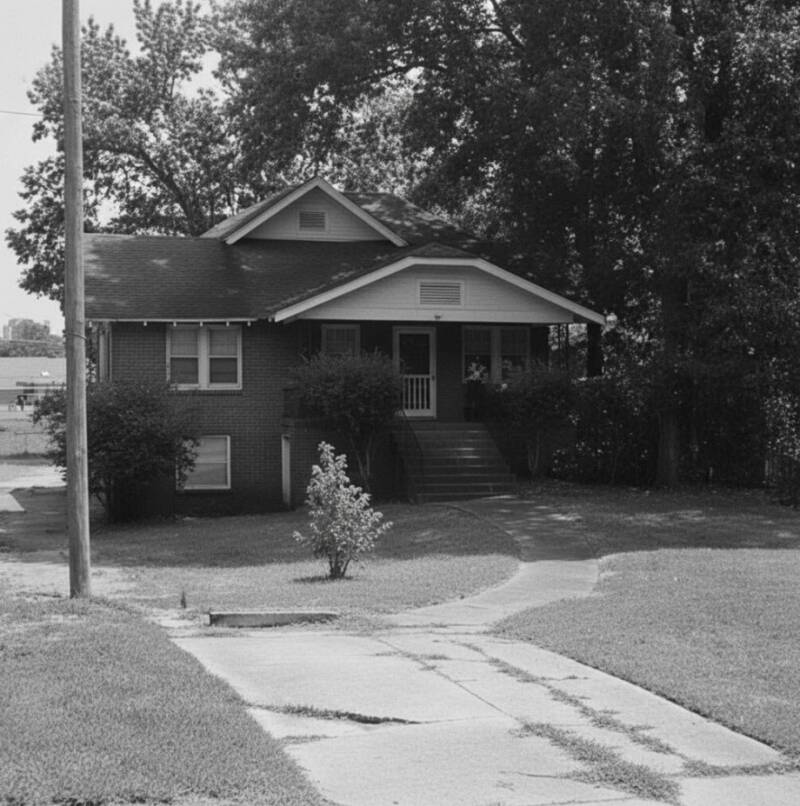
The childhood home of Larry Edmunds at 309 South Mendenhall Street in Greensboro, North Carolina. (These are both private residences; please respect the privacy of the current occupants.)
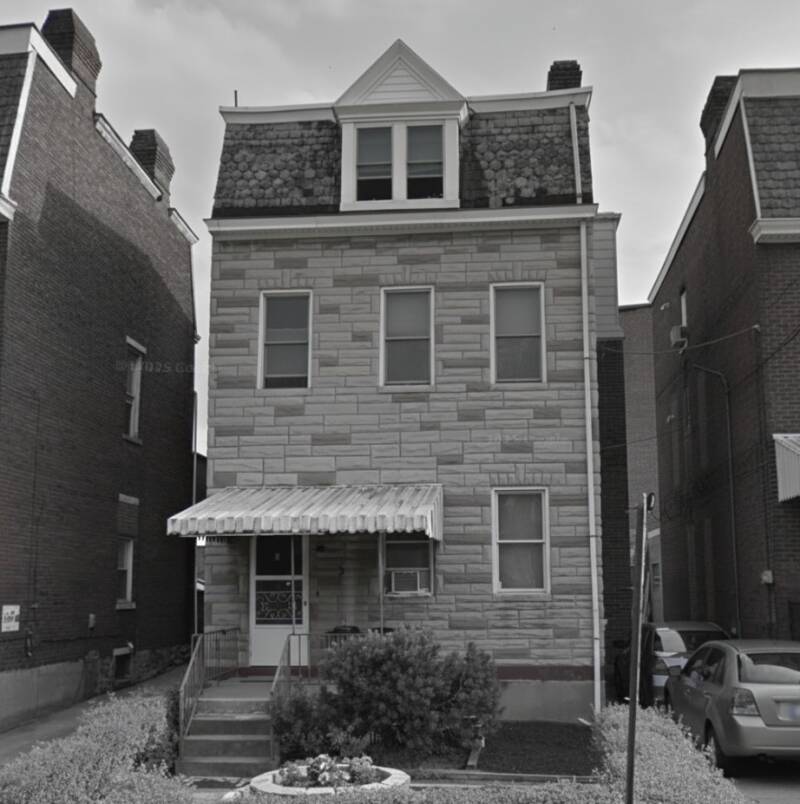
This house at 3 Oakland Square in Pittsburgh was where Larry Edmunds and his wife, Judith, made their home in the early 1930s, before their separation and his move west to Los Angeles.
Although Edmunds’s early years didn’t hint at future fame, he always loved reading and learning. In June 1940, he bought Sam Reiser’s small bookstore at 1603 North Cahuenga Boulevard, close to book row on Vine Street. He chose this spot for a reason. Nearby, next to Musso & Frank, was Stanley Rose’s famous bookstore, where Edmunds had worked and where writers like Faulkner, Fitzgerald, and Nathanael West gathered. Rose’s shop was lively and bohemian, while Edmunds’s store was quieter and more focused on preserving books. From the beginning, his shelves were filled with art books, literature, theater, and especially film.
When few bookstores considered movies worthy of study, Edmunds started selling actor autobiographies from the silent era, technical books on cinematography and screenwriting, studio histories, and rare European titles. Screenwriters who taught film students, depended on his shop for resources. Rather than offering an escape from Hollywood, the store helped people understand it better. Friends remembered his sharp wit and his capacity to go from reciting Shakespeare to reporting on industry news. His business partner described him as “Hollywood’s Greatest Seducer,” in part due to his charming conversation, but also due to alleged affairs with actresses and studio employees. Edmunds enjoyed reading, partying, and conversation.
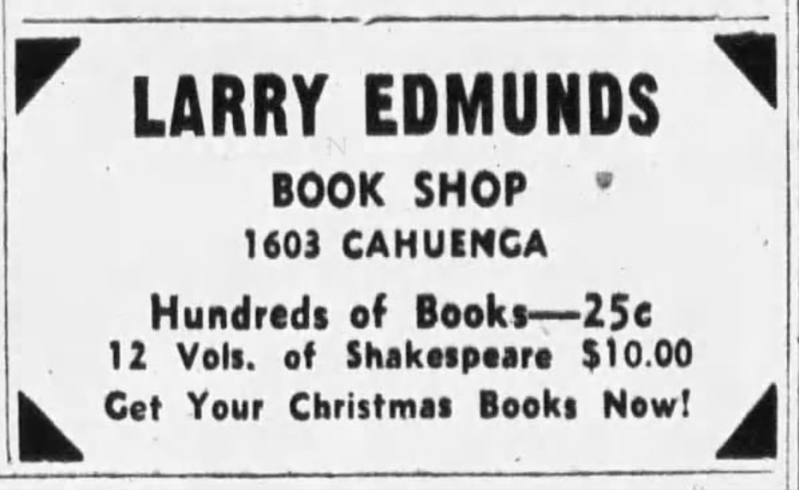
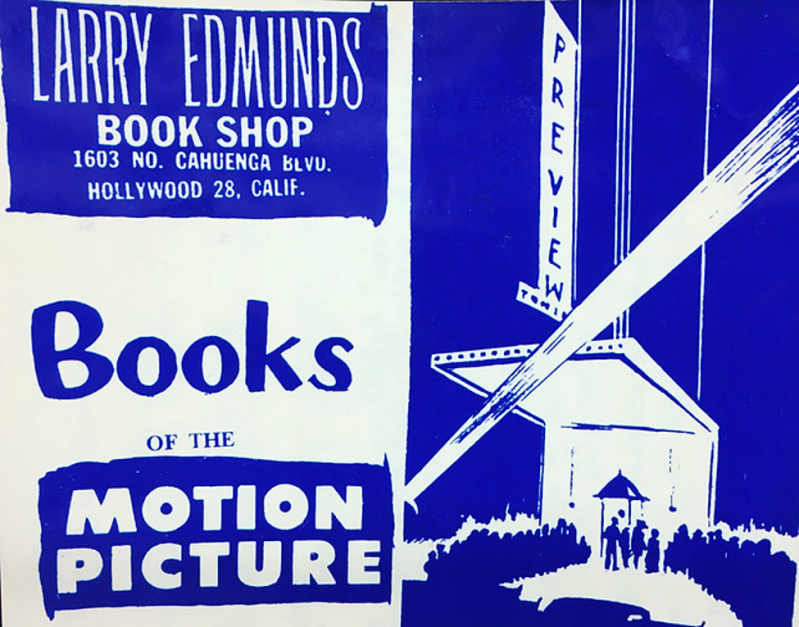
Here’s a story that says a lot about Edmunds. One day, a customer came in looking for Days of Our Years by Pierre Van Paassen. He asked if Edmunds had it. Edmunds did. The man then asked if the book was any good. "Wonderful!" Edmunds replied, launching into an enthusiastic pitch about its merits. After buying it, the customer said, "Incidentally, I wrote it." Encounters like this were typical for Edmunds—a bookseller who loved books and often sold them with more excitement than the authors themselves.
Edmunds counted John Barrymore, Marlene Dietrich, W.C. Fields, and novelist Thomas Wolfe among his friends. He was just as at ease talking about ideas in cafés and salons as he was working in his bookshop. Despite his confident appearance, Edmunds felt deeply restless. He was more of a collector than a socialite, and his struggle to balance his public image with his private struggles eventually led to tragedy.
By 1941, the pressures of business and personal life led Edmunds to alcoholism. Friends recalled his many efforts to recover, including stays in sanitariums and repeated attempts at sobriety that didn’t last. He was seen as intelligent but emotionally unstable. Many respected him, but he had few close friends.
On Labor Day 1941, a neighbor found Edmunds dead in his guest house at 2470 Beachwood Drive after becoming concerned about him. He had taken his own life by inhaling gas at age thirty-five. Soon after, stories circulated about his financial troubles, loneliness, and depression, especially after he was rejected from military service at a time when enlisting was tied to masculinity.
There were also reports that Edmunds had begun suffering from hallucinations. According to his suicide note, the knife slashes carved into the walls were the result of terrifying delusions. He believed tiny men were crawling out of the walls, and he had attacked them with a knife, convinced he was cutting off their heads.
In the end, the stress from alcoholism and depression overwhelmed him. He reportedly wrote in his note: "If you think this is easy, you're crazy." Edmunds was survived by his mother, Elizabeth O’Connell Edmunds, and his sister, Mary Nash, both of Greensboro. His body was returned to North Carolina by the William Strother Mortuary, and funeral services were held there. Larry Edmunds was then buried next to his father in Chatham Burial Park in Chatham, Virginia.
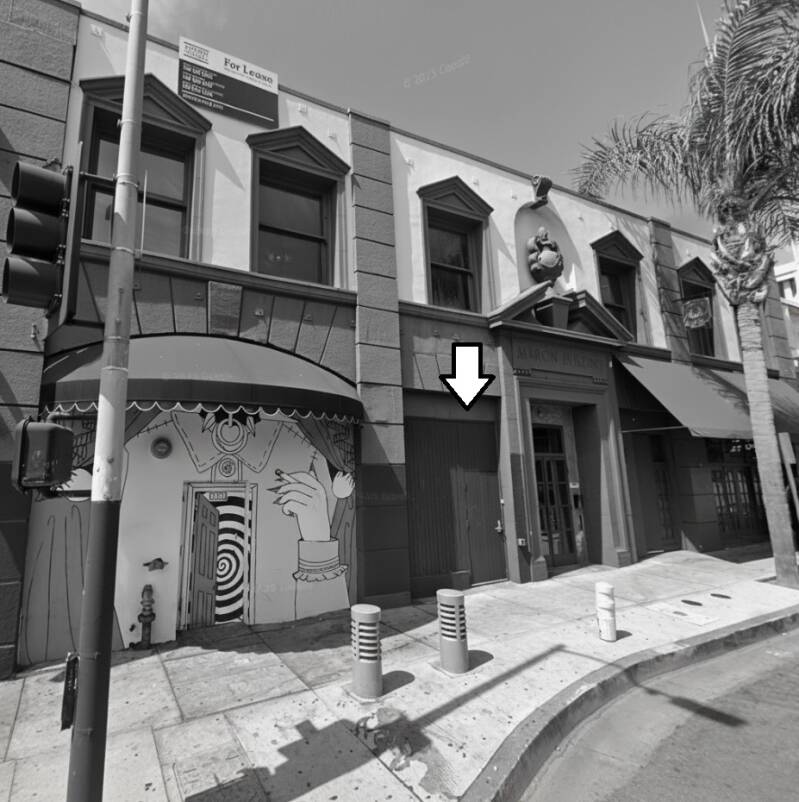
The white arrow points to the original location of the Larry Edmunds Book Shop, which opened in June 1940 and would become one of Hollywood's most celebrated bookstores. Below is a closer view.


The white arrow points to the guest house at 2470 North Beachwood Drive, where Larry Edmunds tragically died by suicide after inhaling gas from his oven.
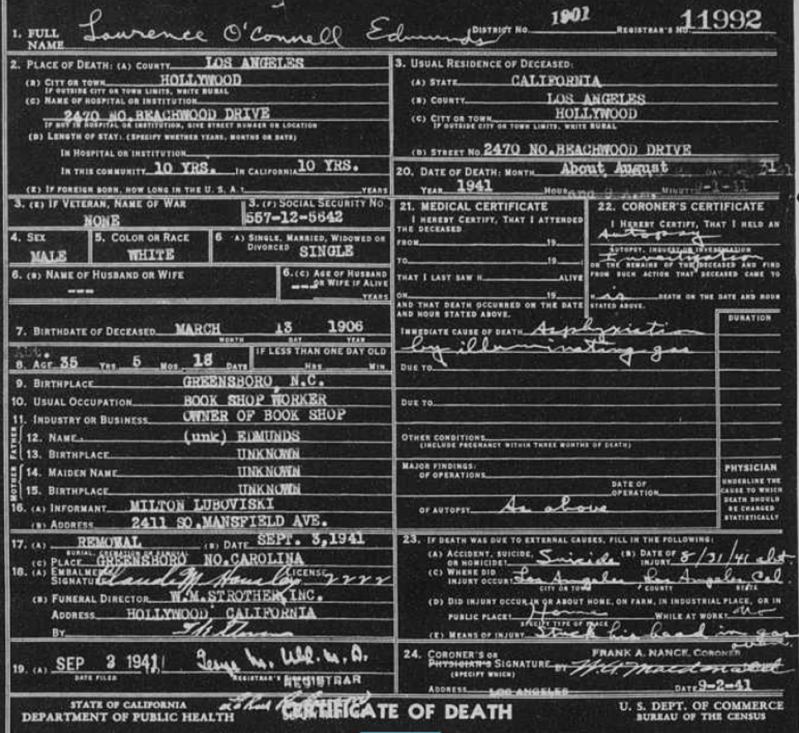
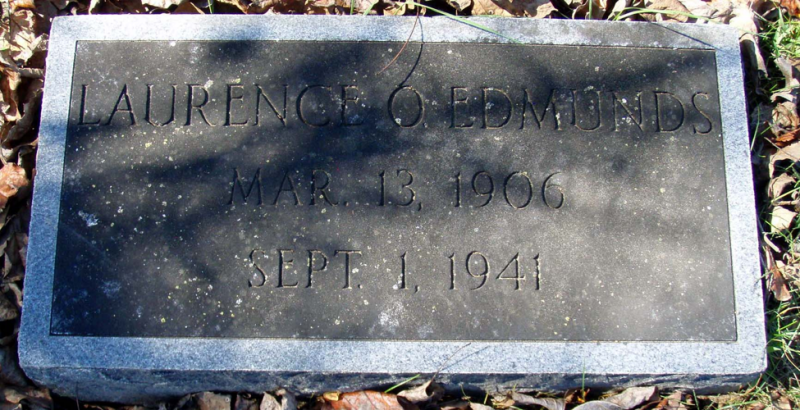
The death certificate of Laurence O'Connell Edmunds is shown above, with his gravestone alongside his parents at Chatham Burial Park in Chatham, Virginia, pictured below it. (Photo Credit: Findagrave / s.stice).
Edmunds had no heirs, but he left behind a successful bookshop with a clear purpose. His partner, Milton Luboviski, and Milton’s wife, Git, decided to keep the store open and keep Edmunds’ name. Under their care, the business grew from a local bookstore into a national center for film scholarship. In 1952, Git Luboviski started a mail-order catalog, reaching customers nationwide. Soon, collectors, historians, and film fans from all over the United States knew about the shop.
By 1955, the store had moved to 6658 Hollywood Boulevard, placing it right in the heart of one of the city’s busiest areas. When it relocated again to 6644 Hollywood Boulevard in November 1990, it had become a true institution. The shop was packed with shelves of biographies and memoirs, boxes of original stills, and framed photos of stars like Garbo and Gable from Hollywood’s golden age.
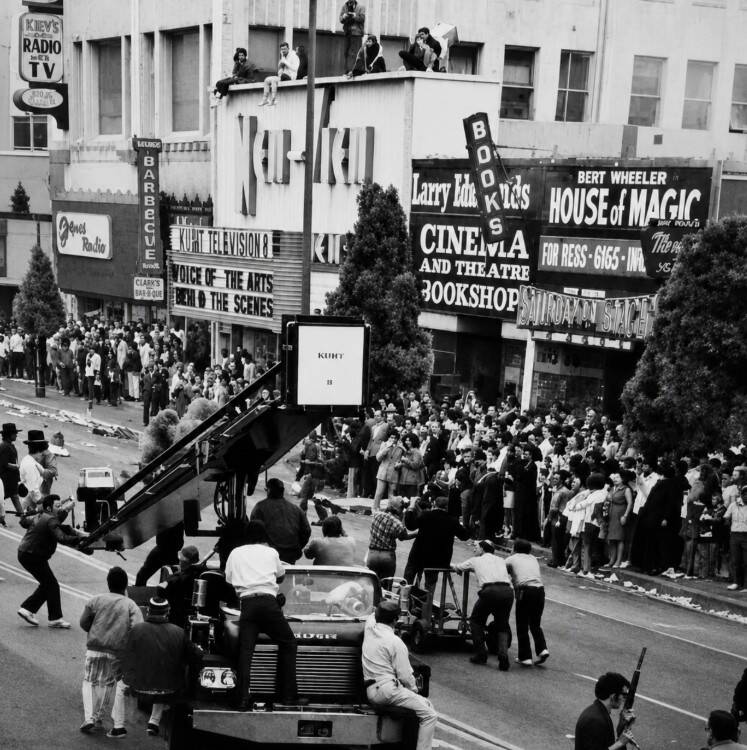
The excitement of a Hollywood film shoot draws crowds to the sidewalk outside the Larry Edmunds Book Shop, where curious spectators pause to watch movie magic unfold.

Milton Luboviski, owner and manager of the Larry Edmunds Book Shop, tends to one of the bookstore's celebrated window displays in 1970, highlighting its unrivaled selection of film memorabilia.
Over the years, the shop attracted a wide range of customers. Writer Ray Bradbury was a regular, and Leonard Maltin called it "the best movie bookstore in the world." Quentin Tarantino visited before he started making films. Scholars and tourists also shopped there, looking for memorabilia and historical artifacts.
The Larry Edmunds Bookshop feels more like an archive than a regular bookstore today. It holds thousands of books, original press kits, autographed photos, annotated screenplays, and all kinds of memorabilia. The store conveys respect for the past and highlights the importance of preserving and learning about Hollywood's history.
In a city infamous for seismic demographic shifts and vanishing icons, the stubborn persistence of Larry Edmunds Bookshop feels near revolutionary. Defying economic depression, war, the flight to the suburbs, the collapse of independent retail, technological disruption, gentrification, and, most recently, the pandemic, Larry Edmunds stands as an enduring testament to why we fight to save culture.

Jeff Mandel, the owner and manager of the Larry Edmunds Book Shop.
Now managed by Jeff Mandel, the shop continues to host author signings, support scholarships, and grow its online presence to keep Edmunds’ mission alive in the digital age. Edmunds’ name still hangs above the door as a living legacy.
Larry Edmunds never saw his store become a landmark for film history or a cultural institution. Still, in true Hollywood style, he achieved a kind of immortality. He is remembered not for his own films, but for creating a place that keeps our memories alive.
When you walk into Larry Edmunds Bookshop today, you can almost sense the layers of Hollywood history in the books and archives on display. In many ways, the shop is a true monument to its founder, just built from different materials—books instead of marble, memories instead of gossip. Edmunds’ presence lives on in the careful upkeep of the collection, preserving the stories of a city that values its past, all thanks to his dedication.
🎬 Check back this Sunday for my latest film review! I'll be taking a look at a new release, exploring whether it's worth your time. I hope you'll stop by, read the review, and share your own thoughts in the comments!
If you enjoyed this look at the life and legacy of Larry Edmunds and his legendary Hollywood bookstore, please take a moment to leave a comment, rate the article, and share it with fellow film lovers and Hollywood history enthusiasts. Your support helps preserve these remarkable stories and introduces The Hollywoodland Revue to new readers.

Add comment
Comments
This is the most comprehensive bio and history I’ve seen of him and his store.
Thanks Elizabeth, I appreciate your kind comments.