

For almost fifty years after her death, Hattie McDaniel’s final wish was not granted. She was the first African-American actor to win an Academy Award and hoped to be buried among Hollywood’s stars. However, the cemetery she chose turned her away because of her race. It was a painful irony that someone so celebrated was denied a resting place alongside her peers.
By Allan R. Ellenberger

Today, visitors walking by Lake Sylvan at Hollywood Forever Cemetery see a beautiful granite cenotaph honoring McDaniel. This is not her actual gravesite, since she is buried at Angelus-Rosedale Cemetery, but the memorial celebrates her life and career and stands as a reminder of a difficult chapter in Hollywood’s history.
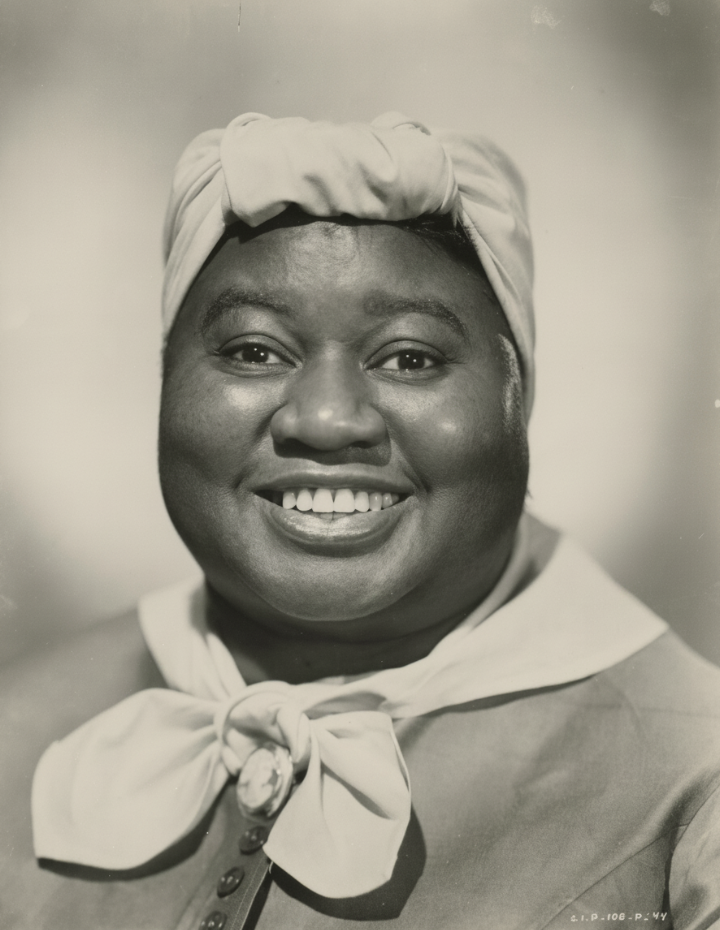
Hattie McDaniel died of breast cancer on October 26, 1952, at the age of fifty-seven. Over more than thirty years, she appeared in nearly 300 films and became one of America’s most recognized character actresses. Although she was often cast as a servant, she brought dignity, warmth, intelligence, and humor to every role. In 1940, she made history as the first African American to win an Academy Award for her role as Mammy in Gone with the Wind.
McDaniel planned her funeral in detail. She asked for a white casket, a white shroud, white gardenias in her hair and hands, a blanket of white flowers, and a pillow of red roses. Most importantly, she wished to be buried at Hollywood Memorial Park, where many of Hollywood’s leading figures rested. For her, this was more than just a burial place—it meant being accepted by the community she served. But her wish was not granted.
At that time, Hollywood Memorial Park was owned by Jules Roth, who enforced a policy that did not allow African Americans to be buried there. McDaniel’s fame, success, and Academy Award did not change their decision. The cemetery refused her burial. Like many places in Los Angeles back then, cemeteries followed the city’s strict racial segregation. Even in death, these barriers stayed in place.
With no alternative, McDaniel's family buried her at Angelus-Rosedale Cemetery, one of the few Los Angeles cemeteries that accepted African American burials. Although she was laid to rest with love and dignity, many felt that Hollywood had failed one of its own. The woman who had broken one of the industry's greatest racial barriers had been excluded from the place where she most wished to rest.
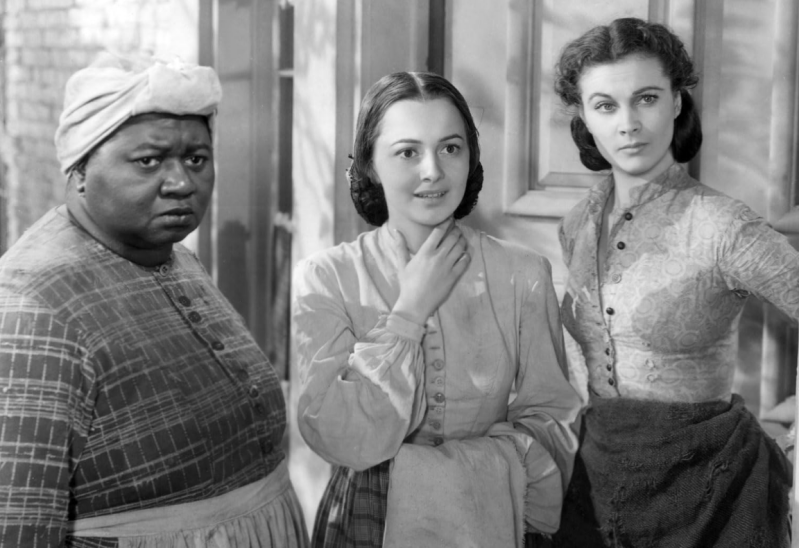
Hattie McDaniel, in her Academy Award-winning performance as Mammy in Gone with the Wind (1939), with co-stars Olivia de Havilland, who received an Academy Award nomination for her role as Melanie Hamilton, and Best Actress winner Vivien Leigh as Scarlett O'Hara.
By 1959, California outlawed racial discrimination in cemetery burials, but by then it was too late to honor McDaniel's final request. Hollywood Memorial Park continued to decline until 1998, when entrepreneur Tyler Cassity purchased the neglected property, restored it, and renamed it Hollywood Forever Cemetery.
As Cassity learned more about the cemetery’s past, Hattie McDaniel’s story stood out to him the most. Hollywood Forever had not only inherited the land but also the responsibility to address the wrongs of the past.
At first, Cassity considered asking McDaniel’s family for permission to move her remains to Hollywood Forever, so she could have the burial she wanted. He later decided not to, believing it was unnecessary to move her from Angelus-Rosedale. Her family had chosen that place with care and moving her might take away from the meaning of her current resting place.
Instead, Cassity came up with another meaningful idea. He wanted to create a memorial for McDaniel at Hollywood Forever. He talked with her relatives, including her great-nephew Edgar Goff and his life partner MaBel Collins. Together, they chose to place a cenotaph overlooking Lake Sylvan. This monument would not replace her burial but would publicly recognize that Hollywood Memorial Park once denied her because of her race.
The dedication ceremony was held on October 26, 1999, forty-seven years after McDaniel’s death. This event turned a day that once marked rejection into a day of remembrance and healing.
The ceremony brought together McDaniel’s family, civic leaders, entertainment figures, and Hollywood historians. Johnny Grant, the longtime honorary Mayor of Hollywood, served as master of ceremonies. Edgar Goff, her great-nephew, spoke about her kindness and sense of humor, saying she would have been "tickled that she finally got there."

Hattie McDaniel's final resting place at Angelus-Rosedale Cemetery, where she was buried in 1952 after her wish to be interred at Hollywood Memorial Park was denied.
The four-foot gray and pink granite cenotaph has a simple but powerful inscription: "To Honor Her Last Wish."
It also recognizes her Academy Award-winning performance in Gone with the Wind and includes Goff's touching tribute: "Aunt Hattie, You Are a Credit to Your Craft, Your Race and to Your Family."
Those words made the monument more than just a memorial. It became a public acknowledgment that a wrong had occurred and that history, even after many years, should be recognized rather than ignored.
The cenotaph stands out at Hollywood Forever because there is no body beneath it. Visitors read the sign and often learn for the first time that one of Hollywood’s brightest stars was not allowed to be buried there because she was Black. The monument helps people remember both McDaniel’s remarkable legacy and the prejudice that affected her final wish.
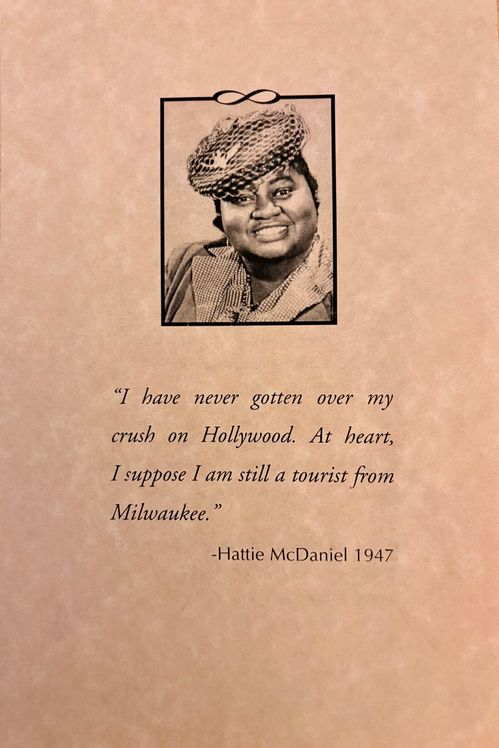

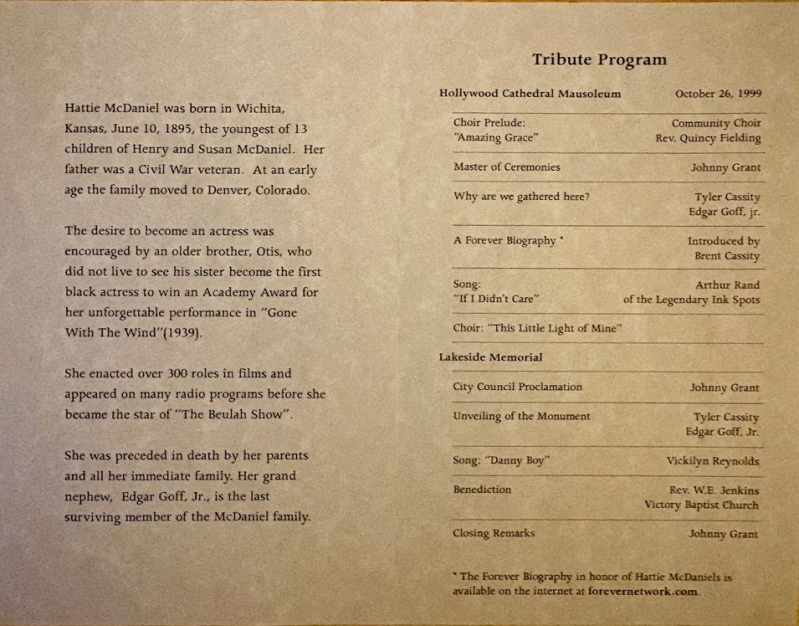
Above is the tribute program distributed at the dedication of Hattie McDaniel’s cenotaph at Hollywood Forever Cemetery on October 26, 1999.
Each year, thousands of people visit the monument. Some come because they love Gone with the Wind. Others remember McDaniel as Beulah on television or as a great character actress. Many are drawn by her story, which represents more than just the film industry. Her story reminds us that progress is not only about victories but also about recognizing past wrongs.
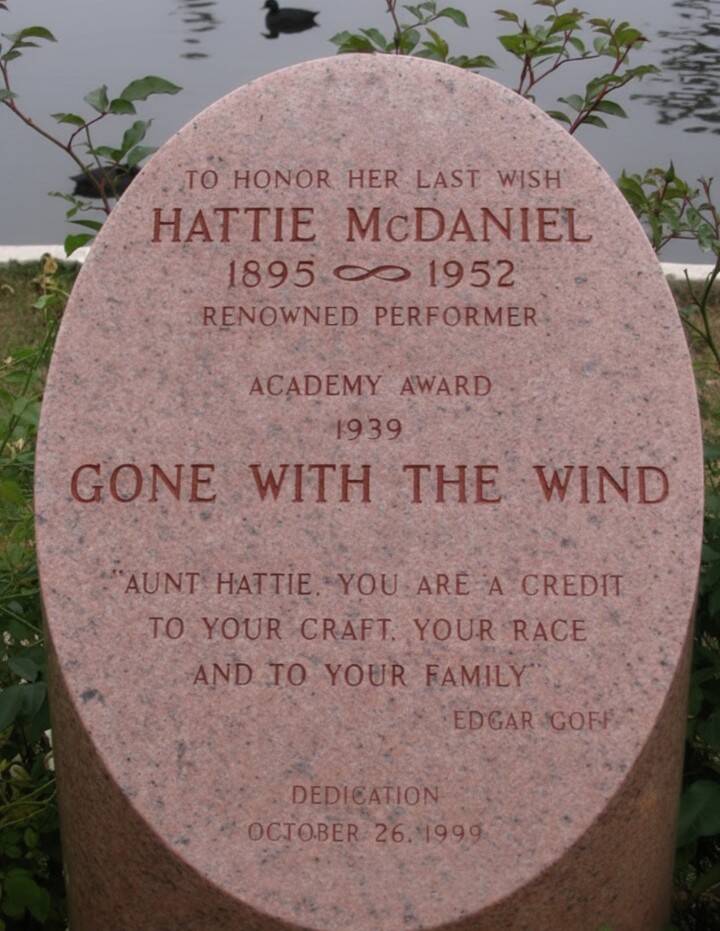
Hattie McDaniel did not get the burial she wanted. Still, Hollywood Forever honored her wish in another important way by giving her a lasting place in Hollywood’s history. Her cenotaph is not a substitute for a grave. It is here to help us remember, reconcile, and show respect.
Nearly fifty years after her death, Hollywood finally found a way to honor Hattie McDaniel. Her dying wish could not be fully granted, but it will never be forgotten.
🎬 Check back this Sunday for my latest film review! I'll be taking a look at a new release, exploring whether it's worth your time. I hope you'll stop by, read the review, and share your own thoughts in the comments!
Hattie McDaniel's Hollywood story didn't end with her Academy Award—it continued with a final wish denied and a long-overdue act of remembrance. After reading this remarkable chapter of Hollywood history, please leave a comment, rate the article, and share it with others who appreciate the people and stories that shaped the motion picture industry. Your support helps preserve these important legacies for future generations.
Add comment
Comments