

First National Pictures was not set up as a movie studio but as a form of rebellion. In the 1910s Adolph Zukor managed to make Paramount one of the most powerful players in the motion-picture industry. Among the tactics he used was 'block booking.' This meant that cinema owners who wanted to show a popular film starring someone like Mary Pickford also had to agree to show a set of less desirable films. The exhibitors became more and more resentful about being told which films they had to show, but since stars such as Pickford attracted large audiences, refusing Zukor could have been a bad business move. In the end, some theatre owners decided that they had had enough.
By Allan R. Ellenberger
Thomas L. Tally, one of the leaders of the revolt, was a pioneering exhibitor in Los Angeles and had opened his Electric Theatre in 1902; together with John D. Williams, the exhibitor from West Virginia, he suggested a radical idea whereby theater owners throughout the country would cooperate, combine their purchasing power, and buy films for themselves.
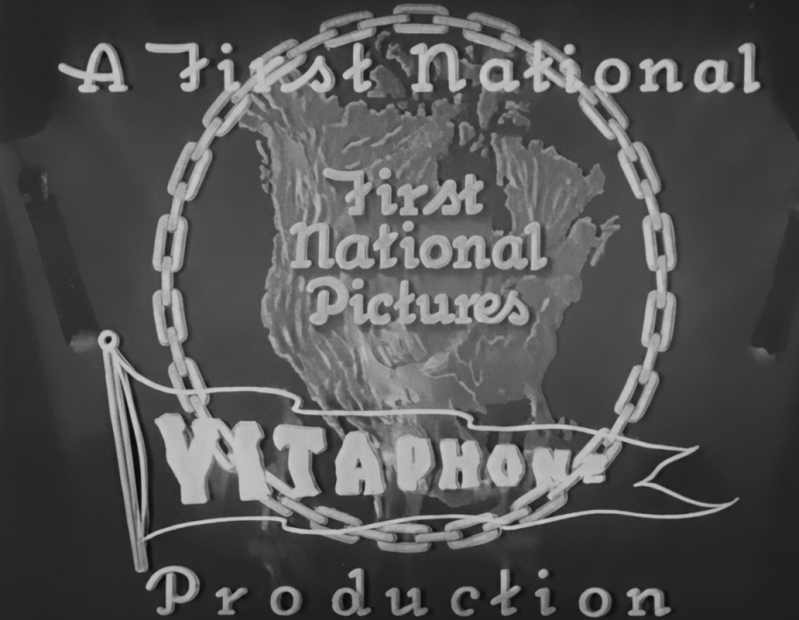
The First National Exhibitors’ Circuit was set up in April 1917. Exhibitors coming from the big cities became members of the new organization, which opened offices in New York and then expanded its influence rapidly. Rather than each theatre owner negotiating separately with Zukor and the other powerful distributors, First National was able to negotiate on behalf of hundreds of screens at the same time. However, there was an even better method of winning the studios' game: to sign their most popular stars.
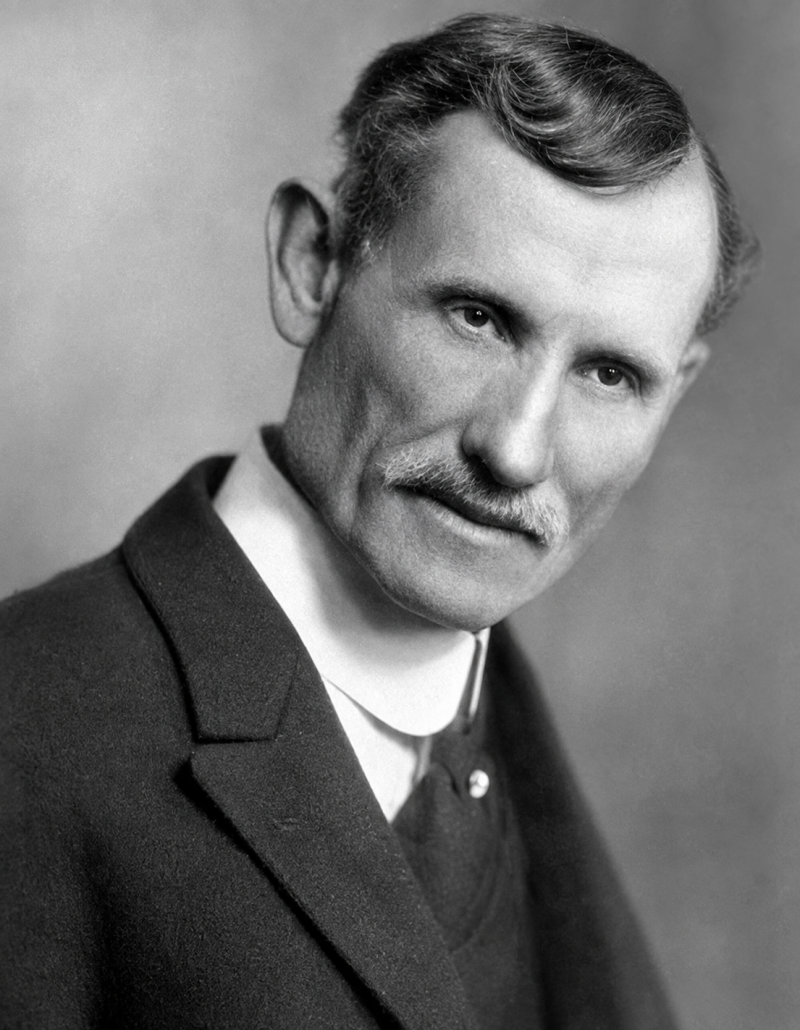
Thomas Talley
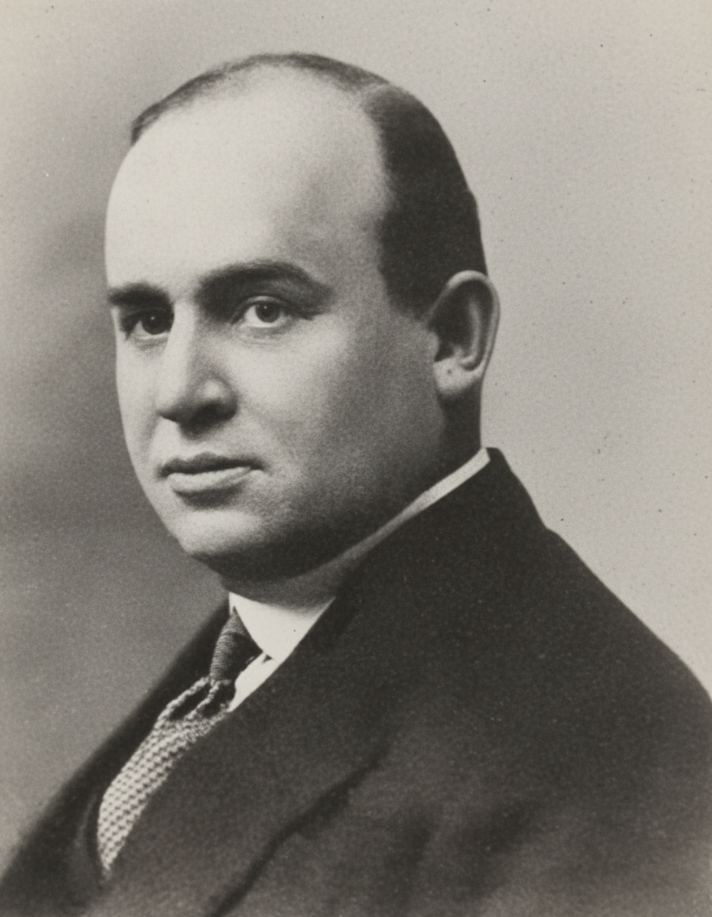
John D. Williams
First National secured a valuable asset in Charlie Chaplin. According to the agreement of 1917, Chaplin was to make a series of films for the company while at the same time having a high degree of independence. Using money provided by First National, he bought property on Sunset Boulevard and La Brea Avenue and then built his own studio in Hollywood.
This arrangement led to some of Chaplin's most memorable films, such as A Dog’s Life (1918), Shoulder Arms (1918), and finally to his masterpiece The Kid (1921), which starred Jackie Coogan. Chaplin's films became more ambitious—and more expensive—and his relationship with First National grew strained as the comedian required the time and money needed to produce films in his own way.
First National dealt a direct blow to Zukor by securing Mary Pickford. Pickford's films had always been one of Paramount's strongest assets when it came to dealing with theater owners. The fact that she left Zukor in November 1918 to join First National was clearly symbolic in that the exhibitors, who had previously been obliged to purchase Paramount's package deals, had taken away Paramount's most important female star.
Pickford's stay was short. Concerned as they were—Chaplin, Douglas Fairbanks and D. W. Griffith—that another major merger of producers and distributors could limit their independence, they established United Artists in 1919 so that the artists themselves could have control over the distribution of their films.
First National was set up as a revolt against Zukor; nevertheless, among its most prominent stars began their own rebellion. Despite this, the company continued to thrive. In the 1920s it changed from a distribution network to becoming a major production company, and its list of stars eventually comprised such well-known figures as Constance Talmadge, Harry Langdon, Richard Barthelmess, Corinne Griffith, Billie Dove, Ken Maynard, and Colleen Moore. Moore, who was one of the great screen personalities of the Jazz Age, became so closely linked with the company that she was at times referred to as the "Queen of First National"; her film Flaming Youth (1923) contributed to establishing her as one of the decade's typical flappers.
First National was not merely purchasing movies made by other people; it was now producing its own. This change reached its peak in 1926, the year when the company built a huge studio in Burbank.

Poster for A Dog's Life (1918), Charlie Chaplin's first film under his $1 million contract with First National.
Situated on acres of former agricultural land and being proudly billed as “The Greatest Studio on Earth”, the new First National studio had stages, offices, workshops, and production facilities which were capable of competing with those of Hollywood's largest studios.
A company set up with the aim of challenging the big studios had instead become quite impressive. However, Hollywood was undergoing another change. The introduction of sound disrupted the industry's balance of power, and one of the companies at the forefront of this change was Warner Bros. The success of The Jazz Singer in 1927 turned Warner from an aggressive competitor into one of Hollywood's most powerful companies.
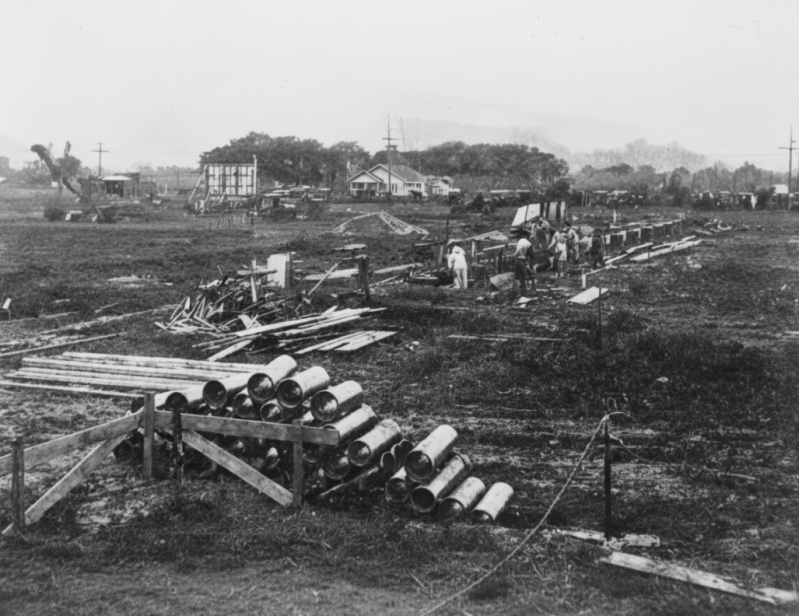
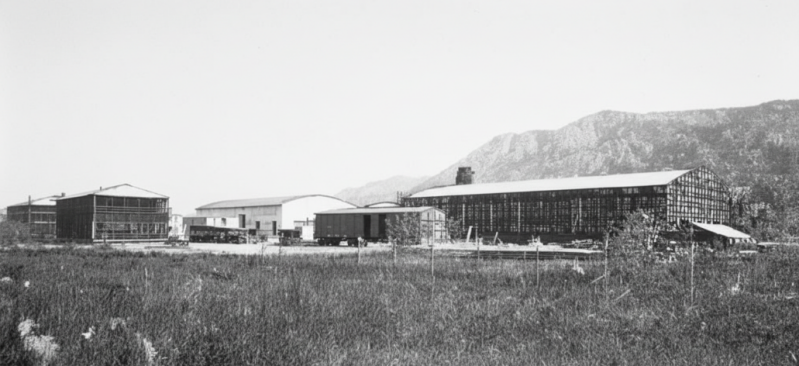
Above: First National Pictures’ new $1.5 million studio complex takes shape in Burbank as steam shovels, concrete mixers, horse teams, and construction crews work to rush the ambitious project toward completion. Below: Construction of First National Pictures’ new Burbank studio was already running a month ahead of schedule by June 1926.
At the same time, First National had become financially vulnerable since in 1928 Warner Bros. obtained a controlling interest in the company; although First National and Warner at first kept on operating as separate organizations, the merger gave Warner something of enormous value—which was First National's splendid Burbank studio together with its wide distribution and exhibition networks.
The shift to sound films came soon after. The film Barker (1928), which starred Milton Sills and Dorothy Mackaill, was originally made without sound before having sound sequences added to it. First National then released Weary River (1929), starring Richard Barthelmess, as the revolution in talking pictures spread throughout the industry.
By 1930 Warner Bros. had transferred a large part of its operations to the First National property and spent millions of dollars on expanding and modernizing the studio. For many years the First National name kept appearing on films, and those Warner productions using that name featured stars such as Edward G. Robinson, Loretta Young and Bette Davis. Nevertheless, First National eventually lost its distinct identity and was absorbed into the Warner Bros. organization.


First National never entirely vanished; indeed, its most significant contribution is still very much alive. The large studio the company established in 1926 is now at the core of Warner Bros. Studios, and this August marked 100 years since it opened. The new production facility was completed quickly and, on August 14, 1926, hosted members of the press and the film industry, who praised it as “The Greatest Studio on Earth.” A century on, the studio remains one of the world's most important production centers. It has been home to numerous generations of film directors, as well as a vast number of movies and television programs. Although the First National name has now largely disappeared from public memory and has been overshadowed by Warner Bros., the studio it founded still survives as one of the most impressive surviving connections to Hollywood's silent era.
That is perhaps the most remarkable aspect of First National's history. Thomas Tally, John D. Williams and a number of disgruntled theater owners decided to take steps to stop Adolph Zukor determining which films they had to show. The cooperative established a national distribution network, drew in Mary Pickford and Charlie Chaplin, cultivated some of the most famous stars of the silent film era, created one of the most significant studios in the history of Hollywood and in the end ended up becoming part of the studio system which it had originally been set up to oppose.
The First National name has long since disappeared from movie screens; however, if you drive past the Warner Bros. studio lot in Burbank nowadays, you'll see the enduring result of Hollywood's major exhibitors' revolt.
Check in tomorrow at The Hollywoodland Revue for my latest Hollywood Forever Immortals profile, featuring Pulitzer Prize-winning food critic Jonathan Gold. I’ll look back at the Los Angeles native who transformed restaurant criticism, championed the city’s countless neighborhood cuisines, and taught generations of Angelenos to discover their own city one meal at a time.
If you enjoyed my look back at the history of First National Studios, please take a moment to comment, rate the post, and share it with others who enjoy classic Hollywood, studio history, and the people who helped build the motion-picture industry. Your support helps keep these stories of old Hollywood circulating and introduces them to new readers.
Add comment
Comments