

Few critics have ever achieved what Jonathan Gold did: he altered the way the city saw itself. Although he wrote about food, he also dealt with neighborhoods, immigration, culture, class, memory, and the people who are responsible for making Los Angeles what it is. When he died in 2018, Gold had become one of the city's most distinctive voices and the first restaurant critic to win the Pulitzer Prize for criticism.
By Allan R. Ellenberger

Jonathan Gold was born on July 28, 1960, in Los Angeles and grew up in a middle-class family in South Los Angeles. He went to UCLA, studying both art and music and becoming a cellist. Music was his passion before he turned his attention to food. He took part in the punk and experimental scenes in the city, had a short time working with the conceptual artist Chris Burden, and wrote articles on music for a number of publications, including Spin, Rolling Stone, Details, and Vanity Fair. Gold was one of the first and most perceptive writers to cover Los Angeles hip-hop, having written in a serious manner about artists such as Dr. Dre and Snoop Dogg before the majority of the mainstream press realized the cultural significance of the genre.
He started out doing proofreading and writing about music for the L.A. Weekly, and in the mid-1980s began to write reviews of restaurants; his 'Counter Intelligence' column then became one of the most influential food columns in the United States. Gold's method was considerably different from that of conventional restaurant criticism since rather than focusing on restaurants with white tablecloths he was more interested in finding out what people in Los Angeles were really eating.
He went to all sorts of places—the strip malls, the taco trucks, the suburban shopping centers and the small storefront restaurants that came within his area of interest. Through his work, Gold gave readers an introduction to Oaxacan food, Thai specialties, Korean barbecue, Vietnamese noodles, Armenian bakeries, Salvadoran pupusas and the various Chinese cuisines of the San Gabriel Valley. The book he published in 2000, Counter Intelligence: Where to Eat in the Real Los Angeles, expressed his view that the true heart of the city could not be found in restaurants associated with celebrities but rather in the neighborhoods that many Angelenos had never taken the time to visit.
Gold contributed to Los Angeles magazine, L.A. Weekly, Gourmet, and the Los Angeles Times; his writing raised restaurant criticism above the level of simple consumer advice. A meal was not simply good or bad but formed part of a bigger narrative concerning migration, family, tradition, and place. Before giving his opinion, Gold sought to understand what a restaurant was trying to achieve and where its cooking originated.
In 2007 Gold, when he was working for L.A. Weekly, won the Pulitzer Prize for Criticism and thus became the first restaurant critic to be so awarded. The Pulitzer Committee took note of the depth and breadth of his writing and the prize helped to establish food criticism as a valid form of cultural journalism. He was also a finalist for another Pulitzer in 2011 and picked up a number of James Beard Foundation Awards over the course of his career.
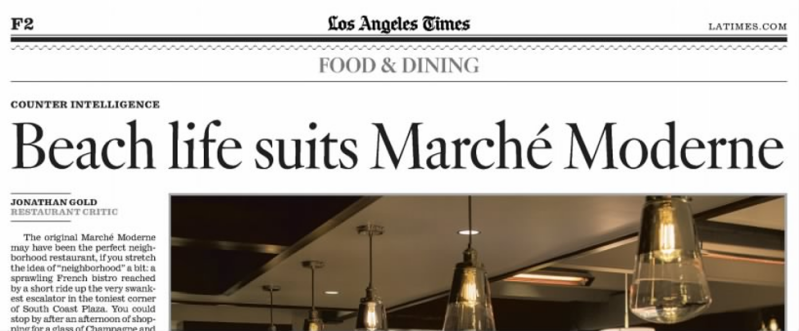
In 2012 Gold reappeared in the Los Angeles Times, where his annual list of the city's 101 Best Restaurants was eagerly looked forward to. His fame did not limit him to dining in fashionable restaurants; instead, he kept on driving around Southern California in order to find new kinds of food and small restaurants, at times sending his readers well beyond their own neighborhoods. One of his best-known pieces of advice was that the most rewarding restaurant could be another fifteen minutes' drive farther than you were willing to go.
A positive review in Gold could transform a small restaurant almost instantly. Nevertheless, chefs usually recalled him as kind rather than intimidating. Instead of viewing a cuisine from the outside with the intention of passing judgment, he got into the habit of studying its history, finding out what the dishes were meant to taste like, and making an effort to understand the people who prepared them.
It eventually became almost impossible for him to remain anonymous because of his distinctive look; thanks to his large glasses, his disheveled hair, and his untidy clothes, Gold was known throughout the restaurant community. The 2015 documentary City of Gold tracked him as he moved about Los Angeles and recorded both his working methods and his fondness for the city.
Gold's private life was closely linked with journalism. He married Laurie Ochoa, an editor and writer who worked for the Los Angeles Times, Gourmet and L.A. Weekly; the couple had two children, Isabel and Leon. Friends referred to Gold as a devoted father who always included his family in the culinary activities which were the basis of his professional life.
What made Gold stand out was his relationship with Los Angeles; he rejected the traditional idea that the city had no coherent culture, for he was fascinated by its vast extent and regarded Los Angeles as a group of communities whose food showed histories coming from Mexico, Korea, Thailand, China, Ethiopia, Armenia, El Salvador, Japan, and numerous other places.
His sickness developed very rapidly. He was diagnosed with pancreatic cancer in early July 2018. Less than three weeks subsequently, on July 21, 2018, he died at the St. Vincent Medical Center in Los Angeles. He was just 57, a week short of turning 58.

Jonathan Gold with his wife, Laurie Ochoa, arts and entertainment editor at the Times (Los Angeles Times / Anne Fishbein).
The response showed how deeply he had become a part of Los Angeles, since chefs, restaurant owners, journalists and regular readers all recalled having discovered various restaurants as a result of Gold having persuaded them to drive to an unfamiliar place. In honor of what would have been his birthday, the landmarks throughout Los Angeles were illuminated in golden light and a public celebration of his life took place at Grand Central Market.
His influence extended beyond his death, and the James Beard Foundation set up the Jonathan Gold Local Voice Award, which recognizes writers for their work examining the food culture of their own communities.

Jonathan Gold was buried at the Hollywood Forever Cemetery, alongside other generations of artists, filmmakers, writers, and so on who contributed to shaping Los Angeles. The inscription on his headstone is one that could not have been more suitable: "Tacos Forever."
Gold never regarded Los Angeles as a city that had anything to apologize for regarding its sprawl or that needed to demonstrate it had a culture. He knew that the city's identity was already present, spread out over thousands of miles of streets and hidden in kitchens where people were preparing the foods they had brought from their homelands.
Jonathan Gold didn't just tell people in Los Angeles where to eat; he persuaded them to move out of areas they were used to, take seats at new tables, and thus discover both the city and each other through the medium of food.
Tomorrow on The Hollywoodland Revue: this week’s “Coming Attractions” roundup featuring the newest theatrical releases, critical reactions, audience buzz, and recommendations on what may—or may not—be worth your ticket money.
If you enjoyed my Hollywood Forever profile of Pulitzer Prize-winning food critic Jonathan Gold, please take a moment to comment, rate the post, and share it with others who appreciate Los Angeles history, food culture, and the people who helped define the city. Your support helps keep these stories circulating and introduces them to new readers.
Add comment
Comments