

On Thursday, January 21, 1988, Cybill Shepherd stood on Hollywood Boulevard at one of the highest points of her television fame and watched her name become part of the pavement. Her star on the Hollywood Walk of Fame, placed at 7000 Hollywood Boulevard in front of the Hollywood Roosevelt Hotel, honored her work in television and, more immediately, the remarkable career revival created by ABC’s Moonlighting. I was there.
By Allan R. Ellenberger

At the time, I was a devoted fan of both Shepherd and Moonlighting, enough of one that I took the day off from work specifically to attend the ceremony. I arrived early and managed to secure a position directly in front of the podium. From there, I had an unobstructed view and took several photographs of the proceedings, including several candid moments that never made their way into the standard accounts of the day.
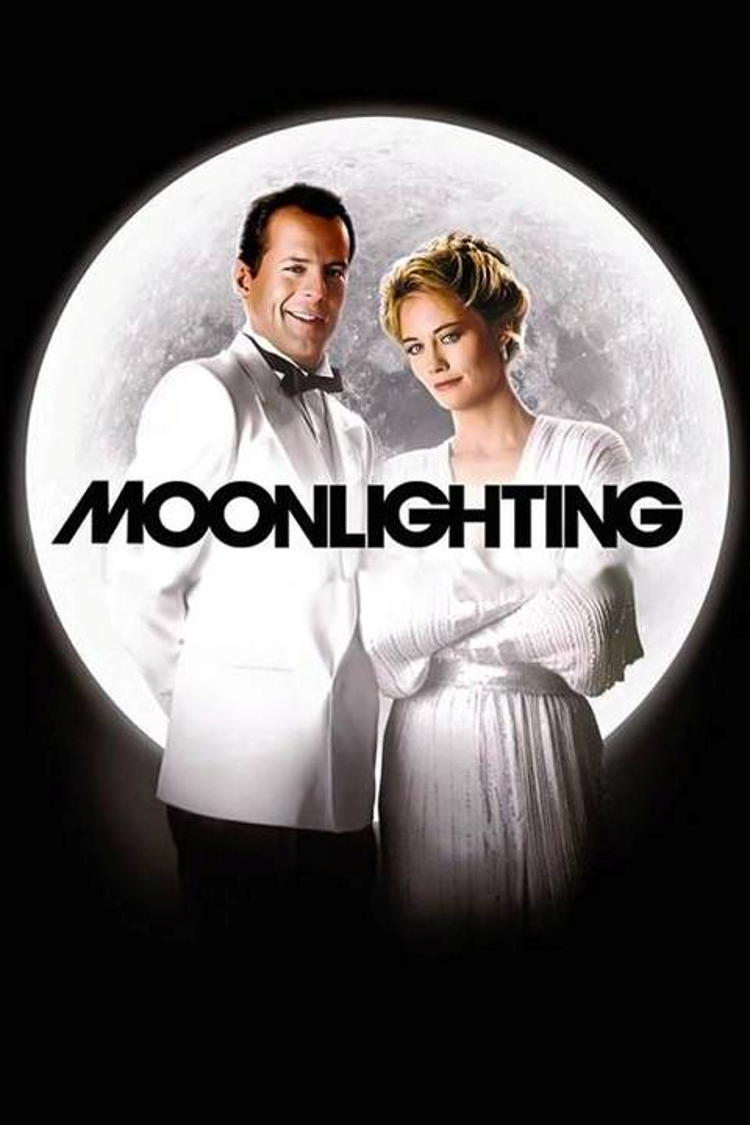
Shepherd’s star was hardly a matter of Hollywood honoring a fading career—quite the opposite. By January 1988, Moonlighting had turned her into one of television’s most visible and celebrated actresses. The series, which premiered in 1985, paired Shepherd’s cool, elegant Maddie Hayes with Bruce Willis’s irreverent David Addison, and their combative chemistry became the engine of one of the decade's most distinctive shows. The mixture of romantic tension, rapid-fire dialogue, comedy, mystery, and deliberate breaking of television conventions made Moonlighting a phenomenon.
The acclaim followed quickly. Shepherd won the Golden Globe for Best Actress in a Television Series—Musical or Comedy for Moonlighting in both 1986 and 1987, and she was nominated again in 1988. The honor therefore arrived at a moment when Hollywood was acknowledging not merely her longevity, but the success of an extraordinary comeback.
That comeback carried special weight because Shepherd had already lived through several different Hollywood lives. Born in Memphis, Tennessee, on February 18, 1950, she first became nationally known as a model before Peter Bogdanovich cast her as Jacy Farrow in The Last Picture Show in 1971. This was followed by The Heartbreak Kid, Daisy Miller, At Long Last Love, and Martin Scorsese’s Taxi Driver. By the early 1980s, however, the heat surrounding her movie career had cooled. Moonlighting changed everything.
There was another reason January 1988 felt like a new beginning. Shepherd had recently become the mother of twins, Ariel and Zachariah, born in October 1987, and had been away from Moonlighting on maternity leave. She had married chiropractor Bruce Oppenheim the previous March. Her Walk of Fame ceremony therefore coincided with her return to work and came just two days before the Golden Globe ceremony, where she was once again a nominee for Moonlighting.
Shepherd later remembered the Walk of Fame honor with characteristic humor in her 2000 autobiography, Cybill Disobedience, written with Aimee Lee Ball. She opened her recollection of that year by writing that 1988 had begun “propitiously” with the Walk of Fame ceremony and joking that the honor “only cost me $4,322.”
That remark gives an unusually candid glimpse behind the glamour. Walk of Fame stars have always involved sponsorship and installation expenses, and Shepherd was apparently under no illusion that Hollywood immortality came free. Even in describing one of the ceremonial high points of her career, she could not resist puncturing the mythology with a joke about the bill.
Hollywood’s longtime Honorary Mayor Johnny Grant conducted the ceremony and unveiled Shepherd’s star. Everyone in Hollywood knew Johnny, and there was no mistaking him. Grant had become virtually synonymous with Walk of Fame ceremonies, presiding over them with an enthusiasm that was part civic boosterism, part showmanship and pure old-fashioned Hollywood.
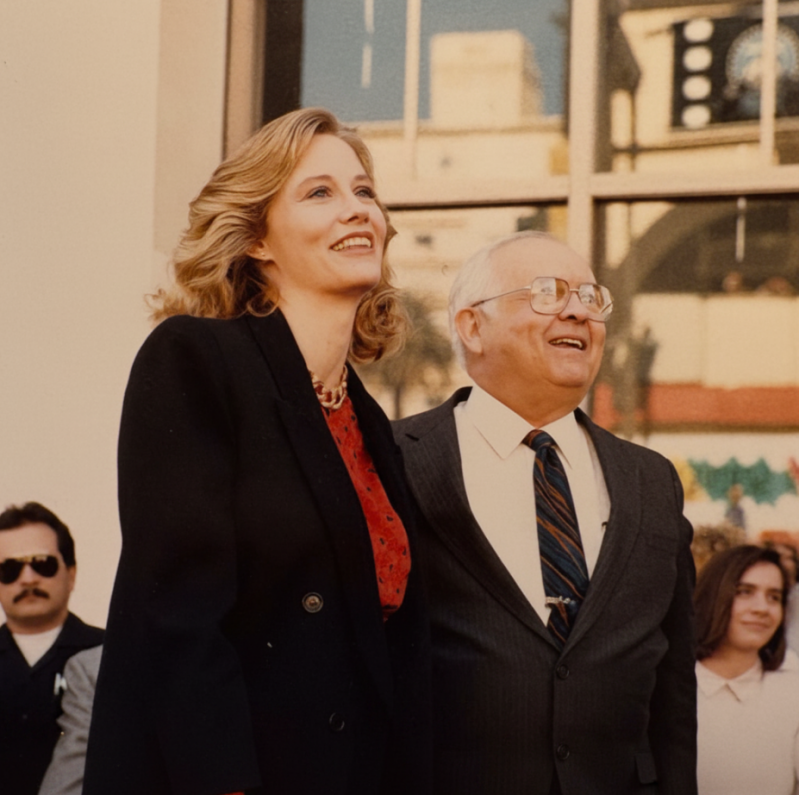
Hollywood Honorary Mayor Johnny Grant introduces Cybill Shepherd during the ceremony dedicating her star on the Hollywood Walk of Fame on January 21, 1988. (Photo Credit: Allan Ellenberger, 1988).
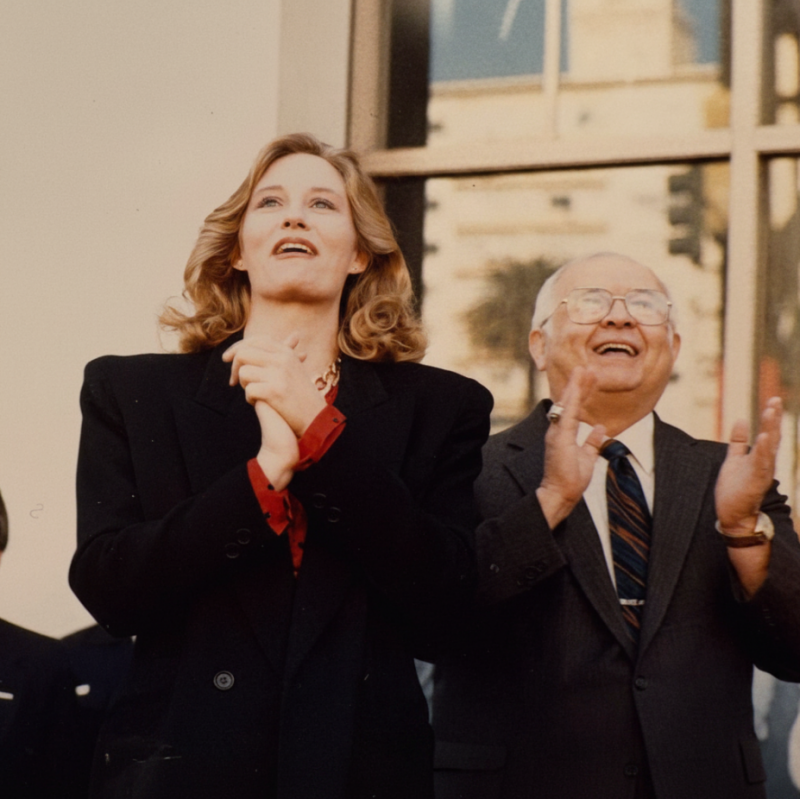
Shepherd and Hollywood Honorary Mayor Johnny Grant glance upward as a passing tour bus erupts in cheers and passengers begin tossing inflated beach balls into the crowd gathered for her Walk of Fame ceremony. (Photo Credit: Allan Ellenberger, 1988).
I photographed Shepherd standing beside Grant that day. In the pictures she looks relaxed and happy, dressed in a black suit over a red blouse, her blond hair catching the afternoon light as the crowd pressed close around the ceremony area. The setting could hardly have been more appropriate. Behind her stood the Hollywood Roosevelt, one of the boulevard’s most historic buildings, while across the street was the Chinese Theatre. A television star of the 1980s was being inducted into a tradition stretching back through generations of Hollywood history.
The ceremony also produced one of those spontaneous Hollywood Boulevard moments that could never have been planned. During the proceedings, a large sightseeing bus passed along the boulevard. People riding on the upper level began tossing inflated beach balls down toward the crowd. Instead of treating the interruption as an annoyance, Shepherd joined in. She caught the balls and began playing with them, laughing and holding them aloft. I photographed her with beach balls balanced in each hand, with another bouncing nearby. It was wonderfully silly and completely human. For a few moments the carefully staged ritual of a Hollywood star dedication became something closer to a neighborhood street party.
Bruce Willis was not present, but he made his presence felt. Shepherd preserved his telegram in her autobiography. His message read, “Sorry I can’t be there, but one of us has to work.” It was a perfect Willis line—dry, teasing, and very much in the spirit of the banter audiences loved between David Addison and Maddie Hayes. By then, stories about tension between Willis and Shepherd were already becoming part of the mythology surrounding Moonlighting, making the joke even sharper. Yet the telegram also linked the ceremony directly to the partnership responsible for Shepherd’s television renaissance.
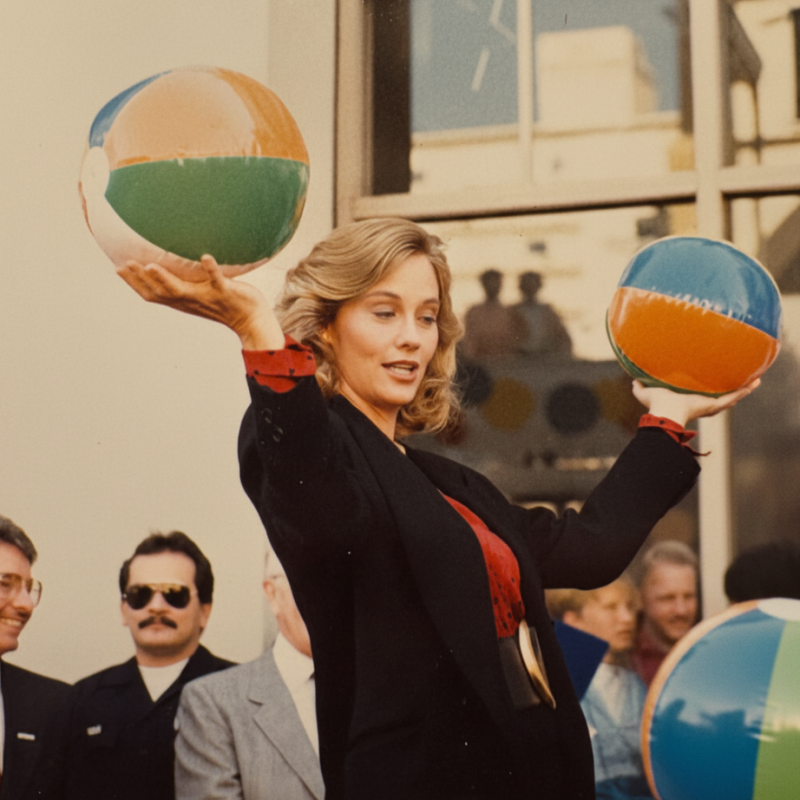
Shepherd playfully entertains the crowd, balancing two beach balls tossed down by passengers on a passing tour bus, whose reflection can be seen in the windows of the Hollywood Roosevelt Hotel behind her. (Photo Credit: Allan Ellenberger, 1988).
The star itself was awarded in the Television category, despite Shepherd’s important film career. That designation tells the story of the moment. This was Hollywood recognizing Maddie Hayes and the impact Moonlighting had made on Shepherd’s career and on television generally. The show had given her a role ideally suited to her intelligence, glamour, comic timing, and willingness to spar with a co-star who could match her energy.
Shepherd’s own recollections of that period reveal that the glittering public moment masked a more complicated professional situation. In Cybill Disobedience, immediately after recalling the Walk of Fame ceremony and Willis’s telegram, she wrote about her growing dissatisfaction with the atmosphere on Moonlighting and with the direction in which Maddie Hayes was being written. The contrast is striking. On Hollywood Boulevard she was being celebrated for one of television’s great success stories; behind the scenes, the creative relationships that had produced that success were becoming increasingly strained.
That knowledge gives the January 21 ceremony a slightly bittersweet quality when viewed from a distance. Nobody standing on the boulevard that afternoon could know precisely how the next year would unfold. Creator Glenn Gordon Caron would leave the series later in 1988, and Moonlighting would end in 1989. Bruce Willis was already on the verge of becoming a major movie star with Die Hard, released that summer. But none of that diminished what Shepherd had accomplished.

Shepherd addresses her fans. (Photo Credit: Allan Ellenberger, 1988).
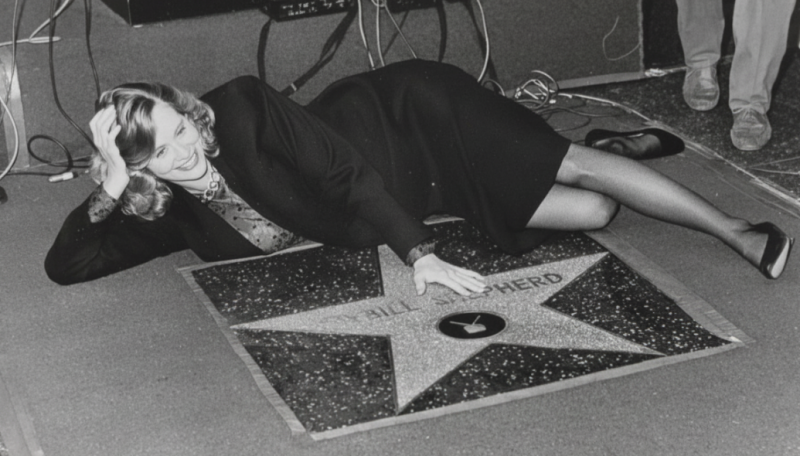
Shepherd brings the ceremony to a playful close, stretching out beside her newly unveiled star for photographers. She is believed to have been the first Walk of Fame honoree to strike the now-familiar reclining pose. (Photo Credit: Scott Downie).
On that January afternoon, she had every reason to celebrate. She was 37 years old, a former teenage beauty queen and fashion model who had become a film star, endured the reversals that Hollywood can deliver with startling speed, and then reinvented herself as one of the defining television actresses of the 1980s.
For me, the ceremony remains more than a date in a Walk of Fame directory. I remember standing at the front of the crowd because I had cared enough about Shepherd and Moonlighting to take the day off and get there early. I remember Johnny Grant beside her. I remember my camera. And I remember those ridiculous beach balls sailing down over my head from a passing tour bus and Cybill Shepherd, on the day Hollywood put her name in the sidewalk, happily catching them.

Sometimes Hollywood history is contained in contracts, awards, and carefully preserved official records. And sometimes it is simply a beach ball bouncing through a crowd on Hollywood Boulevard while a star laughs and reaches to catch it.
If you enjoyed this personal look back at Cybill Shepherd’s 1988 Hollywood Walk of Fame ceremony, I’d love to hear from you. Please leave a comment, rate the post, and share it with fellow Moonlighting fans and anyone who enjoys Hollywood history. Your reactions and memories help keep these stories—and moments like this one on Hollywood Boulevard—alive.
Add comment
Comments