

Doris Race did not live until she was thirteen, but by that time she had already experienced more adventure in her brief life than most adults achieve over many decades. She had ridden lively horses in Canada, earned prizes for her horsemanship, received a gold medal from the Governor-General, had appeared before motion-picture cameras, and had become a well-known figure in the Hollywood riding circles. Because she was small in stature, always well balanced, and fearless when riding, she was just as much remembered for her elegance as for her ability. At the time of her sudden death in February 1922, nearly a thousand people came to pay their last respects and her horse, which had never been ridden, went with the coffin to Hollywood Cemetery.
By Allan R. Ellenberger

Doris was born on August 24, 1908, to George H. Race and Ethel Leonard Race; both of her parents were born in England and the family moved to Canada when Doris was still a child. Her father served as an Indian agent in Alberta and thus Doris grew up in a nation in which horses remained an important part of daily life. She showed a natural affinity for horses.
When she was a small girl, she already had a special ability in dealing with difficult animals. She was not just fearless; she possessed balance, control, and what horsemen refer to as form. Riding in the English style with a straight seat and a calm hand, she soon drew attention to herself for her skill in handling high-spirited horses which could pose a challenge to many older riders.
Before she reached her teens Doris was already achieving success. She received recognition in Canada for her horsemanship, including a gold medal given by the Governor-General in appreciation of her riding skills. She also came to be linked with the Royal Northwest Mounted Police and was regarded as one of their young mascots. Everywhere she appeared people were not only impressed by her ability but also by the contrast between her small stature and the powerful animals which she rode with such confidence.
Doris and her mother moved to Los Angeles about 1919. The southern part of California was a suitable environment for a young rider of her ability. Horse shows were popular, riding academies thrived, and the film industry there still relied heavily on horses. A large number of western films were being produced, and anyone who could actually ride had an advantage when appearing in front of the camera.
Doris soon gained a reputation within the local riding circle. She took part in horse shows in California and always won prizes, at times beating adult women. At a show in San Fernando, she was awarded the title of best woman rider even though she was still only in her teens. She also received accolades at other competitions throughout the state and became a common sight at the Hollywood riding events.
Sea Gull, a big grey horse that belonged to the Hollywood Riding Stables, was Doris's preferred horse. The pair became a local favourite. Doris appeared with the horse in films and rode it as easily as she had always done since she was a child. People who saw her admired the calm confidence she showed when handling the animal. She never relied on showy tricks; rather, her charm lay in the way it seemed as though she was entirely comfortable in the saddle.
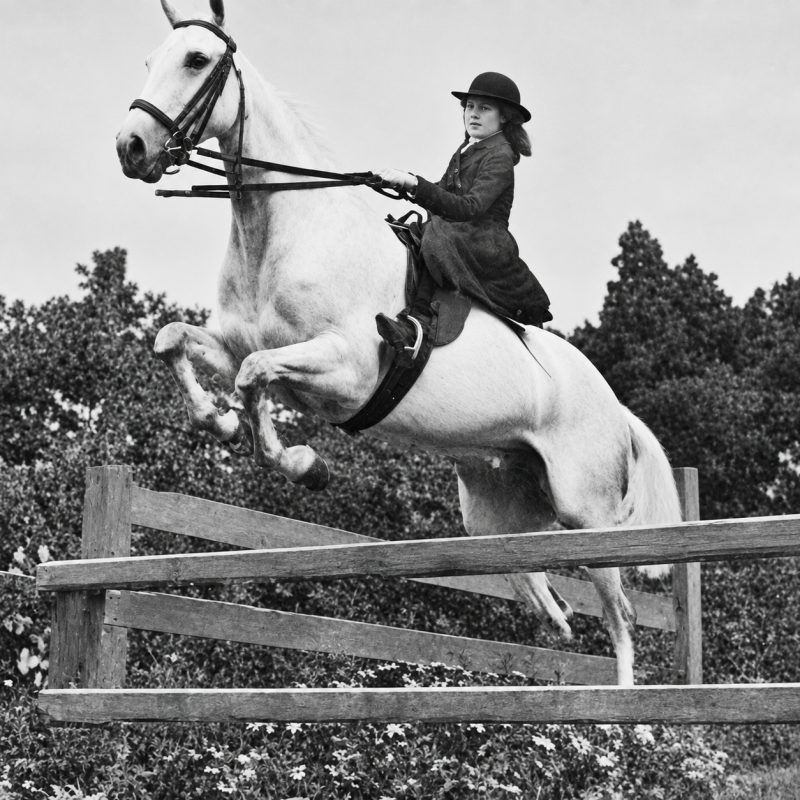
Doris Race at Pasadena, where she won first place in the jumping competition riding Sea Gulf.
As her reputation grew, she was soon involved in films. The 1921 Western The Wolverine, directed by William Bertram and featuring Helen Gibson—one of the most skilled horsewomen and stunt performers of the silent era—was one of the films connected with her. Adapted from a novel by B. M. Bower, the film focused on a type of outdoor action that would have been entirely suitable for Doris.
Doris was also in some other films, but a great deal of her film work has disappeared together with so many of the films from that period. More clearly preserved is her reputation among those who had seen her ride. When she was one of the main attractions at a circus held at the Hollywood Bowl, she became one of the most popular performers at the event. The audiences reacted in the same way that equestrians had done for years—by being impressed with a child who showed remarkable confidence and elegance when controlling a large animal.
However, by the start of 1922 Doris's life changed suddenly. She fell seriously ill and was sent to St. Vincent’s Hospital in Los Angeles. The illness continued for several weeks and what had originally been a terrifying sickness eventually turned out to be tubercular meningitis, an infection of the membranes surrounding the brain and spinal cord which, in the days before effective antibiotics, was almost always fatal.
Doris died in the late hours of the night of February 22, 1922, and she was thirteen years old at the time. The riding community was shocked by the news, having seen her progress from a talented newcomer to one of the most respected young equestrians in Southern California. She had been living with her family at 255 South Bunker Hill, in the former residential area of Los Angeles, and just a few days before many of her friends had still hoped that she might recover.

Doris with her favorite horse, Hollywood, at the Santa Barbara Horse Show.
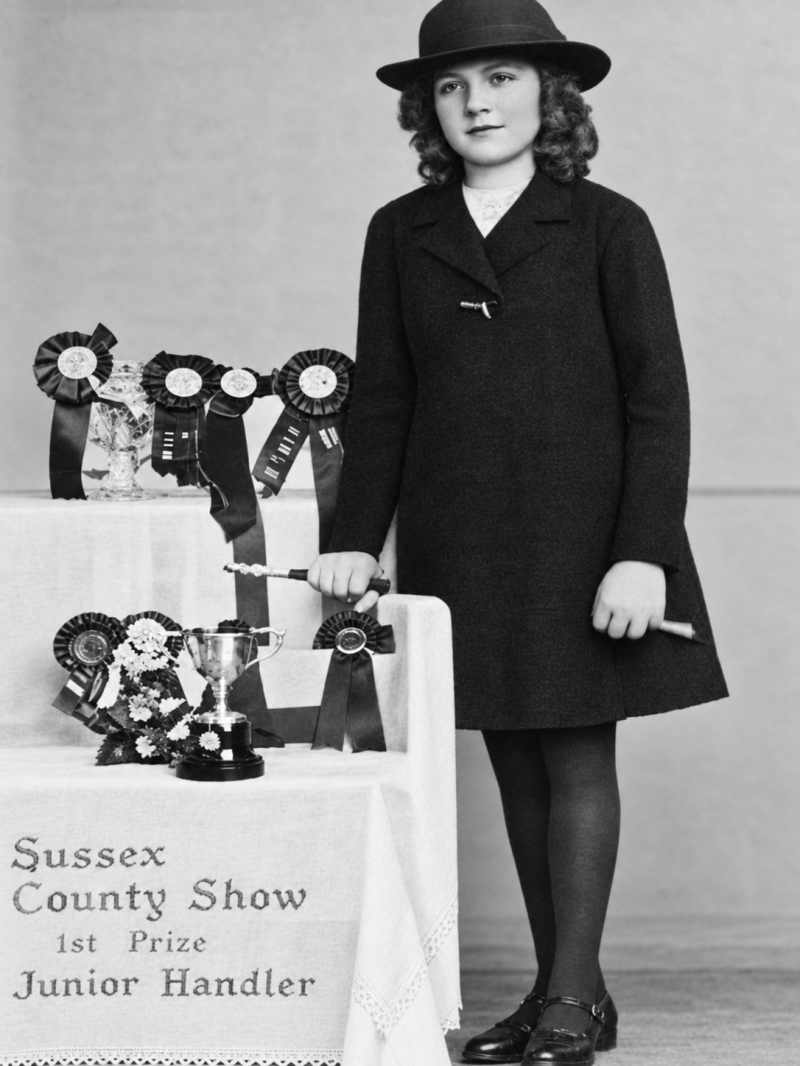
Doris poses with some of her ribbons and trophies.
Her funeral was an extraordinary show of affection, with horsemen and horsewomen arriving from all over Southern California, some of them coming as far as Santa Barbara. People from riding academies, civic groups, and British and Canadian organizations gathered at the Strother & Dayton funeral chapel together with family friends and acquaintances from Hollywood. It is reported that nearly one thousand people attended.
The chapel was full of flowers, including roses sent in by horse owners, a floral saddle provided by the Hollywood Riding School, large hearts made from blossoms, lilies, wreaths, and a horseshoe crafted out of flowers. The tributes showed what kind of world Doris had been a part of and the people who had watched her ride. One of the arrangements had the straightforward message: "She rode into Heaven."
There was another tribute ready. Captain, Doris's preferred horse, was walking along as part of the funeral procession even though he was not being ridden. The empty saddle spoke louder than any eulogy could. As Doris made her last trip through Los Angeles, Captain was taken behind the hearse, the young horsewoman who had spent most of her life on horseback now being taken to Hollywood Cemetery, Section 10-West, Grave 684.
Although her life had been only thirteen years, it had a most interesting story; she moved from Canada to California, gained a reputation in the competitive riding circles, won prizes competing against riders who were considerably older than herself, worked in silent films, and performed in front of Hollywood audiences. While most children at that age were still finding out what they wanted to become, Doris had by that time already become something.
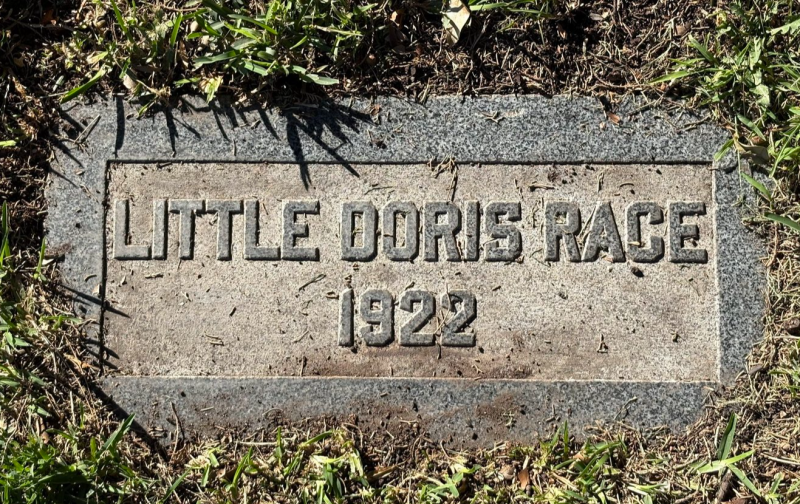
Her story is particularly moving since it is such a perfect example of a bygone Hollywood; it was a city in which stables for horses still stood beside movie studios, in which horses used to travel through the streets, and in which a child with real ability could find herself working in front of a motion-picture camera simply because she was extraordinary.
Doris Race never got the opportunity to grow up and find out where her talent might have led her; her career in films was no more than a starting point, and the awards she had won were only the first chapters of a life which ought to have been much longer.
However, for a short period of time the little horsewoman was present—upright in the saddle, confident, graceful, and apparently fearless, riding through a Hollywood which at that time was still young.
Check in tomorrow for my latest Hollywoodland Revue commentary examining the current status of the Kennedy Center—its history, its architectural and cultural importance, the controversy surrounding its future, and what could be lost if one of America’s most significant performing-arts landmarks is diminished or destroyed.
If you enjoyed discovering the remarkable but all-too-brief life of Doris Race, the gifted child equestrian and silent-film performer now resting at Hollywood Forever, I’d love to hear your thoughts. Please take a moment to leave a comment, rate the article, and share it with others who enjoy Hollywood history and the forgotten stories behind its cemetery gates. Your support helps The Hollywoodland Revue keep these nearly lost lives and memories alive.
Add comment
Comments