

It’s rare to find someone who altered the course of film history but was never fully immersed in the industry he sought to influence. Kevin Brownlow began caring about film history before most people knew there was a history to care about. While he was still a schoolboy he decided that silent film was worth preserving. Where most people saw junk, Brownlow saw sublime art; where most people saw inconsequential relics from cinema’s infancy, Brownlow saw a mature medium in danger of being lost forever. He would go on to spend his life rescuing lost films and documents, leaving an impact on film restoration and historical understanding that will last forever.
By Allan R. Ellenberger
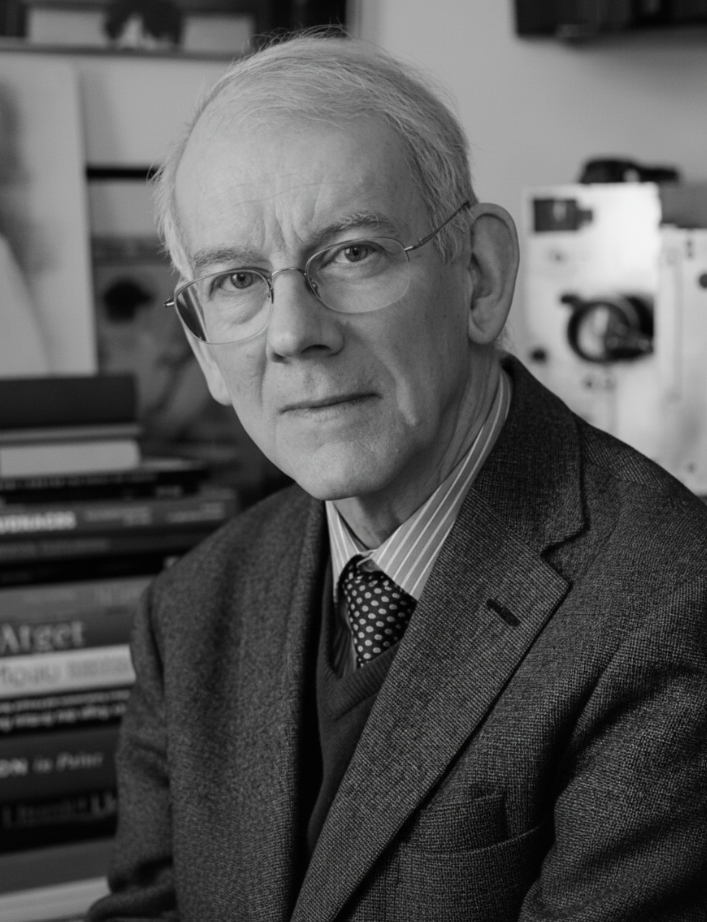
Brownlow was born on June 2, 1938, in Crowborough, East Sussex. He grew up in a Britain where the surviving actors, filmmakers and technicians who worked during the silent era were steadily dying off or fading into obscurity. When Brownlow became interested in silent films as a teenager in the early 1950s, Hollywood had already recovered from its crisis of archival conscience. Silent films no longer seemed strange or problematic to the industry; they just seemed old. Brownlow didn’t think they were old—he loved the epic films of Abel Gance, D.W. Griffith, and Erich Von Stroheim. More than that, he knew they were important and that someone needed to preserve them. Unlike most enthusiasts of the time, Brownlow comprehended, decades ahead of most organizations and institutions, the urgency.
By his own admission he was a busy teenager. As well as devoting himself to silent film he kept up with school and friends. But in addition to these interests, Brownlow began searching for films, photographs, scripts, and production records.
He was saving things people considered worthless; newspapers, magazines, personal documents. He began to interview many of the surviving artists who worked in film’s silent era: directors, cinematographers, editors, production designers, set decorators, and performers. He wrote down their stories while they were still able to tell them. These interviews would later become invaluable to film historians who were able to study his firsthand accounts of people who directly contributed to films like Intolerance and Pandora’s Box.
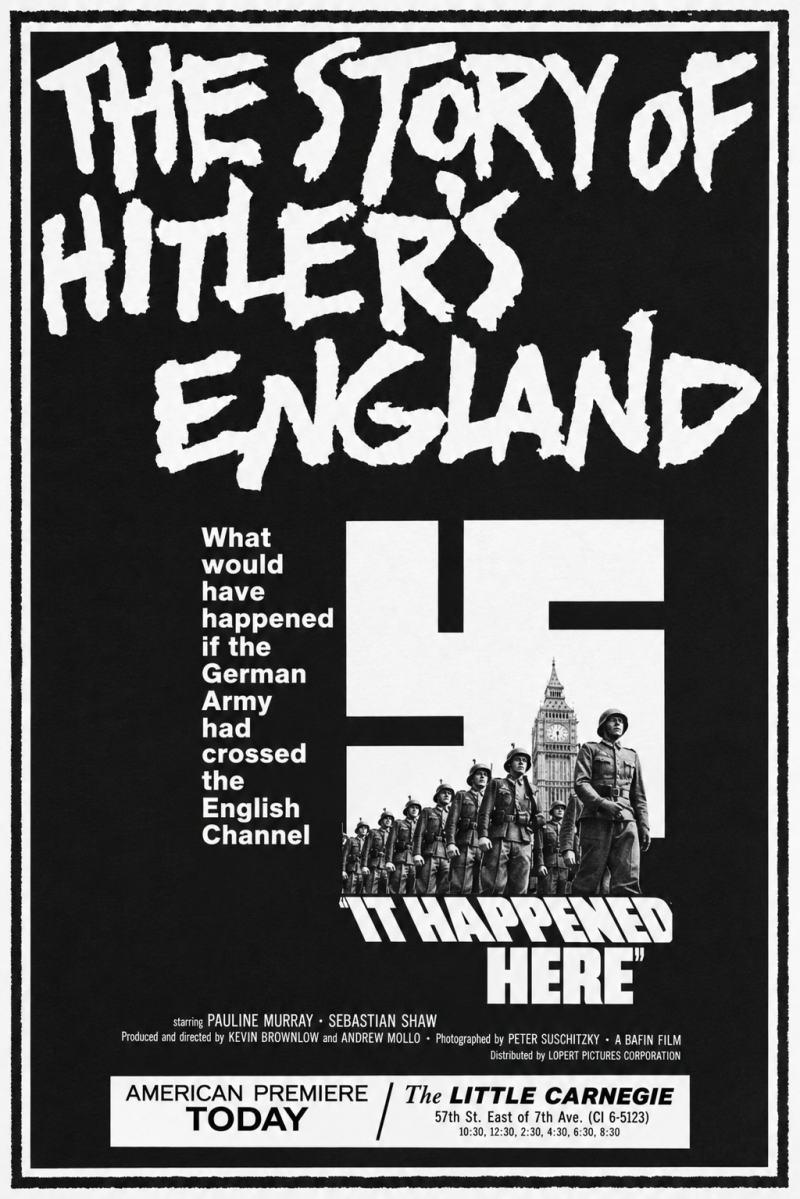
Around this time Brownlow also began making his own films. Shot in his early twenties, It Happened Here was co-directed by Brownlow and showed an imaginary Britain under Nazi occupation. Though far removed from silent film in both topic and execution, the movie still exemplified his talent as a filmmaker and historian. He later collaborated once again with production designer Andrew Mollo on the historical film Winstanley. Although Mollo was a friend and colleague at the time—Brownlow especially valued his meticulous approach to historical details—they didn’t exactly have a close friendship.
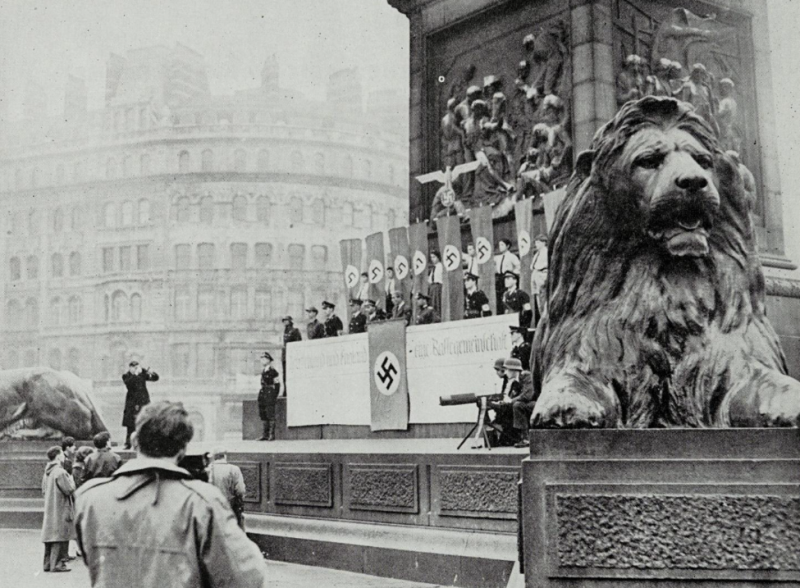
For key scenes in his independent production, It Happened Here, Kevin Brownlow (lower left corner) transformed London’s famed Trafalgar Square into a chilling vision of Nazi-occupied Britain, filling it with swastika banners, uniformed storm troopers, and Hitler Youth. Recreating the setting with convincing period costumes and props proved enormously expensive for the young filmmakers.

Authentically costumed Nazi officers are filmed in action for It Happened Here as co-director Kevin Brownlow, at far right, operates a hand-held camera. The ambitious independent production, begun while Brownlow and Andrew Mollo were still teenagers, ultimately took years to complete before its release in 1966.
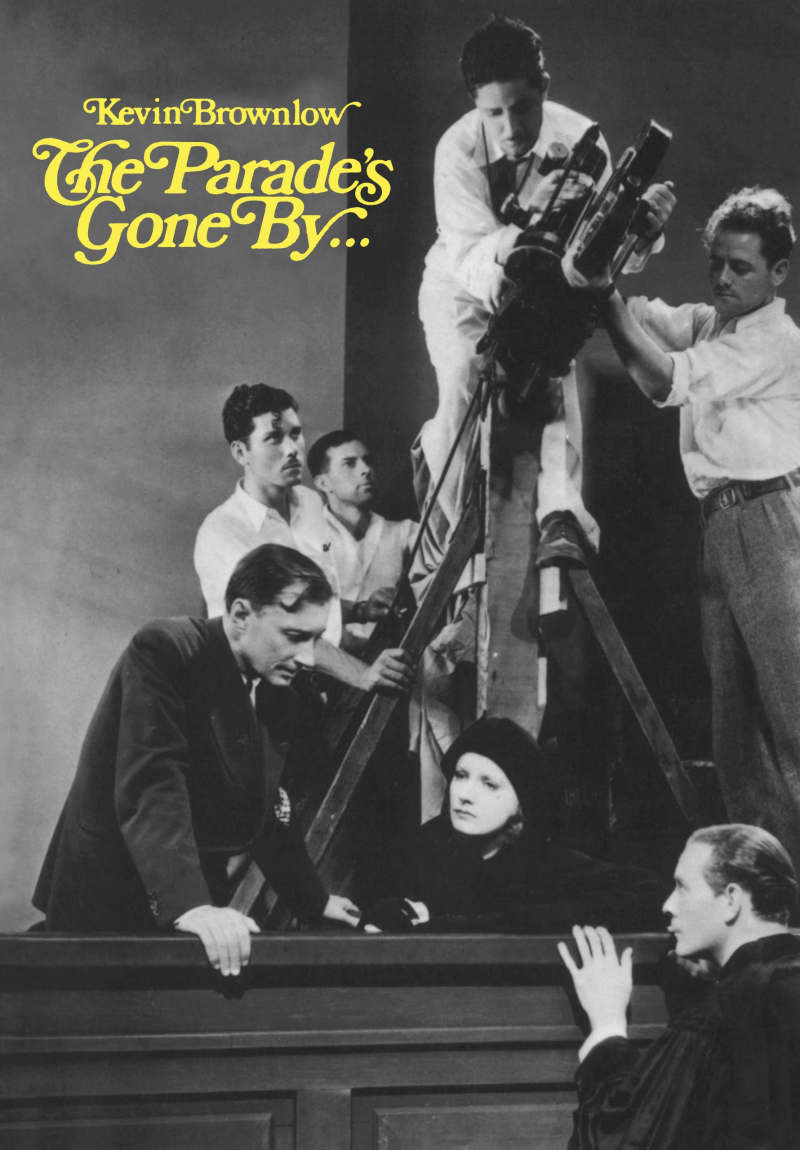
Brownlow’s greatest achievement for film history wasn’t brought to the screen but instead printed in his book The Parade’s Gone By… Drawing on years of research, interviews, and reviews Brownlow painted silent cinema as not merely immature cinema but creative and vibrant. Many commonly held misconceptions about silent cinema were dispelled by the book. The notion that silent films were simplistic and didn’t possess techniques such as camera movement, editing, or varied lighting was shown to be untrue. People had said these things about silent films back when they were being made. The Parade’s Gone By… demonstrated that many techniques filmmakers like Hitchcock and Welles would later make their own had been around since the 1910s and 1920s.
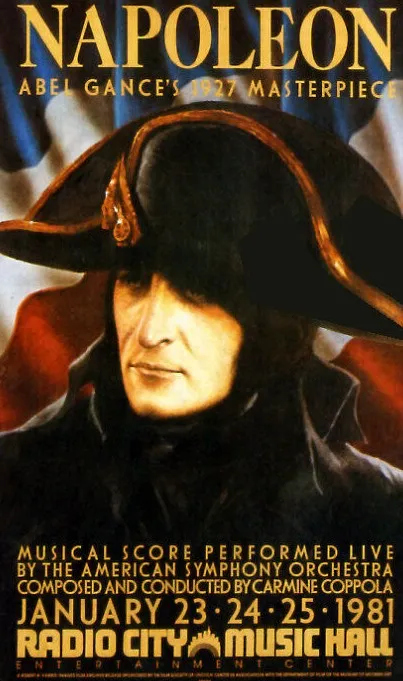
Brownlow’s next project would occupy him for the better part of two decades. Beginning in 1968 he began work on restoring Napoléon, the once considered lost film of Abel Gance. Traveling across the world and looking through private collections and museum archives, Brownlow painstakingly pieced together scraps of film until he was able to restore Napoléon in versions closer and closer to what Gance originally intended. Through these films, usually shown with live orchestral accompaniment, Brownlow showed that silent cinema still had the capacity to captivate contemporary audiences.
Helping bring silent cinema to those contemporary audiences was another interest of Brownlow’s. The four-part documentary series Hollywood, which Brownlow co-produced with David Gill in 1980, synthesized rare film excerpts, photographs, and interviews he had collected over the years to form a comprehensive history of the early days of American cinema. Premiering worldwide, Hollywood revolutionized people’s perceptions of the early days of cinema by highlighting it artists as ingenious rather than obsolete. Brownlow capitalized on this success with further documentaries on Griffith, Keaton, and others. By the time he was done, few silent filmmakers remained whose legacy he hadn’t helped promote or preserve.
Brownlow’s preservation efforts helped inspire film preservation itself. Before saving films was considered an institutional effort, Brownlow had shown that film preservation needed to be academic, meticulous, and fueled by passion. His work would inspire archivists and historians around the world, encouraging the establishment of archives and film restoration programs in institutions and museums worldwide.

Kevin Brownlow has for the majority of his personal life avoided the spotlight. Married to Virginia Keane in August 1969, Brownlow has kept his private life separate from his professional achievements. While many historians seek to add themselves to the history they study, Brownlow has allowed his life’s work to speak for itself.

Kevin Brownlow got the acknowledgment he deserved in 2010, when he received an Honorary Academy Award for his life’s work preserving early film. Considering that the award was given to him by an institution that very nearly let those films disappear forever, the honor served as a reminder that cinema’s future depends on remembering its past.
What is so extraordinary about Kevin Brownlow's legacy is not merely the fact that he preserved certain films, but the fact that he made the decision to do so. In his time, loss was seen as something inevitable and apathy was common. Silent films were disappearing, being thrown away or broken down into fragments. Unlike others, Brownlow did not accept that outcome. He thought that early cinema should be respected in the same way as literature, painting, or classical music—and throughout his life he worked to prove this belief.
At present, almost all serious work involving the restoration, the creation of archives, and scholarly research into silent films is influenced by him.
Because Kevin Brownlow chose to listen while everyone else ignored the situation, he made it possible for the very first aspirations of cinema to keep glowing—remaining alive, understandable, and profoundly moving—long after the silence had come to an end.
If you enjoyed my look at the life and remarkable career of film historian Kevin Brownlow, I’d love to hear your thoughts. Please leave a comment, rate the post, and share it with others who care about silent film, film preservation, and Hollywood history. Your support helps keep these important stories and the people who preserved them in the spotlight.
Add comment
Comments