

There was never anything ordinary about Udo Kier. With his pale blue eyes, sculpted features and slightly dangerous air, he could enter a film for only a few minutes and somehow alter its temperature. Directors used him as a vampire, a sadist, a Nazi, a wealthy eccentric, a supernatural apparition and, late in life, a flamboyant retired hairdresser. He moved effortlessly between exploitation pictures, European art films and Hollywood blockbusters, accumulating more than 200 screen credits during a career that lasted nearly six decades. Yet behind the cultivated menace was a funny, sociable and remarkably unsentimental man who had survived a childhood of genuine hardship before spending his adult life creating characters audiences could not forget.
By Allan R. Ellenberger

Udo Kierspe was born October 14, 1944, in Cologne, Germany, during the final months of World War II. His entrance into the world became one of the stories he told repeatedly throughout his life: the hospital in which he had just been born was struck during an Allied bombing raid, and he and his mother, Thekla Kierspe, survived amid the wreckage. His father was already married and disappeared from his life; Kier later said he never knew him. He and his mother lived in severe postwar poverty, and he recalled that their home did not have hot water until he was seventeen. His mother supported them in part by sewing dresses, while the boy who would eventually become famous for aristocratic villains grew up amid ruins and shortages.
As a teenager Kier served as an altar boy, sang in a choir and occasionally modeled. At sixteen he met another Cologne teenager, Rainer Werner Fassbinder, in a working-class bar where the two sat drinking Coca-Cola and watching the adults around them.
Neither yet knew that both would become important figures in European cinema. Kier later worked in a factory because his mother could not afford to send him to university, saving enough money to leave Germany. Around nineteen he moved to London, intending not to become an actor but simply to learn English, travel and perhaps find clerical work.
Chance intervened. British entertainer and filmmaker Michael Sarne noticed Kier and cast him as a young gigolo in the short film Road to Saint Tropez in 1966. Kier had never studied acting and freely admitted that he did not know what he was doing. The camera, however, loved him. Publicity followed, William Morris signed him, and the young German discovered that he rather enjoyed the attention. “I never wanted to be an actor,” he later remembered; it had simply happened to him.
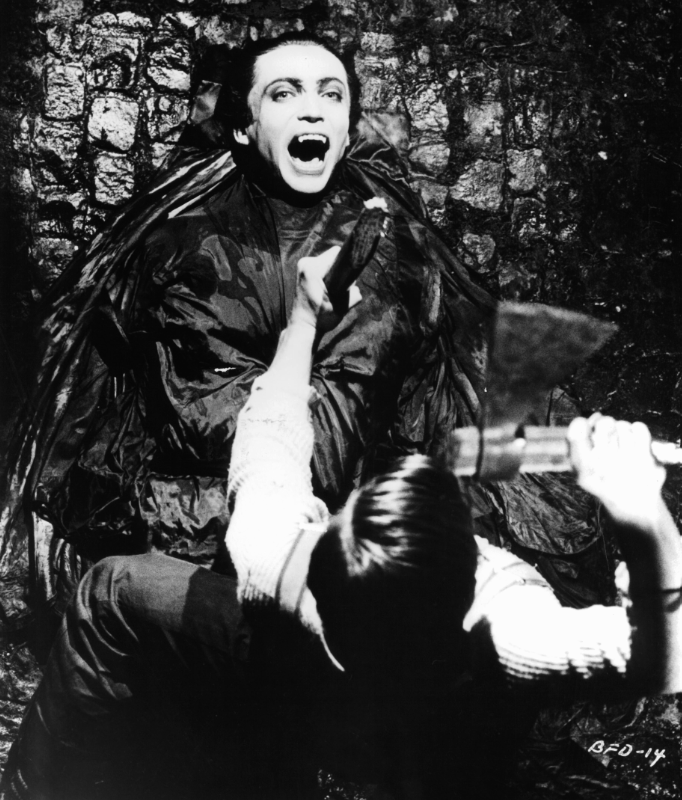
European films followed, including Michael Armstrong’s notorious witch-hunting horror picture Mark of the Devil in 1970. Kier’s real breakthrough came through another accidental encounter. Sitting beside Paul Morrissey on an airplane, Kier mentioned that he was an actor. Morrissey, closely associated with Andy Warhol, eventually cast him as Baron Frankenstein in Flesh for Frankenstein (1973). The film was grotesque, erotic, deliberately excessive and made in 3-D—and Kier was perfect for it. He followed it with the title role in Blood for Dracula (1974), again directed by Morrissey. The two pictures permanently established him as one of cult cinema’s great faces.

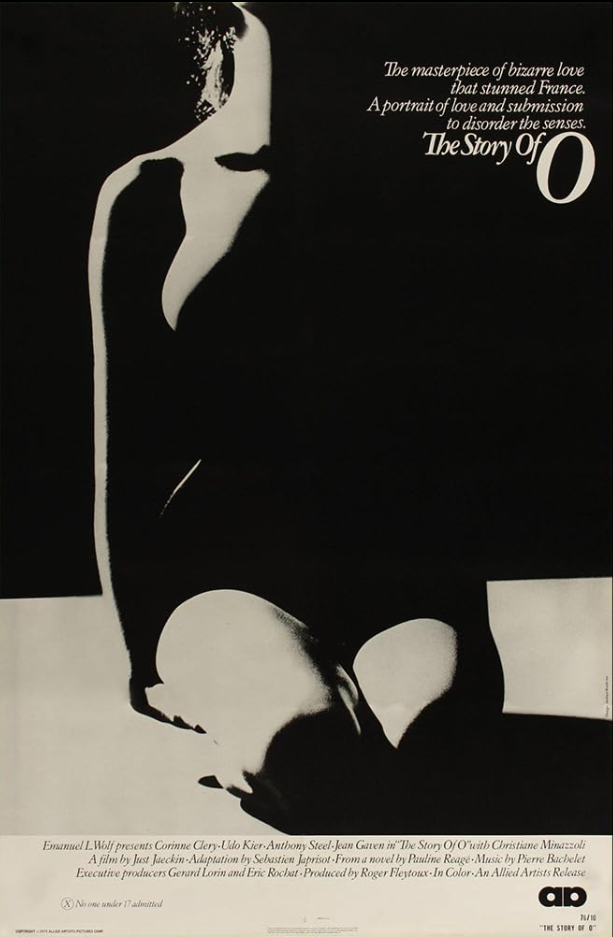

Kier refused to remain confined to horror. He appeared in The Story of O (1975), Dario Argento’s Suspiria (1977), and eventually reunited professionally with Fassbinder, appearing in such films as The Third Generation, Lili Marleen and Lola, as well as the monumental television adaptation Berlin Alexanderplatz. Fassbinder’s world was fearless, sexually fluid and formally adventurous, qualities that suited Kier perfectly. Kier later remembered that their friendship predated their careers by years, which gave their professional relationship an intimacy that could never have been manufactured on a film set.
Another crucial collaboration began with Danish director Lars von Trier. Kier appeared in Epidemic, Medea, Europa, Breaking the Waves, Dancer in the Dark, Dogville, Manderlay, Melancholia and Nymphomaniac: Vol. II, as well as von Trier’s television series The Kingdom. Von Trier’s advice to Kier was characteristically simple: “Don’t act.” Kier understood exactly what he meant. His most effective performances rarely looked labored; instead, he seemed simply to inhabit some strange corner of himself and invite the camera inside.
America discovered him more fully through Gus Van Sant. After meeting Van Sant, Kier was cast in My Own Private Idaho (1991) as Hans, the bizarre client who serenades the young hustlers played by River Phoenix and Keanu Reeves while embracing a lamp. It was only a small role, but it was pure Udo Kier—funny, unsettling and impossible to forget. He later worked again with Van Sant in Even Cowgirls Get the Blues and Don’t Worry, He Won’t Get Far on Foot.
Hollywood soon found uses for him as well. During the 1990s he appeared opposite Jim Carrey in Ace Ventura: Pet Detective, Keanu Reeves in Johnny Mnemonic, Pamela Anderson in Barb Wire, and in the large-scale hits Armageddon, Blade and End of Days. He also appeared in Madonna’s videos for “Erotica” and “Deeper and Deeper,” lent his voice and likeness to video games, and accumulated television roles on both sides of the Atlantic. His credits included seaQuest DSV, Red Shoe Diaries, animated programs and, much later, Hunters. The Television Academy credits him with work across more than 250 film and television productions.
Kier’s career experienced an especially satisfying late flowering. He appeared in Iron Sky, Brawl in Cell Block 99, Downsizing, American Animals, the Brazilian film Bacurau and The Painted Bird. Then came Todd Stephens’ Swan Song in 2021, giving Kier one of the rare American leading roles of his career. He played Pat Pitsenbarger, an elderly gay hairdresser who leaves a nursing home to style the hair of a deceased former client. Beneath the outrageous green suit and cigarettes was a tender meditation on memory, aging and a vanished generation of gay men. Kier researched the real Pitsenbarger with people who had known him and delivered one of his warmest performances.
The role had special resonance because Kier was himself gay, although he never treated his sexuality as a public campaign or secret. He said that no one had particularly asked him about it and that, in his experience, directors cared about whether he could play the role. In 2015 the Berlin International Film Festival honored him with a Teddy Award for his contribution to queer cinema. By the end of his life, he had been with artist Delbert McBride for many years; Kier had spoken publicly of being in a long-term relationship lasting more than two decades.
Away from cameras, Kier developed a life that was much calmer than his screen image suggested. He settled in the Palm Springs area in the early 1990s, surrounded himself with art and modernist furniture, and became a familiar presence at the Palm Springs International Film Festival.

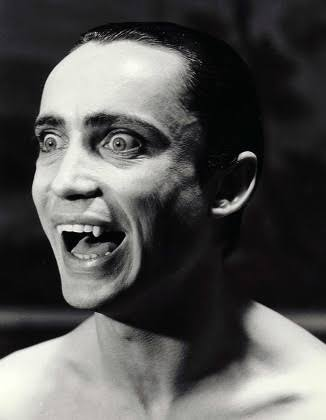
Udo Kier in a scene from Swan Song (2021)
His homes included a converted modernist library and a ranch, and accounts of his domestic world mention his dog Liza, a giant tortoise named Hans and an inanimate horse he jokingly called Max von Sydow. In 2020 he was invited to join the Academy of Motion Picture Arts and Sciences.
Kier continued working almost to the end. One of his final films was Kleber Mendonça Filho’s Brazilian political thriller The Secret Agent (2025). He had also been associated with game designer Hideo Kojima’s project OD, although Kojima later said Kier died before completing all of his planned voice and motion-capture work.

Udo Kier, Garden of Legends (Sect. 8, Lot 202-A, Grave B-CP)
Udo Kier died November 23, 2025, at Eisenhower Medical Center in Rancho Mirage, California. He was eighty-one. His partner Delbert McBride confirmed the death; no public cause was announced.
On January 26, 2026, friends, colleagues and admirers gathered at Hollywood Forever Cemetery for a memorial service held in the cemetery’s Masonic Lodge. Among those present were filmmaker Todd Stephens and Hideo Kojima. Artist Banksy, a friend of Kier’s, sent a work in his memory. After the service, Kier’s urn was taken in procession to the Garden of Legends, where he was interred. A temporary marker initially identified the grave and a larger monument with Kier’s image was later installed.
It is difficult to imagine a more appropriate resting place. Hollywood Forever is filled with actors whose faces became inseparable from the worlds they created on screen, and Kier belonged unmistakably among them. He had survived war, poverty and obscurity, crossed continents and genres, and somehow remained unmistakably himself through hundreds of performances. Whether dressed as Dracula, a Nazi, a millionaire, a madman or an aging hairdresser in a mint-green suit, Udo Kier understood one essential truth about movies: being merely competent was never enough. He wanted to be remembered. And once those extraordinary eyes appeared on the screen, forgetting him was almost impossible.
If you enjoyed my look at Udo Kier at Hollywood Forever, I’d love to hear your thoughts. Please leave a comment, rate the article, and share it with friends who appreciate film history, memorable character actors, and the stories behind Hollywood Forever Cemetery. Your comments, ratings, and shares help The Hollywoodland Revue reach new readers and keep these Hollywood stories circulating.
Add comment
Comments