

Few American murder cases have proved as durable on film and television as the story of Lizzie Borden. On the morning of August 4, 1892, Andrew Borden and his second wife, Abby, were found brutally murdered inside their home at 92 Second Street in Fall River, Massachusetts. Andrew’s thirty-two-year-old daughter Lizzie was eventually arrested, tried, and acquitted. No one else was ever convicted. That unanswered question—did Lizzie do it?—has given filmmakers more than a century of room to speculate.
By Allan R. Ellenberger
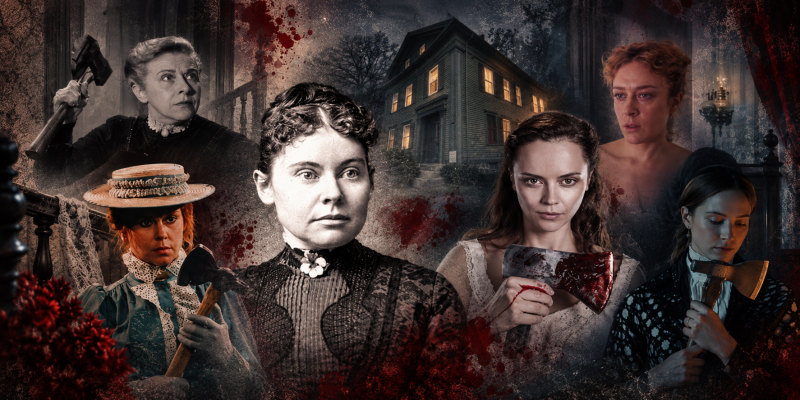
What makes the screen history fascinating is not simply how often the story has been retold, but how differently each generation has imagined Lizzie. Sometimes she is guilty, sometimes innocent, sometimes protecting someone else, and sometimes turned into an outright serial killer. The case has become less a fixed historical narrative than a mirror reflecting whatever period is retelling it.
One of television’s earliest major treatments came on January 22, 1956, when Alfred Hitchcock Presents broadcast “The Older Sister.” Directed by Robert Stevens and adapted from a story by mystery writer Lillian de la Torre, the half-hour drama starred Carmen Mathews as Lizzie and Joan Lorring as Emma Borden. Hitchcock opened the episode holding an axe and joking about the famous nursery rhyme before turning the story over to a reporter who visits the Borden sisters one year after Lizzie’s acquittal.
Rather than simply accusing Lizzie again, the episode offers a clever reversal: Emma is revealed as the actual murderer, while Lizzie has protected her. Historically, there is no evidence that Emma committed the crimes; she was away from Fall River when the murders occurred. But as drama, the twist demonstrates something that would become central to nearly every later screen version—the historical record leaves enough gaps that writers can insert almost any solution they choose.

Above is Carmen Mathews as Lizzie Borden in the Alfred Hitchcock Presents episode, "The Older Sister."

The portrayal that did more than any other to establish the modern screen image of Lizzie arrived nearly twenty years later. ABC broadcast The Legend of Lizzie Borden on February 10, 1975, with Elizabeth Montgomery in the title role. The casting was inspired. Audiences knew Montgomery as the charming Samantha Stephens of Bewitched, making her coolly wielding a hatchet all the more disturbing.
The television film took historical details unusually seriously. Much of its courtroom dialogue came from the actual 1893 trial transcripts, and its reconstruction of the Borden house followed the real layout closely, even though filming did not take place in the actual house. Yet the production ultimately takes a position history never proved: it visually depicts Lizzie committing the murders, famously suggesting that she removed her clothing before wielding the weapon so that blood would not stain her dress. The real Lizzie was acquitted, and no definitive evidence has ever established how the murderer avoided becoming covered in blood.
Montgomery’s performance is restrained rather than hysterical, which makes it effective. Her Lizzie is outwardly proper, controlled, and almost inscrutable. The film does not turn her into a conventional horror villain; instead, it suggests that the respectable Victorian daughter everyone thought incapable of such brutality may have been perfectly capable of it. The movie became so influential that many viewers came to remember its speculative solution almost as fact.
British television revisited the case the following year in the 1976 series Second Verdict. The program combined dramatization with documentary-style reinvestigation, placing fictional detectives Charlie Barlow and John Watt against famous historical crimes. Its Lizzie Borden episode aired on June 24, 1976, with Rosemary Leach portraying Lizzie. Rather than functioning purely as melodrama, the format invited viewers to reconsider the surviving evidence and essentially retry the case themselves.
By the 1990s, television had also begun approaching Borden through documentary rather than fiction. The 1992 production Lizzie Borden: A Century of Fascination, made for the centennial of the murders, brought together Fall River historians and researchers to examine what could actually be established from the record. That documentary is useful precisely because it stands apart from the increasingly imaginative dramatic versions. It returns Lizzie to the realm of evidence rather than folklore.
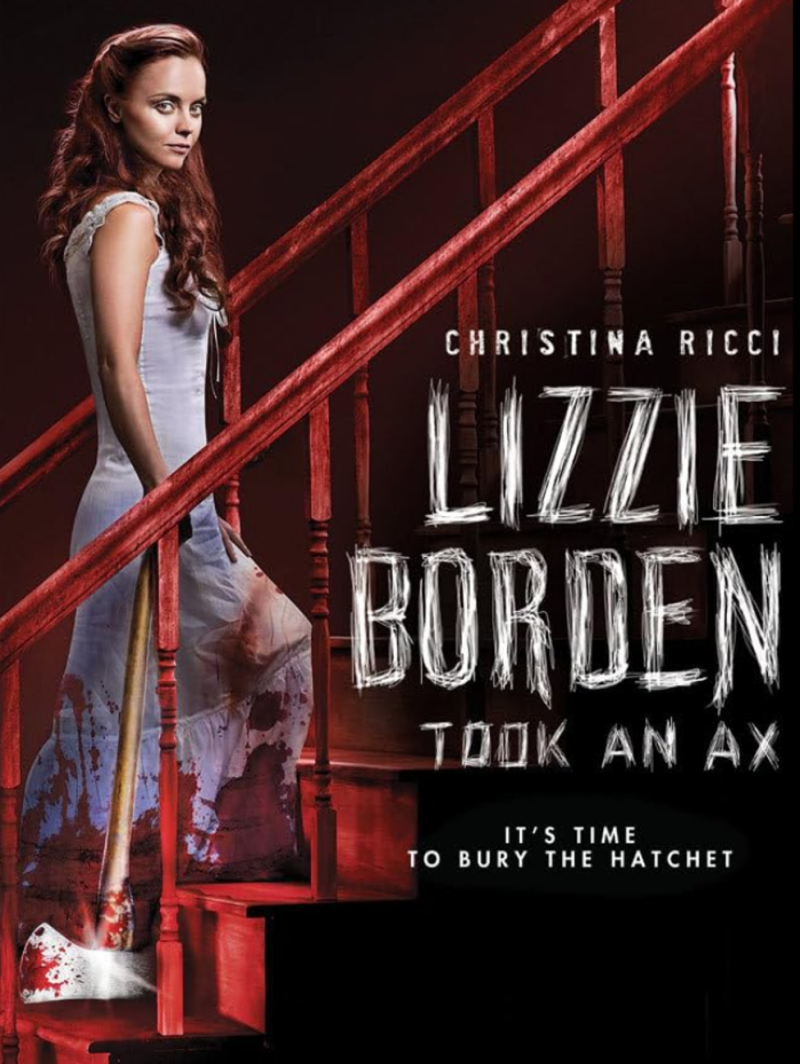
The story returned to popular television in a much more sensational form with Lifetime’s Lizzie Borden Took an Ax, which premiered January 25, 2014. Christina Ricci played Lizzie, Clea DuVall played Emma, Stephen McHattie portrayed Andrew Borden, Sara Botsford was Abby, and Billy Campbell played defense attorney Andrew Jennings. Director Nick Gomez and screenwriter Stephen Kay emphasized the tabloid quality of the original case—the newspaper frenzy, public curiosity, and uneasy contrast between Lizzie’s respectable appearance and the savagery of the crime.
Unlike the historical jury, the movie makes its own verdict clear. Near the end, Lizzie privately confronts Emma, and flashbacks reveal Ricci’s Lizzie committing the murders. The film therefore follows the basic conclusion of the 1975 Montgomery version while presenting Lizzie very differently. Ricci’s portrayal is more mischievous, knowing, and almost amused by the notoriety surrounding her. Historical uncertainty gives way to entertainment.
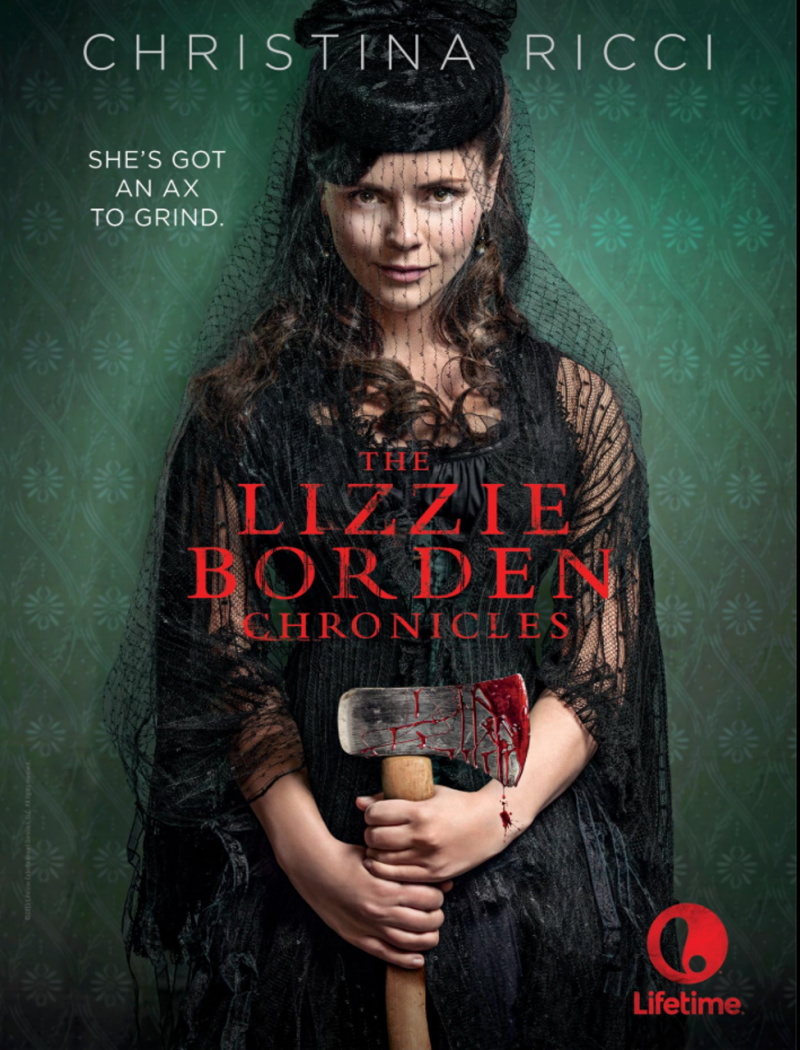
The movie attracted enough attention for Lifetime to bring Ricci back in 2015 for the eight-part The Lizzie Borden Chronicles. By then, historical accuracy was essentially abandoned. The series begins after Lizzie’s acquittal and imagines her eliminating enemies and troublesome acquaintances one after another. Clea DuVall returned as Emma, while Cole Hauser joined the cast as lawman Charlie Siringo. The production openly presented itself as speculative fiction rather than a reconstruction of Lizzie’s actual later life.
That distinction matters. The real Lizzie did not embark on a documented post-trial killing spree. She inherited substantial money, moved with Emma into the large Fall River house they called Maplecroft, eventually became estranged from her sister, and remained a socially controversial but otherwise private city resident until she died in 1927. The Lifetime series uses the historical woman merely as the starting point for a gothic crime fantasy.
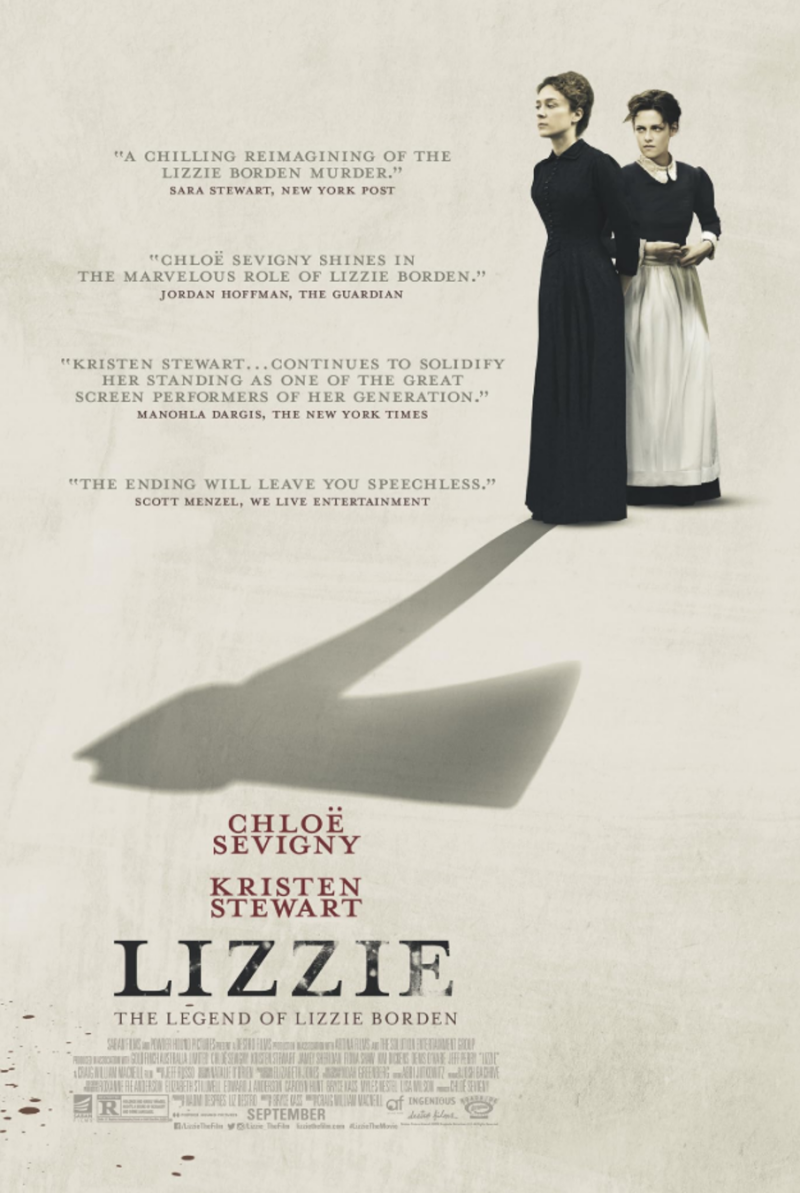
Theatrical filmmakers took a different approach with Lizzie in 2018. Chloë Sevigny, who had reportedly been interested in developing a Borden project for years, played Lizzie opposite Kristen Stewart as the Borden family’s Irish maid, Bridget Sullivan. Craig William Macneill directed. The film presents Andrew Borden as oppressive and sexually abusive toward Bridget and develops a romantic relationship between Bridget and Lizzie. Together, the women ultimately become accomplices in the murders.
That interpretation fits modern themes of repression, sexuality, and female resistance, but the historical foundation is thin. There is no established evidence that Lizzie and Bridget Sullivan were lovers or that Sullivan participated in the killings. Nor is there proof for the specific abuse narrative the movie constructs. What the film does capture effectively is the claustrophobia of the Borden household—the heat, resentment, money disputes, and limited choices available to women in that period. It is less a solution to the crime than a modern psychological interpretation of how such violence might have developed.
Now, in 2026, Netflix has brought Lizzie back yet again with Monster: The Lizzie Borden Story, the fourth installment of Ryan Murphy and Ian Brennan’s true-crime anthology. Ella Beatty stars as Lizzie, with Charlie Hunnam as Andrew, Rebecca Hall as Abby, Billie Lourd as Emma, Vicky Krieps as Bridget “Maggie” Sullivan, Jessica Barden as actress Nance O’Neil, and Sarah Paulson appearing as Aileen Wuornos. The eight-episode season premiered September 17.
Of all the major dramatizations, this one may take the greatest liberties. It presents Lizzie and Bridget as lovers and accomplices, invents an affair involving Andrew and Bridget, attributes another unrelated murder to Lizzie, and moves Lizzie’s friendship with actress Nance O’Neil years earlier than it actually occurred. In reality, Lizzie did know O’Neil, but their relationship developed long after the trial, around 1904. The series also creates a fantastical connection between Lizzie and Aileen Wuornos with no historical basis.
Even Netflix acknowledges the degree of invention. The production describes its Lizzie as a heavily fictionalized interpretation built around selected details from the real woman’s life.

Critics have been sharply divided over that approach, with some admiring the performances and visual style. In contrast, others have objected that the series sacrifices the genuine mystery for sensationalism and contemporary themes.
And perhaps that explains why Lizzie Borden never disappears from the screen. The historical record gives us a murdered father and stepmother, a daughter under suspicion, contradictory testimony, an acquittal, and no final answer. Every filmmaker can therefore create a different Lizzie.
The 1956 Alfred Hitchcock Presents episode made Emma the killer. Elizabeth Montgomery’s 1975 film made Lizzie a calculating murderer hidden behind Victorian respectability. Christina Ricci turned her into something approaching a darkly playful antihero. Chloë Sevigny’s Lizzie interpreted the crime through repression and forbidden love. Netflix has now transformed her into a symbol of female rage while freely rewriting much of the historical record.
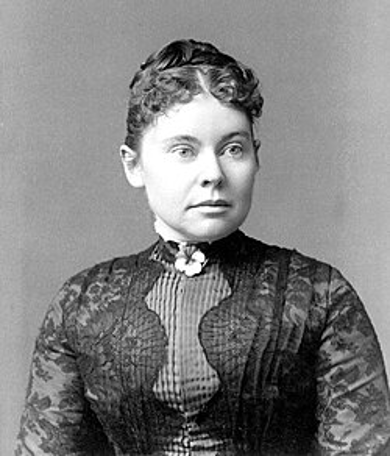
Yet the real Lizzie Borden remains stubbornly beyond all of them. She was acquitted on June 20, 1893, and no subsequent investigation has established with certainty who killed Andrew and Abby Borden. That unanswered question is exactly what has kept cameras returning to Fall River for seventy years. Every generation gets the Lizzie Borden it wants. The truth, more than 130 years later, is still waiting offscreen.
Did you enjoy Lizzie Borden on Screen? I’d love to hear what you think. Please leave a comment, rate the article, and share it with anyone who enjoys true crime, film history, and the many ways Lizzie Borden’s story has been reimagined for the screen. Your comments, ratings, and shares help support The Hollywoodland Revue and bring these stories to new readers. Thank you for reading!
Add comment
Comments