

Long before Hollywood and Highland became one of the world's most famous intersections, strawberry fields, farmhouses, dirt roads, and scattered ranches lay beneath the foothills. Among the people who watched that landscape change was Mary Penman Moll, a schoolteacher who became a landowner, developer, businesswoman and civic figure during the years when Hollywood was still becoming a town. Her name is not nearly as familiar today as those of Daeida Wilcox Beveridge or H. J. Whitley, but portions of the Hollywood she helped create remain underfoot every day.
By Allan R. Ellenberger

Mary was the daughter of Daniel Penman, a Scottish stonemason who had lived in San Francisco before acquiring approximately twenty-eight acres in the Cahuenga Valley. His property stretched along the south side of Prospect Avenue, the future Hollywood Boulevard, near Highland Avenue and west toward La Brea. Much of it was agricultural land, and strawberries were among the crops grown there. Mary lived in a wooden farmhouse near the fields at what would become one of Hollywood’s busiest corners.
Mary Penman Moll was born in Sacramento, California, on November 11, 1865, and grew up during a period when Southern California was still largely rural. By the time her family settled in the Cahuenga Valley, the district that would become Hollywood was a quiet landscape of farms, orchards, dirt roads and scattered homes. She belonged to the generation that knew Hollywood before the electric signs, movie studios and traffic jams, and she would live long enough to watch that rural community transformed into one of the most famous places in the world.
Mary’s first important role in that community was education. Local histories remember her as Hollywood’s first schoolteacher, and she taught at the Pass School on Sunset Boulevard. The Cahuenga Pass School district was one of the small rural districts serving the area before Hollywood developed a formal city school system. A schoolhouse later stood near what is now Sunset Boulevard and Gordon Street, and 1890s photographs show the modest institution where children from neighboring ranches and farms received their education.
Teaching, however, was only the beginning of Mary Penman Moll’s story. After her husband, Charles Gustav Moll, died in 1900 at age 30, she was left in control of valuable property at a moment when Hollywood was beginning to grow rapidly. Instead of simply holding the land or selling it off in one piece, Mary became an active developer. Over the next two decades, she subdivided portions of her property, laid out residential lots and helped transform farmland into neighborhoods and commercial streets. Among her developments was the Hollywood Bonnie Brier tract, whose name survives in early land records. A 1906 deed shows “Mrs. Mary P. Moll” conveying land within the Bonnie Brier tract to the City of Hollywood for alley purposes, evidence of her direct role in shaping the community's street pattern.
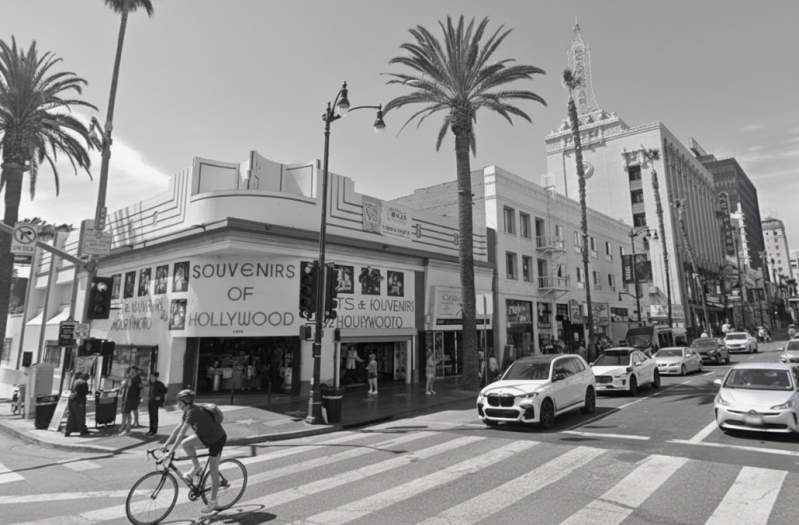
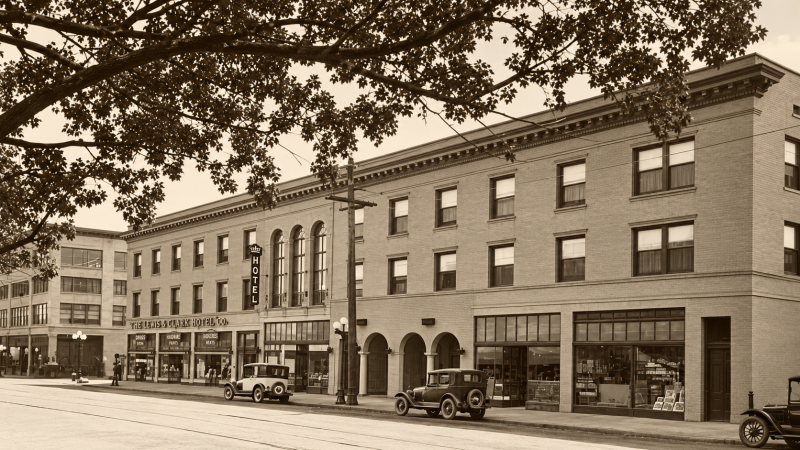
Mary Penman Moll once owned the land above known as the Bonnie Brier tract, extending on the south side of Hollywood Boulevard from Highland Avenue west to La Brea Avenue. The second building from the left was once the Bonnie Brier Hotel, one of the early structures associated with the developing neighborhood. Below is the Bonnie Brier Hotel (on the right) in its heyday. The section on the left, known as the Lewis & Clark Hotel, has since been demolished and replaced by the Souvenirs of Hollywood shop shown in the top photograph. The adjoining portion of the building on the right still survives and is now used as a hostel.
One of the streets most closely associated with Mary is Highland Avenue. As Hollywood expanded, a north-south road through her property became increasingly desirable. Mary donated a strip of land that helped make Highland an official street; it was graded by 1901, though not yet paved. Tradition holds that she wanted the street named for her friend and neighbor Highland Mary Price, wife of blacksmith Thomas Price. Highland Price died on April 10, 1901, and is remembered as the first person buried at the newly established Hollywood Cemetery, now Hollywood Forever. The story is plausible and was repeated in Thomas Price’s own 1940 obituary.
Mary’s importance was not limited to residential subdivision. As the quiet rural crossroads of Prospect and Highland became commercially valuable, she adapted. She demolished her earlier farmhouse, developed commercial property in the area, and then built another residence farther west at 7002 Prospect Avenue, near Orange Drive. That house occupied the site where the Hollywood Roosevelt Hotel would rise in 1927. Early twentieth-century photographs show her Craftsman-style home standing comfortably amid trees and open land, almost impossible to reconcile with the dense urban landscape that surrounds the Roosevelt today.
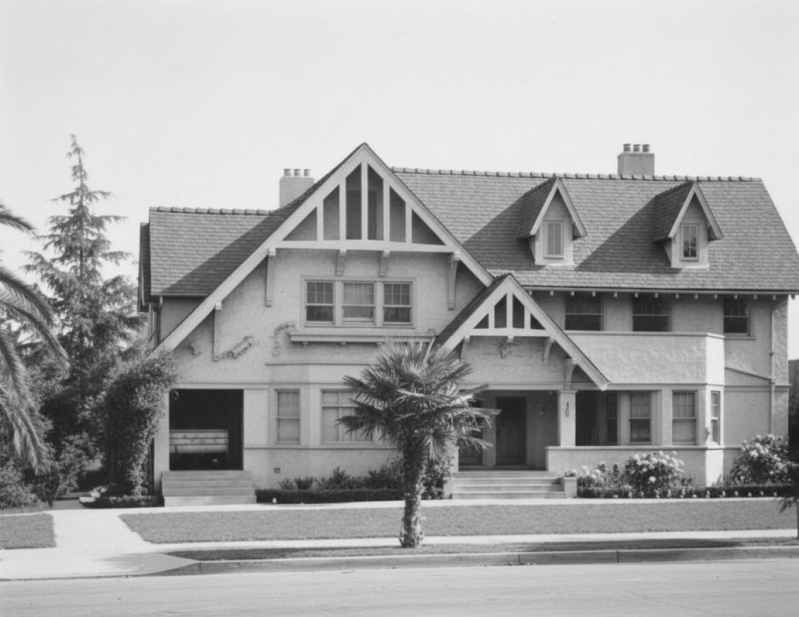
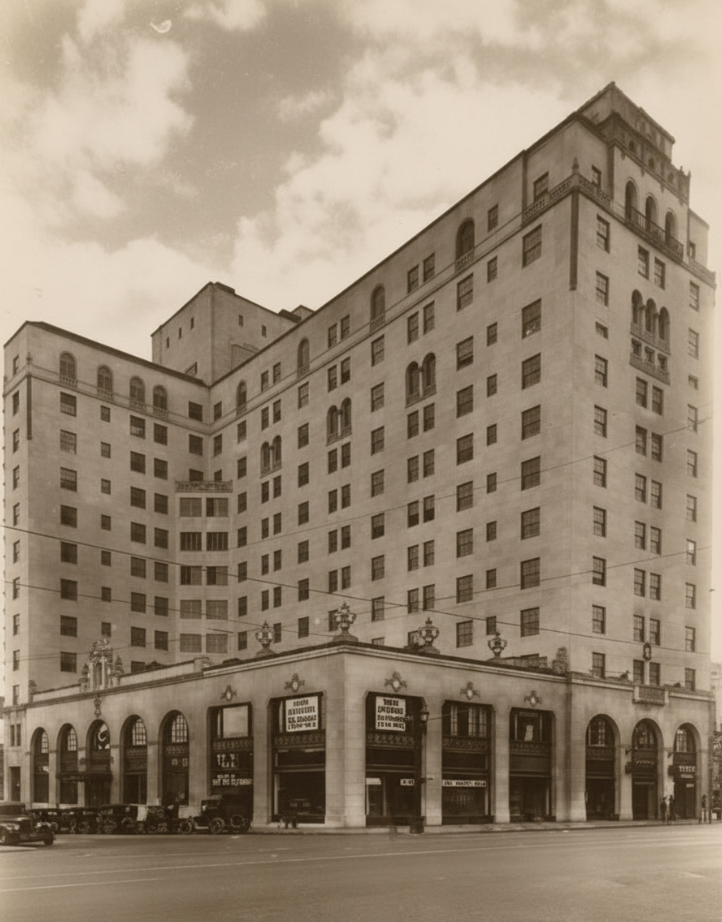
The house at left was built by Mary Penman Moll at 7002 Hollywood Boulevard. It was demolished in 1926 to make way for the Hollywood Roosevelt Hotel, shown at right.
Mary also became associated with one of Hollywood’s most symbolic changes: renaming Prospect Avenue Hollywood Boulevard. Local histories credit her with advocating the change around the time Hollywood was annexed to Los Angeles in 1910. The details have been embroidered over the years, including stories of disagreement between Mary and Daeida Wilcox Beveridge. Still, the larger point is clear: Mary actively participated in the civic and real-estate decisions shaping the community as “Hollywood” became not merely a tract name but the identity of an entire district.
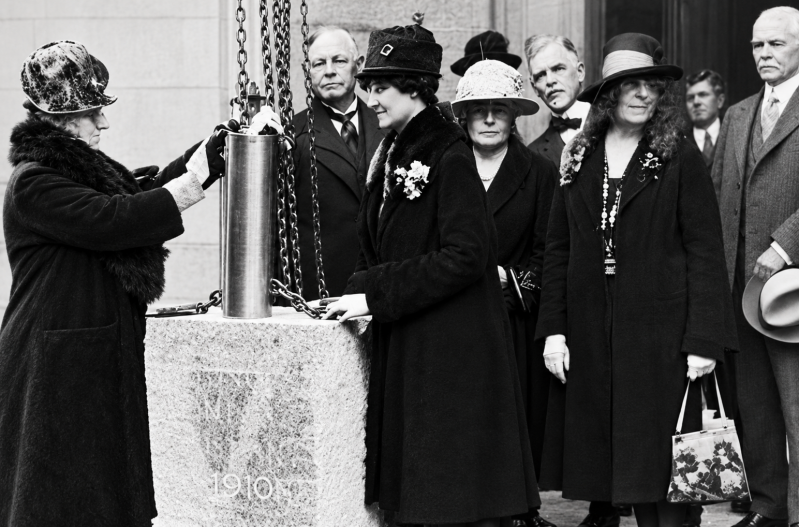
Mary Penman Moll (left) and Mrs. Chester A. Ashley, president of the Y.W.C.A., place documents into a metal cylinder to be sealed inside the cornerstone of the new Y.W.C.A. building at 941 South Hope Street in downtown Los Angeles.
By the 1920s, Mary was no longer simply the daughter of a pioneer landowner. She was a substantial property owner and businesswoman in her own right. In 1921, she commissioned a three-story commercial building on Hollywood Boulevard from Walker & Eisen, one of Los Angeles’ important architectural firms. City records identify the structure as having been built specifically for Mary Penman Moll, with retail space on the ground floor and offices above. Decades later, when the building fell into serious disrepair, Los Angeles preservation documents still singled out its connection to Moll and its place in Hollywood's early commercial development.

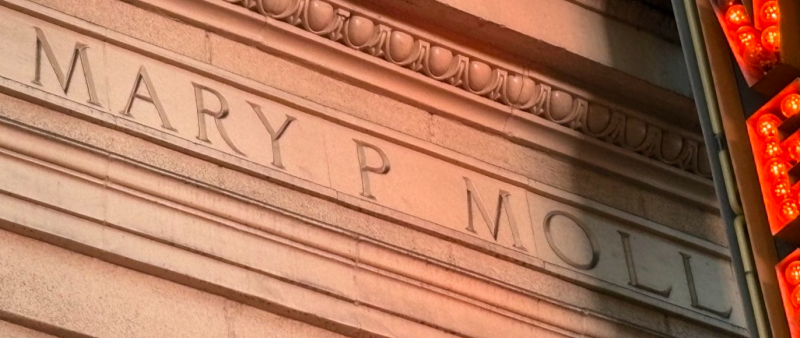
Above: the Mary P. Moll Building at 6912 Hollywood Boulevard, commissioned by Moll in 1921. Below: her name still remains prominently displayed above the entrance.
Her interests also extended beyond real estate. Mary co-founded the Hollywood Business and Professional Woman’s Club, an organization that reflected the expanding public role of women in the early twentieth century. That affiliation feels especially appropriate in her case. Mary began as a teacher in a sparsely populated agricultural community, then moved into property development, commercial construction, and civic affairs at a time when women were still routinely excluded from many areas of business and public decision-making.
The transformation she witnessed during her lifetime was extraordinary. The strawberry fields disappeared. Prospect Avenue became Hollywood Boulevard. Highland Avenue became a major north-south artery and eventually carried Pacific Electric cars connecting Hollywood with the San Fernando Valley. Movie companies arrived, theaters and hotels followed, and the rural community Mary had known became the center of the motion-picture industry. Her own former homesites were swallowed by the new city, including the property that became the Hollywood Roosevelt, which opened in 1927 just across from the expanding entertainment district.
Mary Penman Moll lived long enough to see the Hollywood she had helped shape become almost unrecognizable from the rural community of her youth. She died on April 2, 1952, at her home at 2110 Sherwood Road in San Marino, following a cerebral hemorrhage. She was laid to rest in the family plot at Forest Lawn Memorial Park in Glendale, beside her husband and her parents.
Mary never became a household name, and no Walk of Fame star marks her contribution. Yet her imprint is embedded in Hollywood’s geography. She taught children when the area was still rural, helped subdivide the land as the community grew, contributed property for streets, participated in civic life, built commercial buildings, and watched Hollywood evolve from farmland into a city and then into an idea known around the world.

Mary Penman Moll’s grave in the Iona section of Forest Lawn Memorial Park–Glendale, one of the cemetery’s original sections, Lot 58, Space 5. (Photo: Findagrave / HiD)
Today, millions of people pass through Hollywood and Highland without knowing anything about the woman who once lived beside a strawberry field there. They walk along a boulevard she helped shape and travel an avenue that crossed her land. Mary Penman Moll belongs to that remarkable group of women who built Hollywood before the movies arrived—and whose work made the Hollywood that followed possible.
Check back next Friday for the final installment of The Women Who Built Hollywood Before the Movies, when I’ll profile another Mary: Mary Croswell Gower, an early California settler who personally sold the land to cemetery founder F. W. Samuelson for what became Hollywood Cemetery, today Hollywood Forever. Her family farm also gave its name to Gower Street and the historic Gower Gulch area.
If you enjoyed my look at Mary Penman Moll, one of the remarkable Women Who Built Hollywood, I’d love to hear your thoughts. Please leave a comment, rate the article, and share it with anyone interested in early Hollywood history and the pioneering women who helped shape the community. Your comments, ratings, and shares help The Hollywoodland Revue reach new readers and keep these largely forgotten stories alive.
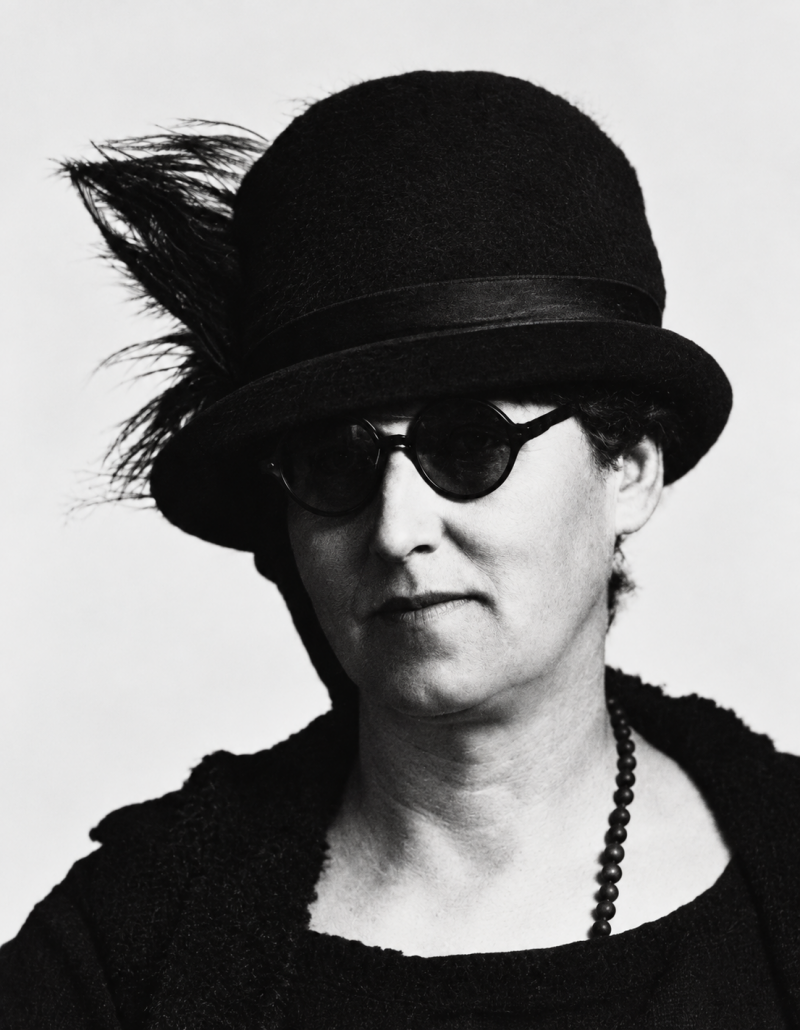
Mary Penman Moll's passport photo.
Add comment
Comments