

There are buildings that belong to an administration, buildings that belong to an era, and buildings that eventually come to belong to the country. The Kennedy Center is one of those buildings. For over fifty years, this large expanse of white marble has sat along the Potomac as a unique landmark in Washington, DC. Unlike many of the memorials in our nation's capital, it honors music, drama, and the arts. Whether you like or dislike its architecture, it has become an integral part of our capital's history, and that history may be threatened.
By Allan R. Ellenberger
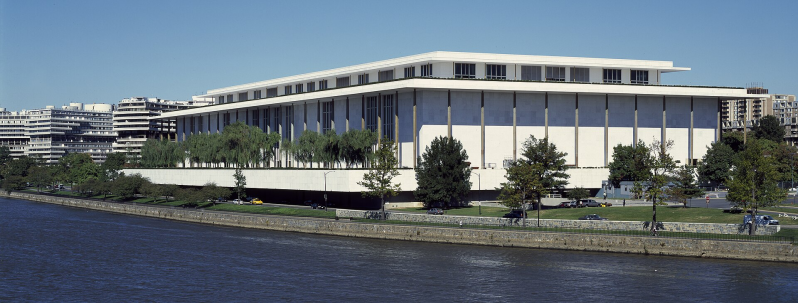
The Kennedy Center did not begin with John F. Kennedy. Its origins reach back to President Dwight D. Eisenhower, who wanted a great arts facility in Washington, D.C. President Eisenhower signed into law the creation of the National Cultural Center in 1958. It was to be a home for music, drama, and dance here in the nation's capital. Money came in slowly, but after Kennedy took office, things started to pick up. He and First Lady Jacqueline Kennedy were huge advocates for the arts, and the center started to take shape.
On November 22, 1963, President Kennedy was shot and killed in Dallas, Texas. After this tragedy, Congress decided that this National Cultural Center that was yet to be built would serve as Washington's official memorial to the assassinated president. President Johnson signed the legislation to rename the facility the John F. Kennedy Center for the Performing Arts on January 23, 1964. It was fitting that we would remember Kennedy in this manner. Not with another statue or silent tribute. He would be remembered at a living memorial where people would act and play music. Dancers would dance, and crowds would continue to flock to the building for decades after the people who knew him were gone.
Architect Edward Durell Stone designed the Kennedy Center. This massive structure is about 630 feet long, 300 feet wide, and 100 feet tall. Many people thought the Kennedy Center was too big and boxy. Some loved its grandeur and stature. No matter what you think about the Kennedy Center's architecture, it's undeniable that it fits the times it was built in. When you build something of significance, it should represent permanence and last a long time.
One thing that represents that permanence is all the marble in the Kennedy Center. Italy gave us roughly 3,500 tons of white marble to use throughout the Kennedy Center. At the time, it was estimated to be worth over a million dollars. Italy sent us marble taken from the same area Michelangelo used for many of his works of art. It was meant to honor JFK and show that Italy cared about him. Imagine all of that marble traveling across the ocean and ending up in a United States President's memorial.
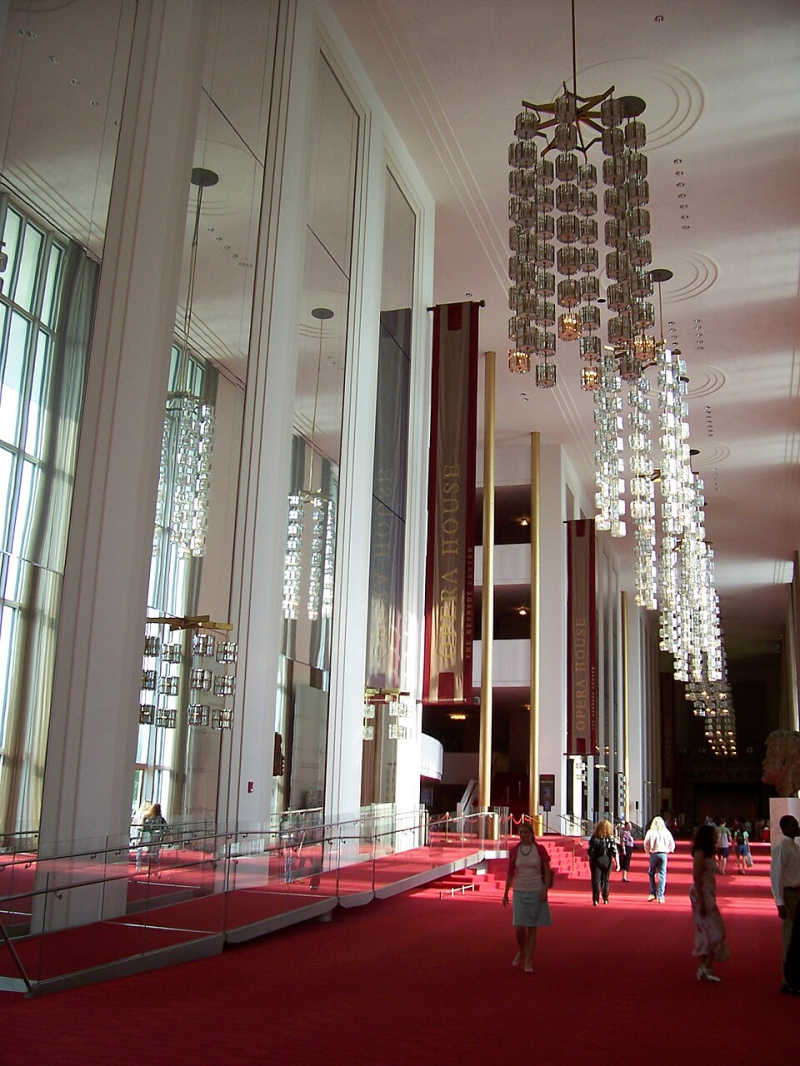
Italy was hardly alone. Many countries also sent artifacts that you can still see in the building today. Norway sent chandeliers that hang in the concert hall. Germany donated large bronze doors. Denmark provided furniture that sits in the grand foyer. Countries have also provided chandeliers, drapery, tapestries, artwork, sculptures, mirrors, and various decorations throughout the center. These items were not simply donated to decorate a building. They represent friendships and now help create our American Memorial.

President Lyndon B. Johnson breaks ground with a gold-plated shovel previously used by President William McKinley to plant a scarlet oak at the White House in 1898. Looking on in the background are First Lady Lady Bird Johnson, wearing a white coat, Jean Kennedy Smith, and Senator Robert F. Kennedy.
You can't enter the Kennedy Center without seeing this massive statue of JFK. Made of bronze by Robert Berks, it stands about 8 feet tall and weighs around 3,000 pounds. This is not your typical statue of a President. The sculpture looks like Kennedy's face is breaking free from a bronze boulder. You can recognize him, but it almost looks like its half done. It reminds visitors that this isn't just a performing arts center; it's a memorial.

It took until 1971 for the Kennedy Center to open its doors to the public. With the premiere of Leonard Bernstein's "Mass," the building was ready for audiences. The Kennedy Center has three main venues: the Concert Hall, Opera House, and the Eisenhower Theater. Over the years, many other venues have been built at the center. From Orchestras to Opera. Dance troupes to Actors. Broadway shows have graced the stage at the Kennedy Center, and musicians from all over the world have performed—the home of the National Symphony Orchestra and Washington National Opera. The Kennedy Center Honors has become one of the most popular award ceremonies in the United States.
That is why I find the situation the Kennedy Center is facing in 2026 so distressing. Over the past year, the Kennedy Center leadership and Board have changed significantly. There have also been attempts to put Donald Trump's name on the Kennedy Center. After a ruling from a Federal Judge, we know the Kennedy Center Board cannot simply decide to change the name Congress gave to it. Questions have now risen beyond the building's name. What will happen to the structure?
A building over fifty years old requires modernization. I don't think anyone would disagree. The Kennedy Center will need updates to its electrical, plumbing, roofing, waterproofing, and more. Congress has granted $257 million to renovate the building. The Kennedy Center Board recently voted to close the building for up to two years to make these repairs. Preservation doesn't mean leaving a building in disrepair. Many historic buildings are updated with a new roof, plumbing, wiring, and updated to allow handicapped access.
Preservationists fear the Kennedy Center will be torn down. After pictures were released of a sign referring to the Kennedy Center as demolished, fears grew that it might actually happen. On September 17th, United States District Judge Christopher Cooper ruled that the government must notify him at least thirty days before any action to demolish the building. As of September 20th, there have been no plans to demolish the building. That being said, if we are talking about destroying the memorial, we need to pay attention.
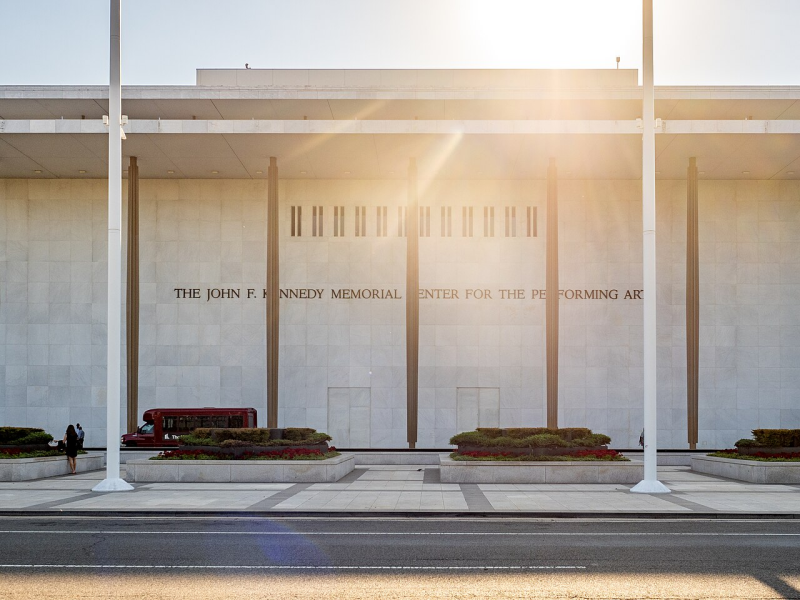
If we tear down the Kennedy Center, we will be losing so much more than an old building. Buildings are a piece of our history. We don't preserve buildings because everyone loves them. But they are what previous generations built and valued. We love buildings from the Victorian Era, Art Deco, and Beaux Arts. The Kennedy Center was built during a specific period, and we should appreciate that. Just because it isn't fashionable doesn't mean we should tear it down.
Many of the artifacts that were donated to the Kennedy Center from other countries could be lost as well. Marble from Italy. Chandeliers from Norway, doors from Germany, and furniture from Denmark. These gifts were given to us and became a part of the memorial to JFK. Sure, you can remove these items and put them somewhere else. But you'll lose the story they tell. A chandelier in a warehouse is just a chandelier. When that chandelier hangs in the Kennedy Center, it becomes a story.
We should update the Kennedy Center. Make sure its HVAC system is working properly. Fix the roof and plumbing. Allow handicapped access and restore the theaters, artwork, and marble. Preservation doesn't mean we freeze a building in time. We should update buildings and let them grow and evolve.
Congress also has a role to play. Congress created the National Cultural Center and changed it to honor John F. Kennedy. If decisions are being made that could harm or destroy our Memorial, we should want Congress to step in, whether that's by law, research, or even stepping in through the courts. Our National Center for the Performing Arts shouldn't be treated as if it's the property of whoever is in charge at any given time.
The Kennedy Center has survived eleven presidencies because its meaning has always been larger than one president. Eisenhower helped launch the dream, Kennedy championed the arts, Jacqueline Kennedy supported the project, Johnson signed its memorial designation, Congress helped finance it, foreign nations contributed pieces of their cultures, generations of artists filled its stages and millions of visitors walked through its doors. All of those layers have become part of the building's history.
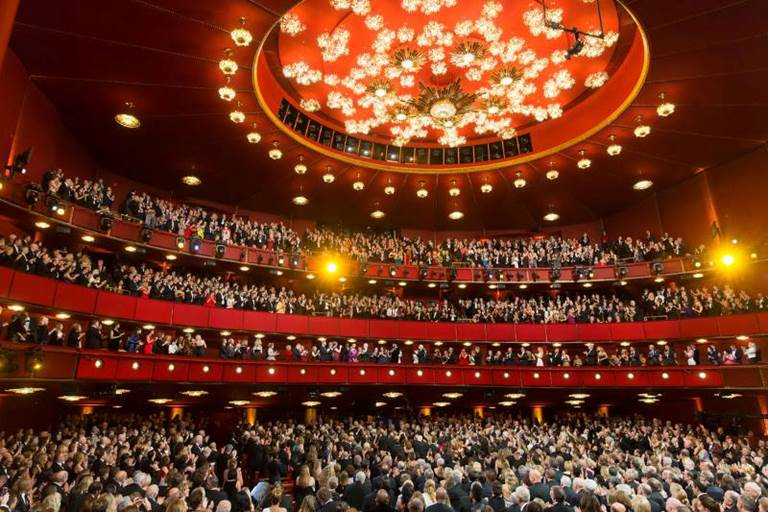


America has already demolished too many important buildings only to recognize their value after the wrecking crews departed. We should know better by now. The Kennedy Center can be repaired, modernized and adapted for another half-century, while today's political controversies will eventually become simply another chapter in its long history. Buildings can survive changing administrations, changing tastes and changing generations if we allow them to. Once we deliberately erase the architecture itself, however, no renovation, reconstruction or replica can give us the original back.
The Kennedy Center is more than a performing arts venue—it is a national memorial, an architectural landmark, and a piece of American history. After reading my latest post, I’d like to hear what you think about its future. Please leave a comment, rate the article, and share it with others who care about preserving our nation’s history and architecture.
Add comment
Comments