

In every era, Hollywood has had someone who claims to know all its secrets. Not actual bodies, but the hidden truths that shaped the industry. Secrets built careers, held marriages together, and cost studios a lot to keep quiet. For decades, the biggest secret was that classic Hollywood was much more sexually diverse and complex than the public ever realized.
By Allan R. Ellenberger
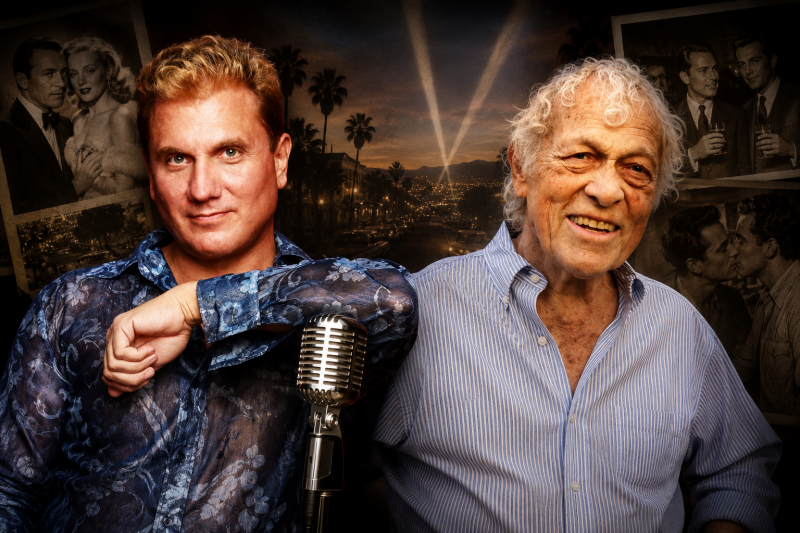
Two very different people stand out: Scotty Bowers and Billy Masters. Bowers said he arranged sexual encounters for many Hollywood stars in the golden age. Masters made his name reporting on closeted celebrities and the hidden queer side of modern entertainment. Both stirred controversies, gained devoted fans and harsh critics, and made people ask a tough question: How much of Hollywood’s history do we trust when it comes from gossip and memories instead of official records?
Scotty Bowers is the more sensational figure. After serving as a Marine at Iwo Jima, he said he worked at a Richfield gas station on Hollywood Boulevard and Van Ness Avenue after World War II. There, he started arranging sexual encounters for actors, directors, and wealthy clients. He claimed that what began as a few meetings grew into a large, informal network for Hollywood’s closeted community from the late 1940s to the 1980s. He shared these stories in his 2012 memoir, Full Service: My Adventures in Hollywood and the Secret Sex Lives of the Stars. His accounts were dramatic.
Bowers said he set up men for Spencer Tracy, women for Katharine Hepburn, and encounters for stars like Cary Grant, Randolph Scott, Vivien Leigh, Charles Laughton, Raymond Burr, Rock Hudson, and many more. He argued that old Hollywood was not the strictly heterosexual world shown in fan magazines, but was full of secret relationships, bisexual experiences, same-sex affairs, and carefully crafted public images. People reacted quickly and as expected.
Some historians dismissed Bowers right away. Many families and estates denied his claims. Others doubted memories from sixty or seventy years ago. Still, Bowers was hard to ignore because he wasn’t alone. Respected people like Gore Vidal, William J. Mann, John Schlesinger, and Dominick Dunne said they believed him or had heard similar stories themselves. Bowers didn’t fit neatly into history—he wasn’t a fully documented source, but he wasn’t just making things up either. His story was more complicated.
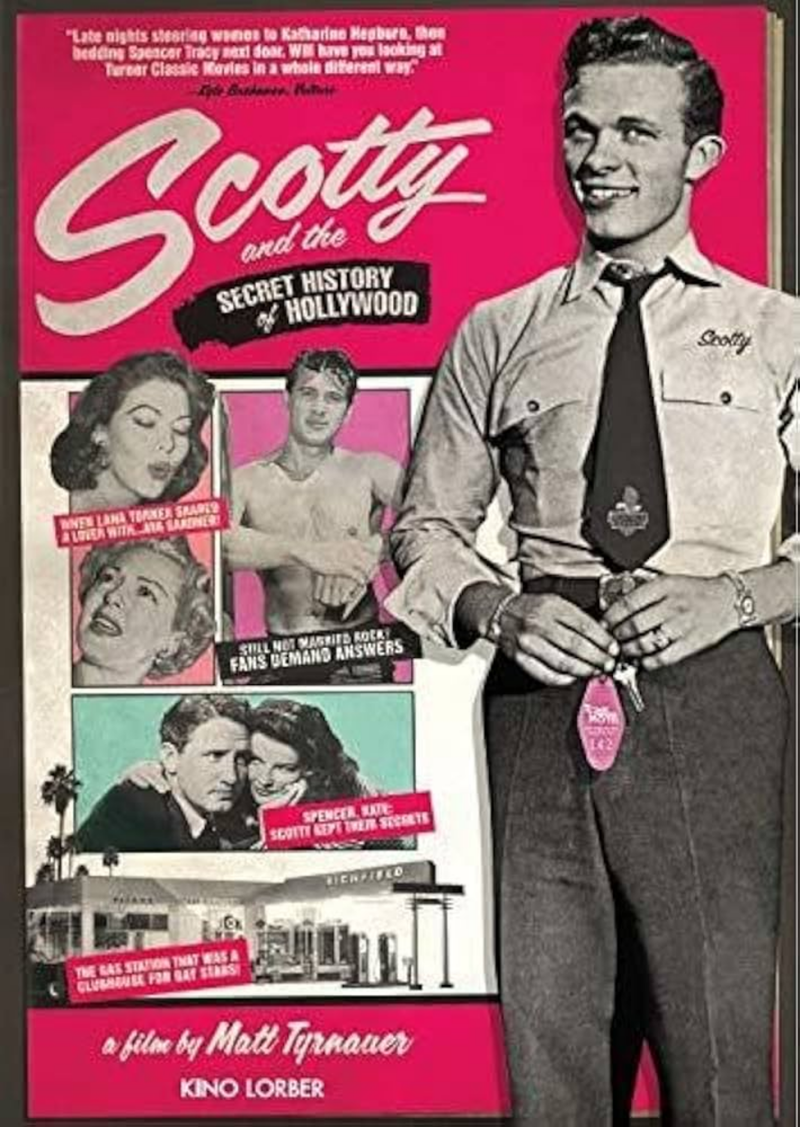
Most of Bowers’s stories can’t be fully proven or disproven. His real value might not be in the specific names he mentioned, but in the bigger picture he described: a Hollywood where people hid, negotiated, and protected their sexual identities behind carefully managed public images. In that way, Bowers was likely sharing a bigger truth, even if the details can’t always be checked.



Billy Masters took a different path. While Bowers focused on the past, Masters looked at what was happening around him. Starting in the 1990s, he became one of the first openly gay, nationally syndicated gossip columnists in the U.S. When most entertainment journalism ignored queer topics, Masters wrote about closeted celebrities, industry hypocrisy, LGBTQ representation, and the tough politics of coming out. His style was often playful and bold, but underneath, he was seriously challenging Hollywood’s secrecy.

Billy Masters became one of the most recognizable voices in LGBTQ journalism as an openly gay columnist whose celebrity gossip, commentary, and interviews have been syndicated in gay and alternative publications across the United States for decades.
Masters, unlike Bowers, didn’t claim to be part of old Hollywood’s secret world. He was more of a commentator, observer, and collector of rumors. Still, the debates around him were similar. Did the public deserve to know these secrets? Did revealing closeted celebrities help society? Was keeping quiet protecting individuals or just the industry?
For years, Masters covered topics most journalists stayed away from. He often suggested stories that mainstream media wouldn’t cover, especially about closeted actors whose careers relied on appearing straight. Critics said he just spread rumors, but his supporters believed he was recording truths that everyone knew but no one wanted to publish.
Masters and Bowers are linked by more than gossip—they are tied by memory. Both collected stories that Hollywood didn’t want to talk about. Neither fits easily into the way historians usually work, since historians rely on documents, contracts, letters, diaries, and records. Queer history often lacks these sources. For much of the twentieth century, people destroyed letters, hid relationships, changed pronouns in letters, entered fake marriages, and erased evidence to protect themselves. This creates a real problem.
If historians only trust documents, much of LGBTQ history is lost. But if they believe every story without question, myths take over. The real challenge is finding a balance. That’s why Scotty Bowers is still interesting—not because all his claims are proven, but because his stories make us face how much of Hollywood’s past was hidden. Billy Masters matters too—not because every rumor was true, but because he saw that silence can change history. Both men upset people because they broke the old rules.
For many years, Hollywood had an unspoken rule: people knew certain things but never talked about them in public. Bowers broke that rule after the main people had died. Masters challenged it while many were still alive. This led to outrage, but also to new understanding.
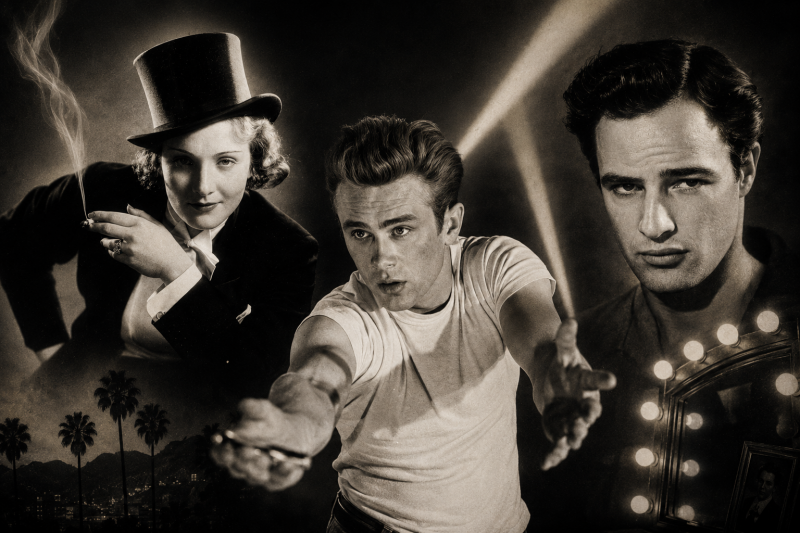
Today, younger people often wonder why stories about Marlene Dietrich, James Dean, Marlon Brando, and other classic stars caused so much controversy. Modern culture talks much more openly about sexuality than in the studio era. That openness exists partly because people finally questioned the old myths.
No matter if you see Bowers as honest, as someone who exaggerated, or as something in between, his memoir changed how people talk about old Hollywood. Whether or not you agree with Billy Masters’ approach, he broadened what queer entertainment journalism could cover. We shouldn’t accept either man’s stories without question, but we also shouldn’t dismiss them right away.
Instead, both men have an important role in helping us understand Hollywood’s hidden past. They show that history isn’t always found in official records. Sometimes it lives on in stories told quietly, late-night talks, memories shared in bars, gossip columns, and old memories that won’t fade. The risk is treating these stories as facts. But it’s even riskier to ignore them completely.
Between official records and rumors, there is a version of Hollywood that is much more complex than studios ever admitted. Scotty Bowers and Billy Masters spent much of their lives pointing to that hidden world. We may never know if they told the whole truth, but they definitely made people ask better questions.
If you enjoyed my latest feature on Scotty Bowers and Billy Masters, please take a moment to comment on, rate, and share the article as we continue exploring the hidden stories, rumors, and realities of LGBTQ Hollywood history.
Add comment
Comments