

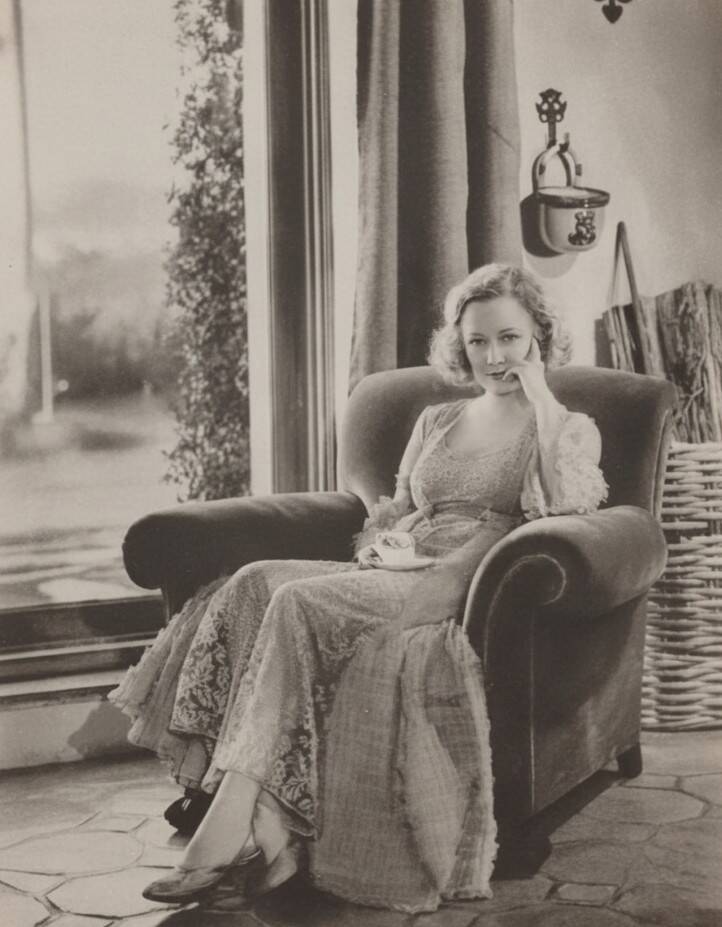
In the shifting social landscape of early 1930s Hollywood, where image and illusion were currency and privacy, a rare and guarded luxury, Miriam Hopkins found herself inhabiting not only a new role in her personal life, but a house already steeped in mystique. Recently separated from screenwriter Austin Parker, Hopkins was, as one contemporary account observed, living in that peculiar state so often assigned to women of her era—socially independent, yet publicly scrutinized, a “young divorcée” navigating both freedom and expectation. Her solution, at once practical and symbolic, was to retreat into a residence whose very architecture seemed to echo her condition: a house of glass, open to the sky, yet shielded from the world.
By Allan R. Ellenberger

The house she picked was at 1717 San Vincente Boulevard, in Santa Monica, where another glamorous loner had lived. It was down the hill from Beverly Hills on elevated ground overlooking the valley and ocean. Though enclosed by a dense privacy hedge—an exterior wall if you will—the interior was airy and open to the light and breeze. It was also private. Paradoxically private and exposed, personal and open. Hopkins rented the place unfurnished. "It came furnished with Greta Garbo," she wrote. "People came to see me. They wanted to see where Greta Garbo slept." They didn't even care about seeing Hopkins. They cared about Garbo, whose bedroom they asked to see.
If the house reflected Garbo's taste Hopkins made no effort to change it. Rather she adjusted to its rhythms. The house itself, a white stucco Spanish-style building with a tiled roof and a long balcony across the front porch was remarkable only in its unpretentious austerity. There was room to move about comfortably but not so much space as to seem palatial. It suited Hopkins' moods to settle into this environment and observe life around her. She gardened, planted, while cultivating and observing the cycles of growth.
The grounds themselves offered small, telling details of domestic life: a croquet lawn, a fountain alive with goldfish, secluded nooks for sunbathing, and stretches of grass where wire-haired terriers could race freely. These were not merely decorative features but lived spaces—extensions of a daily routine grounded in observation and leisure. From her east-facing bedroom balcony, Hopkins took breakfast in the morning sun, gazing across the hills toward the distant sea, a ritual that reinforced the house’s defining characteristic—its openness to light and landscape.
Inside, the house adhered to a philosophy both austere and deliberate. There were no heavy curtains to obscure the view, no screens to filter the air; instead, bright chintz drapes could be drawn back entirely, leaving the windows clear and unobstructed. The elevation of the house, set high above its surroundings, rendered such barriers unnecessary—no flies or mosquitoes intruded. The result was an interior that felt almost exposed, yet entirely controlled, a space where light dictated mood and movement.
Even the furniture displayed tasteful reserve. Rooms that might have overflowed with lace pillows and girlish frippery were spare, almost severe. There were no furbelows or frills, just utilitarian pieces chosen with care. Bedroom walls were painted rough white plaster trimmed by drapes of red and yellow glazed chintz. A quilt of coarse monk's cloth covered the big four-poster bed. Comfortable looking in its crimson velvet, a couch occupied one corner; in another sat a large writing desk. Books were stacked on tables and floor indicating Hopkins's studious habits, and lamps with utilitarian designs suggested practical light, not spotlights.

This is the garden where Garbo took her nude sunbaths. Miriam loved it too; she rented the house because of it.
But in other ways her regimented life yielded glimpses of personality. Just off Hopkins's bedroom was her dressing room, which was a more traditionally feminine space: shelves lined with bottles and brushes, cosmetics laid out in neat rows, lights and mirrors positioned to highlight every flaw. It was here, perhaps more than anywhere else in the house, that the duality of Hopkins’s life became visible: the public figure and the private woman, coexisting within the same walls.
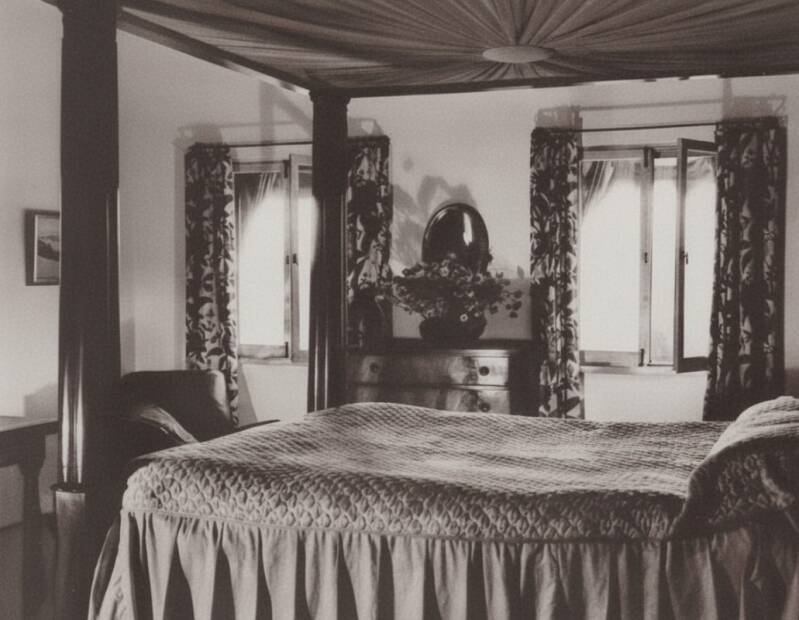
The guest chambers differed slightly from room to room. There was one with a quilted apricot silk coverlet and mahogany furniture. In contrast, one chamber was lighter and perhaps fanciful, furnished with chintz and a bedside lamp shade dusted with silver stars. Sparse though they were, the guest rooms were clearly set up with hospitality in mind, as friends and relatives often came and stayed for days or weeks at predictable intervals. Hopkins was a friendly Southern woman who liked company. She entertained guests readily, forming a close circle instead of putting on displays.
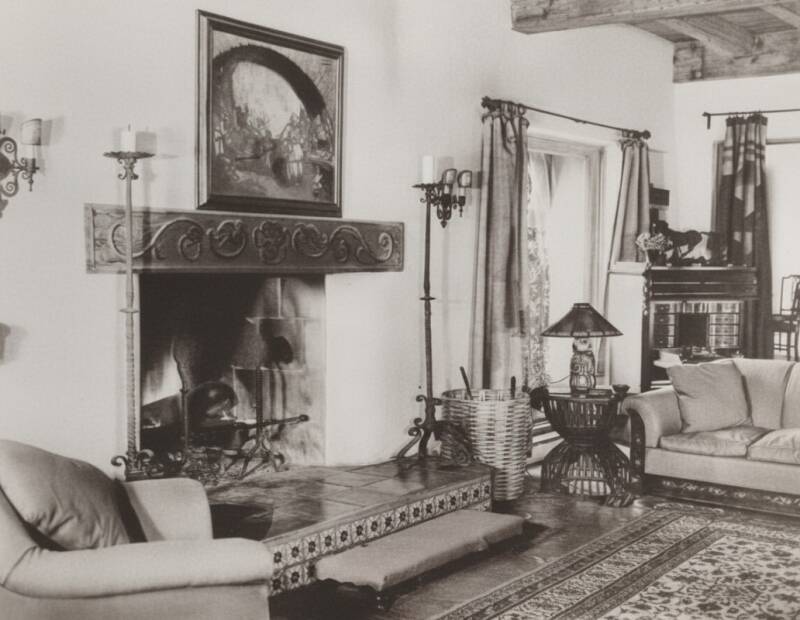
Downstairs, there was one long living room with buff walls, Oriental rugs and huge fireplace into which logs were shoved continually so that fires burned day and night. Ceiling to floor windows gave panoramas unbroken by walls of trees. There was nothing self-conscious about the house; it was a part of the landscape. It was meant for conversation--long slow-talks till late at night.
Meals there also evoked Hopkins's history. Her dining room and kitchen were small and casual, fit for the sort of Southern meals she loved to prepare: fried chicken, beaten biscuits, pork chops, candied sweet potatoes. These gatherings were intimate rather than grand, reinforcing the sense that this was a home of personal comfort rather than public display.
Central to the household was a small but devoted staff, most notably Gabby, Hopkins’s companion and housekeeper, whose presence underscored the actress’s need for stability amid change. Alongside a butler-chauffeur and a gardener, the household operated with quiet efficiency, allowing Hopkins to maintain both her independence and sense of order.
That Hopkins cultivated a lively social scene at her residence should come as no surprise. However, her guests were of an entirely different character than those popping up throughout Hollywood parties. There were writers, directors, intimate friends, rather than the noisy throngs of the film colony. It was a world of stimulating conversation, of shared ideas, of evenings that lingered rather than dazzled.
Still, under the layers of habit and routine, there lingered an undercurrent of change. Hopkins had entered a home made mythic by another woman's presence, and Hopkins, simply by living in the house and making it her own, began to change it-and change herself. The house that was open to the sky but private from view seemed a fitting symbol for Hopkins' life at that time-exposed in reputation, yet private in reality.

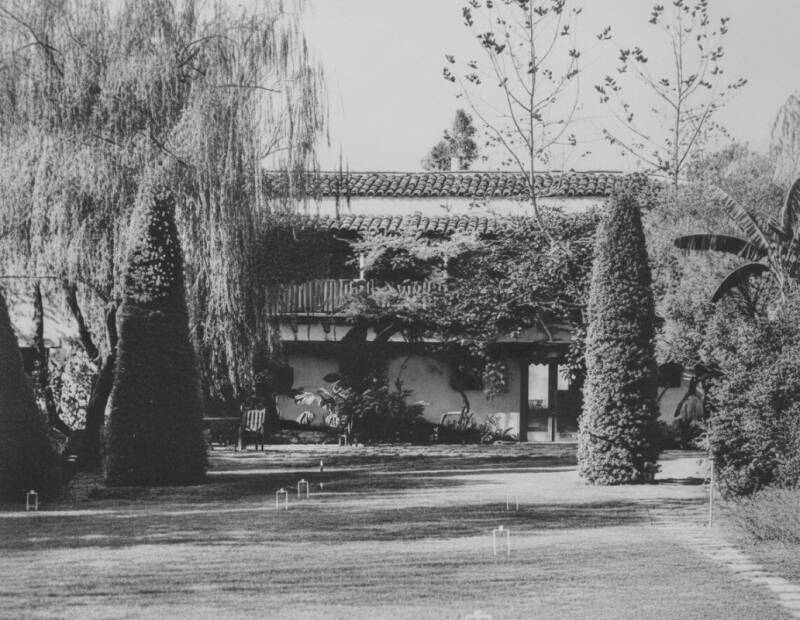
The outside of the Garbo-Hopkins manor in 1930.

The same view today.
Ultimately, though, what's gained from these snapshots of modern life isn't a picture of a home, but of a mode of existence. In the early '30s, Hopkins wasn't withdrawing or charging forward. She was leveling out, finding her equilibrium in what must have felt like a culture with very few opportunities for someone like her. Here, in Garbo's house, she leveled out, sure. But she also got somewhere to stand—from there to see other things, herself, and maybe, thanks to Garbo, blue sky, too.
If you enjoyed the story of Miriam Hopkins at the former Garbo Manor, please take a moment to comment, rate, and share your thoughts with fellow classic Hollywood enthusiasts.
Add comment
Comments