

In an era when Hollywood often favored spectacle over subtlety, Ordinary People arrived in 1980 like a hushed confession—intimate, unsettling, and profoundly human. Directed by Robert Redford in his first effort behind the camera, the film marked a striking departure from the actor’s established screen persona, revealing instead a filmmaker deeply attuned to emotional nuance and psychological truth.
By Allan R. Ellenberger
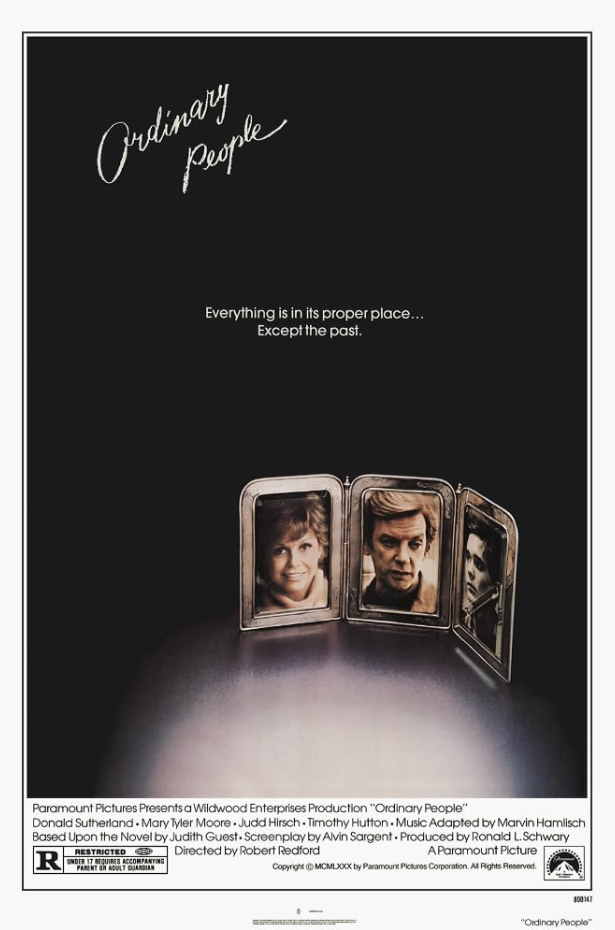
The project began with Judith Guest’s 1976 novel, a quiet but piercing examination of grief within an upper-middle-class family shattered by tragedy. Redford encountered the book before its publication and was immediately drawn to its restraint—its refusal to dramatize pain in conventional ways. Rather than grand gestures, Guest’s story unfolded through silences, small ruptures, and the slow erosion of familial bonds. Redford recognized in it the potential for a different kind of film, one that would challenge audiences not with spectacle, but with recognition.
At its center is the Jarrett family: Calvin, Beth, and their surviving son, Conrad, struggling in the aftermath of the accidental death of the elder son, Buck. The narrative follows Conrad’s fragile return to daily life after a suicide attempt, his ongoing therapy, and the widening emotional distance between his parents. It is, on its surface, a simple story. But beneath that simplicity lies a meticulous exploration of guilt, repression, and the unspoken tensions that can fracture even the most seemingly composed lives.
Casting proved crucial to the film’s success, and Redford approached it with unusual care. For the role of Conrad, he selected Timothy Hutton, a relative newcomer whose vulnerability and quiet intensity made him ideal for the part. Hutton’s performance would become the emotional anchor of the film, capturing the raw, often inarticulate anguish of a young man struggling to reconcile survival with loss. As his psychiatrist, Dr. Berger, Redford cast Judd Hirsch, whose warm, unorthodox approach to therapy provided both contrast and relief, grounding the film in moments of unexpected humor and humanity.

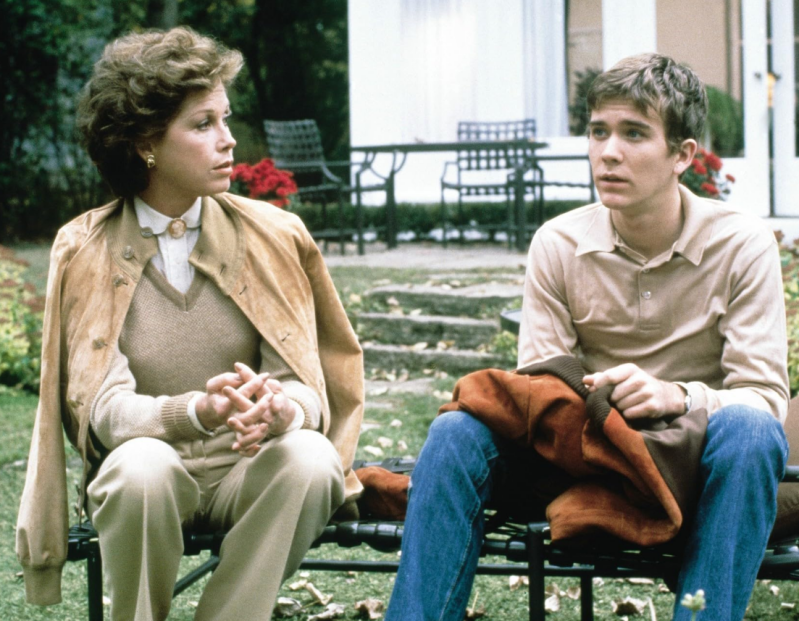

Equally vital were the roles of Conrad’s parents. Donald Sutherland brought a quiet, aching compassion to Calvin, a father desperate to reconnect with his son while navigating his own grief. Opposite him, Mary Tyler Moore delivered one of the most startling performances of her career as Beth—a woman whose composure masks a profound emotional withdrawal. Known primarily for her warmth and charm in television, Moore’s portrayal here was chilling in its restraint, suggesting a character for whom control had become both armor and prison.
Filming took place primarily in Lake Forest, Illinois, where the suburban landscape provided an ideal backdrop for the film’s themes. Redford’s direction emphasized naturalism: muted tones, unadorned interiors, and a camera that lingered just long enough to capture the tension beneath ordinary interactions. There are no overt stylistic flourishes, no manipulative crescendos. Instead, the film unfolds with a quiet inevitability, allowing performances and emotional truth to carry the narrative.
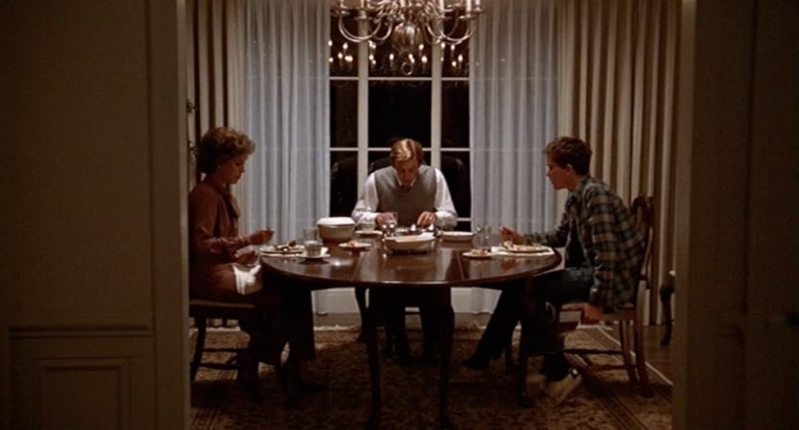
One of the most striking aspects of Ordinary People is its treatment of therapy—not as a narrative device, but as a central, evolving relationship. The sessions between Conrad and Dr. Berger form the film’s emotional spine, offering moments of confrontation, breakthrough, and, ultimately, healing. In these scenes, Redford allows space for silence and discomfort, trusting the audience to sit with the characters rather than be guided through them.
Upon its release, Ordinary People was met with widespread critical acclaim. Reviewers praised its sensitivity, its performances, and Redford’s assured direction. There was a sense that something rare had been achieved: a film that spoke with honesty about mental health and family dynamics at a time when such subjects were often treated superficially or avoided altogether. Audiences responded as well, finding in the Jarrett family a reflection of struggles that were at once specific and universal.
The film’s success culminated at the 53rd Academy Awards, where it won Best Picture, Best Director for Redford, Best Supporting Actor for Hutton—who, at twenty, became the youngest recipient of that award—and Best Adapted Screenplay for Alvin Sargent. Its victory over more outwardly ambitious contenders signaled a moment when quiet storytelling could still command the industry’s highest recognition.
In the years since, Ordinary People has endured not because of spectacle or innovation, but because of its emotional precision. It remains a film that does not seek to overwhelm, but to understand—to illuminate the ways in which grief reshapes lives and the fragile, often painful process of finding one’s way back.
For all its title suggests, there is nothing ordinary about its achievement. It is, instead, a reminder that the most profound dramas are often those that unfold behind closed doors, in the spaces where words fail and silence speaks.

I invite you to share your thoughts, rate the film, and spread the word by sharing my review of Ordinary People—your voice helps keep these classics alive.
Add comment
Comments