

New Year’s Day of 1924 should have dawned with optimism in Hollywood, but instead it delivered one of the most bruising scandals of Mabel Normand’s already troubled career. The beloved comedian—once the irrepressible sprite of Mack Sennett’s Keystone lot—again found herself yoked to violence, tragedy, and newspaper frenzy when a party spiraled into gunfire inside the luxurious Los Angeles apartment of oil heir Courtland S. Dines at 325-B Vermont Avenue.
By Allan R. Ellenberger

Normand and her close friend Edna Purviance, the demure and long-suffering heroine of Charlie Chaplin’s early films, had spent the afternoon celebrating with Dines, Purviance’s sometime beau. The gathering was relaxed, fueled by holiday spirits at a time when Prohibition merely made alcohol more desirable and its consumption more theatrical. By early evening, all three were heavily intoxicated. Around seven o’clock, a knock sounded at the door—Horace Greer, Normand’s chauffeur, arriving in full uniform. He insisted he had come to take Mabel home, explaining she had a scheduled appendicitis operation later that week. What followed happened in seconds yet haunted the rest of the decade.
The stories vary in detail, but the overall picture is the same. Greer later claimed that Dines, who was in a surly, drunken fury, grabbed a bottle of liquor and threatened him when Greer tried to lead the "inebriated" Miss Normand from the apartment. Dines, who later testified that he was too drunk to remember much of what happened, said that he had made no such gesture.
Purviance said that Dines had not acted aggressively in any way. It is also certain that the room was swirling with alcohol, jealousy, resentment, and confusion. In that explosive moment, Greer grabbed Normand's .25-caliber pistol and fired three shots. One bullet tore through Dines's ear; another went through his chest. It was a miracle he lived.
Greer bolted for it and then turned himself in at a Wilshire police station. The officers found Normand and Purviance hovering over the injured oilman, both trying to render first aid to the best of their abilities. The victim had been brought to the bedroom and they were unable to do much more than try to stop the bleeding. Mabel, crying and hysterical, gave a statement that contradicted many points she had previously mentioned. Purviance did her best to smooth things over, but she, too, was clearly distraught. The newspapers wasted no time in printing every detail, delighting in the titillating inconsistencies.
The four souls tangled up in that New Year’s party gone wrong...
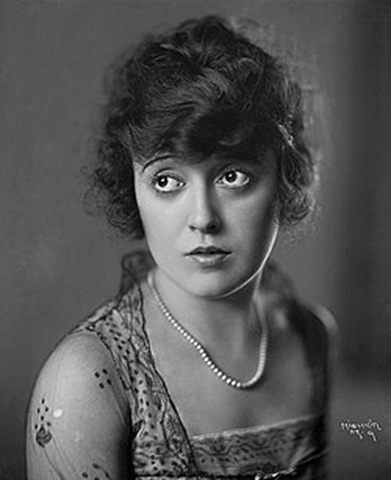
Mabel Normand, the troubled star drawn yet again into the orbit of gunfire and controversy

Courtland S. Dines, the man Greer shot—and the alleged aggressor whose temper ignited the confrontation

Edna Purviance, rumored fiancée to Courtland Dines and the unwitting visitor swept into the scandal

Horace A. Greer, Mabel Normand’s chauffeur and the man who fired the shots that wounded Courtland Dines
Hours later, the studios were in crisis mode. Mabel Normand—unable to entirely escape the negative publicity from the William Desmond Taylor murder of 1922—was again the story of the front page. Journalists cast the incident as a hedonistic Prohibition-era bacchanal and loose-morals activists as a woman inextricably linked to men, booze and immorality. One headline hinted that she had become far too friendly with her chauffeur and that jealousy was the real reason for Greer's shooting. Studio heads, eager to protect one of their biggest stars, began badgering their friends in the police department to keep the story from getting out of control. They did their best to place all of the blame on Greer, an impulsive and emotionally volatile employee whose problems had nothing to do with Mabel.


But the story would not die. Dines refused to testify at Greer's trial, pleading a poor memory of the incident, and Greer was acquitted on a plea of self-defense. As far as the courtroom was concerned, that was that, but there was no way to stop the public's prurient thirst for speculation. Boycotts of Normand's films broke out in many cities. She was denounced by church groups as a prime example of Hollywood's immorality. Forevermore, the image of America's funniest, freckle-faced, screen comedienne seemed inextricably linked to wayward gunmen, mysterious shootings, and whispered innuendo.
In the wake of the previous scandals, this one added to her reputation. It wasn’t that Mabel was responsible for the calamities that befell those around her, but rather that misfortune seemed drawn to her orbit with uncanny frequency. Mabel became the symbol of the era's view of Hollywood as fickle and immoral: a talented woman who is destroyed not by her own mistakes but by an unpredictable and hedonistic world.
The Courtland Dines shooting remains one of the defining scandals of early Hollywood—not because its facts were extraordinary, but because it revealed the machinery of fame at its most unforgiving. Mabel Normand was guilty only of celebrating New Year’s and keeping a troubled chauffeur in her employ. Yet she paid the steepest price. Studios distanced themselves. Theater owners hesitated to book her pictures. And a woman adored for her wit, warmth, and irrepressible spirit found her career collapsing under the weight of stories she never wrote.


In the end, the scandal was less about a gunshot than the ruinous echo it produced. That echo followed Mabel Normand for the rest of her short life—a reminder that in Hollywood, even an innocent bystander could be destroyed by a single moment of chaos, magnified by flashbulbs and fed to a world hungry for gossip.
So—what do you make of Mabel Normand’s newest scandal? Leave your verdict in the comments.

Add comment
Comments