

Long before Hollywood immortalized its stars in marble and memory, humanity had already begun its oldest and most enduring ritual: the careful tending of the dead. Burial, in its many forms, is among the earliest expressions of civilization itself—a quiet but profound declaration that a life mattered, that it should be remembered, and that something of it must endure beyond the final breath.
By Allan R. Ellenberger
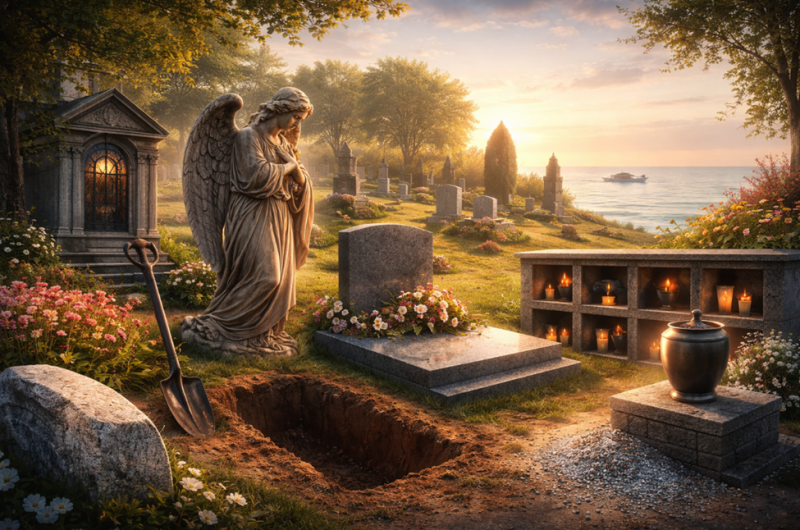
The archaeological record shows that since ancient history humans and neanderthals buried their dead deliberately. Skeletons were often found in shallow graves sometimes with stone tools or animal bones. People in Prehistory sometimes put pigments such as red ochre with bodies when burying them. Whether people believed in life after death in prehistory is unknown, but intentional burial implies at least a primitive belief in an afterlife or spiritual existence. The act of burying the dead was significant in that humans acknowledged death and decided that it should be marked with ritual.
With increasing complexity of civilizations came more involved burial rituals. Ancient Egyptians practiced mummification of their dead, placing them inside tombs as part of large complexes. These structures and ceremonies provided guidance for the afterlife. Egyptians built pyramids as a way to house the eternal bodies of deceased rulers. Mesopotamians and later ancient Greeks and Romans used death as a way to display social class. Upper-class citizens were buried with goods and sometimes names, while the lower class were either unnamed or buried together in a mass grave. In ancient Rome roads were lined with tombs and reminders of death; passing by the cremation urns of columbaria, the Romans allowed for the dead to be publicly remembered.


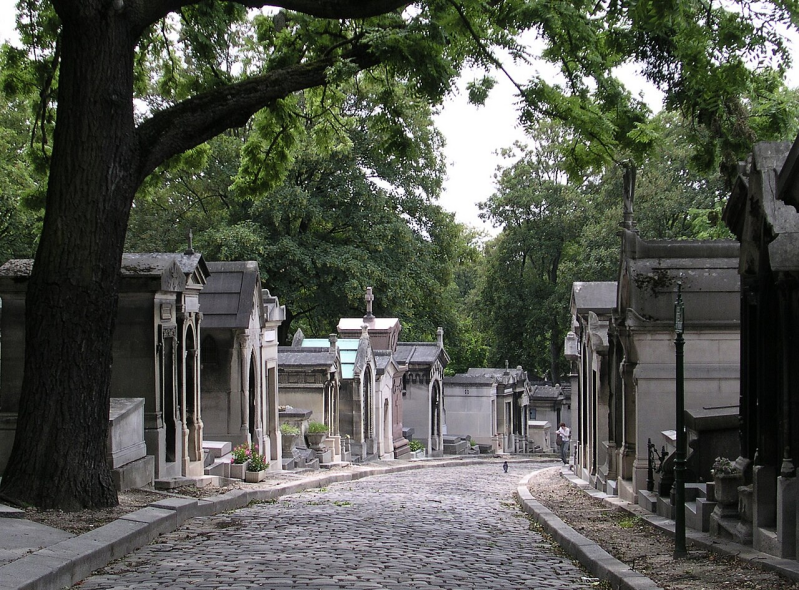
Death in the Middle Ages literally came to the doorstep of many. People were buried in churchyards located at the center of town. Families sought to be buried closer to church grounds believing they would gain favor with God. Bodies were placed underneath church floors or, when churches ran out of space, in the overcrowded churchyards that surrounded them. As towns expanded and the frequency of deadly diseases spread throughout Europe, these burial grounds could no longer accommodate the dead. Additionally, as familiarity with death became commonplace, people began to fear death. By the eighteenth and nineteenth centuries, the rural cemetery movement began in Europe and soon spread to the United States. This movement entailed burying the dead on the outskirts of town in landscaped grounds. Cemeteries like Père Lachaise in Paris and Mount Auburn in Massachusetts designed cemetery grounds to resemble parks.
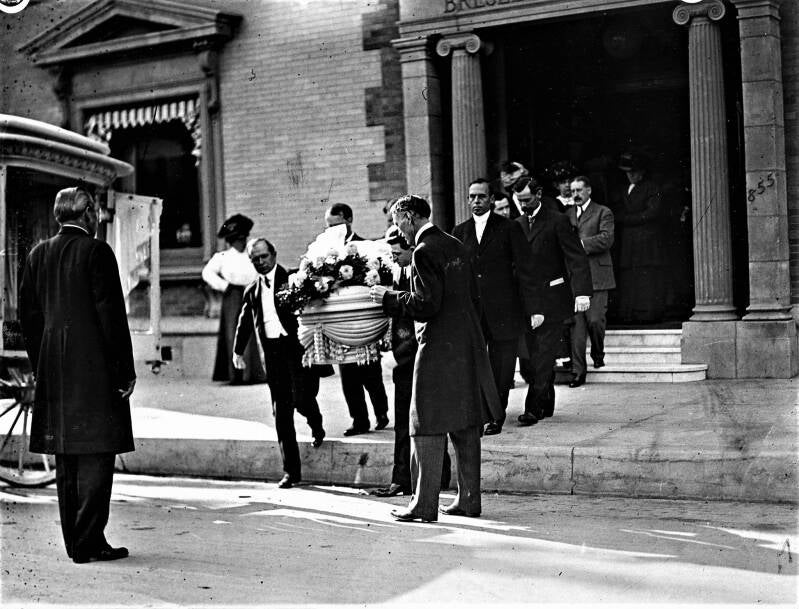
The period between then and now saw the creation of our modern funeral industry. Nineteenth-century developments included improved methods of embalming, necessary to transport Civil War casualties, the emergence of the funeral director, and the increasing standardization of funeral rites. By the early 1900s, cemeteries had been transformed into landscaped memorial parks focused on uniformity of appearance and perpetual care. Gone, from most cultures, were the towering mausoleums and sculptural monuments of previous centuries. Instead, lawn-level markers of uniform appearance became the memorial choice.
Intersecting with these changes was the emergence of pre-need, another social shift that would eventually change forever how people confront death. Informal versions of prepaid funeral services had occurred previously, but the formal, modern pre-need funeral plan – people planning and paying for their own funeral before death – started to emerge in the early 1900s, took firm root in the 1930s, and grew exponentially in later years. Planning one's own funeral in advance made logical sense: people could help their loved ones avoid the added financial stress and tough choices.
Yet pre-need has always occupied an uneasy place in the human psyche. For some, it offers peace of mind—a final act of control in a life increasingly defined by unpredictability. But to others it seems morbid, forcing them to think about their demise longer than they care to. Some cultures accept it. Where death is a topic not shied away from but embraced and prepared for, pre-need seems to come naturally. But where death is hidden away and not talked about, pre-need is turned away from.
Discomfort gets at something deeper and truer: we fear death because it’s unknown. We fear the losing of control. The never knowing. Experts from different fields have mulled over this idea for centuries.

Green Burial: Larkspur Conservation, at Taylor Hollow, Nashville, TN. (Photo Credit: The Green Burial Council)
The common consensus: our fear of death is biological, cultural, and psychological. We worry about the what-ifs. How will I die? Will it hurt? Will I see my family again? But more than that, we worry about forgetting who we are.
Ironically though, many people love cemetery spaces. They are beautiful outdoor places that hold history. They help us to remember and connect with our past. Cemetery grounds can be considered public archives that allow historians to study genealogy, art, and architecture. For others, however, cemeteries evoke unease, their stillness interpreted not as peace but as absence. Cultural narratives, religious beliefs, and personal experiences all shape these reactions, creating a spectrum of responses that range from reverence to avoidance.
When it comes to the practical question of disposition—whether to be buried, cremated, or otherwise—modern individuals navigate a complex interplay of tradition, cost, environmental concern, and personal belief. Ground burial, once the default, carries with it a sense of permanence and continuity. It anchors the deceased to a specific place, a site that can be visited, tended, and remembered. Cremation, which has grown dramatically in popularity over the past century, offers flexibility. Ashes may be placed in niches, scattered in meaningful locations, or kept by loved ones. For some, this represents freedom; for others, a troubling lack of finality.
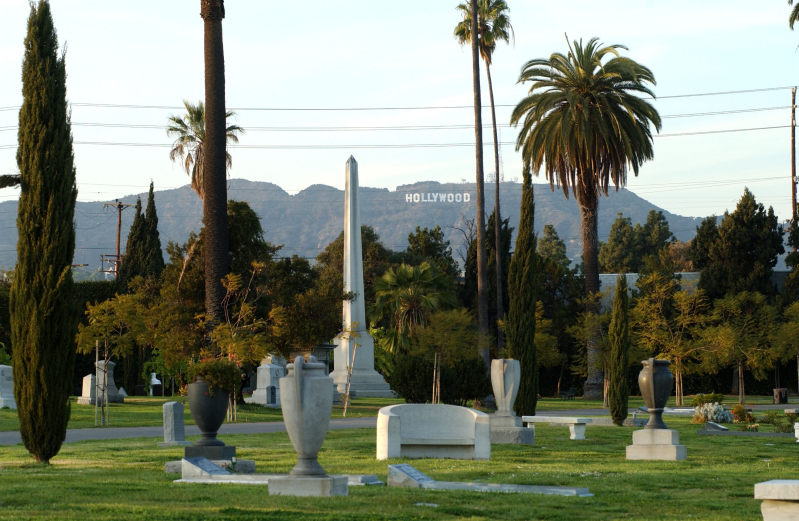
Modern cremation is a result of recent cultural changes. The movement of people to urban areas, increase in land prices and secularization have played large roles in its popularity. Statistics show that cremation has recently become more prevalent in the United States than burial. On top of this, cremation is diversifying. There are many options to choose from when deciding on cremation: columbaria, scattering gardens, memorial diamonds—each offering a different approach to remembrance.
Human disposition methods will likely continue to diversify and evolve in the future. Some people have already chosen "green burial," which attempts to limit environmental impact. These methods can include allowing the body to decompose naturally without embalming it with chemicals, burying the body in a biodegradable casket, or burial in a conservation cemetery. Even newer methods are starting to be implemented, like alkaline hydrolysis (also known as "water cremation") and human composting. Both of these methods present ethical considerations and new opportunities. Memorialization is branching into digital spaces as well, with some people imagining their existence continuing through online archives and artificial intelligence.

Issues connected to all of these concerns return us to larger questions that have existed alongside humanity since ancient times: How do we remember? Who gets remembered and who gets forgotten? What function does ritual play in mourning our losses? Cemeteries, funeral practices and memorializing mean far more for the living than just death.
Ochre-covered graves dating back to prehistory and pristine grave sites of contemporary lawn parks are ultimately monuments to mankind's struggle with death. Burial history is filled with fear and hope, culture and change, sorrow and memory. But in each tombstone, vase, and silent cemetery lies the same desire: to be remembered.
Left: A U.S. Navy sailor commits cremated remains to the sea, with the transparent inner bag visible alongside the labeled outer container used in standard American packaging.
Explore how burial and memory have shaped our deepest fears and rituals—then comment, rate, and share your thoughts
Add comment
Comments