

During a recent visit with family in Pennsylvania, I discovered—almost by accident—that I was only thirty minutes from the cemetery where Night of the Living Dead was filmed. One afternoon, my nephew Hunter offered to drive me there, and together we set out to see the location firsthand. After arriving along the quiet road, we watched the film’s opening sequence on my iPad to orient ourselves. As the scene began to play, a strange realization set in—we were already there, parked directly in front of the very tombstones and landmarks immortalized on screen. It was one of those rare moments when past and present aligned so precisely that it felt less like coincidence than inevitability.
By Allan R. Ellenberger

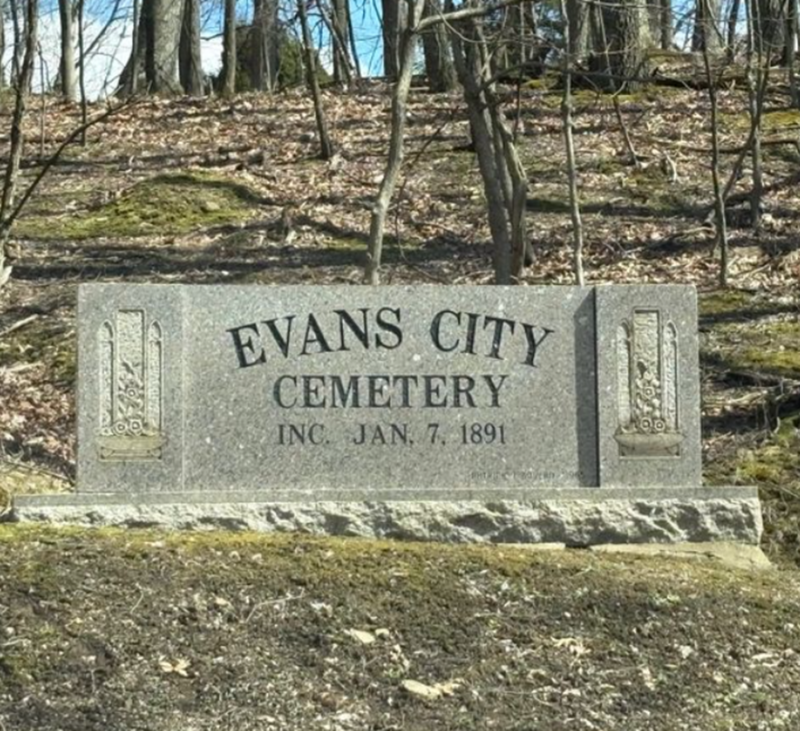
Evans City Cemetery began as just another functional rural graveyard to service the surrounding area. Opening on January 7, 1891, the cemetery sits on Franklin Road, just outside-of-town playing into the film’s strength. It really belongs to the country out there – distant, open, quiet. It was that atmosphere of detachment that George A. Romero and John A. Russo were searching for.
Russo later recalled that he had insisted the film open in a cemetery. The reasoning was instinctive but profound: cemeteries carry a natural tension, capable of evoking both the mundane and the macabre. Romero embraced the idea, and in doing so rejected the traditional trappings of horror—no castles, no laboratories, no European ruins. Instead, the terror begins under an ordinary American sky, among familiar headstones, in a place that feels safe until it suddenly is not. Evans City Cemetery provided exactly that contradiction, and from it emerged one of the most unsettling openings in film history.
Ironically, these scenes—now the film’s iconic beginning—were among the last shot in November 1967. Working with a modest budget, Romero and his team relied on real locations rather than constructed sets, and by the time they arrived at the cemetery, the production had developed a disciplined efficiency that shaped every decision. What resulted was not merely practical filmmaking, but a visual language grounded in authenticity.
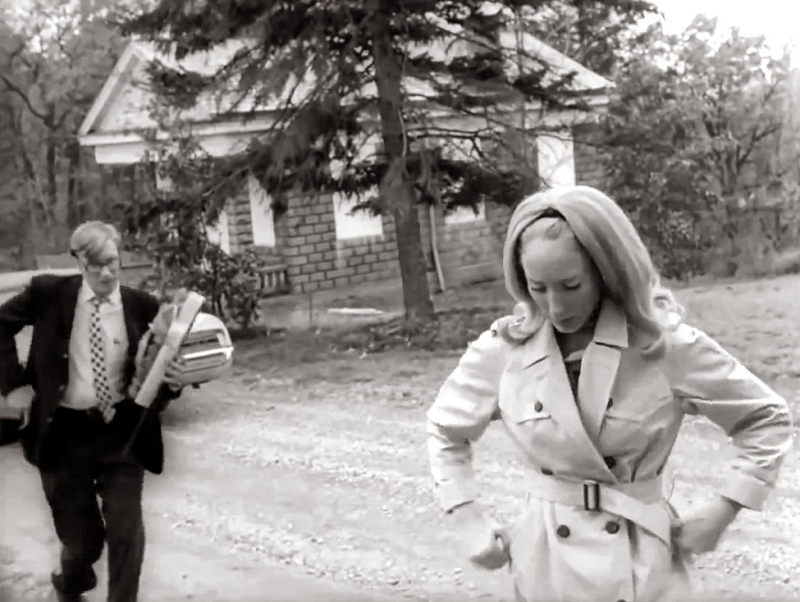
At the center of this sequence are three figures whose contributions extend far beyond their screen time. Russell Streiner, who plays Barbra’s brother Johnny, was also one of the film’s producers and a key collaborator in Romero’s early Pittsburgh ventures. As a founding member of The Latent Image, the commercial production company that gave rise to the film, Streiner helped bring the entire project into existence. His now-famous taunt—“They’re coming to get you, Barbra”—was delivered with casual mockery, yet it would become one of the most quoted lines in horror history.
Opposite him, Judith O'Dea brings Barbra to life with a performance that moves from mild irritation to absolute terror. A Pittsburgh-born stage actress who later pursued a career in Los Angeles, O’Dea grounded the scene in emotional realism. Streiner later remarked that the two looked convincingly like siblings, lending an additional layer of believability to their interaction.
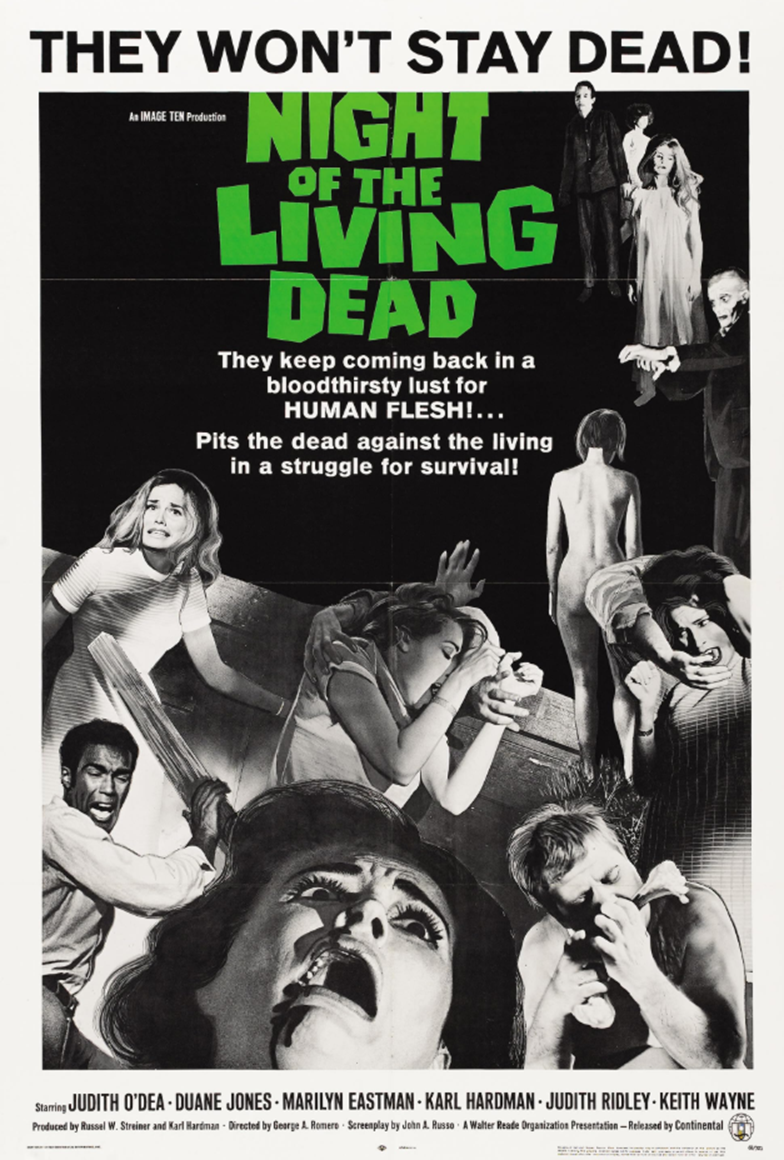
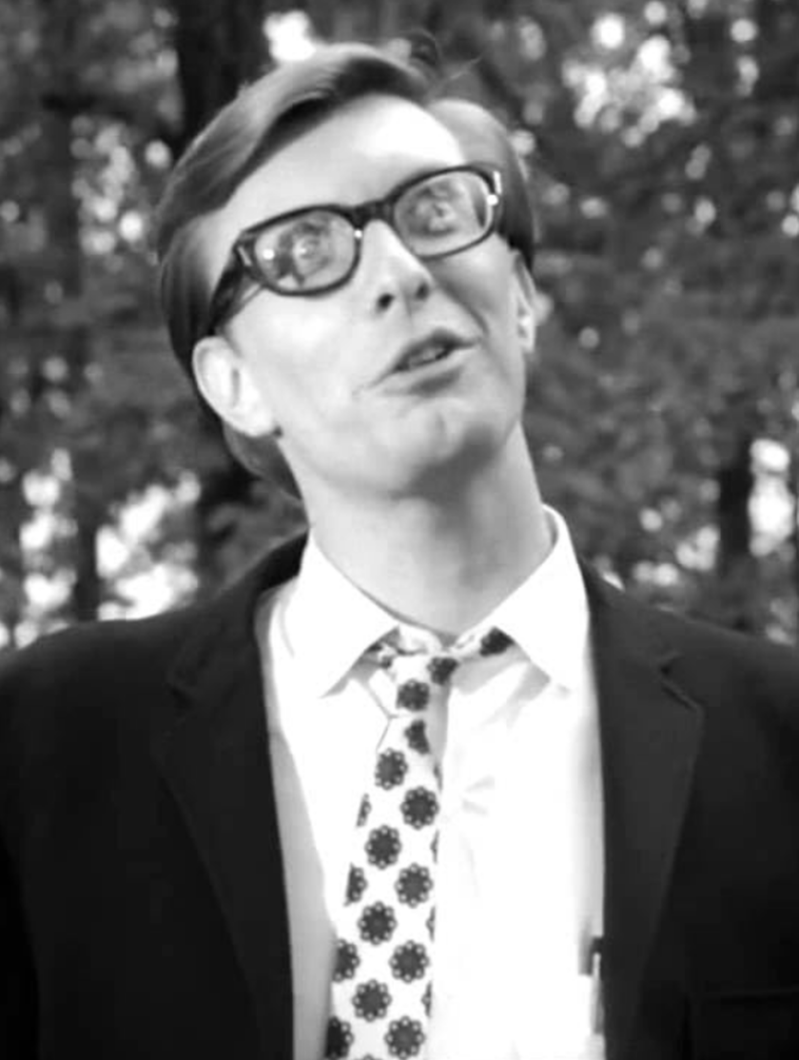
Then there's Bill Hinzman, who essentially stumbled into the role of cemetery ghoul. John Russo had originally wanted to play the role himself, but Hinzman's tall, thin frame—and black suit that he happened to be wearing at the time—made him far more imposing. It was a decision that would change film history. Hinzman was the very first of Romero's living dead to hit the screen, and his lumbering walk through the cemetery is one of the most horrifying images in movie history.


What's effective about Hinzman’s performance is his restraint. He does not initially appear monstrous. He looks like a man out of place, then a man behaving strangely, and only gradually something far more sinister. Russo had imagined ghouls moving with rigor mortis, stiffly and deliberately. Hinzman brought that to his body-language, creating a style that was unnerving precisely because it felt plausible. It's horrifying because it shouldn't look normal.
Equally interesting is the cemetery itself, which serves as more than just a setting. The gravestones featured in the sequence were not stand-ins or props; they're actual monuments with their own stories to tell. The most iconic is undoubtedly the Nicholas Kramer stone, which Barbra reaches out to grasp frantically after Johnny is assaulted. Kramer was a German immigrant who fought for the Union in both the 134th and 78th Pennsylvania Infantry regiments during the Civil War and later settled in Evans City to work as a constable for many years. He died in 1917, his gravestone soon-to-be – entirely by accident – one of cinema's most famous images.


Other markers, including those of the Blair and Cole families, are also visible, anchoring the film in an authentic landscape. This use of real geography gives the sequence a documentary-like quality. Fans who visit today can still trace the path taken by Barbra and Johnny, identifying specific stones and vantage points captured by Romero’s camera. In this sense, Evans City Cemetery operates as a silent co-star, its layout shaping the action and its presence grounding the film in reality.
Among its structures is the small chapel near the cemetery's entrance. Featured prominently in the film's opening sequence, this chapel quickly became iconic with fans of the film. By 2011 the chapel was severely dilapidated, with possible demolition threatened. Intervention spearheaded by Gary Streiner (brother of Russell) saved the chapel, due in large part to its significance to Night of the Living Dead. The chapel's rescue highlights the interesting nature of this cemetery; it continues to serve as an active cemetery where visitors can purchase graves within yet doubles as holy ground for film history.

As a cemetery, Evans City is not defined by celebrity interments but by the lives of those who shaped the region. Figures such as Thomas B. Evans, an early landowner associated with the town’s development, share the grounds with veterans, families, and local citizens. Yet through Romero’s film, these ordinary histories became intertwined with something far larger, a cultural memory that extends well beyond Butler County.
A group of young filmmakers, working with limited resources, created an image system that would redefine horror. The chill of late autumn, the practical constraints of the production, and the improvisational nature of the performances all contributed to a sequence that feels immediate and unpolished in the best possible way.


For Judith O’Dea, the legacy of that moment has endured for decades. She has often remarked that hardly a week passes without someone quoting Johnny’s line to her. Streiner, too, remains inseparable from that taunt, while Hinzman became known to generations of fans as “Zombie #1.” Together, they did more than act in a scene; they transformed a location into myth.
Today Evans City Cemetery remains active, but it’s also something of a pilgrimage site for film buffs and history lovers. It is an unusual dual identity, but an appropriate one. The cemetery belongs first to the community and to those laid to rest within it. Yet it also belongs to cinema history, because in November 1967, Romero’s camera captured something enduring.
Evans City Cemetery is not merely where Night of the Living Dead was filmed. It is where modern American horror found its footing—where the familiar gave way to the unthinkable, and where, for the first time, the dead stirred.


Editor’s Note: My sincere thanks to my nephew Hunter Sevin—and his dog Silas—for taking the time to drive me to Evans City Cemetery, where we documented landmarks and scenes from the horror classic Night of the Living Dead; it was a pleasure to spend the day with him and see the fine young man he is becoming.

Step into the birthplace of modern horror and, if the story stirs you, please comment, rate, and share.
Add comment
Comments