

Long before his name became synonymous with American music and innovation, Fred Waring was a boy growing up in the railroad town of Tyrone, Pennsylvania—a place that also happens to be my hometown. During a recent stay there, I found myself drawn to Waring’s story, compelled to take a closer look at the most prominent figure ever to emerge from its streets. Of all Tyrone’s sons, none achieved greater national prominence or cultural influence than Waring, whose career as a bandleader, radio pioneer, and ambassador of American song carried the spirit of small-town life onto a vast stage—while never entirely severing the ties to the community that first shaped him.
By Allan R. Ellenberger

Fredrick Malcolm Waring was born June 9, 1900, in Tyrone, Pennsylvania. Tyrone was a small industrial community located on the Allegheny Mountains' many ridges. Waring's father, Frank Waring, was a banker and temperance leader. Frank was known to have a strict personality that valued discipline and duty as a citizen. His mother, Jessie Calderwood, was musically inclined. She would lead the town choir in song, often using the family living room in Tyrone as a practice space.
From an early age, Waring displayed both leadership and showmanship. By the age of ten, he was conducting the local Boy Scout drum corps, wielding a curtain rod as his baton—an image that foretold the commanding presence he would later bring to concert halls and broadcast studios alike. Tyrone itself provided a fertile proving ground: a close-knit town where music, community, and performance blended into daily life. As a teenager, he formed a banjo quartet with his brother Tom and neighborhood friend Poley McClintock, performing at dances and local gatherings, quickly earning a reputation for lively, inventive entertainment.
In 1918, Waring departed Tyrone for Penn State College as a student of architectural engineering. However, music was always his true passion. The band he formed while studying was known variably as the Waring-McClintock Snap Orchestra and later the Banjo Orchestra. As he added more musicians and sophistication to the act, it became a popular draw at college functions. Yet despite his talent, he was turned away numerous times by the Penn State Glee Club. Motivated by this rejection, Waring decided to focus on his own group, bringing in vocalists and further developing a sound that stressed quality, articulation and energetic chorus work. Out of this rejection blossomed Fred Waring and His Pennsylvanians.
Formed at Penn State in approximately 1918, the group quickly went from college novelty to become one of the most popular musical groups of the 20th century. By the early 1920s, the Pennsylvanians were on the road bringing their mix of orchestral backing and close harmonized vocals to audiences around the country. The troupe got their big break in 1922 after performing at a festival at the University of Michigan. The group was soon hired as professionals and Waring's career was on the road to national stardom.
The band's 1925 recording of "Collegiate" became known as an anthem of the Jazz Age and was one of the first recordings issued commercially as an electric recording by Victor Talking Machine Company. During the late 1920s and 1930s Waring and his Pennsylvanians led the field in radio, records and live appearances, providing audiences with a cross between dance band novelty songs and "high-class" choruses. They appeared in some of the earliest sound movies, including Syncopation (1929), which further expanded their reach, placing them among the pioneers of multimedia entertainment.
Waring's biggest contribution, culturally speaking, however, was via radio, and later television. The Fred Waring Show premiered in 1933 and became a mainstay of network radio for years, later appearing in various formats on television as well. Millions of listeners were introduced to a highly polished, yet accessible brand of group singing.

Fred Waring as a youth in the Boy Scouts.
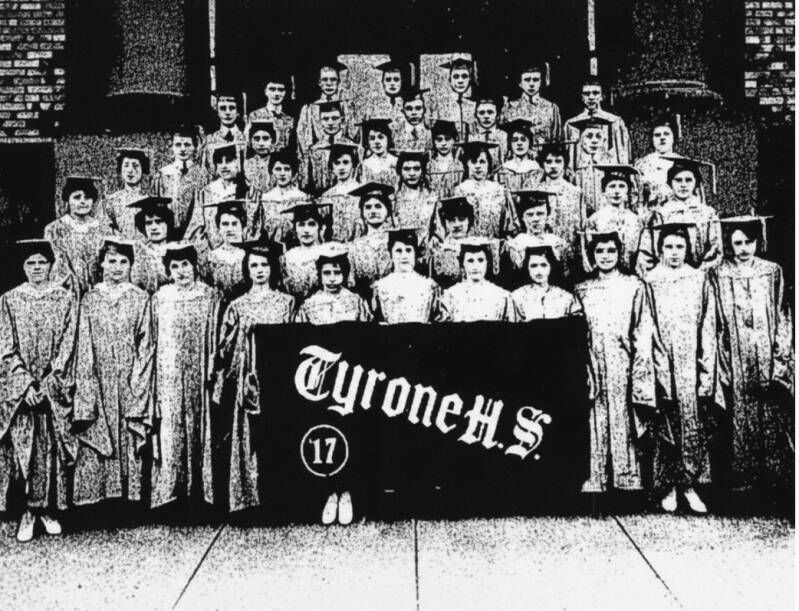
Fred Waring's 1917 graduating class at Tyrone High School on the steps of Lincoln High School (demolished).
Waring's Pennsylvanians would eventually morph into a full-fledged choir at times numbering over fifty voices, and his technique would become the blueprint for American choral singing, especially as it related to diction, balance, and ensemble sound. It was no exaggeration when admirers called him “America’s Singing Master,” or even “the man who taught America how to sing.”
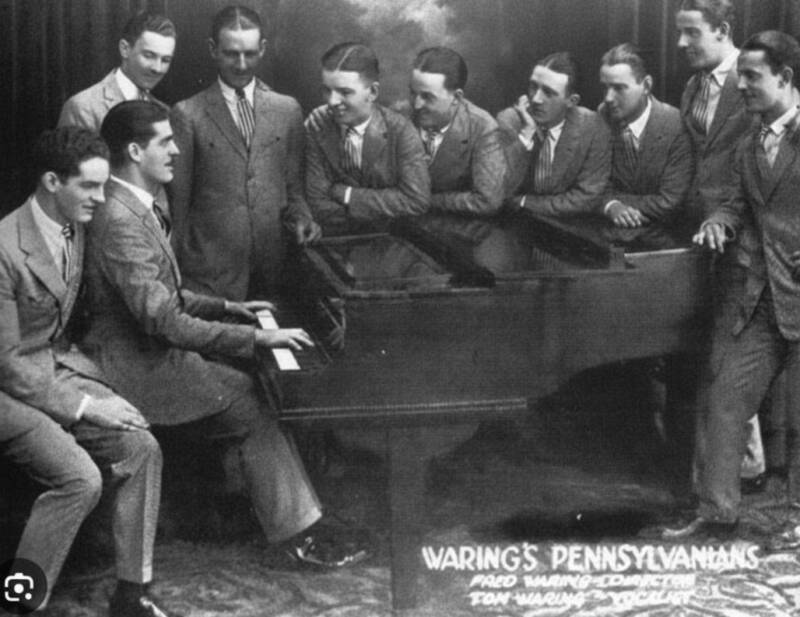
Left to Right: Fred Waring, Tom Waring, Curly Cockerill, Poley McClintock, Freddy Buck, Ernie Radal, Art Horn, Bill Townsend, Jim Gilliland, Nelson Keller.
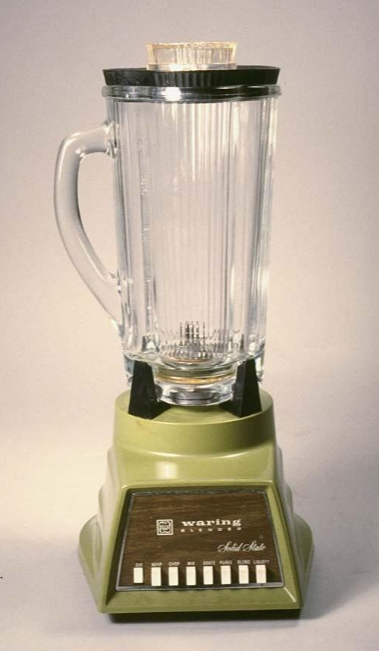
In the mid-1930s, Fred Waring—already celebrated as the leader of “The Pennsylvanians”—unexpectedly turned his attention to a technological curiosity that would bear his name. Intrigued by an early electric mixing device developed by inventor Fred Osius, Waring recognized both its practical potential and its commercial promise. Investing his own money and lending his considerable promotional influence, he helped refine and introduce the appliance to the public in 1937 as the Waring Blender.
Demonstrated on his popular radio programs and embraced by restaurants, hospitals, and eventually American households, the machine quickly became indispensable, capable of everything from mixing cocktails to preparing specialized medical diets. Waring’s involvement was not merely financial; his endorsement transformed the device into a national success, ensuring that his legacy would extend beyond music into the realm of everyday American life.
During World War II, Waring and his ensemble became fixtures of patriotic entertainment, performing at military camps and war bond rallies while contributing songs that bolstered morale on the home front. His connection to his hometown endured; in Tyrone, he helped establish the Tyrone-Waring Canteen, a rest stop offering comfort and hospitality to traveling servicemen, reflecting both his national prominence and his local loyalty.
Waring’s personal life reflected both stability and complexity. He married his college sweetheart, Dorothy McAteer, in 1923, though the marriage ended in divorce in 1929. He later married Evelyn Nair, with whom he had three children, before divorcing again in 1954. His third marriage, to Virginia Clotfelter, endured until his death, and together they built a family that included both biological and adopted children. Through it all, Waring remained devoted to his work, often maintaining a demanding schedule of touring, broadcasting, and teaching.

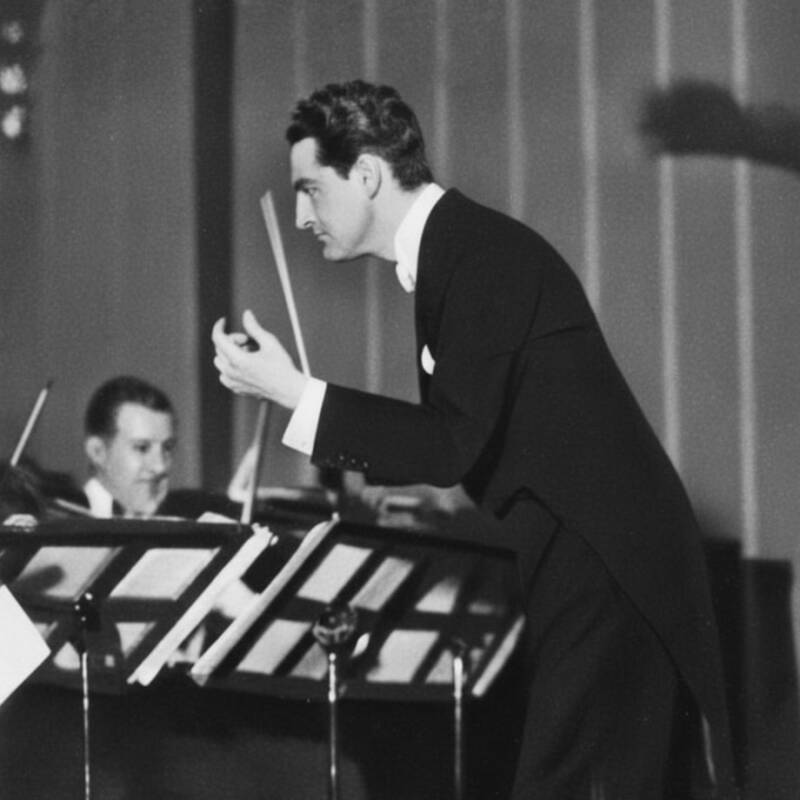
In 1947, he established the Fred Waring Choral Workshop at his Pennsylvania base near Shawnee-on-Delaware, where he trained generations of singers in his disciplined approach to choral music. These workshops became a cornerstone of his legacy, spreading his methods into schools, churches, and community choirs across the nation.
However, as was true of most singers with their backgrounds steeped in the prewar era, Waring found himself eventually losing ground with popular music trends. The evolution of rock and roll during the 1950s and 1960s overshadowed the sounds of vocal-pop groups like his. He tried to keep up, changing personnel to include younger entertainers and altering his repertoire to fit more modern tastes, but the center of gravity in popular culture had moved on. He remained active in touring, traveling tens of thousands of miles annually to his legion of fans.

Left to right: Howard Baldridge, holding a statuette from the Boy Scouts; Waring; Mayor Steve Beals, with a plaque from the Tyrone Borough Council; and George Stever, with the first Distinguished Citizen Award from the Tyrone Area Chamber of Commerce.
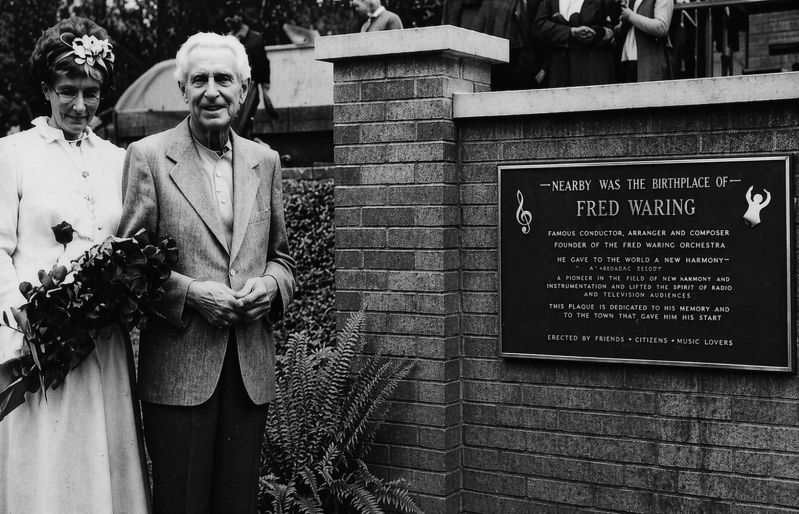
Fred Waring and his wife Virginia at the unveiling of the plaque located at Lincoln Avenue in front of the former site of Lincoln High School where Waring graduated. The plaque is dedicated to Waring's life in Tyrone, Pennsylvania.
On October 3, 1983, Fred Waring returned in triumph to Tyrone, where the community staged a heartfelt two-day celebration in his honor. Declared “Fred Waring Days,” the occasion opened with a banquet at Tyrone Area High School, where Waring—accompanied by his wife Virginia, daughter Dixie Wilson, and longtime associate Peter Keifer—was greeted by a capacity crowd of admirers. The program, organized by the “Tyrone Salutes Fred Waring” committee and chaired by Richard Getz, reflected both civic pride and personal affection. Waring was presented with a commemorative scrapbook chronicling the festivities and honored with the Chamber of Commerce’s First Distinguished Citizen Award. In accepting the tribute, he responded with characteristic warmth, remarking that he felt “overwhelmed” by the outpouring from his hometown.
The event also honored Waring's deep roots in Tyrone and his impact on American music and youth groups that stretched across the years. Attendees remembered him singing in church and school groups as a child in town. Other anecdotes highlighted his start in the Boy Scouts as a mascot and his rise to drum major. He remained involved with the Scouts through donations and broadcasts, always sending them a special message on radio every Scout Week.
Clergyman and musician Rev. Dr. Samuel T. Lewis III praised Waring’s artistic legacy, declaring that he had “taught America how to sing,” while emphasizing his deeper lesson—that every song possesses its own spirit and meaning. Visibly moved, Waring reminisced about childhood friends, neighborhood gatherings, and the formative musical life of his family home, reaffirming that the foundation of his remarkable career had been laid in Tyrone, where the joy and inspiration he carried to the world first took root.

The plaque dedicated to Tyrone native Fred Waring on Lincoln Avenue.

Fred Waring's grave at Shawnee Presbyterian Church Cemetery. Waring's brother and sister are interred behind him. (Photo Credit: Findagrave/Dan Russell)
Fred Waring died on July 29, 1984, at the age of eighty-four, at his summer home in State College, Pennsylvania, following a stroke after videotaping a concert with his ensemble and completing his annual summer choral workshop. That brought to a close one of the most enduring careers in American music. True to the rhythm that had governed his life, Waring remained active to the very end; in a final, fitting testament to his devotion, he had conducted a rehearsal only the day before—still refining harmonies, still demanding precision, still fully engaged in the art that had defined him. He was laid to rest at Shawnee Presbyterian Church Cemetery, returning in death to the Pennsylvania soil that had shaped his beginnings and to which he had remained deeply bound, even as his voice—and the sound of his beloved Pennsylvanians—carried far beyond it.
But today Waring lives on, not just through recordings and radio broadcasts, but in the sound of American choral music itself. His standards of clarity, discipline and blend took group singing out of the saccharine closet and into the realm of art. From his start conducting barber shop concerts with a curtain rod in Tyrone, Pennsylvania, to his position as a voice in every American home, Fred Waring’s life was a chorus story.
If you enjoyed this look at Fred Waring and his remarkable legacy, please comment, rate, and share the article with fellow readers.
Add comment
Comments