

Today we conclude our look at central Pennsylvania-born personalities—with a personal twist. Janet Blair was part of that bright constellation of performers who came to Hollywood with song-filled hearts and dreams of showbiz success, made famous starring in the cheery, upbeat musicals audiences craved during World War II and its aftermath. A talented dancer and vocalist who was never a diva type actress, Blair enjoyed success in movies and worked steadily throughout her career as cinematic musicals went out of style, performing in television shows and onstage plays before retiring from the industry. For me, however, her name has always carried an additional, more personal resonance—one woven into the half-remembered stories and unanswered questions that live quietly inside families.
By Allan R. Ellenberger

Born Martha Janet Lafferty on April 23, 1921, in Altoona, Pennsylvania, she was the daughter of coal-mining executive Fred Lafferty and wife Florence. Raised in a strict upper-middle-class family, she discovered she had a knack for music and show business at an early age. She also developed her unique pure, ringing soprano voice early on in her career. Like many performers of the time, she got her start in show business singing and dancing in nightclubs and on radio, giving her some polish before she hit the movies.
Somewhat similarly, a story circulated quietly through my own family, which originated from central Pennsylvania as well. It was one of those stories that I heard told on multiple occasions growing up but was never written down, but since everyone who told it was certain it was true, it became easy to believe. The story was that actress Janet Blair may actually be related to us. As the story goes, my great-uncle Howard Ellenberger, who was born in 1896, got a young girl pregnant out of wedlock.
This child was subsequently given up for adoption and became Martha Janet Lafferty, the adopted daughter of Fred and Florence Lafferty. How anyone in my family knew this information was never revealed, only that Uncle Howard thought this girl was our relative. What made the story possible was proximity: Both Howard Ellenberger and the Lafferty family lived in Blair County, Pennsylvania.
I was seven years old when Uncle Howard died in 1963, far too young to pose questions that might have cleared things up. Years went by and the story was never at the forefront of mysteries begging for answers. It existed as sort of a strange, fascinating sidebar to family trivia that was neither accepted nor rejected outright. Long after I moved to Los Angeles (and while Janet Blair was still alive), I never considered seeking her out. Would she have wanted to hear that story? Would she have considered it intrusive? Brushed it off as fabrication? I never risked asking and now time has closed that door on me. As to whether there's any truth to the story at all, I may never know.
What is public knowledge, and has been for some time, is Blair's career. After signing with Columbia Pictures at the start of the 1940s, Blair was seen as a musical actress who could carry numerous lightweight musicals with modest budgets. She appeared in a series of musical comedies and light dramas throughout the decade, usually opposite rising male actors or within an ensemble cast.

Martha Janet Lafferty's 1938 graduation picture from Altoona High School
Perhaps her most notable film during her time with Columbia was My Sister Eileen, released in 1942. Based on Ruth McKenney's column in The New Yorker, Blair played the level-headed sister opposite Rosiland Russell's Eileen and provided the music and cuteness factor in what became a major success for Columbia.
During the 1940s she frequently appeared in Hollywood musicals opposite bandleaders and crooners. This work coincided with the swing era at its peak. Her role in The Fabulous Dorseys in 1947 with Tommy and Jimmy Dorsey captured the sound of postwar America, where big-band music and uplifting plots were kings of the box office. Blair didn't play larger than life roles; her allure was that she seemed attainable.
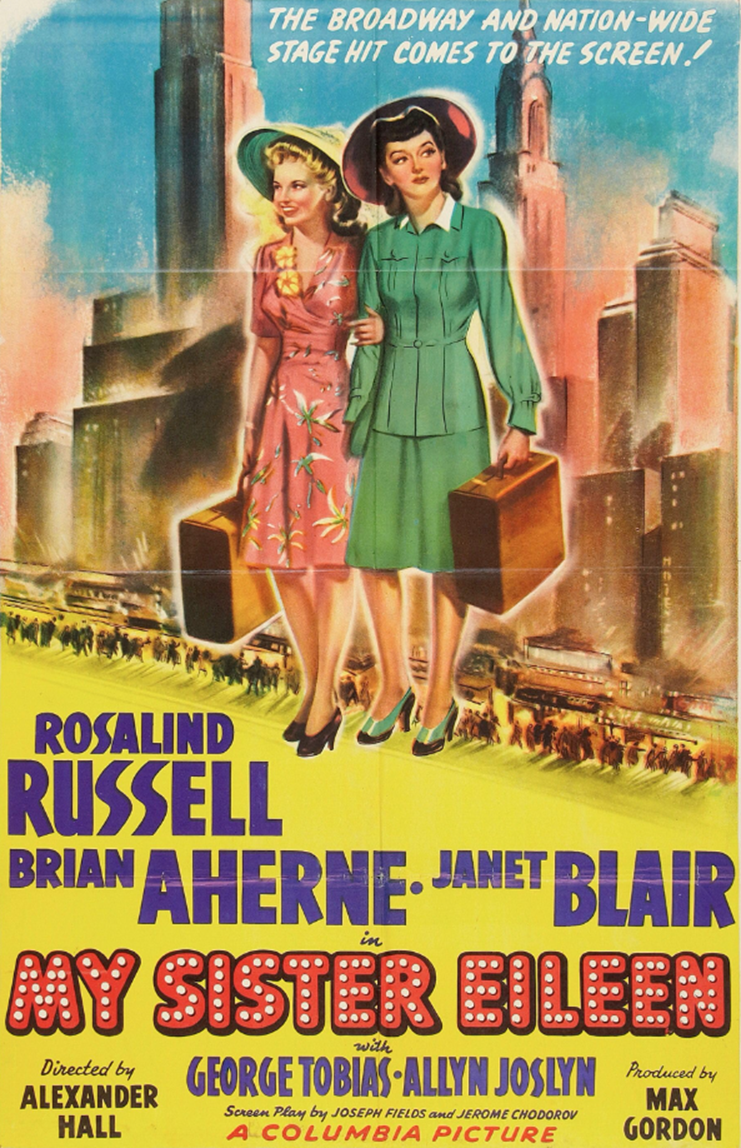

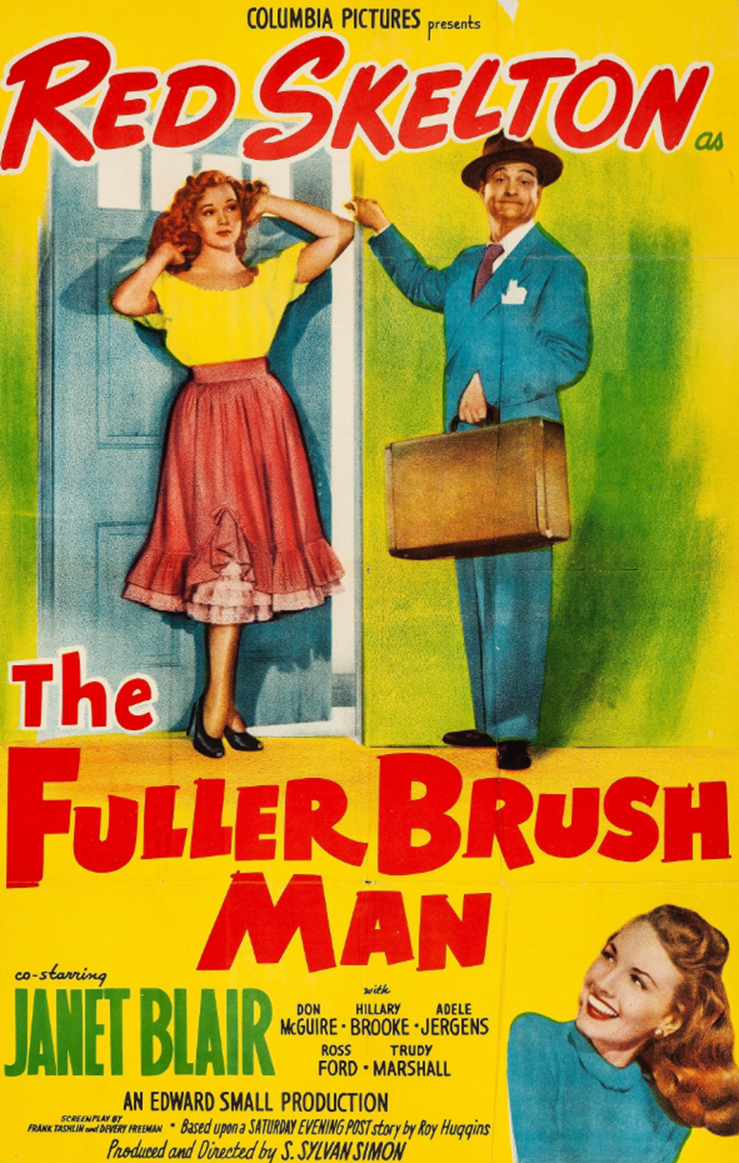
She played characters that felt worldly wise and capable yet fun. They were women that the viewer might see themselves being friends with. When the studio musical declined during the late 1940s and 1950s, Blair transitioned easily into television and stage work. She performed regularly on variety shows and made numerous guest appearances on episodic television. Blair was willing to follow work wherever it might lead her and appeared professional and dependable as the studio system evolved into something unrecognizable from its beginnings. Blair married motion-picture agent Nick Mayo in 1948; they remained married for two decades and had two children. Blair avoided scandal and salacious headlines, living a more private life.

Cary Grant and Janet Blair in Once Upon a Time (1944).
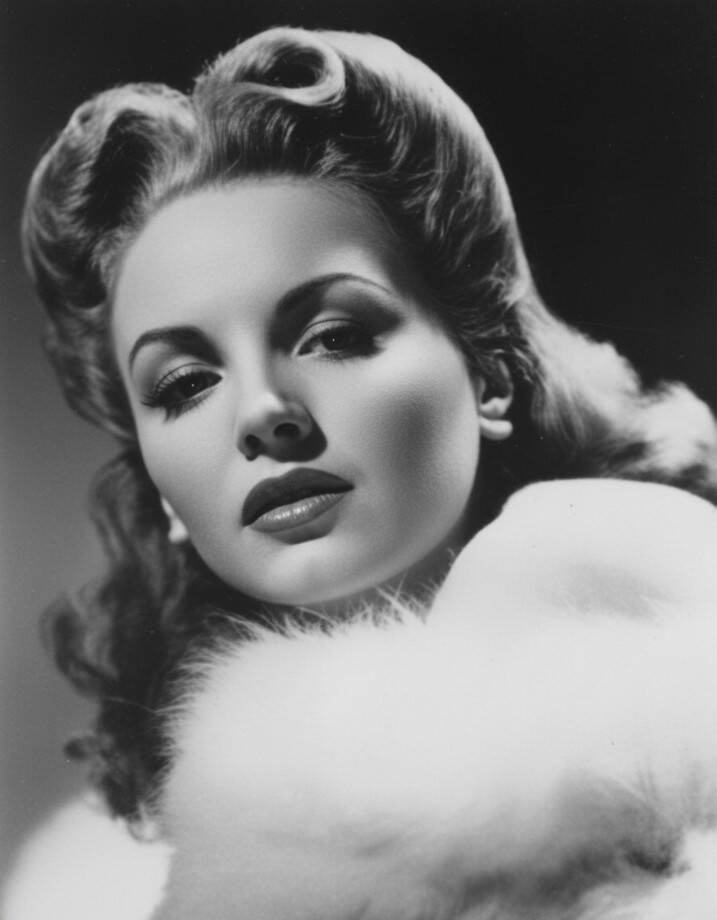
Janet Blair glamour shot.

Janet Blair and second husband Nick Mayo.
1962's Burn, Witch, Burn! (also titled Night of the Eagle) is a psychologically suspenseful British horror film, notable for casting Janet Blair in one of the most interesting roles of her career. Adapted from the novel Conjure Wife by Fritz Leiber, the film was directed by Sidney Hayers and filmed in England with low-budget credentials. Blair stars as a professor's wife who practices protective witchcraft behind her husband's back, unleashing a Pandora's box of suspicion and skepticism that threatens their orderly life together. Much of her character's demeanor is portrayed with a simmering menace beneath her superficial characterization as the loving spouse. The film project was brought to screenwriters Richard Matheson and Charles Beaumont, who both worked on the screenplay and heightened its psychological tension. Shot with an emphasis on low-key lighting and suggestive sound design, rather than explosive special effects, Burn, Witch, Burn! would go on to become a cult classic.


Janet Blair is honored for her professional accheivement and loyalty to Altoona following a performance of Mame in 1967.
In the early 1970s, Janet Blair returned to television in a prominent way when she co-starred opposite Henry Fonda in the ABC sitcom The Smith Family. Premiering in 1971, the series cast Fonda as Chad Smith, a widowed former lawyer turned community-relations officer for the Los Angeles Police Department, with Blair playing his wife, Betty Smith, and their three children which included Ron Howard, Darlene Carr and Michael James-Wixted. The show blended light comedy with topical themes—often addressing generational tensions, social issues, and changing family dynamics of the era—marking a departure from more traditional sitcom fare. For Fonda, it was a rare foray into television comedy, while for Blair it represented a steady, high-profile role that showcased her warmth and versatility. Although The Smith Family lasted only two seasons, it remains a notable entry in both actors’ careers, capturing a moment when television sought to reflect the complexities of modern American family life.

Ron Howard, Darlene Carr, Henry Fonda, Janet Blair and Michael James-Wixted in the television program The Smith Family.
Janet Blair passed away from complications of pneumonia on February 19, 2007, at the age of eighty-five in Santa Monica, California. She was cremated. Reportedly, her ashes were scattered in Blair County. Her life spanned the rise and fall of old Hollywood—from a teenager discovered with the help of major movie studios to staying relevant despite changes in the industry to retiring while still cherished by her fans. She will always be remembered by viewers as that cheerful singing presence in movies that made us believe that everything was going to be alright. To me, she is also the reminder of how Hollywood and our family trees can possibly intersect in weird ways, leaving behind mysteries we may never solve.
Am I related to Janet Blair? I may never know. But maybe that's how it should be. After all, Hollywood was built on truth...and fiction... and rumor. And sometimes those rumors don't play out on the silver screen, but right around our own family dinner tables. Just begging to be told again.
If you enjoyed the story of Janet Blair, please take a moment to comment, rate, and share your thoughts with fellow classic film enthusiasts.
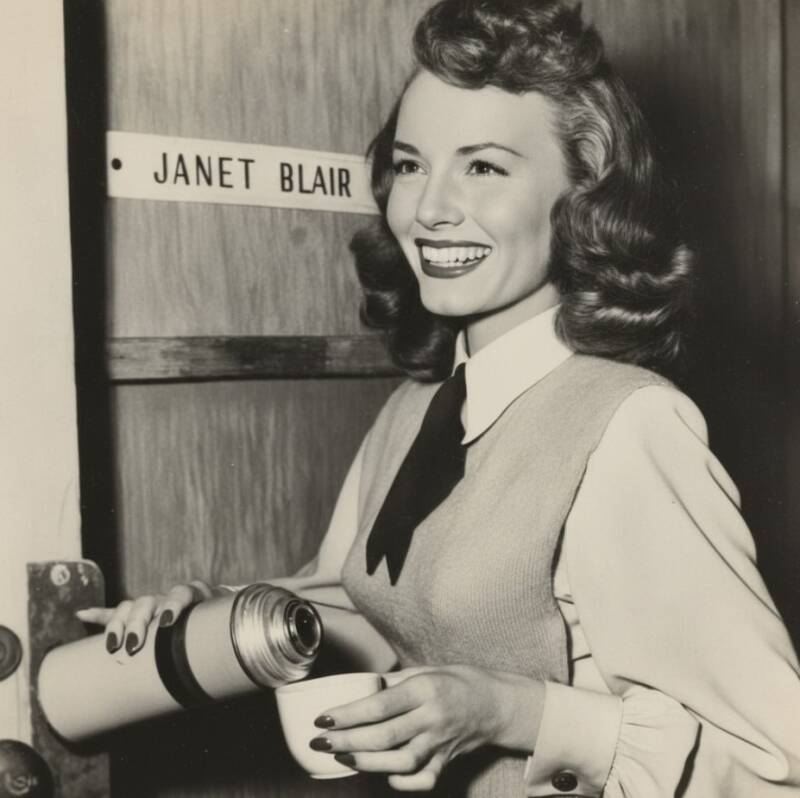
Add comment
Comments