

Two decades after changing how fashion looked on film forever, The Devil Wears Prada 2 (2026), arrives not simply as a sequel to the wildly popular film, but as a reflection on time—time that has passed, time that was lost and time that won't stop for even the greats. Written again by Aline Brosh McKenna and directed by David Frankel, the cast from the original returns featuring Meryl Streep, Anne Hathaway, Emily Blunt and Stanley Tucci along with a host of new talent. The story acknowledges from its opening frames, that the world of glossy magazines—and the power structures behind them—has fundamentally changed.
Reviewed by Allan R. Ellenberger

The set-up is refreshingly straightforward and appropriately modest. Miranda Priestly may have been tarnished, but she hasn't lost her edge. Print is dying, replaced by last-minute digital deadlines and snooping corporate superiors. Andy Sachs, now a seasoned journalist, is enticed back into the Runway sphere. Emily Charlton has graduated from terrorized assistant to a powerful diva in her own right. The movie is essentially an exploration of role reversals — professional, age-based and cultural — without losing sight of the biting satire and clever comedic timing of its predecessor.
Miranda herself changes most of all. The Miranda of old could fire one of her assistants with a glance and toss her coat on a desk. Now she lives in a world of human resources, corporate liability and responsibility. The movie mines comedy and poignancy from these new developments - the small humiliations of ego being tamed, the gentle humor of watching a strong woman hang up her own jacket. It's such a petty moment, really, yet it speaks volumes about the passage of time and the erosion of unchecked authority.
Early critical consensus has called the film a solid and enjoyable sequel, with early reviews describing it as “fun and fierce,” and praising the seamless return of its central cast. On review aggregator websites the film currently has around a 79% positive rating with universal acclaim from critics. However, some critics mentioned that it was not as sharp as the original movie, occasionally drifting into sentimentality or struggling to balance nostalgia with commentary. Other critics have accused the film of failing to walk the nostalgia tightrope entirely, being uneven or too nostalgic in its attempts to address its themes concerning media's changing landscape and the future of journalism.


Audience reaction, however, tells a slightly different story—one shaped less by critique and more by affection. For many viewers, the pleasure lies in reunion: seeing these characters again, hearing those rhythms of dialogue, and stepping once more into a world that, for all its excess, feels familiar and oddly comforting. The film’s parade of celebrity cameos and high-fashion spectacle reinforces that appeal, turning it into both a narrative and an event. It is, undeniably, a film built as much on memory as on storytelling.
More than anything, I sided with that viewership reaction rather than some of the nastier reviews. I liked the movie. It was enjoyable -- simply, earnestly enjoyable -- to spend time with these characters again after two decades, to see what life had done to them without completely destroying what they used to be. The film knows that trying to be something new is its weakest endeavor, and that honoring the past is its biggest asset. And while it's never quite as blood-smartly witty as the original, that hardly matters. It doesn't have to be. It succeeds by aging.
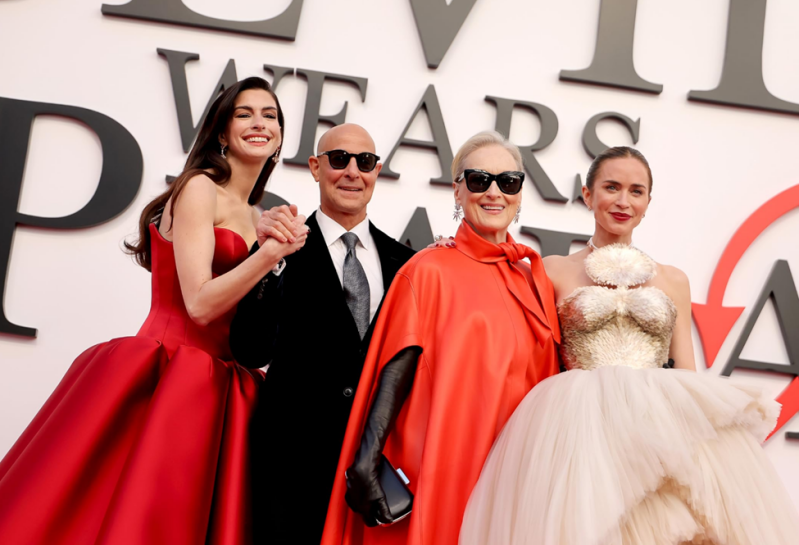
Most importantly, the film never indulges itself. It doesn’t feel the need to spell everything out. It gives you the story but doesn’t rob you of discovering the intricacies of its universe all over again. There are twists and cliffhangers and character development, yes, but not so much that they ruin the film for someone seeing it for the first time. In a world of spoilers and midnight screenings, that’s almost revolutionary.
In the end, The Devil Wears Prada 2 isn't really about fashion at all. It's about preservation--of jobs, of selves, and of the masks we wear to protect both. It wonders silently, fearfully, at what cost we let those institutions that support us wither away. And change. Is that selling out? For Miranda Priestly, change will mean holding on without quite letting go. For us, it just means accepting that even icons have to change sometimes.
It may not be groundbreaking. It may not be as sharp as it once was. But it endures—stylish, self-aware, and unexpectedly moving in its acknowledgment that even the most powerful figures must, eventually, learn to hang up their own coat.
Rating: ★★★★½

If you enjoyed my review of The Devil Wears Prada 2, please take a moment to comment, rate, and share the post to keep the conversation—and the fashion—alive.
Add comment
Comments