

Once upon a time in Hollywood, amid orange groves, dusty streets, and the rising fantasy factories of the silent-film era, a cluster of tiny storybook cottages appeared on Formosa Avenue just south of De Longpre. With their crooked roofs, curved chimneys, uneven shingles, leaded windows, and whimsical medieval styling, the homes looked less like Southern California real estate and more like something torn from the pages of a Brothers Grimm fairy tale. Nearly a century later, the so-called Chaplin Cottages — also known as the Hansel and Gretel Cottages — remain among the most enchanting and mysterious architectural survivals from Hollywood’s earliest golden age.
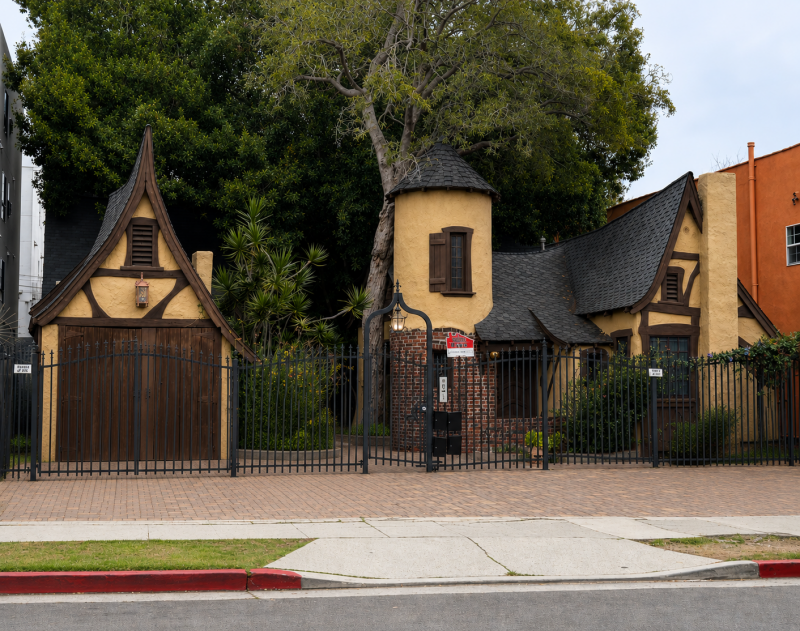
The cottages were constructed in 1923 and 1924 at 1330–1338 North Formosa Avenue, built in the style of the Southern California Storybook architectural movement that peaked during this time due to the growth of the region's motion-picture industry. Hollywood in the 1920s wasn't just turning out motion pictures, they were also turning out fantasies. Many times, set designers, carpenters, scenic painters and other craftsmen who worked for the studios would bring their creativity home with them. Around Los Angeles they built romantic European-inspired cottages full of theatrical flourishes in an attempt to capture the mood of old-world charm and handmade imperfection.
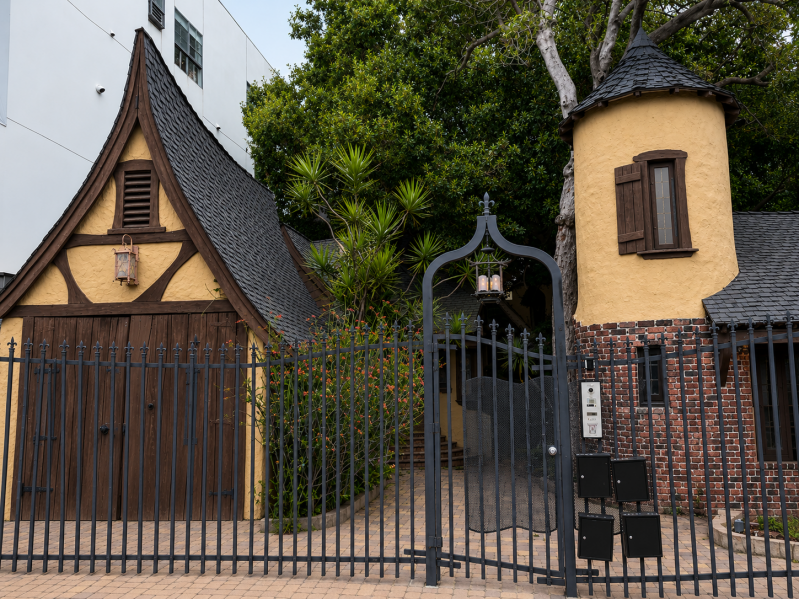
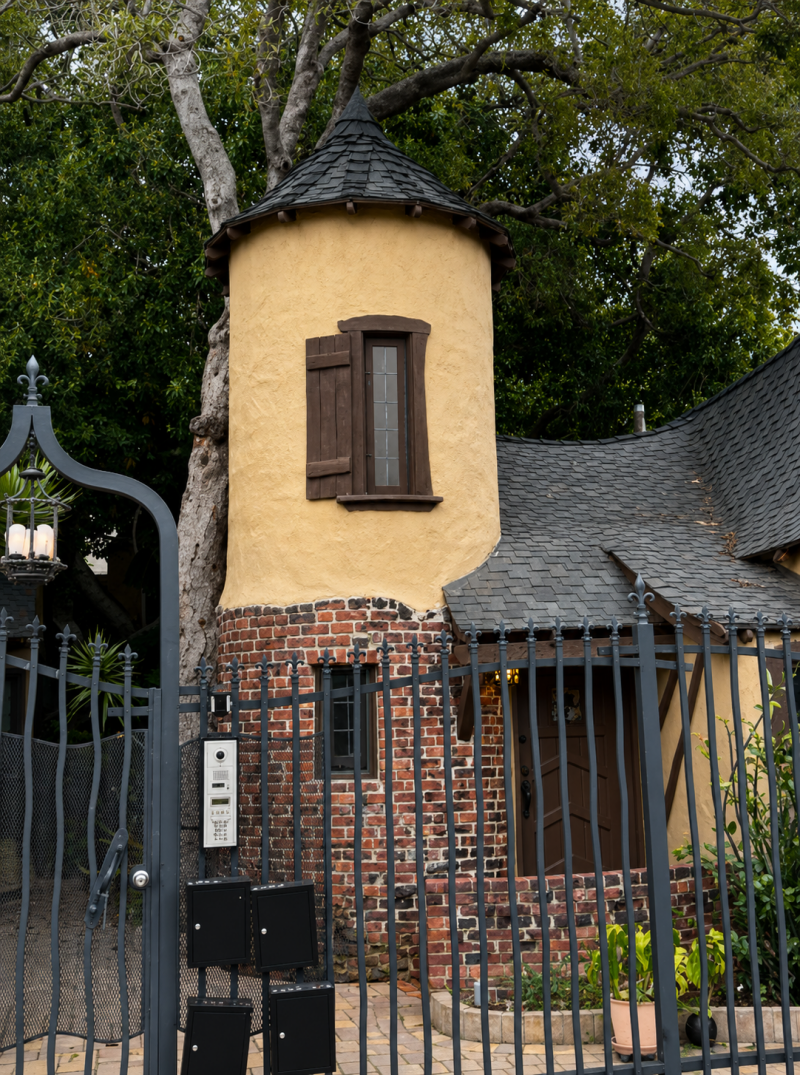
The Formosa cottages are among the purer examples of that sensibility still intact today. Pitched roofs plunge towards the earth at a steep angle. Clad in timber, their façades seem haphazardly imperfect, carved by monks instead of modern workmen. Small windows stud turret-like towers and irregular gables. The architecture toys with logic, refusing the simple straight lines of mundane city planning. Nestled as they are now between apartment buildings and urban sprawl, they still possess a touch of the magical quality of a movie set forgotten after filming ended.

Their inspiration came from an architectural style that came directly from Hollywood. By the 1920s movie-goers fell in love with films that took them to fairy-tale-like exotic kingdoms, European mountain villages, swashbuckling romances, and mythical worlds. Soon people wanted to bring that magic home with them. Architects like Walter S. Luther and carpenters like Arthur and Nina Zwebell became identified with what was becoming known as the Storybook style, creating residences that appeared handmade, often asymmetrical, and centuries-old, though they were all brand-new.
Yet what truly elevated the Formosa cottages into Hollywood legend was their enduring connection to Charlie Chaplin. Locals soon began referring to them as the “Chaplin Cottages,” a nickname that has survived for generations. The reason was obvious: the cottages stood a few blocks from Chaplin’s famed studio on La Brea Avenue; one of Hollywood’s creative nerve centers during the silent era, producing films that transformed the Little Tramp into one of the most recognized figures on earth. According to long-standing Hollywood lore, Chaplin either financed the cottages directly or arranged for them to be constructed as residences for actors, artists, studio workers, or visiting talent connected with his productions.
Although there are no records that confirm Chaplin commissioned or owned the complex, it always seemed plausible. Chaplin's movies often portrayed the type of handmade fantasy and sentimentality that the cottages were built with. Some say actual craftsmen who worked on set for Chaplin during movie productions worked on the project during their free time and used scenery building techniques that were used on film sets. Another thought is that the complex was built independently of Chaplin but was just associated with him due to its location and playful nature.
Whatever the reality, the moniker stuck because it evoked something emotionally true about early Hollywood itself. The bungalows represented an era when filmmaking was still a small-scale, creative pursuit driven by artisans. Hollywood hadn't yet calcified into corporate professionalism. It was still a bizarre little village of dreamers constructing magical dreamworlds out of plaster, paint, lumber, and whimsy.
The cottages created an extension of the fairy-tale fantasy on the inside as well. Tenants were greeted with hand-plastered walls, archways, exposed beams, small alcoves and irregular interiors intended to look lived-in and natural rather than uniform. Ivy, flowers and creeping vines in front yards softened the narrow courtyard shared between each unit making the area feel like a secret European village hidden within Hollywood.
During subsequent decades, many artists, writers, studio secretaries and fledgling actresses and actors lived in the cottages, drawn to the amenities as well as the proximity to Chaplin's studio, Goldwyn Studios and United Artists just a few blocks away. In fact, during the 1930s and 1940s many residents could literally walk to work through the epicenter of the motion-picture business.

As with much of old Hollywood though, these cottages were constantly threatened with demolition. Developers during Los Angeles' postwar building boom leveled older structures and peculiar architectural oddities all over the city, replacing them with apartment buildings, parking structures and strip malls. Somehow, however, the Formosa cottages persisted for decades. Fires broke out periodically at the property including one in January of 1947 at one of the duplexes that reportedly was first noticed when a dog began barking at the blaze before it could spread further through the structure.

Late in the twentieth century preservationists began to appreciate Storybook design as architecturally significant and the scarcity of extant examples. In 1992 the Los Angeles Cultural Heritage Commission designated the property as Historic-Cultural Monument No. 535 to formally protect the cottages.
That title ensured the survival of not just a set of buildings, but a mood — an intact piece of the city's earliest identity. Film historian Robert Winter would later write that the cottages embodied “the fantasy of Hollywood’s first age — a time when builders imagined themselves as dream makers, not developers.”
Today, the Chaplin Cottages are perhaps the most photographed and widely loved example of Storybook design in Los Angeles. Their tilted roofs and romantic facades continue to grace magazine covers, movies, social-media snapshots, and architectural textbooks. But despite their iconic status, the Chaplin Cottages remain private homes, not museum pieces. They still serve as residences much as they did a century ago ago.
Standing before them today, one can still sense the peculiar magic of early Hollywood lingering in the air. Past the wrought-iron gates and under the fairy-tale eaves is a city that once thought imagination could build worlds. These cottages are whimsical architecture brought to life, but they're actually surviving set pieces from the story of Hollywood itself.
Maybe that’s why the Chaplin legacy won’t die. Whether or not Charlie Chaplin paid for those cottages himself doesn’t really matter. What matters is how Chaplinesque they are. Playful. Homemade. Romantic. A little naughty. Undeniably human. In a city that rushes to destroy its history to reach its future, the Chaplin Cottages remain one of the few examples of make-believe that can truly stand the test of time—if built with love.
Tomorrow on The Hollywoodland Revue: the troubled and largely forgotten life of actor Mark Herron — remembered today chiefly as one of Judy Garland’s husbands, but whose own Hollywood story was filled with ambition, scandal, heartbreak, and tragedy.
If you enjoyed this journey into Hollywood’s enchanting Chaplin Cottages and the fairy-tale world of early Los Angeles architecture, please comment on, rate, and share the post with fellow classic film and history lovers.
Add comment
Comments