

Judy Garland's turbulent personal history features several prominent figures, particularly men who influenced her career, finances, and public image. Among these individuals, Mark Herron, her fourth husband, remains relatively indistinct despite his close association with one of Hollywood’s most scrutinized lives. Herron's brief and volatile relationship with Garland was ultimately overshadowed by her enduring legacy. However, his story offers valuable insight into the complex intersections of celebrity, anonymity, and personal struggle in mid-twentieth-century Hollywood.
By Allan R. Ellenberger

Mark Herron, originally named Truman Herron and born on July 8, 1928, in Baxter, Tennessee, began his career outside the established networks of the film industry. Unlike many of his contemporaries, he entered Hollywood through persistence and determination rather than familial connections. By the 1950s and early 1960s, Herron had established himself as a working actor, appearing in both film and television in roles that required versatility rather than public recognition. His career exemplifies the pattern of steady employment common in Hollywood, where many performers contribute significantly to the industry without achieving widespread fame.
Herron's screen work frequently positioned him on the margins of significant productions. He appeared in Federico Fellini’s 8½ (1963), a film recognized for its enduring critical acclaim, as well as in projects such as Girl in Gold Boots (1968) and Eye of the Cat (1969), which later achieved cult status. His career was further supported by television roles, including appearances in long-running series such as Gunsmoke, reflecting a dependable presence within the industry. Despite his consistent professional activity, Herron remained a peripheral figure in the public imagination until his association with Judy Garland.
By the mid-1960s, Garland was undergoing a particularly unstable period. Her marriage to producer Sid Luft had ended, her emotional and physical health was precarious, and her pursuit of stability often resulted in relationships that provided little lasting refuge. Herron entered her life during this time, initially as a companion and later as a central figure. Their relationship quickly attracted media attention, further complicated by reports suggesting they had married before Garland’s divorce from Luft was finalized. This confusion reinforced the perception that Garland’s personal life was subject to ongoing public scrutiny and contradiction.
The marriage took place on November 14, 1965, in Las Vegas, a city Garland had previously selected for discreet ceremonies. While the setting suggested a desire for privacy, the reality was quite different. The union was brief and deteriorated within months into public accusations. During divorce proceedings, Garland alleged that Herron had physically abused her, while Herron asserted that any violence was in self-defense. These conflicting accounts, amplified by Garland’s fame and media attention, ensured that the marriage would be remembered primarily for its dissolution rather than its beginning.
For Herron, the repercussions were both immediate and enduring. Garland’s public prominence transformed a private marital dispute into a widely publicized controversy, placing Herron in a role he could neither control nor escape. While Garland’s narrative was often met with public sympathy and fascination, Herron’s identity became largely defined by his association with her. This pattern is common in Hollywood history, where individuals connected to major stars frequently find their own lives interpreted through those associations.
After the marriage ended, Herron withdrew from public attention and resumed the quieter life of a working actor. Although his career continued, it lacked the momentum required for broader recognition. In later years, aspects of his personal life became more widely known, including reports of a long-term relationship with actor Henry Brandon, suggesting a private identity maintained within an industry that continued to demand discretion. As with many comparable histories, the available details are incomplete, shaped as much by omissions as by preserved records.

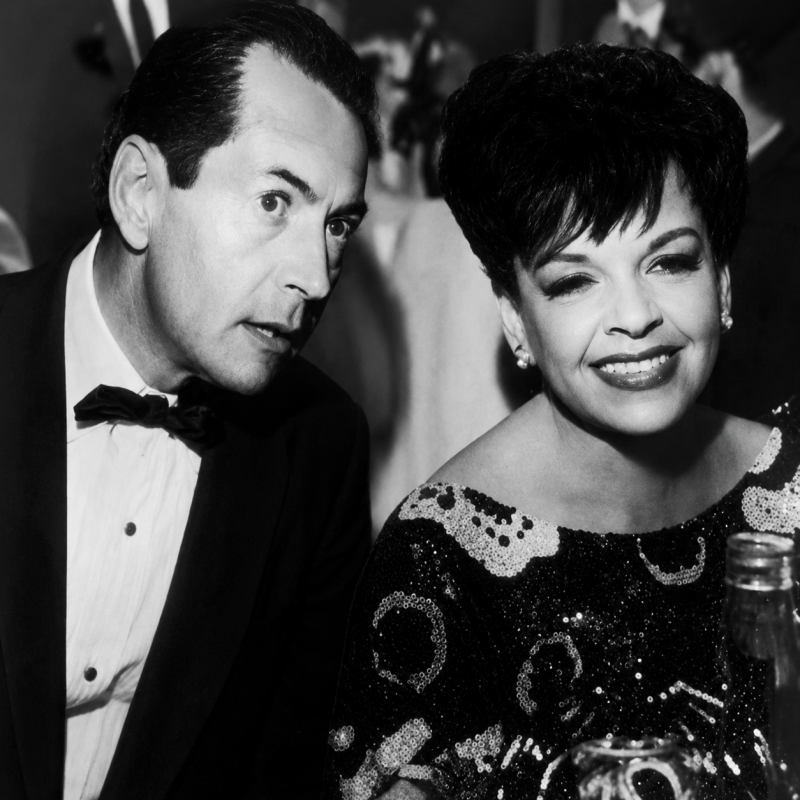
Garland and Herron on their wedding day.
Herron spent his final years in Los Angeles, a city that has historically served as both a refuge and a place of obscurity for those outside its central narratives. He died of cancer on January 13, 1996, at the age of sixty-six. His remains were cremated, and on May 31, 1996, he was buried in the Rose Garden (Section 5, Space 182) at Hollywood Memorial Park, now Hollywood Forever Cemetery. Judy Garland is also interred nearby, establishing a final connection in a life and afterlife marked by continual change.

Above: Hollywood Forever Cemetery’s Rose Garden, where the ashes of actor Mark Herron were laid to rest.
Mark Herron’s legacy is, in many respects, inseparable from Garland’s. He did not leave behind a body of work that demands rediscovery, nor did he pursue the visibility that ensures lasting fame. Instead, he occupies a quieter place in Hollywood history, defined more by intersection than by individual achievement. His story serves as a reminder that the lives surrounding prominent figures are often equally complex, shaped by both personal and public forces.
Ultimately, Herron remains characterized by the tension between anonymity and notoriety. His brief marriage to Judy Garland ensures that he is not entirely forgotten, even as the broader details of his own life recede from historical prominence.
Tomorrow on The Hollywoodland Revue: this week’s “Coming Attractions” roundup featuring the newest theatrical releases, critical reactions, audience buzz, and recommendations on what may—or may not—be worth your ticket money.
If you enjoyed my latest feature on actor and producer Mark Herron, please take a moment to comment on, rate, and share the post with fellow classic Hollywood fans and film history lovers.
Add comment
Comments