

When people talk about old Hollywood, they usually mention the stars on the big screen or the powerful studio bosses who made headlines. Louis B. Mayer led MGM with a commanding presence. Irving Thalberg earned fame as the “Boy Wonder” producer. Samuel Goldwyn became known for his temperamental genius. But behind almost every major MGM production during its golden years was another key figure, someone the public rarely saw but who held great influence in the industry: Joseph Judson “J. J.” Cohn.
By Allan R. Ellenberger

Joseph Judson “J. J.” Cohn (1895-1996)
Most people outside the film industry had never heard of him, and that was just how he liked it. He almost never gave interviews, stayed out of the spotlight, and rarely took credit on screen. Still, for decades at MGM, Cohn was essential to keeping the studio running. He was efficient, disciplined, careful with money, and very smart, making him a key builder of the MGM empire. By the time he died in 1996 at age 100, people in the industry saw him as one of the last direct links to Hollywood’s silent era and one of the final original founders of the Academy of Motion Picture Arts and Sciences.
Joseph Judson Cohn was born on December 3, 1895, in New York City, right when movies themselves were just starting out. As one obituary put it, he was born “the very month that people first paid to see a moving picture.” At that time, Hollywood wasn’t yet the center of filmmaking. Cohn grew up while the American film industry was still figuring out what it would become.
Cohn started working in movies in 1915 at Fox Film Corporation, first in the scenario and film editing departments. Back then, the industry was chaotic, unstable, and growing fast, so ambitious young people who worked hard could move up quickly.
Three years later, he joined the Samuel Goldwyn Company as a cashier and purchasing agent in Fort Lee, New Jersey, which was still a major film center at the time. When Goldwyn bought Triangle Studios in Culver City in 1919, Cohn moved to California and became the company’s business manager, then later its production manager. This was a key time in Hollywood’s history. Studios were changing from small operations into big, organized companies, and Cohn’s skills in organization, budgeting, and problem-solving made him extremely valuable.
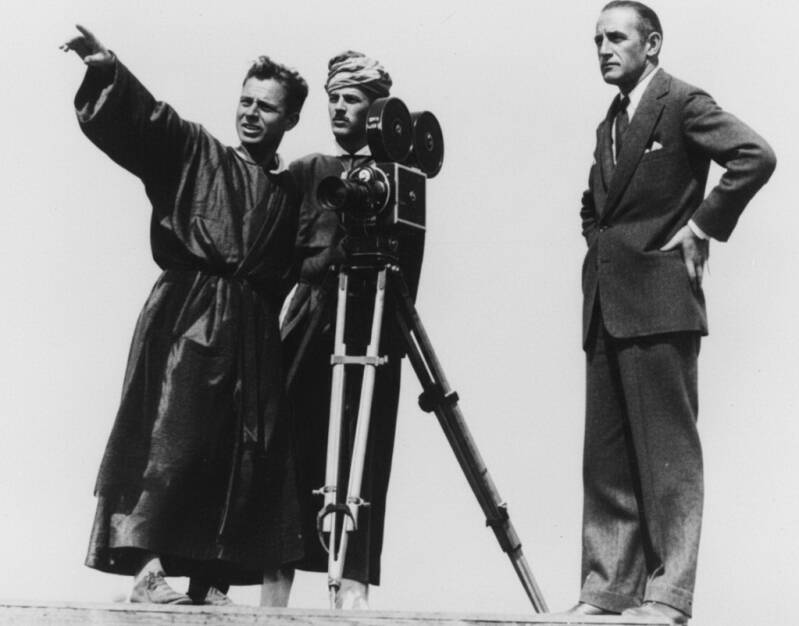
J. J. Cohn (right) with cameraman Max Fabian on the set of Ben-Hur (1925)
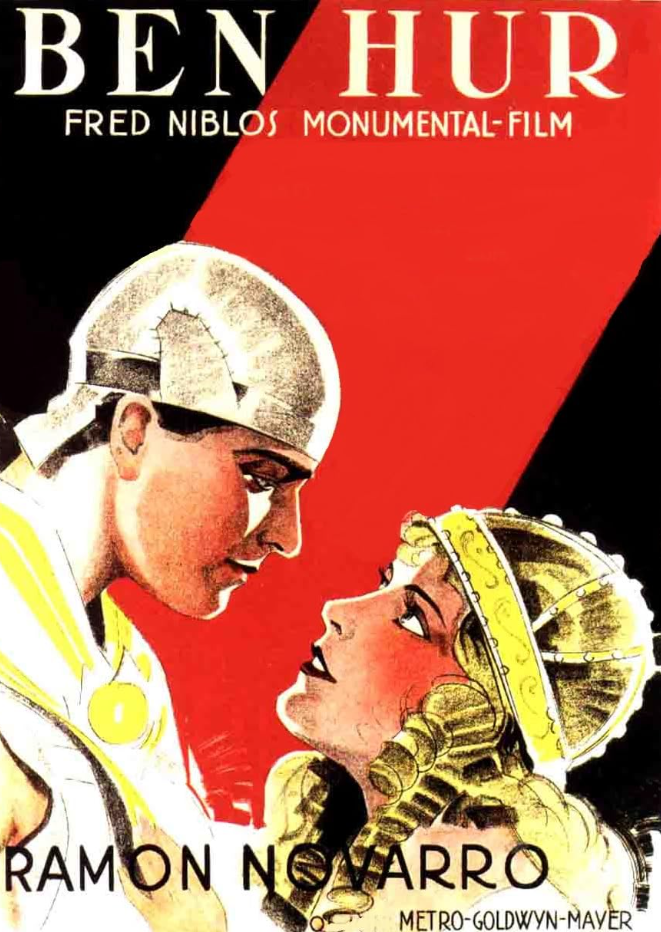
A major turning point in Cohn’s career came with the troubled production of Ben-Hur (1925), a huge silent film that eventually starred Ramon Novarro. The project started in Europe under Goldwyn before MGM was formed, but things quickly went wrong. Costs soared, huge sets were built in Italy, and filming delays piled up. It became one of the biggest financial crises Hollywood had faced so far.
Cohn played a big role in saving the film. Later, film historians credited him with realizing the European production couldn’t continue and recommending that the project stop and be mostly reshot in Culver City with closer oversight. This decision probably saved the film and may have helped steady the newly formed MGM as well.
In 1993, while I was researching my biography of Ramon Novarro, I interviewed J. J. Cohn at his home in Beverly Hills. Even after so many years, he remembered Ben-Hur clearly. He was part of that first group of executives who saw filmmaking as more than just art or entertainment—it was a complex operation. Thousands of extras, animals, costumes, cameras, and crews all had to work together with exact timing. Cohn was especially good at managing this kind of challenge. Even in his old age, he was sharp, careful, and deeply knowledgeable about silent-era film production. Talking with him felt like getting a direct look into the inner workings of old Hollywood.
Even though Ben-Hur was one of the most expensive silent films ever made, it turned out to be a big success for MGM and made Ramon Novarro a top star at the studio. Cohn’s reputation in the industry grew a lot after he helped the production recover from its near-disaster.
When Metro, Goldwyn, and Mayer merged in 1924, Cohn became MGM’s production manager. He worked under Louis B. Mayer, Irving Thalberg, Harry Rapf, Eddie Mannix, and Benny Thau. Howard Strickling, MGM’s well-known publicity chief, later said Cohn was part of the small core group that really built the studio.

J. J. Cohn (center) on the set of The Big House (1930) with Robert Montgomery (left), and Chester Morris.
If Mayer was the studio’s public leader and Thalberg its creative planner, Cohn was one of the main minds behind its operations. He was especially good at keeping budgets in check without lowering production quality. Producer Gottfried Reinhardt once called him “one of Hollywood’s most efficient and imaginative production managers,” and praised his skill at keeping “that slippery balance between economy and quality.”
This ability to balance costs and quality was key to MGM’s success. Other studios often thought MGM’s movies cost much more than theirs because they looked so polished and had big stars. Cohn later said, with pride, that MGM was often one of the least expensive major studios, given the quality of its films. That kind of practical efficiency was exactly what he valued.
After Irving Thalberg died in 1936, Cohn became even more influential. He was named executive producer in 1937 and vice president in 1948. During the 1930s, 1940s, and early 1950s, he helped manage many MGM productions, including the very successful Andy Hardy and Dr. Kildare series. His authority reached almost every part of the studio’s work.
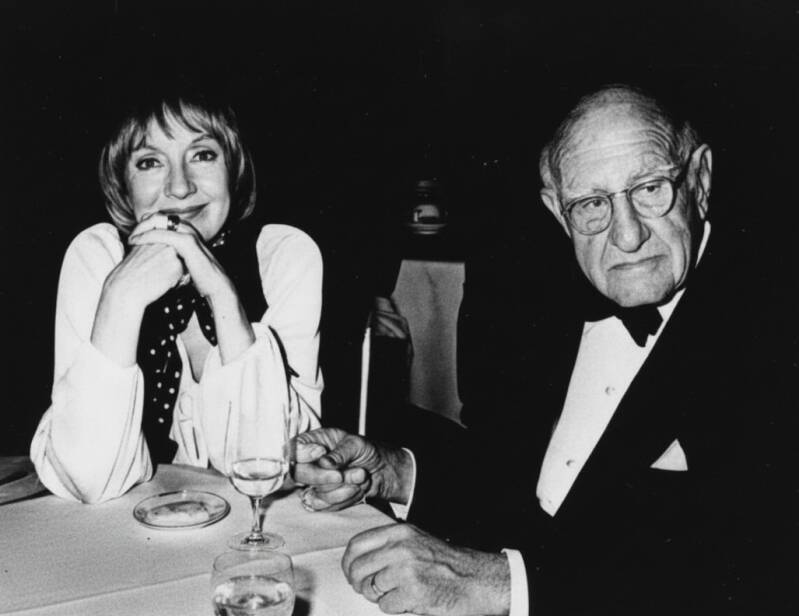
Actress Evelyn Keyes and J. J. Cohn attend the Founder Patrons dinner at the Beverly Hills Hotel in 1979.
Even though he had a lot of power, Cohn stayed mostly out of the public eye. Unlike Harry Cohn at Columbia or Darryl F. Zanuck at Fox, he didn’t try to become a celebrity. He avoided publicity and rarely looked for attention. The Los Angeles Times reported that he didn’t give an on-the-record interview until 1977, when he was already eighty-two, and that he supposedly paused his daily tennis game for it.
His modesty is one reason his work is often forgotten today. Hollywood history usually focuses on big personalities, while the quieter people who kept things running are often overlooked. But inside the industry, Cohn’s reputation stayed strong.
He was known for understanding every part of production, from budgets and schedules to managing talent and logistics. Cohn also helped shape one of Hollywood’s most important institutions. His Academy of Motion Picture Arts and Sciences membership card was dated May 11, 1927, which made him a founding member. He joined the Academy in its first year as part of the producers' branch and stayed active for the rest of his life, even voting on documentary-feature nominations in his later years.
Away from work, Cohn lived a much more private life than many Hollywood executives of his time, who were often linked to scandals and excess. In 1925, he married Bessie Cooke (who died in 1954) and raised her son from her earlier marriage. Later generations of his family stayed involved in California business and wine culture. One of his grandsons, Bret Lopez, even named his Napa Valley wine label “Scarecrow” to honor Cohn’s link to The Wizard of Oz.
Even after he retired, Cohn stayed active. He played tennis every day and kept up with studio news and Academy events long after the old studio system he helped create was gone. He lived to see Hollywood change from nickelodeons to digital movies, and from silent films to CGI blockbusters.
Joseph Judson “J. J.” Cohn died in his sleep on January 12, 1996, at his home in Beverly Hills. He was 100 years old. His death marked the end of a direct link to MGM’s earliest days and the silent film era. Obituaries throughout the industry noted that, even though the public rarely knew his name, few people had more influence behind the scenes during Hollywood’s golden age. Cohn was buried at Forest Lawn-Glendale in the Everlasting Love section.
Today, J. J. Cohn is still one of the great unsung figures in classic Hollywood history. He wasn’t a star, a flashy studio boss, or a self-promoting executive. Instead, he was something much rarer and maybe even more important: someone who knew how to make Hollywood work. Quietly and efficiently, without seeking attention, he helped build the most glamorous studio empire in film history.

J. J. Cohn's grave at Forest Lawn-Glendale (Photo credit: Findagrave.com/AJ)
🎬 Check back this Sunday for my latest film review! I'll be taking a look at a new release, exploring whether it's worth your time. I hope you'll stop by, read the review, and share your own thoughts in the comments!
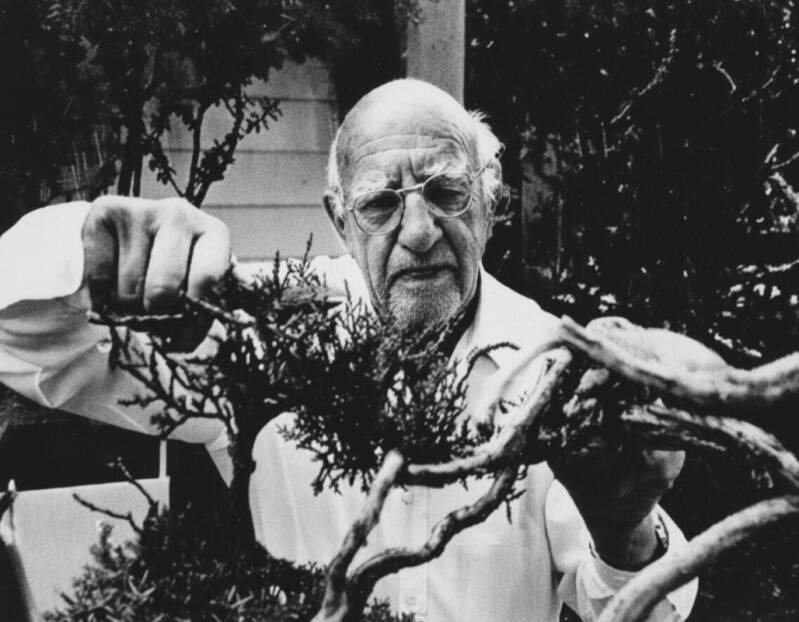
J. J. Cohn tending to the garden in his Beverly Hills home in 1977.
If you enjoyed my latest feature on legendary MGM executive J. J. Cohn, the quiet force behind Ben-Hur and the golden age of Metro-Goldwyn-Mayer, please comment on, rate, and share the post with fellow classic film fans and historians.
Add comment
Comments