

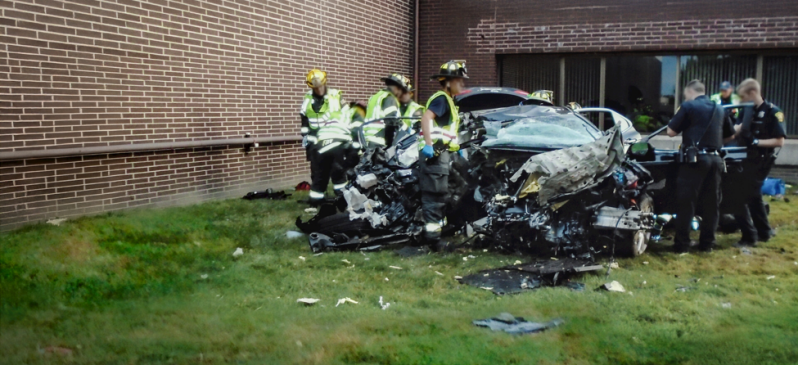
Some true-crime documentaries fascinate viewers, while others leave them unsettled. Netflix's The Crash is definitely in the latter group. Directed by Gareth Johnson, this 94-minute film looks back at one of the most shocking criminal cases in recent years: the 2022 deaths of Dominic Russo and Davion Flanagan. Both were killed when seventeen-year-old Mackenzie Shirilla crashed her Toyota Camry into a brick building in Strongsville, Ohio, at almost 100 miles per hour. At first, it seemed like a tragic accident, but investigators soon found something more disturbing. There was no sign that Shirilla tried to brake before the crash. She was later convicted of murder and aggravated vehicular homicide, receiving two concurrent prison sentences of fifteen years to life.
Reviewed by Allan R. Ellenberger

Johnson made this documentary because the case touches on many issues people care about today: true crime, social media, teenage mental health, influencer culture, and the public’s fascination with young women accused of serious crimes. The film tries to answer a question that has lingered since the start: why would a teenager choose to kill two young men, including her own boyfriend?
The documentary brings together police footage, courtroom evidence, social media posts, and interviews with family, classmates, investigators, and, most importantly, Shirilla herself. Netflix knew that having her participate would be a major draw. For many viewers, hearing directly from the convicted killer is both the film’s biggest strength and its most unsettling part. Instead of clear answers, the film leaves viewers with a strong sense of unease.
Johnson gives Shirilla and her family a chance to share their side, including claims that she had a medical episode and cannot remember the crash.
However, the documentary focuses much more on the evidence prosecutors used to argue the crash was intentional. In the end, viewers have to weigh both sides, but many critics have pointed out that the film mostly supports the prosecution’s view.
In my view, the evidence is very convincing. The lack of braking, the car’s speed, the route, and everything shown in the documentary all suggest guilt rather than an accident. The film does not remove every doubt, but it makes a strong case that this was not just a tragic mistake. It is hard to see all the evidence and think otherwise. Even some viewers who thought the documentary was one-sided still believed Shirilla was guilty.
What sets The Crash apart from other Netflix true-crime shows is how current it feels. This is not an old case with yellowed newspapers and retired detectives. The social media posts are recent, and the videos seem familiar. The people involved could be anyone you know—neighbors, classmates, or friends. The documentary keeps reminding viewers how quickly teenage drama and bad decisions can turn into something tragic.

Mackenzie Shirilla
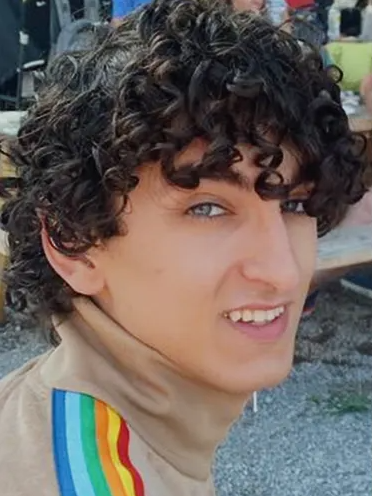
Dominic Russo

Davion Flanagan
The most powerful parts of the film focus on Dominic Russo and Davion Flanagan, the two young men who died that morning. Too often, true-crime documentaries focus on the people who committed the crime and forget about the victims. While The Crash sometimes does this, it ultimately reminds us that two families lost sons, brothers, and futures that can never be replaced.
Most critics have responded positively, though not with great enthusiasm. Many liked the documentary’s pacing and how easy it is to follow, but some questioned whether it gives the defense a fair chance. Others called it compelling but uncomfortable to watch and raised the usual questions about whether true-crime documentaries cross the line from journalism into exploitation.
Audience reactions have been even stronger. Social media is full of debates about Shirilla’s guilt, her parents’ actions, and how the documentary presents the evidence. Many viewers now believe she caused the crash on purpose, while a smaller group is still bothered by what they see as missing information or bias. The controversy has helped make the documentary one of Netflix’s most-watched titles.
One of the oddest parts of the case, mentioned briefly in media coverage, is the ongoing support Shirilla gets from some fans and online followers. Like other famous criminal cases in the social media age, a small but loud group keeps defending her and sending messages of support. This may be one of the most troubling parts—not because people disagree about the case, but because internet culture is turning real-life tragedy into a kind of fandom.
In the end, The Crash works because it never lets viewers feel comfortable. It is not a traditional mystery—it is a tragedy. Johnson’s film leaves people thinking about accountability, privilege, social media, parenting, and how the line between public spectacle and personal disaster is getting harder to see.
By the time the credits roll, viewers probably will not feel entertained or even satisfied. Instead, they will feel unsettled. Maybe that is exactly what a documentary about this case should do.

Above is the official intake photograph of Mackenzie Shirilla as maintained by the Ohio Department of Rehabilitation and Correction following her conviction in the 2022 crash that claimed the lives of Dominic Russo and Davion Flanagan.
Join us tomorrow at The Hollywoodland Revue as we commemorate the 100th anniversary of Marilyn Monroe's birth with a special feature exploring the remarkable and often heartbreaking childhood of Norma Jeane Baker before she became a Hollywood legend.
If you enjoyed my review of Netflix's The Crash, please take a moment to comment on, rate, and share the article as we explore one of the most disturbing and controversial true-crime documentaries of the year.
Add comment
Comments