

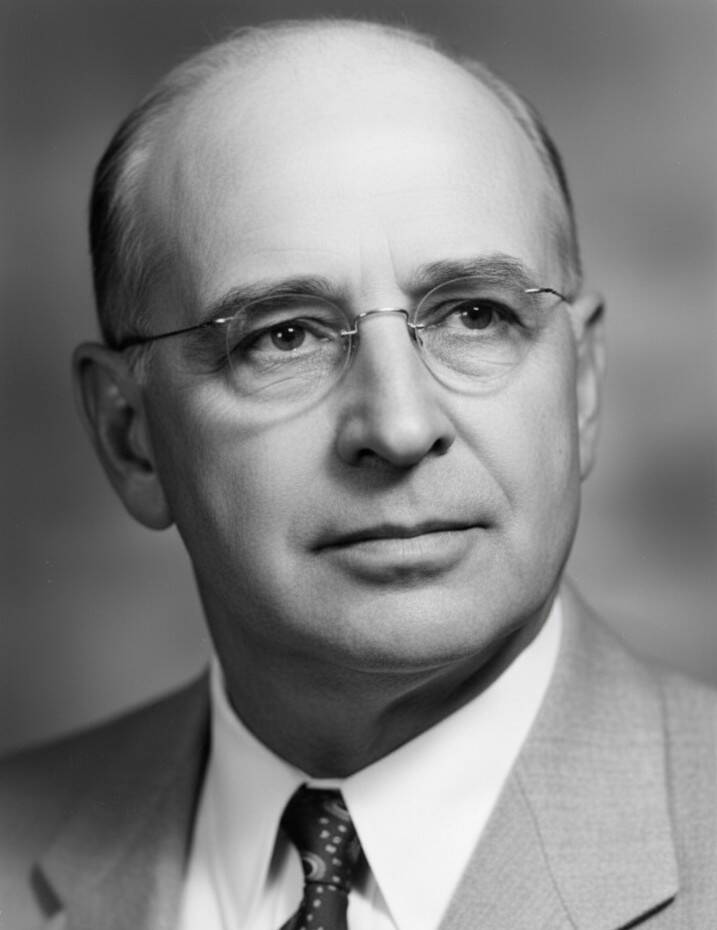
Long before Hollywood conjured images of movie stars, red carpets, and studio moguls, it was a quiet agricultural community where residents knew each other by name, and the local doctor may have bicycled many miles to make a house call. Few residents saw -- and wrote about—Hollywood's metamorphosis better than Dr. Edwin Obadiah Palmer. Physician, civic leader, founder of Hollywood Hospital and Research Center, historian, and author of History of Hollywood, Palmer devoted nearly 60 years to helping develop the community he chronicled.
By Allan R. Ellenberger

Edwin O. Palmer was born June 17, 1872, in Schenectady, New York, to William H. Palmer and Mary T. Leavenworth Palmer. Always striving to improve himself, young Edwin studied medicine at a moment when doctors were transforming their field from nineteenth-century tradition to twentieth-century science. After graduating from Columbia University with his M.D. in 1896, Palmer practiced medicine in New York for a few years before striking out west.
In October 1900, Palmer moved from New York to Southern California, abandoning his practice. This decision was historically significant for both Palmer and Hollywood. He moved to the young community in early 1901 and opened Hollywood's first doctor's office by setting up shop above the town's post office. Hollywood was still made up of fields and open space, as it was still considered a rural community. Palmer remembered having to practice medicine miles away in any direction and recalled using a bicycle, a horse, a buggy, and a saddle horse.
Palmer practiced as a physician specializing in general medicine and surgery for over 25 years and was one of Hollywood's foremost doctors. He continued to practice until 1927. Palmer treated generations of Hollywood residents as it grew from a sleepy village into one of California's fastest-growing cities.
His impact was felt in other areas aside from medicine as well. Palmer helped found the Hollywood Medical Group and served as president for much of its history. In World War I, he took on a duty assigned by the Los Angeles County Council of Defense to travel and lecture on alcoholism and venereal disease. After the war, he took a major role in civic efforts to build hospitals and raise public health awareness in Hollywood.
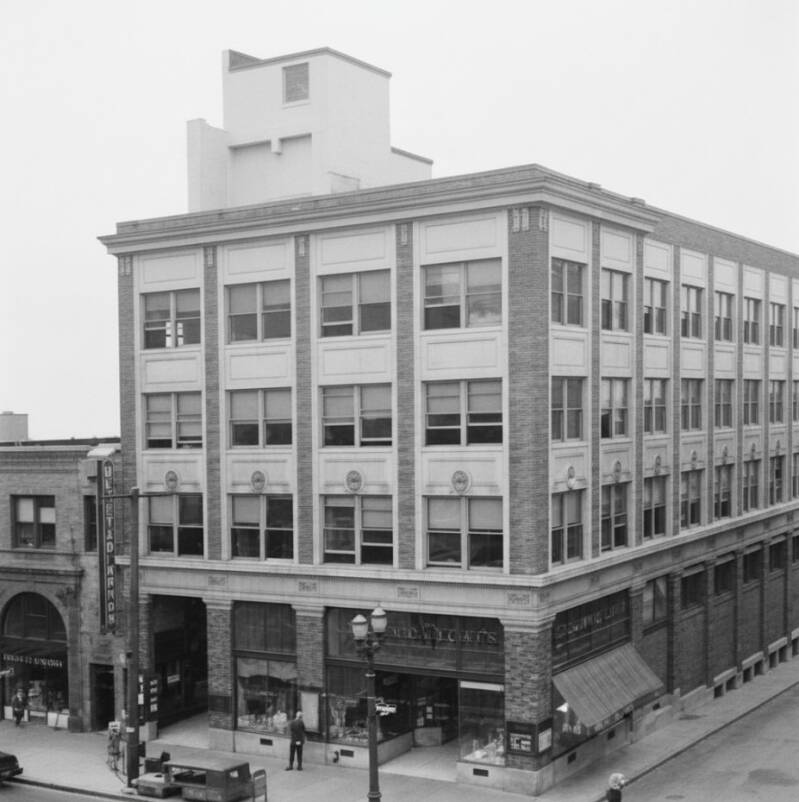
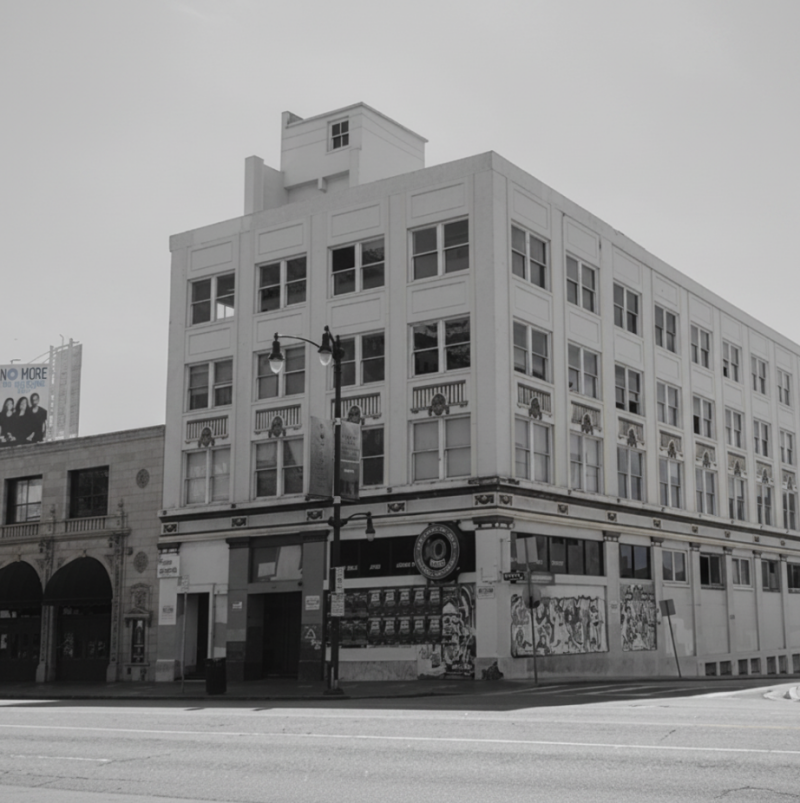
The Palmer Building at 6360–6366 Hollywood Boulevard was constructed in 1921 by Dr. Edwin O. Palmer and originally served as a publishing and commercial center. Shown at left shortly after its completion and at right as it appears today, the historic structure has survived a century of Hollywood change and has since been redeveloped into a boutique hotel.
One of his greatest achievements was helping to found Hollywood Hospital, 1300 North Vermont Avenue. Palmer assisted in the hospital's incorporation and later became president of the board of trustees, while also becoming one of its biggest financial backers. After Palmer stepped away from regular practice, he continued to feel a personal attachment to the hospital. Palmer worked as superintendent for six months without pay during a period of institutional transition. Palmer felt that civic institutions were just as important as individual successes throughout his life.
Palmer's community involvement was also prolific. He served as assistant county health officer and as Hollywood's city health officer after it incorporated. He purchased land locally and was involved with many community groups. Palmer helped to organize the Hollywood Citizens Committee in 1906 and got involved in business enterprises that helped shape Hollywood into what it was becoming. His influence is seen throughout the development of early Hollywood.

Dr. Edwin O. Palmer was the driving force behind the founding of Hollywood Hospital in 1924, recruiting fellow physicians—including Dr. Paul B. Roen—to help establish and financially support what would become one of Hollywood's most important medical institutions, today known as CHA Hollywood Presbyterian Medical Center.
Still, Palmer is probably best remembered today for his work as a historian. Realizing that Hollywood's glittering rise to fame was eclipsing its earliest history, he began compiling photographs, records, interviews, and reminiscences from those who were there when moviedom was just a gleam in Los Angeles' eye.
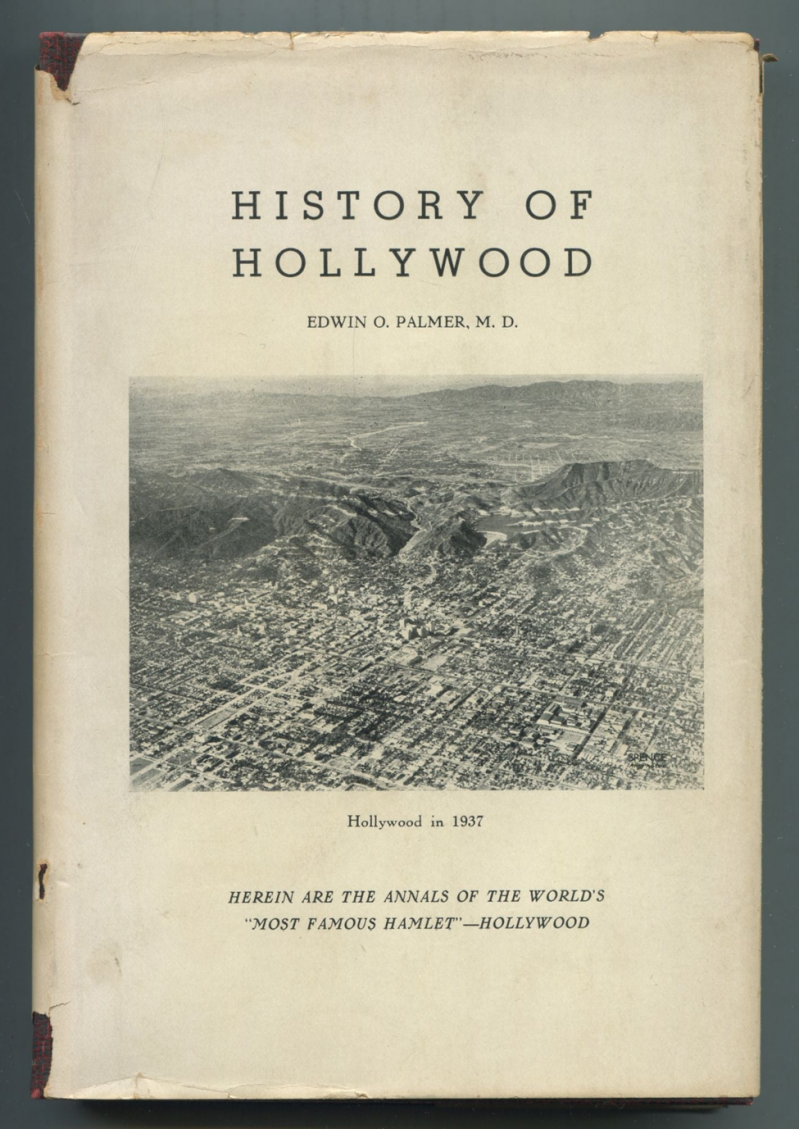
The outcome was History of Hollywood, released in 1937 and expanded in 1938. Hollywood's history was recounted from prehistoric times through its evolution into a community and, finally, into the world's entertainment capital. Volume two contained biographies of many individuals who contributed to Hollywood's development. Included are civic leaders, developers, movie pioneers, and other notables who made Hollywood famous. Palmer's book is still used by researchers and historians, almost ninety years later, because it contains unique information about Hollywood.
Palmer enjoyed many happy years with his family. He married Genevieve O' Brien in 1903. Together, they had a son, William E. Palmer, and daughters Katherine Kline, May Palmer Salmon, Florence Palmer, Betty Weir, and Lowell Frost. His wife died in 1954 after more than five decades of marriage. This would have surely saddened Palmer in his later years.
Dr. Palmer passed away at his residence, 1745 Camino Palmero, in Hollywood, on October 19, 1959, at the age of 87. The cause was a cerebrovascular accident due to arteriosclerosis. Palmer had been living in California for fifty-nine years and had worked for nearly all of them to develop the city around him. Describing him as a "Hollywood pioneer," his obituary aptly summarized the life of a man who spent his days living Los Angeles history.
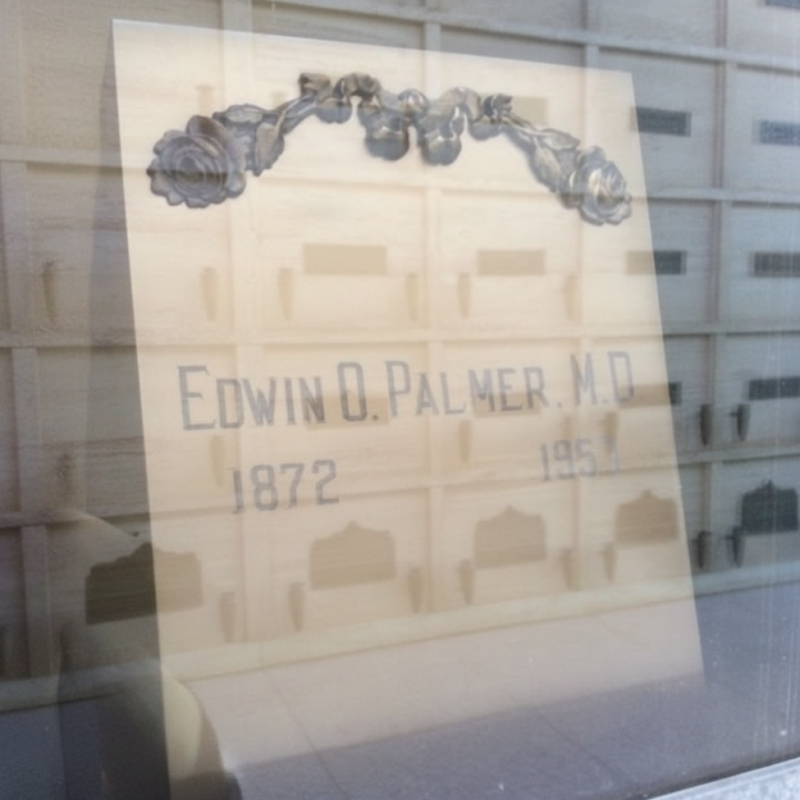
Funeral services took place on October 21, 1959, at the chapel at Hollywood Cemetery (now Hollywood Forever Cemetery). In memory of Palmer, the family asked that donations be made to Hollywood Presbyterian Hospital or to the American Institute of Family Relations instead of flowers. Both were causes Palmer had given throughout his life, promoting health and restoration to others. He was cremated at Hollywood Crematory following the service and his cremains placed in the Abbey of the Psalms, Alcove of Trust, Tier 5, Niche 3.
If you stroll through Hollywood Forever today, you'll find yourself amongst countless celebrities who delighted the masses. Dr. Edwin O. Palmer was never in a film of any sort, but he may have given Hollywood a legacy as permanent as any. He treated its citizens, built its organizations, and documented its infancy before it could vanish. Hollywood might have lost its beginning if not for Palmer. In a city of make-believe, he made sure its beginning wouldn't fade into fiction.
Tomorrow on The Hollywoodland Revue: this week’s “Coming Attractions” roundup featuring the newest theatrical releases, critical reactions, audience buzz, and recommendations on what may—or may not—be worth your ticket money.
If you enjoyed my profile of Dr. Edwin O. Palmer, the physician, historian, and author who helped preserve Hollywood's earliest history, please leave a comment, rate the article, and share it with fellow lovers of Hollywood's past.
Add comment
Comments
Fascinating and beautifully written. I agree that he deserves to be remembered. Thank you for sharing!
Hi Sherri, thank you for your comments.